

For most people, coffee feels completely normal until one day it suddenly causes heartburn, stomach discomfort, or sensitive teeth. That is usually when people start asking: Is coffee acidic, or is something else causing the problem?
Yes, coffee is naturally acidic. Most coffee has a pH between 4.5 and 6, making it mildly acidic compared to water. But coffee acidity is more complicated than a simple pH number. Roast level, brewing method, caffeine content, bean quality, and even brewing temperature all influence how acidic coffee tastes and how it affects the body.
Quick Answer: Is Coffee Acidic or Not?
Coffee is mildly acidic because it naturally contains compounds like chlorogenic acids, citric acid, malic acid, and quinic acid. These acids affect flavor, aroma, stomach sensitivity, and perceived sharpness.
However, acidity alone is not always the main reason coffee causes discomfort. Caffeine stimulation, brewing style, and individual digestive sensitivity often play a bigger role than pH itself.
Why Coffee Acidity Matters
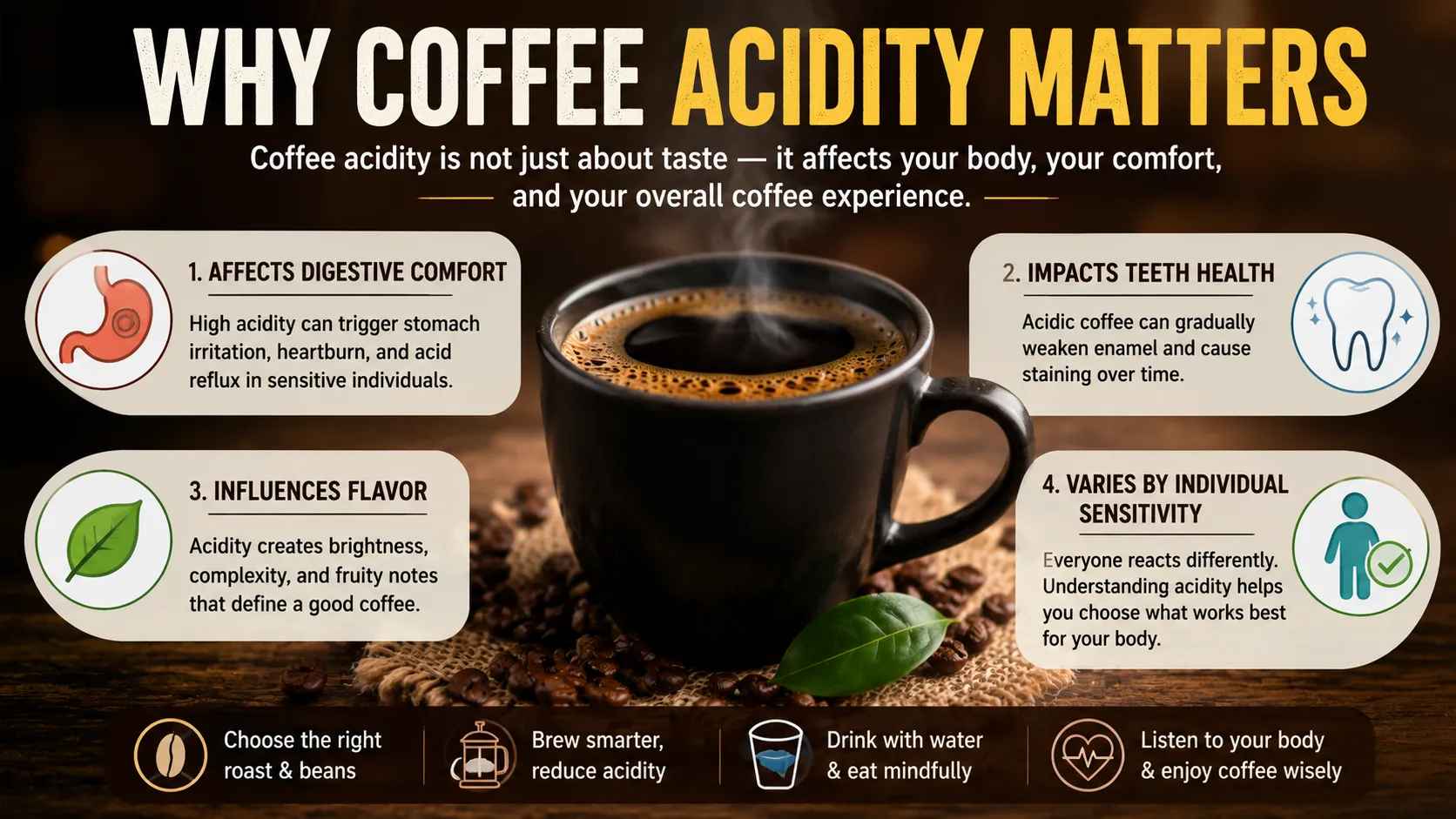
Interestingly, many people drink coffee for years without problems, only to notice acidity later. In many cases, the issue is not coffee itself but changes in digestion, stress levels, caffeine tolerance, or brewing habits. Coffee acidity mainly matters in three situations:
- Sensitive stomach or acid reflux
- Tooth enamel concerns
- Flavor preference
Some coffee lovers actively seek bright acidic flavors because they create fruity, vibrant tasting notes. Others prefer smoother, low-acid coffee because it feels gentler on digestion. Both experiences are completely normal.
What Makes Coffee Acidic?
Coffee beans naturally contain several organic acids that develop during roasting and extraction. The most important acids include:
- Chlorogenic acids
- Citric acid
- Malic acid
- Quinic acid
- Acetic acid
Research in coffee chemistry suggests that chlorogenic acids break down during roasting into quinic and caffeic acids, which influence bitterness, flavor depth, and perceived stomach irritation. These acids are also responsible for the bright, crisp notes found in specialty coffee.
For example, Ethiopian coffee often tastes citrusy and wine-like because of higher natural acidity, while Brazilian coffee tends to taste nuttier and smoother.
Coffee pH Scale Explained
Coffee is acidic, but it is far less acidic than many people assume.
Beverage | Approximate pH |
Lemon juice | 2 |
Soda | 2.5–3 |
Black coffee | 4.5–6 |
Tea | 5–6 |
Milk | 6.5–6.8 |
Water | 7 |
The lower the pH number, the more acidic the beverage. Coffee sits in the mildly acidic range. That means it is acidic enough to affect sensitive individuals but nowhere near the acidity level of soft drinks or citrus juices.
Why Is Coffee Acidic but Bitter?
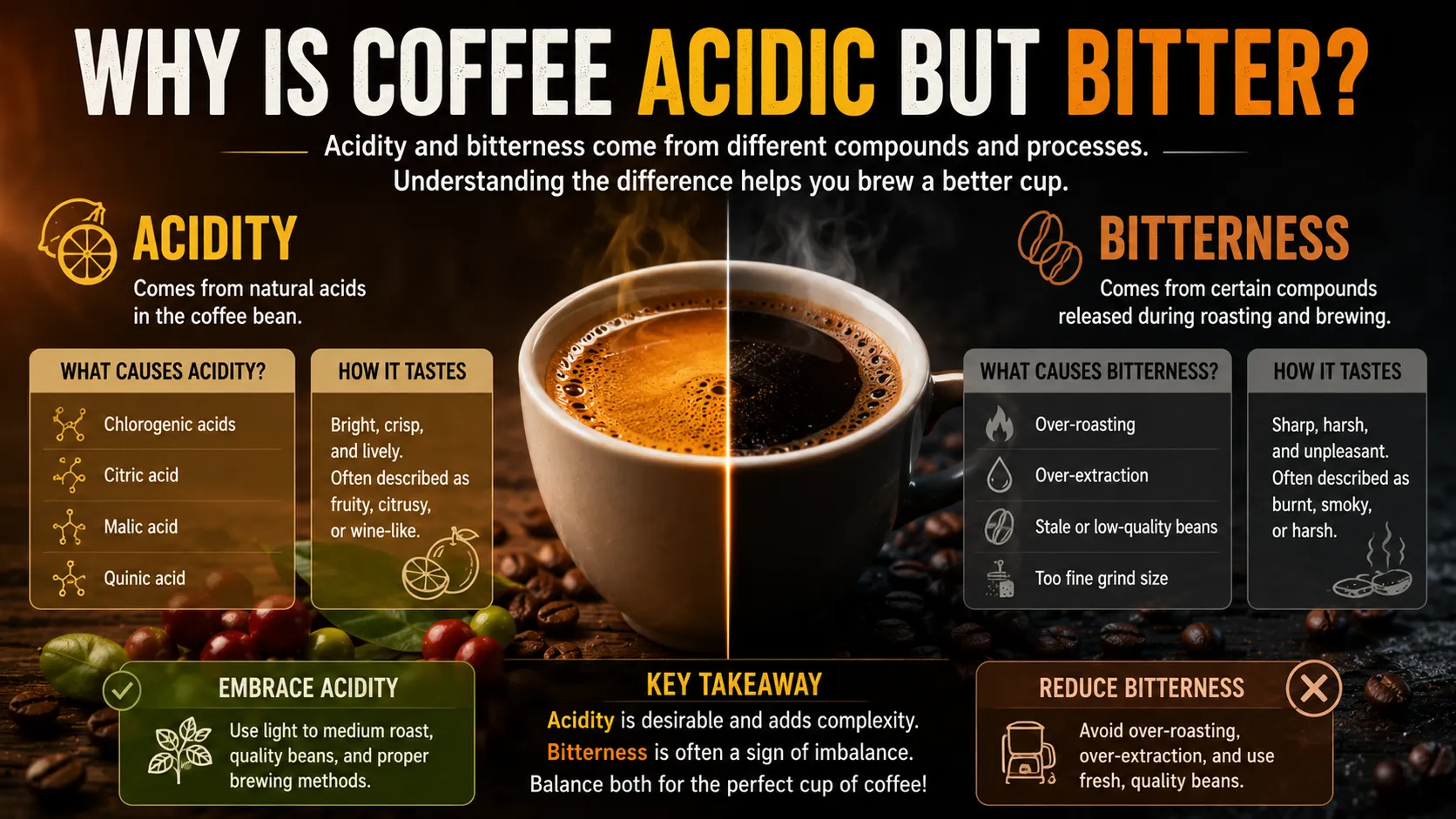
Acidity and bitterness are completely different flavor characteristics, although people often mix them up. Acidity creates brightness and lively flavor notes. Bitterness usually develops from darker roasting, stale beans, or over-extraction during brewing.
A high-quality light roast may taste fruity and acidic without tasting harsh. Meanwhile, badly brewed coffee can taste extremely bitter even when acidity levels are relatively low.
This is one reason cheap supermarket coffee sometimes feels harder on the stomach. Poor-quality beans are often over-roasted to hide defects, creating rough bitterness and burnt flavors.
Does Brewing Temperature Affect Coffee Acidity?
Yes, more than many people realize. Hot water extracts acids from coffee grounds much faster than cold water. This is why traditional hot-brewed coffee often tastes sharper and more acidic compared to cold brew. Cold brew extraction happens slowly over several hours, which reduces the amount of acidic compounds pulled from the beans.
Many coffee drinkers report that cold brew feels noticeably smoother on the stomach, especially early in the morning when digestion feels more sensitive. Brewing science supports this experience. Lower extraction temperatures generally reduce perceived acidity and bitterness.
Is Coffee Acidic to the Body?
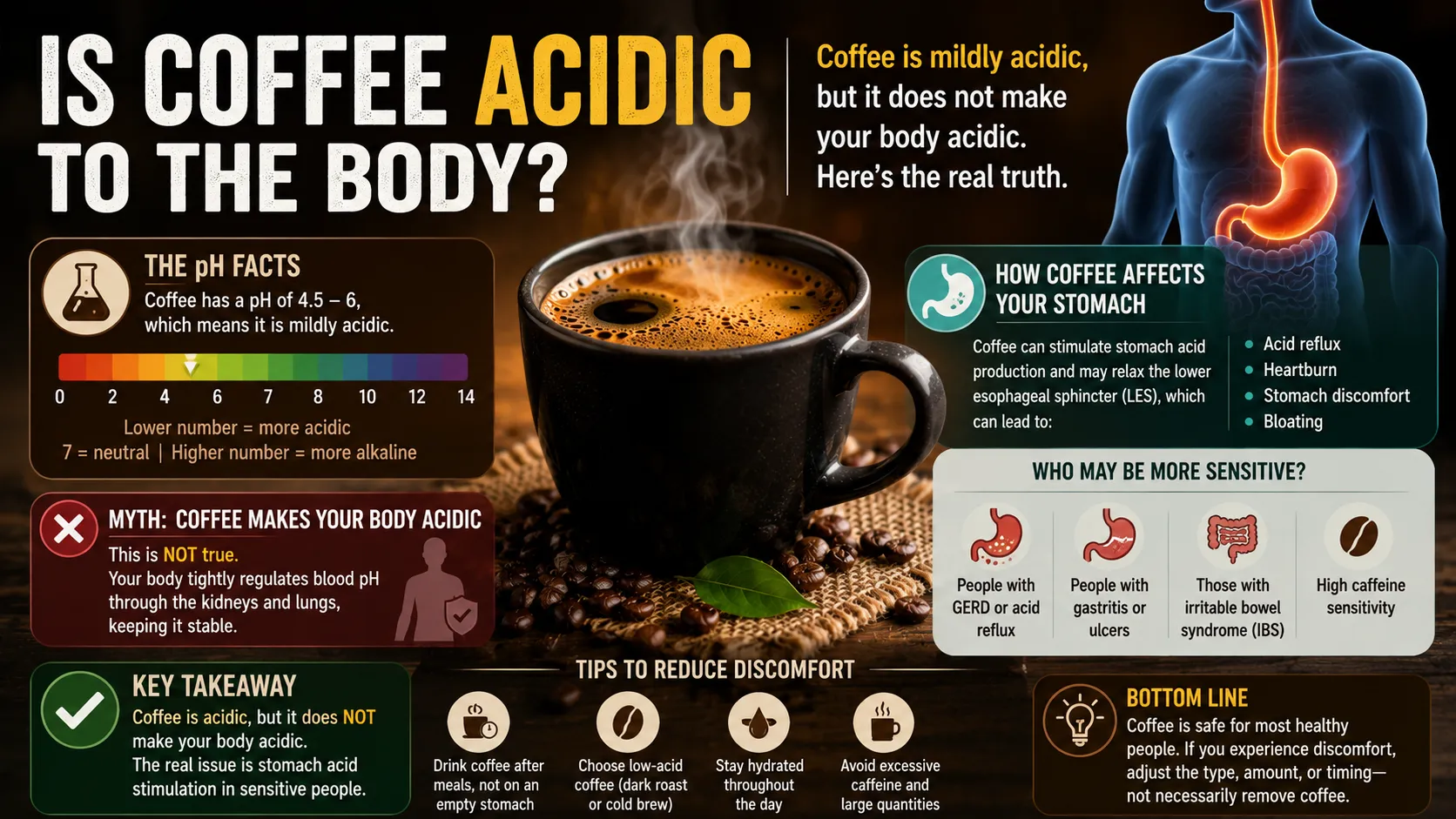
One of the most common myths online is that acidic foods automatically make the body acidic. The human body does not work that way. Healthy kidneys and lungs carefully regulate blood pH levels regardless of whether you consume acidic or alkaline foods.
Coffee itself does not significantly change body pH in healthy adults. However, coffee can increase stomach acid production, which may trigger discomfort in sensitive people. That distinction is important. The problem is usually stomach irritation or reflux symptoms, not the body becoming “too acidic.”
Coffee Acidity vs Caffeine: What Actually Causes Irritation?
Many people blame coffee acidity when caffeine is actually the bigger trigger. Caffeine stimulates stomach acid production and may relax the lower esophageal sphincter, which helps keep stomach acid from rising upward. That is why some people still experience reflux symptoms even with low-acid coffee.
Although dark roast coffee is generally less acidic, certain individuals may still react because caffeine itself can contribute to digestive irritation. This explains why tolerance varies so much from person to person.
Is Coffee Acidic Enough to Cause Acid Reflux?
For some individuals, yes. Coffee can worsen symptoms like:
- Heartburn
- Chest burning
- Sour taste in the mouth
- Upper stomach discomfort
People with GERD or acid reflux often notice symptoms more strongly after drinking highly acidic or highly caffeinated coffee. Still, reactions differ widely. Some people tolerate espresso perfectly but struggle with drip coffee. Others can drink cold brew comfortably but react to light roasts. In many cases, the brewing method matters more than people expect.
Coffee Acidity and GERD
GERD, or gastroesophageal reflux disease, makes the digestive system more sensitive to acidic foods and caffeine stimulation. People with mild GERD often tolerate coffee better when they:
- Drink it after meals
- Choose dark roast coffee
- Avoid drinking multiple cups quickly
- Switch to cold brew
- Reduce sugar-heavy coffee drinks
Many coffee drinkers also notice that freshly roasted specialty coffee feels gentler than stale, low-quality coffee. That may sound surprising, but fresher beans often create cleaner extraction and smoother flavor balance.
Is Coffee Acidic With Milk?
Coffee remains acidic after adding milk, but milk softens the overall flavor and reduces perceived sharpness. Milk has a higher pH than coffee, so it slightly buffers acidity. This is why lattes and cappuccinos usually feel smoother compared to black coffee.
Oat milk and almond milk may also help some individuals tolerate coffee more comfortably. Still, adding milk does not completely neutralize coffee acids.
Is Coffee Acidic for Teeth?
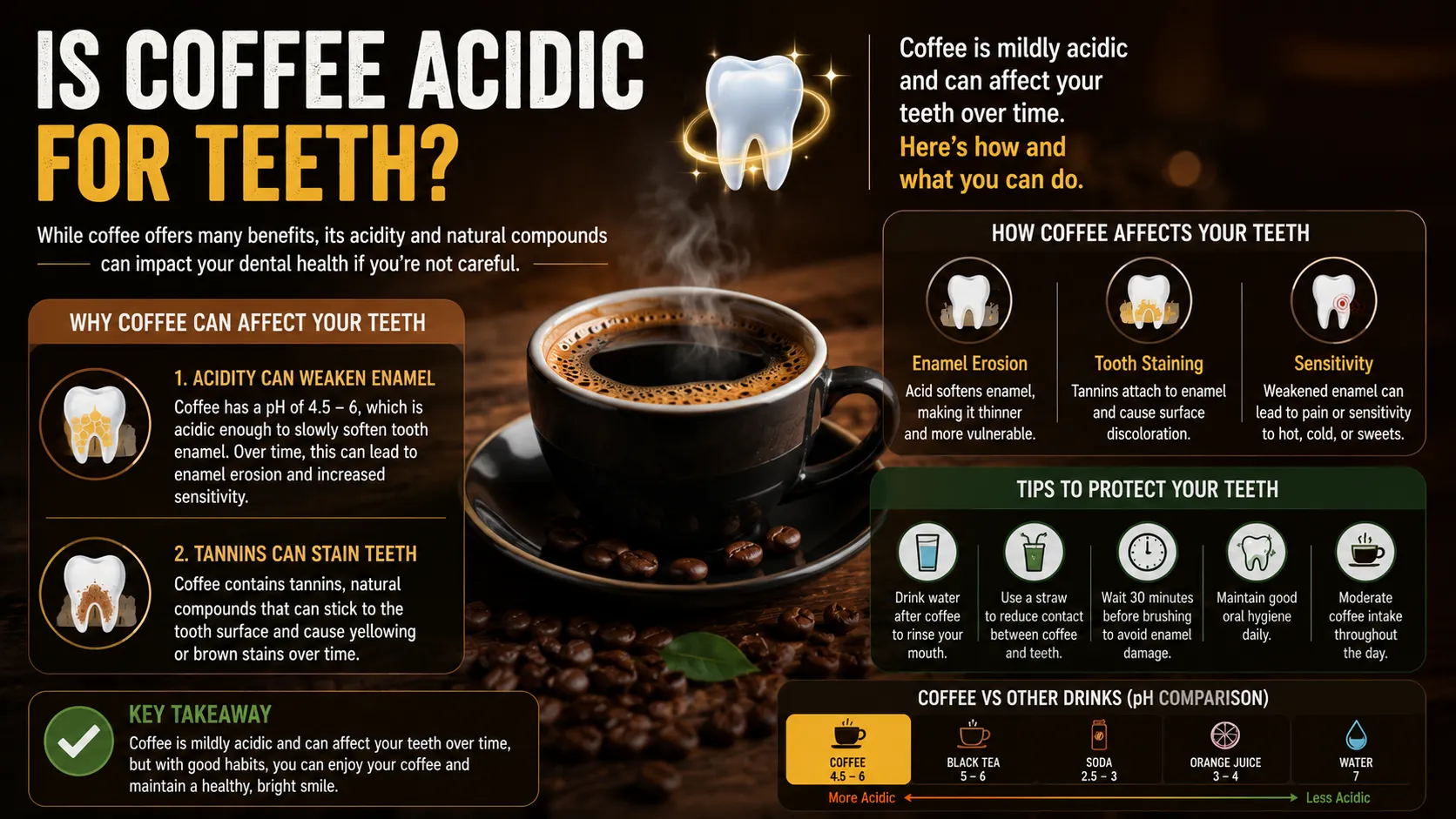
Coffee can contribute to enamel erosion over time because acidic beverages temporarily soften tooth enamel. Coffee also contains tannins that cause staining. However, coffee is generally less damaging than soda because its acidity level is lower. The real problem often comes from drinking coffee slowly throughout the day. Constant sipping repeatedly exposes enamel to acid.
Dentists commonly recommend rinsing with water afterward and waiting before brushing. Brushing immediately after acidic drinks may increase enamel wear because enamel remains temporarily softened.
Which Coffee Has the Lowest Acidity?
Some coffees are naturally easier on the stomach than others.
Coffee Type | Acidity Level |
Cold brew coffee | Low |
Dark roast coffee | Lower |
Medium roast coffee | Moderate |
Light roast coffee | Higher |
Arabica coffee | Higher |
Robusta coffee | Lower |
Cold brew and medium-dark roast coffee are usually considered the safest starting point for people with acid sensitivity.
Cold Brew vs Hot Brew Acidity
Cold brew and hot coffee behave very differently chemically. Hot water extracts acids rapidly, while cold extraction produces smoother flavor compounds with lower perceived acidity. This is why cold brew often tastes chocolatey and mellow instead of sharp or citrusy. Many people switching from hot coffee to cold brew notice reduced stomach irritation within days.
Dark Roast vs Light Roast for Acid Reflux
Light roast coffee usually contains more chlorogenic acids because roasting time is shorter. Dark roasting breaks down some acidic compounds, which creates a smoother flavor and lower perceived acidity.
However, extremely dark coffee can sometimes become bitter and smoky if over-roasted. For many sensitive coffee drinkers, medium-dark roast offers the best balance between flavor and stomach comfort.
Does Espresso Have More Acid Than Coffee?
Not necessarily. Espresso tastes stronger because it is concentrated, but acidity depends more on roast type, extraction quality, and bean origin than brewing pressure alone. A smooth medium-dark espresso may actually feel gentler than a large acidic drip coffee. This surprises many people.
Why Specialty Coffee Acidity Tastes Different
Not all acidity tastes unpleasant. In specialty coffee, acidity is often associated with freshness and quality. Bright acidic notes can resemble berries, apples, citrus, or tropical fruit. Coffee professionals sometimes describe acidity as “juicy” or “vibrant” rather than sour. Low-quality coffee usually tastes harsher because bitterness overwhelms flavor balance. That difference matters.
Best Coffee Brewing Method for Sensitive Stomachs
People with stomach sensitivity often tolerate certain brewing methods better than others. Cold brew is usually the gentlest option because of its lower acid extraction.
French press coffee may also feel smoother because metal filters allow more natural oils into the cup, creating a fuller texture. Very strong drip coffee, especially when over-extracted, tends to cause the most irritation for sensitive drinkers.
How to Reduce Acid in Coffee
Small adjustments often help more than eliminating coffee. Choosing lower-acid coffee is usually the easiest first step. Dark roast, cold brew, and low-acid specialty blends are popular options for sensitive stomachs.
Many people also notice improvement when they stop drinking coffee on an empty stomach. Fresh beans, proper brewing, and moderate caffeine intake can make a surprisingly large difference. Sometimes it takes experimentation to find the right balance.
Is Low-Acid Coffee Really Better?
Low-acid coffee can absolutely help people with reflux or digestive sensitivity. However, it is not automatically healthier for everyone. Some coffee lovers prefer brighter acidic flavors because they create complexity and freshness. The best coffee depends on both your body and your personal taste preferences.
Related Coffee Topics You May Like
FAQs
Is coffee more acidic than tea?
Yes, coffee is generally slightly more acidic than tea, although both beverages are only mildly acidic overall.
Is cold brew less acidic than regular coffee?
Yes. Cold brew usually extracts fewer acidic compounds because it uses cold water and a slower brewing process.
Does milk reduce coffee acidity?
Milk softens the taste and perceived sharpness of coffee but does not completely remove acidity.
What coffee is best for acid reflux?
Cold brew, dark roast, and medium-dark roast coffee are commonly easier for reflux-sensitive individuals to tolerate.
Can coffee damage tooth enamel?
Over time, acidic drinks, including coffee, may contribute to enamel erosion, especially with frequent exposure throughout the day.
Why does coffee upset my stomach?
Coffee may stimulate stomach acid production and irritate sensitive digestive systems, particularly when consumed on an empty stomach.
Is decaf coffee less acidic?
Sometimes slightly, but reduced caffeine stimulation is usually the bigger reason people tolerate decaf more comfortably.
Conclusion
Now I think your question: Is coffee acidic? Is clear yes, Coffee is naturally acidic, but acidity alone is not usually the real problem. Roast level, brewing style, caffeine stimulation, and personal digestive sensitivity often matter far more than pH itself.
For most healthy adults, coffee acidity is more about tolerance than danger. Experimenting with cold brew, dark roast coffee, brewing methods, and drinking habits often makes a bigger difference than avoiding coffee entirely.
And interestingly, many people discover they can still enjoy coffee comfortably once they understand which type of coffee actually works best for their body.