
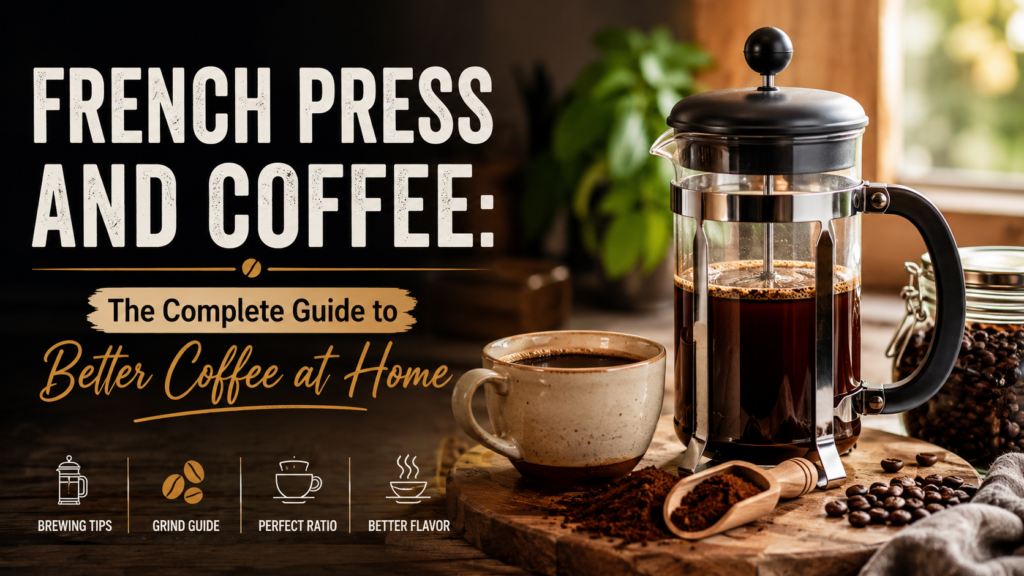
French press and coffee are closely connected because the French press method is one of the easiest ways to make rich, flavorful coffee without expensive equipment.
A French press coffee maker uses immersion brewing, where coffee grounds stay in hot water before being separated with a metal filter. This process keeps natural oils inside the cup and creates a fuller taste than many drip coffee machines.
For beginners and coffee enthusiasts alike, French press brewing offers a balance of simplicity, control, and quality. With fresh beans, a proper French press and coffee grinder, and correct brewing techniques, it is possible to make café-style coffee at home in just a few minutes.
What Is a French Press and Coffee Brewing Method?
A French press is a manual coffee maker designed to brew coffee by steeping coarse coffee grounds in hot water. After several minutes, a plunger with a metal mesh filter separates the grounds from the liquid coffee.
Unlike paper-filter brewing methods, French press coffee keeps more natural oils and fine particles inside the drink. That is why it often tastes stronger, smoother, and more aromatic.
Coffee drinking is often personal before it becomes technical. Many people choose French press coffee not because of brewing science alone, but because the flavor feels warmer, heavier, and more comforting.
A French press coffee maker is a manual brewing device that uses immersion extraction and a metal filter to produce rich and full-bodied coffee.
Why Is French Press Coffee So Popular?
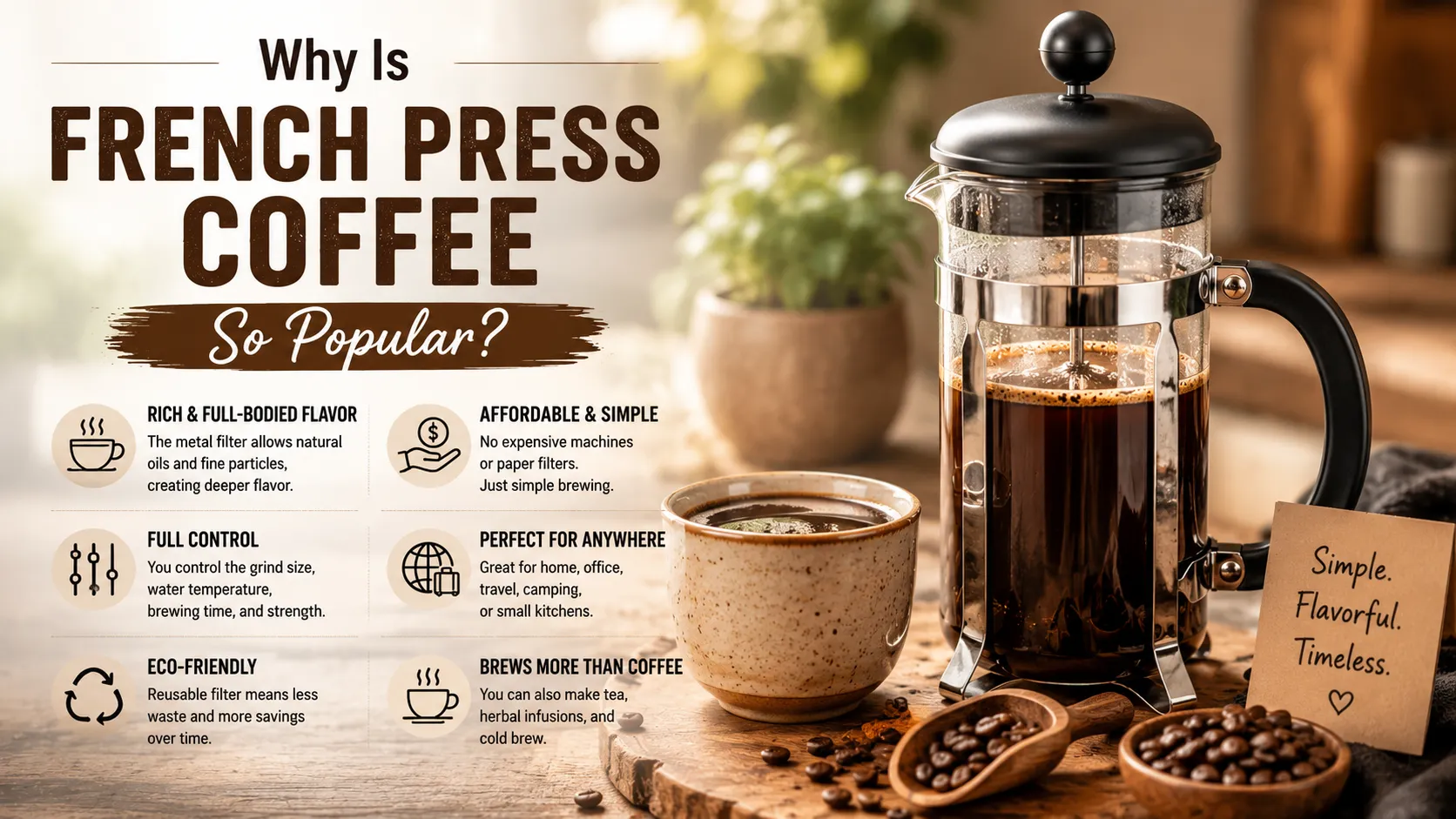
French press coffee has remained popular for decades because it combines convenience with strong flavor. It does not require complicated settings, expensive machines, or disposable filters.
For many coffee drinkers, the brewing process itself also becomes part of the experience. Grinding fresh beans, pouring hot water, and slowly pressing the plunger creates a slower and more intentional coffee routine.
Main Reasons People Prefer French Press Coffee
- Rich flavor with natural coffee oils
- Simple brewing without complex equipment
Many people who switch from automatic drip coffee makers notice that French press coffee feels more balanced and satisfying, especially during morning routines.
How Does a French Press Coffee Maker Work?
A French press coffee machine works through immersion brewing. Coffee grounds remain fully submerged in hot water for several minutes, allowing deeper flavor extraction. The process is simple but surprisingly effective.
First, coarse coffee grounds are placed into the container. Hot water is poured evenly over the coffee, and the mixture is left to steep for around four minutes.
After brewing, the plunger is pushed down slowly. The mesh filter traps the grounds at the bottom while the brewed coffee stays above. This brewing style extracts more oils and body compared to paper-filter methods, which is why French press coffee often tastes richer.
Why Does French Press Coffee Taste Different?
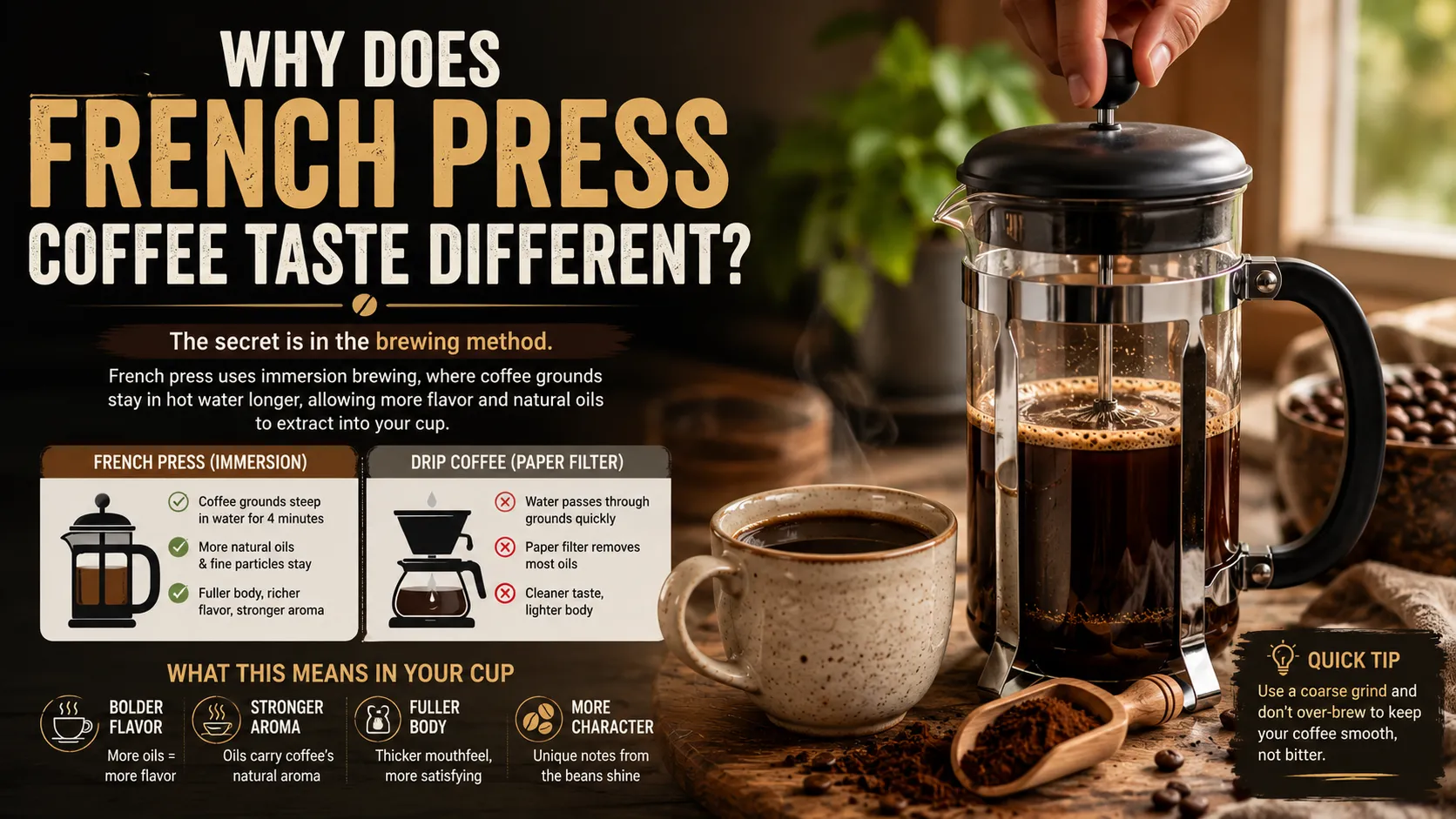
French press coffee tastes different because the metal filter allows natural oils and microscopic coffee particles to remain in the cup. Paper filters used in drip coffee makers remove many of these oils. That creates a cleaner but lighter taste. French press brewing produces coffee that feels:
- fuller
- heavier
- more aromatic
That small difference changes how people experience coffee. Some describe French press coffee as smoother and more comforting, especially when paired with medium or dark roast beans.
What Coffee Grind Is Best for French Press?
Coarse coffee grounds are best for French press brewing. A coarse grind helps control extraction and prevents excessive bitterness. Fine grounds often pass through the mesh filter and create muddy coffee.
Why Grind Size Matters
Coffee extraction depends heavily on surface area. Fine grounds extract faster, while coarse grounds extract more slowly and evenly. Using the wrong grind size is one of the most common beginner mistakes.
Best Practice
- Use coarse, even coffee grounds for a smoother flavor
A proper French press and coffee grinder setup can improve coffee quality more than many people expect.
Why Is a French Press and Coffee Grinder Important Together?
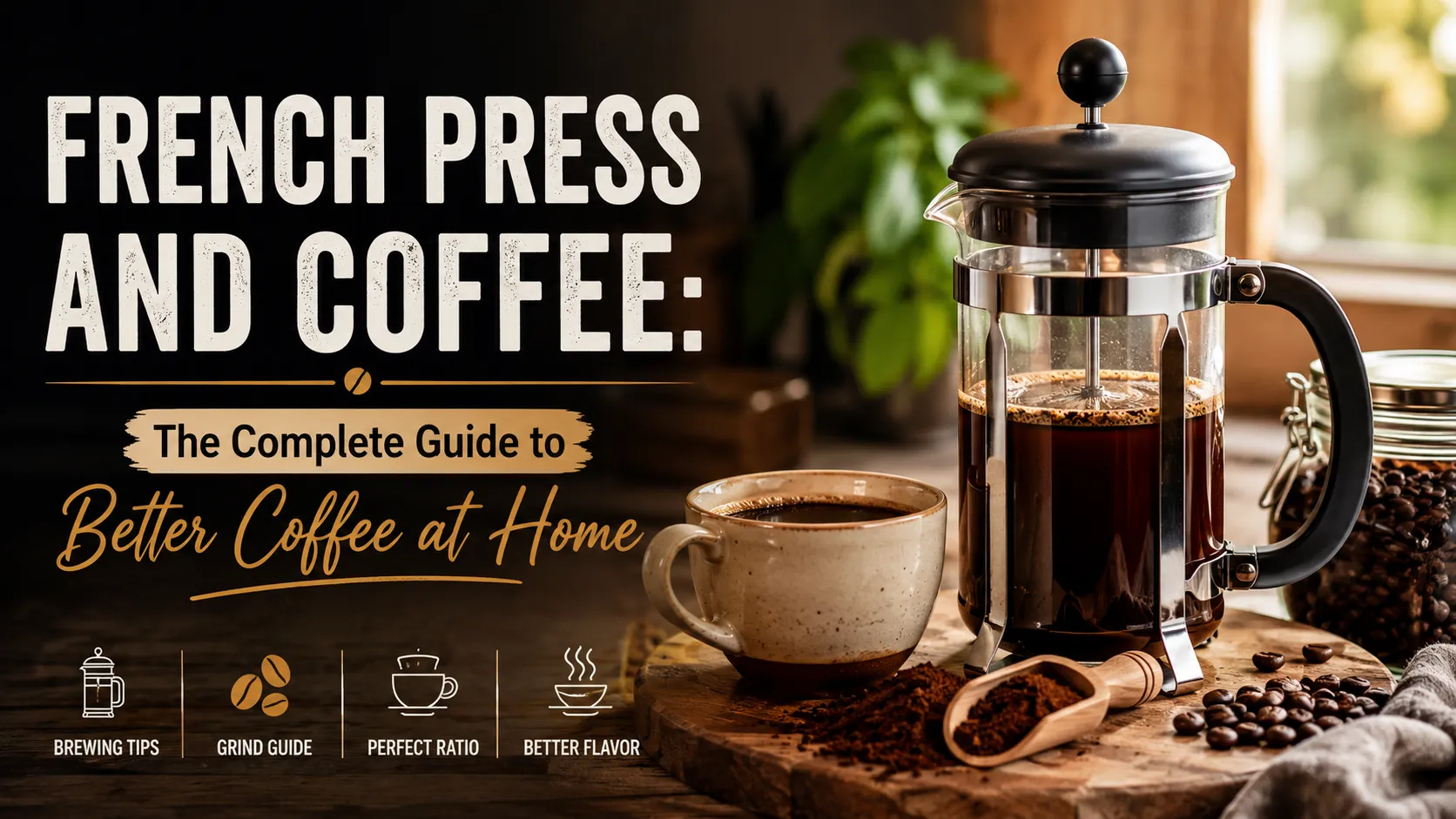
Fresh grinding is one of the biggest factors in coffee flavor quality. Coffee beans begin losing aroma shortly after grinding. Pre-ground coffee may still contain caffeine, but much of the original aroma and flavor complexity fades over time. That is why coffee professionals often recommend buying whole beans and grinding them just before brewing.
Burr Grinder vs Blade Grinder
Burr grinders are generally considered better for French press coffee because they create even grind sizes. Blade grinders chop beans unevenly, which can produce both under-extracted and over-extracted flavors in the same cup.
Important Tip
- Freshly ground coffee usually creates a stronger aroma and a smoother taste
Even small changes in grind consistency can noticeably improve French press coffee.
What Is the Best Coffee-to-Water Ratio?
The coffee-to-water ratio directly affects strength and flavor balance. Most coffee experts recommend a ratio between 1:15 and 1:17. For beginners, a practical starting point is:
- 30 grams of coffee
- 500 ml of water
This usually creates balanced medium-strength coffee. People who enjoy stronger coffee often slightly increase the coffee amount rather than extending the brew time. That matters because brewing too long usually increases bitterness instead of richness.
What Is the Best Water Temperature for French Press Coffee?
The ideal water temperature for French press coffee is between 90°C and 96°C (195°F to 205°F). Boiling water can burn coffee grounds and create harsh flavors. Water that is too cool may under-extract the coffee and produce a weak taste.
Simple Brewing Tip
After boiling water, waiting about 30 seconds before pouring often improves flavor noticeably. This small adjustment can make coffee taste smoother and less bitter.
How Long Should French Press Coffee Brew?
Most coffee professionals recommend brewing French press coffee for about four minutes. That timing usually creates balanced extraction without excessive bitterness.
Brewing Time and Flavor
Short brewing times may produce weak coffee, while longer brewing times can over-extract the grounds. Over-extraction often creates:
- bitterness
- dryness
- harsh aftertaste
Many people assume stronger coffee comes from longer brewing, but stronger flavor usually comes from better coffee ratios and fresher beans instead.
What Are the Advantages of a French Press Coffee Maker?
French press coffee makers remain popular because they combine quality with simplicity. They are affordable, portable, and easy to use without requiring electricity or disposable filters.
Main Advantages
- Full-bodied flavor and stronger aroma
- Lower cost compared to espresso machines
French press brewing also gives users more control over:
- brew time
- water temperature
- coffee strength
That control helps coffee lovers personalize flavor more easily.
What Are the Disadvantages of French Press Coffee?
Despite its advantages, French press coffee is not perfect for everyone. Because metal filters allow tiny particles into the cup, the texture can feel heavier compared to drip coffee. Some people also prefer the convenience of automatic coffee makers.
Common Drawbacks
French press coffee can become bitter if left sitting with the grounds after brewing. Regular cleaning is also important because coffee oils can build up inside the mesh filter over time.
French Press vs Drip Coffee Maker
French press and drip coffee makers create very different coffee experiences. Drip coffee machines use paper filters that remove many natural oils. French press brewing keeps those oils inside the coffee. As a result, drip coffee usually tastes cleaner, while French press coffee tastes deeper and heavier.
Which One Is Better?
The answer often depends on personal preference rather than quality. People who enjoy bold coffee usually prefer French press brewing. Those who prefer lighter and cleaner coffee may choose drip coffee makers instead.
Coffee habits are often emotional before they are technical. Many people stay loyal to the brewing method that feels most comforting during their daily routine.
French Press vs Espresso
French press coffee and espresso are very different brewing styles. Espresso uses high pressure to force hot water through finely ground coffee. French press brewing relies only on steeping. That difference changes:
- texture
- concentration
- flavor intensity
Main Difference
French press coffee is rich and full-bodied, but it does not create espresso crema or concentrated extraction. Espresso machines are also significantly more expensive and require more technical skill.
Why is the Bodum French Press So Popular?
Bodum French Press models are among the most recognized coffee makers in the world. The company became popular because it combined minimalist design with practical brewing performance. Many Bodum French Press products use borosilicate glass, stainless steel frames, and reliable mesh filtration systems.
Why Coffee Lovers Trust Bodum
- Durable construction with heat-resistant materials
- Consistent brewing performance and stylish design
For many users, Bodum products offer a balance between affordability and long-term reliability.
What Coffee Beans Work Best for French Press?
Medium and dark roast beans are commonly preferred for French press brewing because they produce fuller and smoother flavor profiles. Dark roasts often create chocolate, caramel, or smoky notes, while medium roasts usually provide more balance and sweetness.
Roast Level and Flavor
Coffee bean roast level can significantly influence French press flavor. Dark roasts usually create a smoother and heavier body, while lighter roasts often produce brighter acidity and more fruit-forward flavors. That difference becomes especially noticeable in immersion brewing methods like French press coffee.
Can French Press Coffee Be Healthier?
Coffee contains antioxidants and natural compounds that may support focus and mental alertness. French press coffee also preserves more natural oils compared to paper-filter brewing methods.
However, because it is unfiltered, it contains compounds called diterpenes, including cafestol. Some studies suggest excessive intake of unfiltered coffee may slightly increase cholesterol levels in sensitive individuals.
Important Health Insight
Many people with stomach sensitivity notice that carefully brewed French press coffee feels smoother when lower-acid beans are used. Factors like roast level, water temperature, and brew time can influence acidity more than people realize.
How to Make Better French Press Coffee at Home
Improving French press coffee usually comes down to consistency rather than expensive equipment. Small changes in technique often create noticeable improvements.
Step-by-Step Brewing Tips
Start with freshly roasted coffee beans whenever possible. Grind them coarsely immediately before brewing. Use filtered water and maintain proper brewing temperature.
Pour water evenly and stir gently for balanced extraction. Allow the coffee to steep for four minutes before pressing slowly. Serve the coffee immediately after brewing to prevent bitterness from continued extraction.
Common French Press Coffee Mistakes
Many beginner mistakes can reduce coffee quality even when using good beans. The most common issue is using grind sizes that are too fine.
Frequent Brewing Errors
- Using boiling water directly on coffee grounds
- Leaving brewed coffee sitting too long with the grounds
Old coffee beans can also reduce aroma, sweetness, and flavor clarity. Interestingly, many people blame the coffee itself when the real issue is an inconsistent brewing technique.
Is French Press Coffee Good for Beginners?
Yes. French press brewing is often considered one of the best beginner-friendly coffee methods. It requires minimal equipment while still teaching important brewing fundamentals like:
- grind size
- extraction
- water temperature
- timing
That practical learning experience helps many coffee drinkers better understand flavor balance.
Related Coffee Topics You May Like
Frequently Asked Questions (FAQ)
What is the best coffee for a French press?
Medium or dark roast coffee with a coarse grind usually works best for French press brewing.
Can you use regular ground coffee in a French press?
Yes, but most pre-ground coffee is too fine and may create a muddy texture or bitterness.
Is French press coffee stronger than drip coffee?
French press coffee often tastes stronger because it contains more natural oils and fine particles.
Why does French press coffee taste bitter?
Bitterness usually comes from over-extraction, water that is too hot, or grinding coffee too finely.
Which is better: Bodum French Press or cheaper models?
Bodum French Press models are widely trusted for durability, design quality, and consistent brewing performance.
Can a French press make cold brew coffee?
Yes. Many people use French press coffee makers to prepare cold brew by steeping coffee grounds in cold water for several hours.
Does French press coffee contain more caffeine?
French press coffee can contain slightly more caffeine depending on the brew ratio and steeping time.
Can French press coffee be less acidic?
Yes. Using medium-dark roasts, proper water temperature, and correct brewing time can help reduce harsh acidity.
Final Thoughts on French Press and Coffee
French press and coffee brewing continue to remain popular because the method combines simplicity, control, and rich flavor in one affordable setup.
For many coffee drinkers, French press brewing feels more personal and intentional than automatic brewing methods. The slower process often becomes part of the enjoyment itself.
Using fresh beans, a reliable French press coffee maker, and a quality coffee grinder can dramatically improve coffee flavor at home. Brands like Bodum French Press remain trusted because they consistently provide durable equipment and dependable brewing performance.
For coffee lovers, trying different beans, roast levels, and brewing styles side by side is often the easiest way to discover which flavor profile truly fits their daily routine best.