Here’s a question most of us never actually answer: how much caffeine did you really have today? That morning latte, the mid-afternoon cold brew, the cola with lunch — they add up fast, and almost nobody does the math. So we built this caffeine calculator…
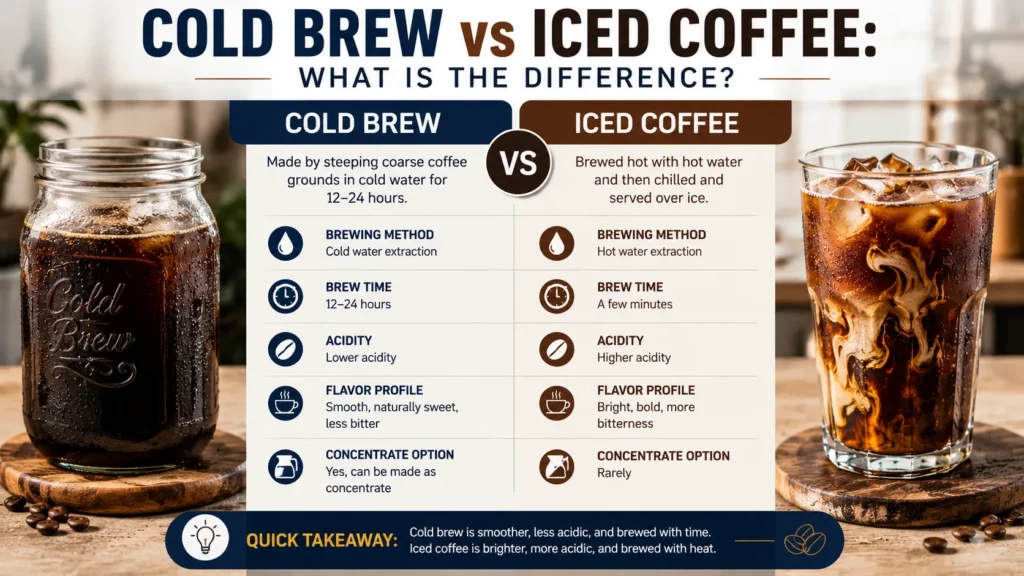
Cold brew vs iced coffee vs iced espresso — the summer menu looks simple until you have to choose. They all show up in a glass of ice. But they don’t taste the same, they aren’t made the same way, and they don’t take the…
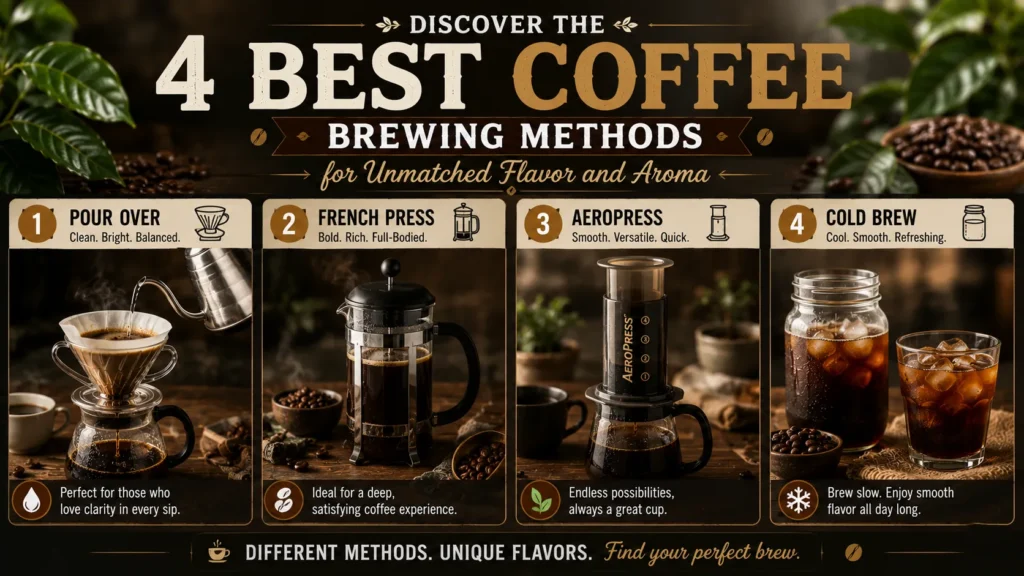
French press vs pour over vs espresso — three brewers, three very different cups of coffee. None of them is objectively “the best.” They just suit different mornings, different budgets, and different tastes. This guide compares all three honestly: how each one works, what the…

Explore the world of coffee with honest reviews and practical advice. Find your perfect cup, one bean and machine at a time.
A great espresso machine can turn your kitchen into your favorite café — but the wrong one turns into an expensive regret. The market is packed with options: compact beginner machines under $200, all-in-one grinder combos, fully automatic one-touch brewers, and prosumer machines built like tanks. They all make “espresso,” but the experience — and the taste — differs enormously.
This guide compares the 10 best espresso machines for 2026 across every budget and skill level. Whether you’re a complete beginner after a forgiving first machine, a home barista chasing café-quality shots, or a milk-drink lover who needs serious steam power — this one’s for you. There’s also a buying guide covering what actually matters, including the grinder question almost everyone gets wrong.
Compare all 10 at a glance:
| # | Machine | Type | Built-in Grinder | Price Range | Best For |
|---|---|---|---|---|---|
| 1 | Breville Barista Express | Semi-automatic | Yes | ~$650–750 | Best overall all-in-one |
| 2 | Breville Barista Express Impress | Semi-automatic | Yes | ~$600–700 | Assisted tamping, less fuss |
| 3 | De’Longhi La Specialista Arte Evo | Semi-automatic | Yes | ~$650–700 | Beginners wanting guidance |
| 4 | Breville Bambino | Semi-automatic | No | ~$300–350 | Small kitchens, beginners |
| 5 | Ninja Luxe Café Premier | Semi-automatic / multi | Yes | ~$500–600 | Espresso + drip + cold brew |
| 6 | De’Longhi Classic | Semi-automatic | No | ~$200–280 | Affordable first machine |
| 7 | Philips Baristina | Fully automatic | Yes | ~$270–400 | One-touch convenience |
| 8 | De’Longhi Stilosa | Semi-automatic | No | ~$100–180 | Tightest budgets |
| 9 | Rancilio Silvia | Semi-automatic (prosumer) | No | ~$900–1,100 | Durability + manual control |
| 10 | Breville Barista Touch | Semi-automatic | Yes | ~$800–1,000 | Touchscreen ease, premium |
The Breville Barista Express is the default recommendation for home espresso, and for good reason: it bundles a capable espresso machine with an integrated conical burr grinder, so you get fresh grounds for every shot without buying — or learning — a separate grinder. PID temperature control keeps extraction stable, and the manual steam wand produces genuine microfoam for lattes and cappuccinos.
Key Features
Who it’s for
Pricing: Typically ~$650–750. Check the current price — it shifts with sales.
Pros
Cons
Also consider: Barista Express Impress (adds auto tamping); Bambino + separate grinder (more compact)
Verdict: The smartest all-in-one investment for most home baristas — café-quality potential with grinding convenience built in.
The Barista Express Impress takes the classic Express formula and automates its trickiest step: tamping. Its assisted tamping system presses the puck with consistent pressure every time, removing one of the biggest variables for beginners. You keep hands-on control of grinding and extraction — the machine just makes the prep more forgiving.
Key Features
Who it’s for
Pricing: Typically ~$600–700. Check the current price.
Pros
Cons
Also consider: Barista Express (more hands-on, often cheaper); Philips Baristina (fully automatic)
Verdict: The best pick if you want the Express experience with training wheels on the hardest step.
De’Longhi’s La Specialista Arte Evo is built around guided learning: sensor grinding doses consistently, the tamping lever guides your pressure, and active temperature control keeps shots stable. The dual heating system lets you brew and steam without waiting, and the latte system produces thick milk foam with less technique.
Key Features
Who it’s for
Pricing: Typically ~$650–750. Check the current price.
Pros
Cons
Also consider: Breville Bambino (simpler, cheaper); Philips Baristina (fully automatic)
Verdict: One of the best beginner-friendly machines that still grows with your skills.
The Bambino proves you don’t need a big machine for good espresso. Its ThermoJet system heats up in about 3 seconds, the 54mm portafilter pulls proper shots, and the steam wand — while manual — is capable of real microfoam. The trade-off: no built-in grinder, so you’ll need a separate espresso-capable grinder.
Key Features
Who it’s for
Pricing: Typically ~$300–350. Check the current price.
Pros
Cons
Also consider: De’Longhi Stilosa (cheaper); Barista Express (adds grinder)
Verdict: The best compact starter — fast, simple, and genuinely capable, as long as you pair it with a good grinder.
The Ninja Luxe Café isn’t just an espresso machine — it also brews drip-style coffee and cold brew, with guided grind, tamp, and brew assistance built in. For households where different people want different drinks, one machine covering all three is compelling value.
Key Features
Who it’s for
Pricing: Typically ~$500–600. Check the current price.
Pros
Cons
Also consider: Barista Express Impress (more espresso control); Philips Baristina (simpler automation)
Verdict: The best choice when versatility matters more than espresso purism.
A long-running budget favorite, the De’Longhi Classic (EC series) keeps things simple: a 15-bar pump, manual frother, and dial controls. It won’t win on features, but it pulls respectable shots for the money and teaches the fundamentals — dosing, tamping, timing — without complexity.
Key Features
Who it’s for
Pricing: Typically ~$200–280. Check the current price.
Pros
Cons
Also consider: Breville Bambino (faster heat-up); De’Longhi Stilosa (cheaper still)
Verdict: A proven, affordable first step into home espresso.
The Baristina is for people who want espresso without the hobby: it grinds, tamps, and brews at the touch of a button, with adjustable strength and cup size, plus an automatic milk frother. You trade hands-on control for consistency and zero learning curve.
Key Features
Who it’s for
Pricing: Typically ~$270–400. Check the current price.
Pros
Cons
Also consider: Ninja Luxe Café (more brew styles); Barista Express (more control)
Verdict: The easiest path to daily café-style drinks at home.
The Stilosa is the cheapest credible way into real espresso: a 15-bar pump, manual frother, and simple dials. Expectations should match the price — you’ll need a decent grinder and some patience — but it produces genuinely enjoyable shots and steamed milk for very little money.
Key Features
Who it’s for
Pricing: Typically ~$100–180. Check the current price.
Pros
Cons
Also consider: De’Longhi Classic (step up in build); Breville Bambino (faster, better steam)
Verdict: The best ultra-budget starting point — just pair it with a proper grinder.
The Rancilio Silvia is a legend for a reason: commercial-grade brass boiler, stainless steel body, and a design that owners keep running for a decade or more. It rewards skill — there’s no hand-holding, and temperature surfing takes learning — but it punishes nothing and lasts. Pair it with a quality grinder; it deserves one.
Key Features
Who it’s for
Pricing: Typically ~$900–1,100. Check the current price.
Pros
Cons
Also consider: Breville Barista Touch (easier, automated); Barista Express (grinder included)
Verdict: The enthusiast’s long-term investment — demanding, but unmatched durability at this level.
The Barista Touch wraps the Barista Express formula in a touchscreen interface with drink presets and automatic milk texturing (temperature and texture adjustable). It’s the most effortless way to get customized, repeatable milk drinks without learning manual steaming.
Key Features
Who it’s for
Pricing: Typically ~$800–1,000. Check the current price.
Pros
Cons
Also consider: Barista Express Impress (cheaper, more hands-on); Rancilio Silvia (more durable, manual)
Verdict: The most convenient premium home setup for customized milk drinks.
Be honest about where you are. Complete beginners do best with guided or automatic machines (Baristina, Bambino, Stilosa) that forgive mistakes. Intermediate brewers who’ve learned dosing and tamping will outgrow pure automatics and want semi-automatic control (Barista Express, La Specialista). Advanced hobbyists chasing the last 5% of shot quality want manual prosumer machines (Silvia) — and accept the learning curve.
Temperature consistency is what separates balanced shots from sour-or-bitter ones. Entry machines use small single boilers or thermoblock/thermojet systems — fast to heat, fine for a shot or two, but they can waver across back-to-back shots and can’t brew and steam simultaneously. Heat-exchanger and dual-boiler designs (prosumer territory) hold temperature rock-steady and let you steam milk while pulling a shot. For most home users making 1–2 drinks, a good thermoblock/PID machine is plenty; upgrade boiler architecture only if you’re serving a crowd daily.
You’ll see “15-bar” or “20-bar” on almost every box. Here’s the honest version: espresso extracts at around 9 bars — the higher number is the pump’s maximum rating, not the brewing pressure. What matters is whether the machine regulates pressure consistently at the puck (many do via an over-pressure valve). Don’t choose a machine by its bar rating; choose by temperature stability, build quality, and reviews of actual shot quality.
This is the single most important buying advice in espresso: an espresso-capable grinder matters as much as the machine. Espresso needs fine, uniform grounds, and most failed home setups trace back to an inadequate grinder, not the machine. If your budget is $500 total, you’re usually better off with a $300 machine + $200 grinder than a $500 machine + pre-ground coffee. Machines with built-in grinders (Barista Express, Baristina, La Specialista) solve this conveniently; if you buy a grinder-less machine (Bambino, Silvia, Stilosa), budget for a proper espresso grinder from day one.
If lattes and cappuccinos are your daily order, steam performance deserves as much weight as shot quality. Manual wands reward skill with the silkiest microfoam; automatic frothers trade some texture control for convenience. Panarello-style wands (common on budget machines) are the most forgiving for beginners. Decide based on what you actually drink every day.
Stainless housings, brass boilers, and metal (not plastic) portafilters correlate with machines that survive years of daily use. A well-built $700 machine kept for 8 years costs less per year than replacing a $150 machine every two. Check warranty length and parts availability before buying.
Our recommendations are research-based. For every machine, we compare published specifications (boiler/heating system, pump, portafilter size, grinder type where integrated), build materials, feature sets, and aggregated user feedback from retail reviews and home-barista communities — including long-term reliability reports, which matter enormously for appliances at this price.
We don’t operate a testing lab and we don’t accept payment for placement. When we describe a machine as “consistent” or “durable,” we’re summarizing widely reported owner experiences, not our own measurements. Prices shown are typical ranges and change frequently — always check the current price before buying.
It depends on your experience and budget. For most people, the Breville Barista Express is the best all-round home choice — grinder included, stable temperature, strong steam. Beginners on a budget should look at the Breville Bambino or De’Longhi Stilosa (plus a separate grinder); those wanting zero learning curve should consider the fully automatic Philips Baristina.
No — that’s the point of all-in-one machines like the Barista Express or Baristina: the integrated grinder is designed to pair with the machine and removes a whole category of beginner mistakes. A separate high-end grinder gives experienced users more precise control, but for most home baristas, a good built-in grinder is the simpler, better-value path.
Prosumer machines (like the Rancilio Silvia) use commercial-grade components — brass boilers, heavier builds, stronger steam — and are designed for manual control and decade-long lifespans. Regular home machines prioritize convenience, automation, and lower prices. Choose prosumer if you’re committed to the craft; choose home-oriented if you want great coffee with less fuss.
Not mandatory, but highly convenient. A built-in grinder guarantees fresh grounds for every shot and saves counter space. Serious enthusiasts sometimes prefer a separate premium grinder for finer control — but a mediocre separate grinder is worse than a good integrated one. Either way, never pair any espresso machine with pre-ground supermarket coffee and expect great results.
A semi-automatic with guided features (Breville Bambino, De’Longhi La Specialista Arte Evo) or a fully automatic (Philips Baristina). Look for stable temperature, simple controls, and forgiving milk frothing. Avoid starting with a manual prosumer machine — the learning curve will frustrate you before the coffee rewards you.
A quality machine lasts 5–10+ years with proper care: regular cleaning, descaling with soft water, and backflushing where applicable. Stainless housings and brass boilers outlast plastic-heavy builds. Longevity is one of the strongest arguments for spending more upfront on a well-built machine.
Up to a point. The jump from ~$150 to ~$500 buys dramatically better temperature stability, steam power, and build quality. Beyond ~$800, you’re paying for either automation polish (touchscreens, auto-frothing) or prosumer durability (dual boilers, commercial parts). Match the spend to how seriously — and how often — you’ll brew.
The best espresso machine is the one that matches your skill, your drink habits, and your budget — not the most expensive one on the list. For most home baristas, the Breville Barista Express remains the sweet spot: grinder, stable temperature, and real steam in one box. Beginners should start simpler (Bambino, Stilosa, or the one-touch Baristina), and committed hobbyists who want a machine for a decade should look hard at the Rancilio Silvia — with a proper grinder beside it.
Whatever you choose, remember the golden rule of home espresso: grinder first, machine second. Get that right, and every machine on this list will make you a better cup.