

If you enjoy coffee but want to reduce your caffeine intake, you have probably wondered how much caffeine in decaf coffee actually remains. Many people believe decaf coffee is completely caffeine-free, but that is not entirely true. Although most of the caffeine is removed during processing, a small amount still stays in every cup.
For most healthy adults, this remaining caffeine is unlikely to cause problems. However, if you are sensitive to caffeine, pregnant, managing certain medical conditions, or trying to avoid stimulants altogether, understanding how much caffeine remains can help you make better choices.
In this guide, you will learn exactly how much caffeine is found in decaf coffee, how it compares with regular coffee, espresso, tea, milk, and Nespresso pods, how decaffeination works, and whether decaf coffee is the right option for your lifestyle. The information is based on current industry standards and nutritional data commonly used in the United States.
Quick Answer: How Much Caffeine in Decaf Coffee?
On average, one 8-ounce (240 ml) cup of decaf coffee contains between 2 and 5 milligrams of caffeine. The exact amount depends on the coffee beans, brewing method, roasting process, and the decaffeination technique used.
For comparison, a regular cup of brewed coffee typically contains 80 to 120 milligrams of caffeine, making decaf coffee about 95 to 98 percent lower in caffeine.
Although decaf is not completely caffeine-free, it is considered a low-caffeine beverage and is a suitable choice for most people who want to reduce their caffeine intake.
What Is Decaf Coffee?
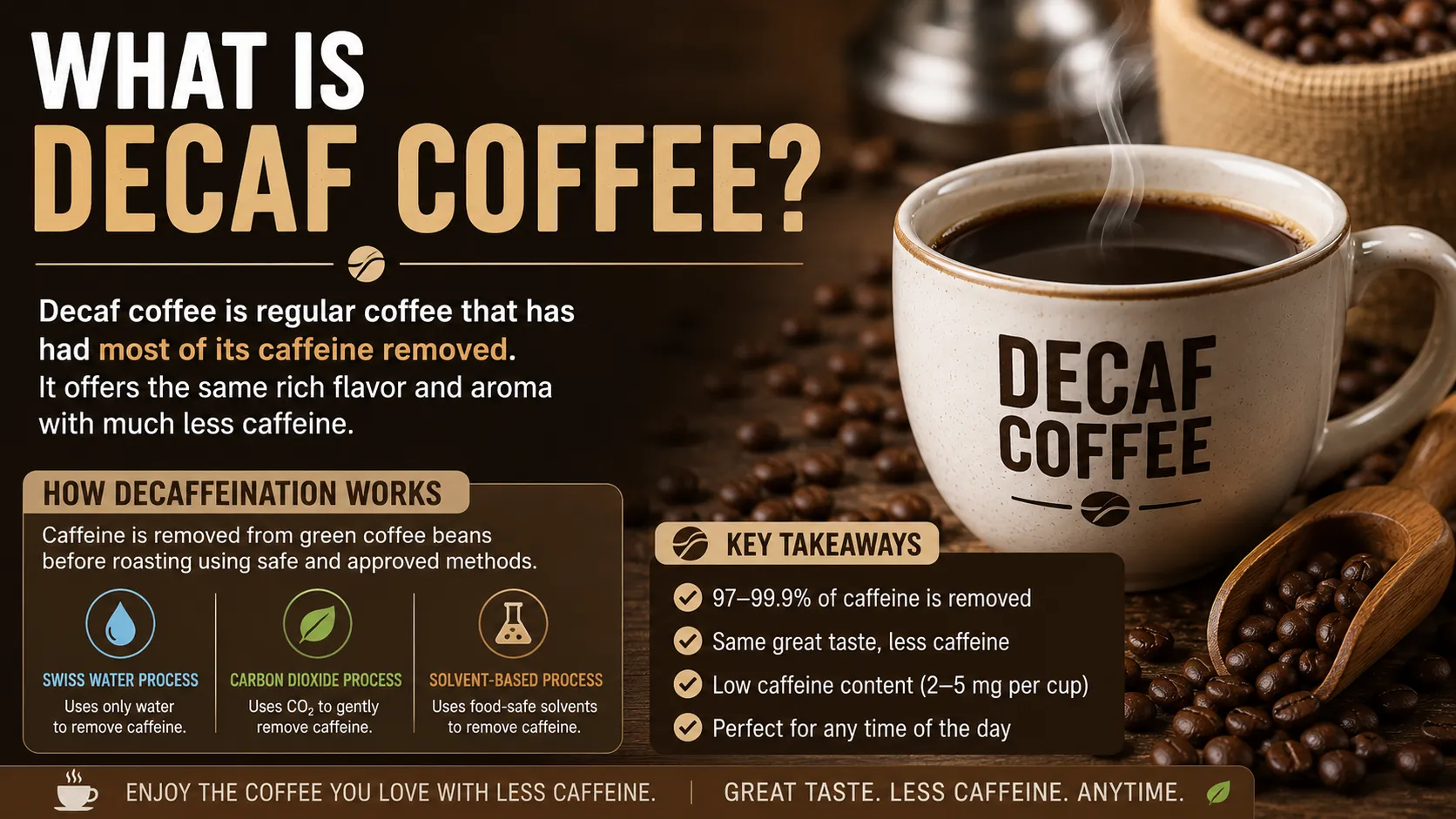
Decaf coffee is regular coffee that has had most of its caffeine removed before roasting. The flavor, aroma, and many of the natural compounds remain, allowing coffee lovers to enjoy a familiar taste without consuming the same level of caffeine.
The decaffeination process begins while the beans are still green. Manufacturers use approved methods to extract caffeine while preserving as much of the coffee’s original character as possible. Modern decaffeination methods include:
- The Swiss Water Process, which removes caffeine using only water and specialized carbon filters.
- Carbon dioxide processing, which selectively removes caffeine while protecting flavor compounds.
- Food-safe solvent methods that use approved compounds to separate caffeine from the beans before roasting.
Each method produces coffee that meets strict food safety standards in the United States.
Why Does Decaf Coffee Still Contain Caffeine?
Many people assume that “decaf” means zero caffeine. In reality, removing every trace of caffeine from coffee beans is extremely difficult without damaging their flavor and quality.
Instead, manufacturers remove approximately 97 to 99.9 percent of the caffeine before the beans are roasted and packaged. The remaining caffeine varies depending on several factors, including:
- The type of coffee bean used.
- The decaffeination process.
- Brewing strength.
- Serving size.
- Coffee brand.
Because of these differences, two cups of decaf coffee from different brands may not contain the same amount of caffeine.
How Much Caffeine in Decaf Coffee 1 Cup?
A standard American serving is one 8-ounce cup. The average caffeine content looks like this.
Coffee Type | Average Caffeine Per 8 oz Cup |
Decaf Coffee | 2–5 mg |
Regular Brewed Coffee | 80–120 mg |
Instant Decaf Coffee | 2–4 mg |
Cold Brew Decaf | 3–7 mg |
Most health experts agree that this small amount of caffeine is unlikely to affect healthy adults. Even drinking several cups of decaf coffee usually results in much less caffeine than a single regular cup.
How Much Caffeine in Decaf Coffee vs Regular?
The biggest difference between decaf and regular coffee is the amount of caffeine they contain. Regular coffee is designed to provide an energy boost because caffeine naturally stimulates the central nervous system. Decaf coffee offers nearly the same coffee experience while greatly reducing this stimulant effect.
Feature | Decaf Coffee | Regular Coffee |
Average Caffeine | 2–5 mg | 80–120 mg |
Energy Boost | Very Low | High |
Sleep Friendly | Usually Yes | Often No |
Suitable for Caffeine Sensitive People | Yes | Not Always |
Coffee Flavor | Very Similar | Original |
Although regular coffee remains the better choice for those seeking alertness and increased energy, decaf coffee is often preferred by people who enjoy coffee later in the day or who are limiting caffeine for personal or medical reasons.
Is Decaf Coffee Completely Caffeine Free?
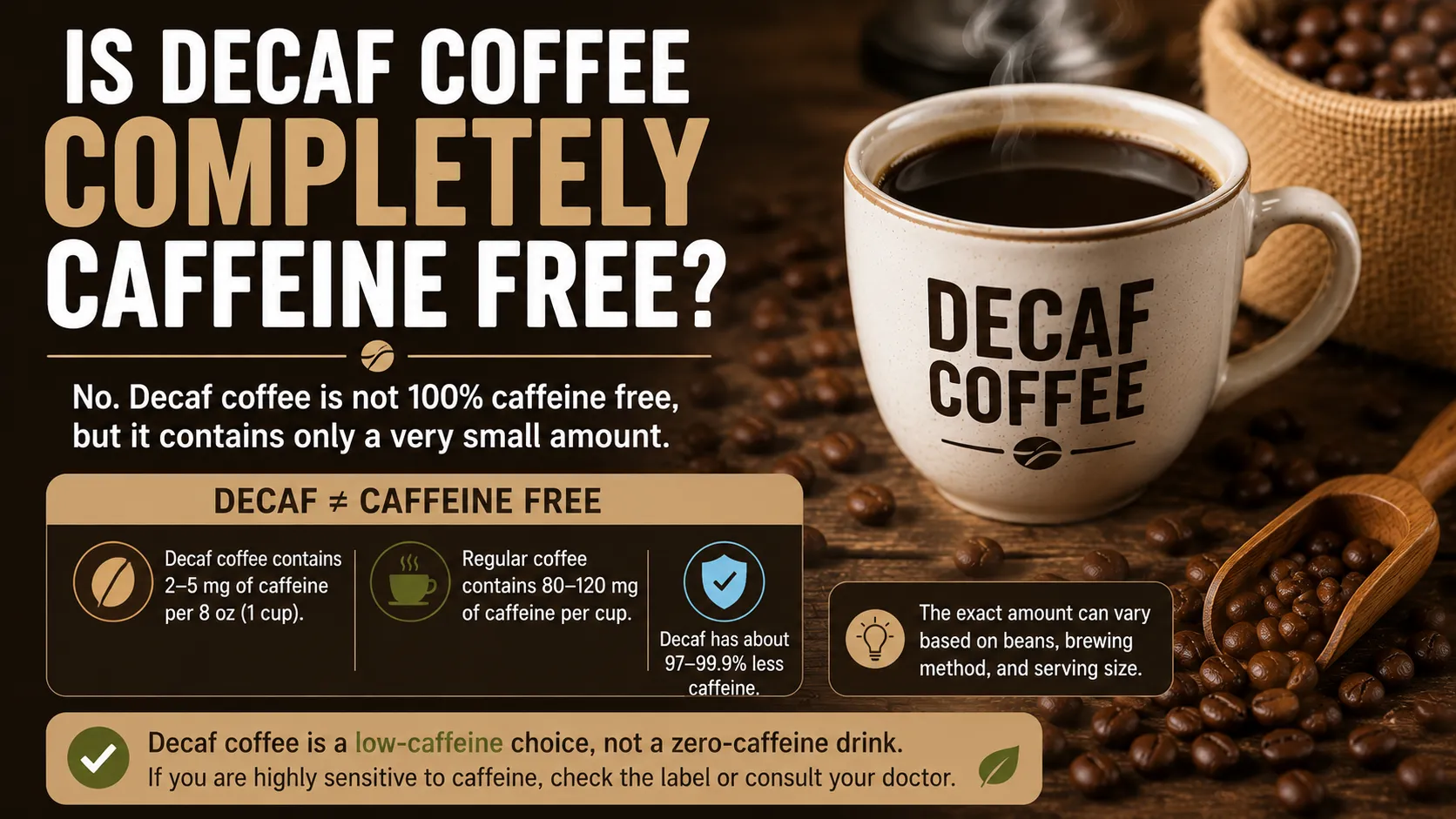
No. Decaf coffee should be viewed as low-caffeine coffee rather than caffeine-free coffee. If you need to eliminate caffeine because of a medical condition or doctor’s recommendation, you should carefully read product labels and consult a healthcare professional before making it a regular part of your diet.
For most people, however, the tiny amount of caffeine found in decaf coffee is considered negligible and does not produce noticeable stimulant effects.
Why Do People Choose Decaf Coffee?
People choose decaf coffee for many different reasons beyond simply reducing caffeine intake. Some of the most common reasons include:
- Enjoying coffee in the evening without disrupting sleep.
- Managing caffeine sensitivity.
- Reducing jitters or anxiety linked to high caffeine consumption.
- Following medical advice during pregnancy or certain heart conditions.
- Continuing to enjoy the taste and routine of coffee while consuming less caffeine.
Unlike many coffee alternatives, decaf still provides much of the rich aroma and flavor that coffee drinkers enjoy, making it an appealing option for daily use.
How Much Caffeine in Decaf Espresso?
Many people assume that decaf espresso contains no caffeine because the serving size is small. In reality, a decaf espresso shot still contains a small amount of caffeine.
A standard 1-ounce (30 ml) shot of decaf espresso usually contains between 2 and 7 milligrams of caffeine. The exact amount depends on the coffee beans, roasting profile, espresso machine, and the decaffeination process used by the manufacturer.
While this is much lower than a regular espresso, which typically contains 60 to 75 milligrams of caffeine, it is not completely caffeine-free.
If you enjoy lattes, cappuccinos, or Americanos made with decaf espresso, the total caffeine content will remain relatively low, making them a popular choice for people who want the flavor of espresso without the strong stimulant effects.
How Much Caffeine in Decaf Tea?
Coffee is not the only beverage available in decaf form. Many black, green, and herbal teas are also sold as decaffeinated options. Most decaf tea contains between 1 and 8 milligrams of caffeine per cup, depending on the tea variety and how it is processed.
Black tea generally contains more caffeine than green tea before decaffeination, so the remaining amount may vary slightly after processing. Herbal teas, on the other hand, are naturally caffeine-free unless they contain tea leaves from the Camellia sinensis plant.
If your goal is to reduce caffeine while still enjoying a warm beverage, both decaf coffee and decaf tea can be suitable choices.
How Much Caffeine in Decaf Coffee vs Tea?
Many people wonder whether decaf coffee or tea contains more caffeine. The answer depends on whether the tea is regular or decaffeinated. A standard cup of decaf coffee usually contains 2 to 5 milligrams of caffeine, while decaf tea generally contains 1 to 8 milligrams. In many cases, the difference is minimal.
If you compare decaf coffee with regular black tea, regular tea often contains considerably more caffeine. For people who are highly sensitive to caffeine, reading the nutrition information on the packaging is the best way to understand exactly how much caffeine is present in each beverage.
How Much Caffeine in Decaf Coffee vs Milk?
Milk is naturally caffeine-free, while decaf coffee contains a small amount of caffeine. This means a glass of plain milk contains 0 milligrams of caffeine, whereas an average cup of decaf coffee contains 2 to 5 milligrams.
Although milk does not provide the same roasted flavor or aroma as coffee, it is often combined with decaf espresso to create drinks such as decaf lattes and cappuccinos. In these beverages, the caffeine comes entirely from the decaf espresso rather than the milk itself. For individuals who need to eliminate caffeine, plain milk remains the better option.
How Much Caffeine in Decaf Coffee Nespresso?
Nespresso offers several decaffeinated coffee capsules, but the caffeine content varies slightly between blends. Most Nespresso decaf capsules contain approximately 2 to 5 milligrams of caffeine per serving, although some specialty blends may contain slightly more or less.
The company follows strict quality standards to maintain the flavor profile while removing the majority of caffeine during processing. If you regularly use a Nespresso machine, checking the product information for your specific capsule is the most accurate way to determine its caffeine content.
Does the Brewing Method Affect Caffeine in Decaf Coffee?
Yes, even after decaffeination, the brewing method can slightly influence the amount of caffeine extracted into your cup. Methods that use longer brewing times or finer coffee grounds may extract slightly more caffeine than faster brewing methods.
For example, French press coffee, drip coffee, pour-over coffee, and espresso all extract coffee differently. However, the difference in caffeine is usually small because decaf beans already contain very little caffeine. The serving size also matters. A larger mug naturally contains more caffeine than a smaller cup, even when using decaf coffee.
Can You Drink Decaf Coffee Every Day?
For most healthy adults, drinking decaf coffee daily is considered safe. Decaf coffee still contains many of the beneficial antioxidants found in regular coffee. These compounds may help protect cells from oxidative stress and contribute to overall wellness when consumed as part of a balanced diet.
Many people switch to decaf because they want to enjoy coffee throughout the day without experiencing common caffeine-related effects such as insomnia, nervousness, or rapid heartbeat.
As with any beverage, moderation is still recommended. Adding excessive amounts of sugar, flavored syrups, or high-fat creamers can reduce the overall health benefits of your coffee.
What Are the Benefits of Choosing Decaf Coffee?
Decaf coffee offers many of the same enjoyable qualities as regular coffee while significantly reducing caffeine intake. Some of its key benefits include:
- Enjoying coffee later in the day with less risk of sleep disruption.
- Reducing caffeine-related jitters and nervousness.
- Supporting people who are sensitive to caffeine.
- Providing antioxidants similar to those found in regular coffee.
- Allowing coffee lovers to enjoy familiar flavors while limiting stimulant intake.
These benefits make decaf coffee an attractive option for people looking to balance enjoyment with mindful caffeine consumption.
Is Decaf Coffee Right for Everyone?
Although decaf coffee is suitable for many people, it may not be the ideal choice for everyone. Individuals with severe caffeine sensitivity may still react to the small amount of caffeine that remains.
Likewise, people with certain medical conditions or those following specific dietary recommendations should consult their healthcare provider if they are unsure whether decaf coffee is appropriate.
For the average coffee drinker, however, decaf coffee offers an excellent compromise between enjoying coffee and reducing caffeine consumption. It delivers much of the same taste and aroma while minimizing the stimulating effects associated with regular coffee.
Common Myths About Decaf Coffee
Despite its popularity, several myths about decaf coffee continue to circulate. Understanding the facts can help you make informed decisions about your daily coffee habits.
Myth 1: Decaf Coffee Contains No Caffeine
This is the most common misconception. Decaf coffee is not completely caffeine-free. Most decaffeinated coffees still contain 2 to 5 milligrams of caffeine per 8-ounce cup, which is significantly less than regular coffee but not zero.
Myth 2: Decaf Coffee Is Less Healthy
Decaf coffee still contains many of the antioxidants and beneficial plant compounds found in regular coffee. While small amounts may be lost during the decaffeination process, it remains a nutritious beverage for most people when consumed without excessive sugar or high-calorie additives.
Myth 3: Decaf Coffee Tastes Bad
Modern decaffeination methods have improved significantly over the years. High-quality decaf coffee can deliver a rich aroma and balanced flavor that closely resembles regular coffee. Many people cannot easily tell the difference during blind taste tests.
Myth 4: Decaf Coffee Causes Dehydration
Like regular coffee, decaf contributes to your daily fluid intake. Research suggests that moderate coffee consumption does not significantly dehydrate healthy adults.
How to Choose the Best Decaf Coffee
Not all decaf coffee is produced the same way. Paying attention to quality can improve both taste and your overall coffee experience. When shopping for decaf coffee, consider these factors:
- Look for reputable brands that clearly explain their decaffeination process.
- Choose freshly roasted beans or freshly ground coffee whenever possible.
- Consider Swiss Water Process decaf if you prefer a chemical-free decaffeination method.
- Store coffee in an airtight container away from heat, moisture, and sunlight to maintain freshness.
A little research can help you find a decaf coffee that matches your preferred flavor profile while keeping caffeine intake low.
Related Coffee Topics You May Like
Frequently Asked Questions
Does decaf coffee have caffeine?
Yes. Most decaf coffee contains between 2 and 5 milligrams of caffeine per 8-ounce cup. While the amount is very low, decaf coffee is not completely caffeine-free.
How much caffeine in decaf coffee compared to regular coffee?
A typical cup of regular coffee contains 80 to 120 milligrams of caffeine, while decaf coffee usually contains only 2 to 5 milligrams. This means decaf has approximately 95 to 98 percent less caffeine than regular coffee.
Can I drink decaf coffee before bed?
Many people can enjoy decaf coffee in the evening without experiencing sleep problems because of its low caffeine content. However, individuals who are extremely sensitive to caffeine may still notice mild effects.
Is decaf coffee safe during pregnancy?
Many healthcare professionals recommend limiting caffeine during pregnancy. Decaf coffee may help reduce caffeine intake, but it still contains small amounts of caffeine. Pregnant women should always follow their healthcare provider’s recommendations regarding daily caffeine consumption.
Does decaf coffee contain the same antioxidants as regular coffee?
Yes. Decaf coffee retains many of the antioxidants found in regular coffee, although the decaffeination process may slightly reduce some compounds. It remains a good source of beneficial plant-based antioxidants.
Is decaf coffee healthier than regular coffee?
Neither option is universally healthier. Regular coffee offers more caffeine-related alertness, while decaf provides a similar taste with much less caffeine. The better choice depends on your personal health, caffeine tolerance, and lifestyle.
Final Thoughts
Understanding how much caffeine in decaf coffee can help you make more informed choices about your daily coffee routine. Although decaf coffee is not completely caffeine-free, it contains only a small fraction of the caffeine found in regular coffee.
For most people, an average cup provides 2 to 5 milligrams of caffeine, making it an excellent option for those who want to reduce their caffeine intake without giving up the taste and aroma of coffee.
Whether you are comparing how much caffeine in decaf coffee vs regular, wondering how much caffeine in decaf espresso, looking into how much caffeine in decaf tea, or choosing how much caffeine in decaf coffee Nespresso, the key takeaway is that decaf offers a balanced alternative for coffee lovers who prefer a gentler caffeine experience.
By selecting high-quality decaf beans, understanding serving sizes, and brewing your coffee properly, you can continue to enjoy your favorite beverage while keeping caffeine consumption under control. If you have a medical condition, are pregnant, or are particularly sensitive to caffeine, consult your healthcare provider to determine the best choice for your individual needs.