

If you’ve ever wondered where does coffee come from, you’re not alone. Coffee is one of the world’s most popular beverages, enjoyed by millions of people every day. From your morning espresso to an afternoon latte, every cup has a remarkable story that begins long before it reaches your kitchen.
Coffee has traveled across continents, shaped cultures, influenced economies, and become a global industry worth billions of dollars. Understanding where coffee beans come from, how coffee spread worldwide, and the fascinating history of coffee helps you appreciate every sip even more.
In this guide, you’ll discover the origins of coffee, how it became a worldwide favorite, where coffee is grown today, and whether coffee is actually produced in America. Whether you’re a casual coffee drinker or an enthusiast looking to learn more, this article answers the most common questions in a simple and informative way.
Where Does Coffee Come From?
Coffee originally comes from Ethiopia in East Africa, where wild coffee plants naturally grew. According to historical accounts, coffee was first discovered centuries ago before spreading to Yemen, the Middle East, Europe, Asia, and eventually the Americas. Today, coffee is cultivated in more than 70 countries located within the tropical region known as the “Coffee Belt.”
Coffee Originated From Which Continent?
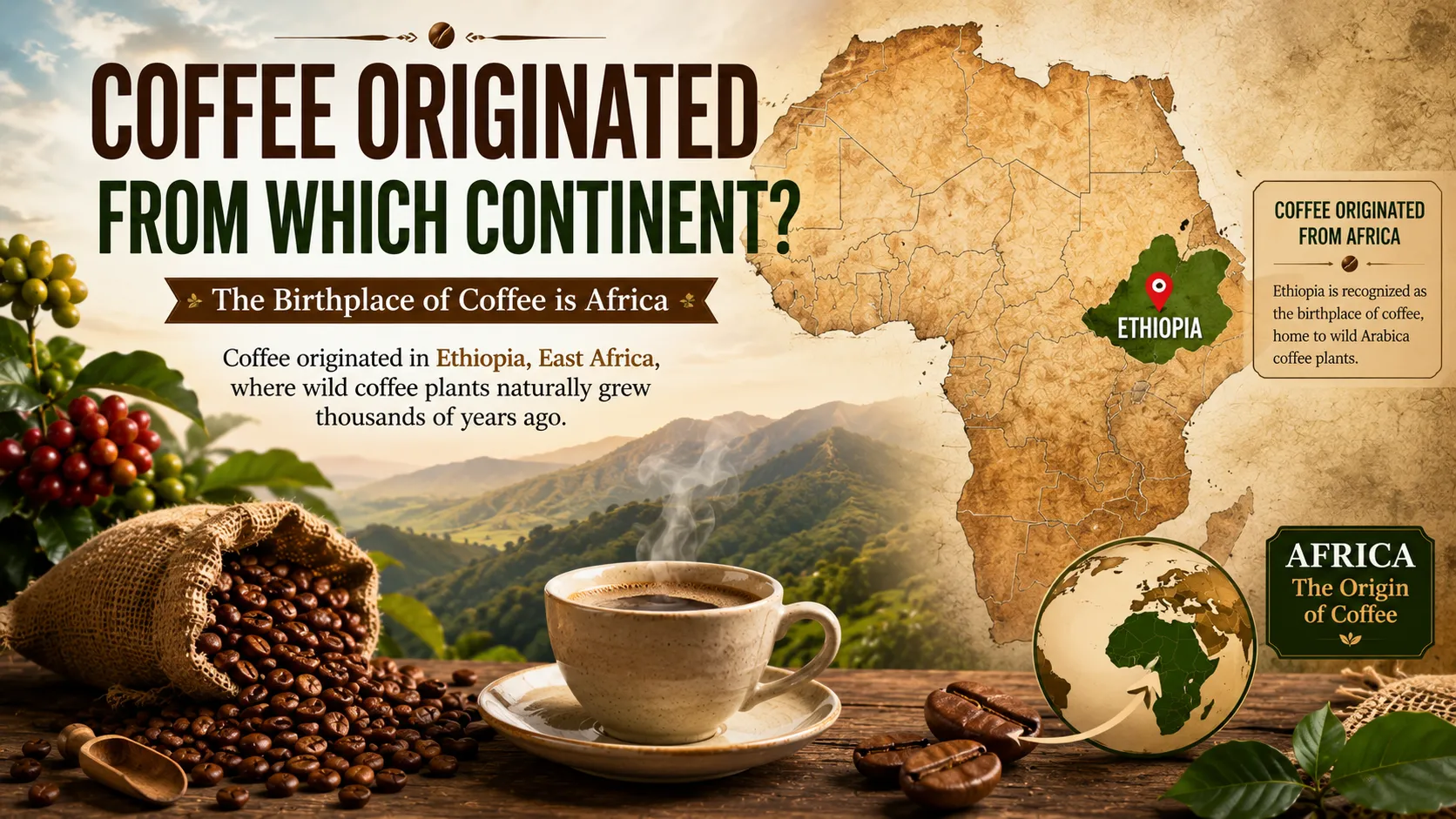
Coffee originated in Africa, specifically in the highland forests of Ethiopia. Most historians agree that Ethiopia is the birthplace of coffee because it is home to wild Arabica coffee plants, the oldest naturally occurring coffee species known today.
The country’s unique climate, high elevations, and fertile volcanic soil created the perfect environment for coffee to grow naturally. Even today, Ethiopia produces some of the world’s most distinctive coffee varieties, known for their floral aromas and fruity flavors.
Although Ethiopia is recognized as coffee’s birthplace, the drink we know today evolved after coffee reached neighboring Yemen, where cultivation and roasting methods became more organized.
The History of Coffee
The history of coffee spans more than a thousand years and reflects how one simple plant transformed into a global cultural phenomenon.
According to popular legend, an Ethiopian goat herder named Kaldi noticed that his goats became energetic after eating bright red berries from a particular shrub. Curious about the berries, local monks experimented with them and eventually discovered they could create a drink that helped them stay awake during long hours of prayer.
Whether this story is entirely factual or not, historians agree that coffee cultivation began in Yemen around the 15th century. From Yemen, coffee spread rapidly throughout the Arabian Peninsula, where coffee houses became important centers for conversation, learning, and trade. By the 16th century, coffee had reached Persia, Egypt, and the Ottoman Empire.
European merchants later introduced coffee to Italy, France, England, and the Netherlands. Initially viewed with skepticism, coffee soon gained widespread popularity, eventually replacing alcoholic beverages as a preferred morning drink in many regions.
As European colonial powers expanded, coffee plants were transported to Asia, Central America, South America, and the Caribbean, laying the foundation for today’s global coffee industry.
Where Does the Word Coffee Come From?
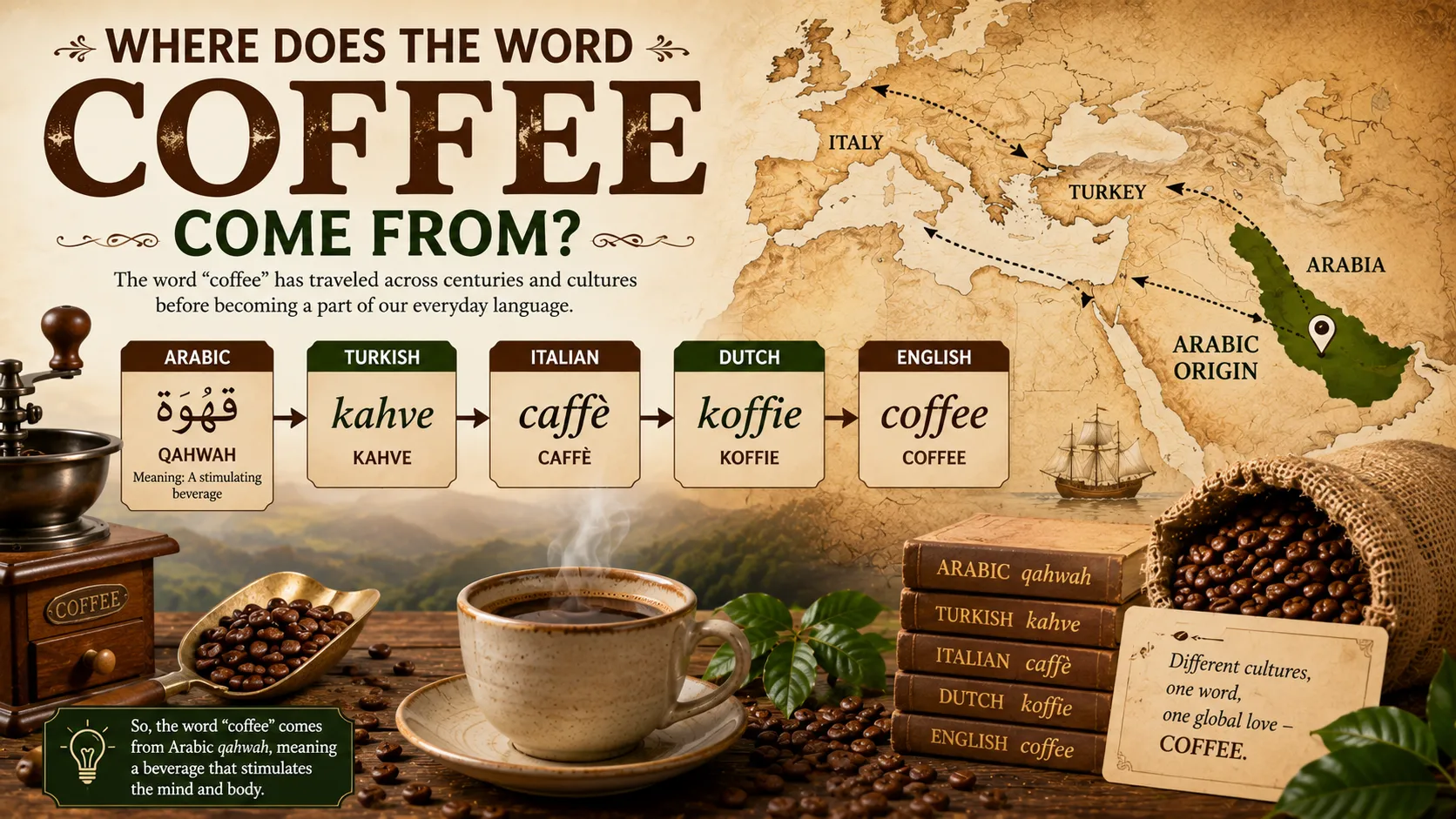
Many people also ask, where does the word coffee come from? The English word “coffee” has traveled through several languages over centuries.
It is generally believed that the word originated from the Arabic word “qahwah,” which referred to a stimulating beverage. As coffee spread through Turkey, the word evolved into the Turkish “kahve.” European traders later adapted it into the Italian “caffè,” the Dutch “koffie,” and eventually the English word “coffee.”
Although some people associate the word with the Ethiopian region of Kaffa, linguistic experts generally consider the Arabic origin to be the strongest explanation.
Where Does Coffee Come From in the World?
Today, coffee is grown in a region known as the Coffee Belt, which stretches around the equator between the Tropic of Cancer and the Tropic of Capricorn. Countries within this tropical zone provide the ideal combination of rainfall, temperature, altitude, and fertile soil required for coffee cultivation. Some of the world’s largest coffee-producing countries include:
Country | Primary Coffee Type | Known For |
Brazil | Arabica & Robusta | World’s largest coffee producer |
Vietnam | Robusta | Strong, bold-flavored coffee |
Colombia | Arabica | Smooth and balanced taste |
Ethiopia | Arabica | Birthplace of coffee with floral flavors |
Honduras | Arabica | Sweet, fruity specialty coffee |
Indonesia | Arabica & Robusta | Earthy and full-bodied coffee |
India | Arabica & Robusta | Shade-grown coffee with spice notes |
Together, these countries supply the vast majority of the coffee consumed worldwide.
Where Do Coffee Beans Come From?
Many people assume coffee beans grow like beans on plants, but that’s actually not true. Coffee beans are the seeds found inside the fruit of the coffee tree, commonly called a coffee cherry. Each cherry usually contains two seeds, which become the coffee beans we roast and brew.
The process begins when coffee trees produce fragrant white flowers. After pollination, these flowers develop into green cherries that slowly ripen into bright red or yellow fruits.
Once harvested, farmers remove the fruit, clean the seeds, dry them carefully, and prepare them for export. These green coffee beans are then roasted in different ways to create the wide variety of coffee flavors enjoyed around the world.
How Coffee Trees Grow
Coffee trees thrive under very specific environmental conditions. They generally require:
- Temperatures between 60°F and 70°F (15°C–24°C)
- Consistent rainfall throughout the year
- Rich, well-drained soil
- Moderate sunlight
- High elevations for premium Arabica varieties
A newly planted coffee tree usually takes three to four years before producing its first harvest. Once mature, a healthy coffee tree can continue producing cherries for several decades with proper care.
The Two Main Types of Coffee
Although hundreds of coffee varieties exist, nearly all commercial coffee comes from two primary species.
Feature | Arabica | Robusta |
Flavor | Sweet, smooth, complex | Strong, bold, slightly bitter |
Caffeine | Lower | Higher |
Growing Altitude | Higher elevations | Lower elevations |
Market Share | Around 60–70% | Around 30–40% |
Common Uses | Specialty coffee | Instant coffee and espresso blends |
Arabica is generally preferred for premium coffee because of its delicate flavor profile, while Robusta is valued for its stronger taste, higher caffeine content, and greater resistance to pests.
Where Does Coffee Come From in America?
Many people ask whether coffee comes from America. The answer depends on which America you’re referring to. The United States produces only a small amount of coffee, primarily in Hawaii and limited areas of California where climate conditions are suitable. However, Central America and South America are among the world’s largest coffee-producing regions.
Brazil is the world’s leading coffee producer, followed by Colombia, both of which export millions of bags of coffee every year. Countries such as Guatemala, Costa Rica, Honduras, Peru, and Mexico also contribute significantly to global coffee production. As a result, much of the coffee consumed in the United States is imported from these neighboring coffee-growing countries.
Why Coffee Grows Only in Certain Parts of the World
Coffee plants are highly sensitive to climate. They flourish in tropical environments with stable temperatures, seasonal rainfall, and fertile soils. Regions that are too cold, too dry, or experience frequent frost cannot support healthy coffee cultivation.
This is why nearly all commercial coffee is produced within the Coffee Belt, where environmental conditions remain favorable throughout the year. Farmers also consider altitude an important factor. Higher elevations often produce slower-growing coffee cherries, allowing beans to develop richer flavors and greater complexity.
From Coffee Cherry to Your Cup
The journey of coffee does not end when farmers harvest ripe coffee cherries. Several important steps take place before the beans are ready to be brewed.
After harvesting, the cherries are processed to remove the outer fruit and reveal the green coffee beans inside. Farmers then dry the beans until they reach the proper moisture level before sorting them by size and quality.
The green beans are exported to coffee roasters around the world. During roasting, heat transforms the beans by developing the aromas, flavors, and rich brown color that coffee lovers recognize. Finally, the roasted beans are ground and brewed using methods such as drip coffee, French press, espresso, or pour-over.
Each stage of this process influences the taste of the final cup, which is why coffee from different regions can have remarkably different flavor profiles.
How Coffee Processing Affects Flavor
After coffee cherries are picked, producers use different processing methods to prepare the beans. Each method creates unique flavors and characteristics. The three most common processing methods are:
- Washed Process: The fruit is removed before drying, producing a clean, bright, and balanced flavor.
- Natural Process: The cherries are dried with the fruit still attached, creating sweeter, fruitier, and fuller-bodied coffees.
- Honey Process: Part of the fruit remains during drying, resulting in a smooth coffee with balanced sweetness and acidity.
Coffee enthusiasts often notice these differences when tasting specialty coffees from different regions.
Why Do Different Countries Produce Different Tasting Coffee?
Even though coffee comes from the same plant family, beans grown in different countries rarely taste the same. Several natural factors influence flavor, including:
- Climate and average temperature
- Elevation above sea level
- Soil composition
- Annual rainfall
- Coffee variety
- Farming techniques
- Processing methods
- Roasting style
For example, Ethiopian coffees are often known for their floral and citrus notes, while Colombian coffees tend to have a smooth, balanced taste with caramel sweetness. Brazilian coffees are commonly described as nutty and chocolatey, making them popular for espresso blends.
This combination of environmental conditions and farming practices is often referred to as a coffee’s terroir, similar to how wine is influenced by where grapes are grown.
Is Coffee Still Grown Wild?
Yes, although most coffee is cultivated on farms, wild coffee plants still exist. Ethiopia remains home to natural forests where wild Arabica coffee grows.
These wild plants are valuable because they contain genetic diversity that helps scientists and farmers develop coffee varieties that are more resistant to diseases, pests, and climate change. Protecting these forests is important for the future of coffee production around the world.
How Climate Change Is Affecting Coffee Production
Coffee farming depends heavily on stable weather conditions. Rising temperatures, changing rainfall patterns, and extreme weather events are creating new challenges for coffee growers. Some of the biggest concerns include:
- Reduced suitable land for coffee farming
- Increased outbreaks of pests and plant diseases
- Lower crop yields in some regions
- Greater pressure on water resources
- More unpredictable harvest seasons
To address these challenges, many farmers are adopting sustainable farming practices, planting shade trees, improving irrigation systems, and developing climate-resilient coffee varieties.
Why Sustainability Matters in Coffee Farming
Modern coffee consumers are increasingly interested in how their coffee is produced. Sustainable coffee farming focuses on protecting the environment while supporting farming communities and maintaining high-quality production.
Many coffee producers now follow practices such as conserving water, reducing chemical use, preserving forests, and ensuring fair working conditions for farm workers.
Certifications such as Fair Trade, Rainforest Alliance, and Organic help consumers identify coffee produced under recognized environmental and social standards. Supporting sustainably produced coffee contributes to the long-term future of the global coffee industry.
Interesting Facts About Coffee
Coffee has one of the richest histories of any beverage in the world. Here are a few fascinating facts:
- Ethiopia is widely recognized as the birthplace of coffee.
- Brazil has been the world’s largest coffee producer for more than 150 years.
- Coffee is one of the most traded agricultural commodities globally.
- More than 70 countries grow coffee commercially.
- Coffee trees can continue producing fruit for 30 years or longer with proper care.
- A single coffee cherry usually contains two coffee beans.
- Specialty coffee is one of the fastest-growing segments of the coffee industry.
Related Coffee Topics You May Like
Frequently Asked Questions
Where does coffee come from originally?
Coffee originally comes from the highland forests of Ethiopia in East Africa. Wild Arabica coffee plants naturally grew there before coffee cultivation spread to Yemen and later throughout the world.
Where does the word coffee come from?
The word “coffee” is believed to come from the Arabic word qahwah, which later became kahve in Turkish before evolving into the English word “coffee.”
Where do coffee beans come from?
Coffee beans are actually the seeds found inside the fruit of the coffee tree, known as coffee cherries.
Where does coffee come from in America?
Most coffee consumed in the United States is imported from countries such as Brazil, Colombia, Guatemala, Honduras, Costa Rica, and Mexico. Domestic production is limited mainly to Hawaii and small areas of California.
Which continent did coffee originate from?
Coffee originated in Africa, specifically in Ethiopia, where wild Arabica coffee plants still grow today.
Which country produces the most coffee?
Brazil is the largest coffee producer in the world, supplying approximately one-third of the world’s coffee production.
Why is coffee grown near the equator?
Coffee requires warm temperatures, consistent rainfall, fertile soil, and frost-free conditions. These environmental factors are found within the tropical region known as the Coffee Belt.
Conclusion
Understanding where does coffee come from reveals that every cup of coffee has an extraordinary journey. From the ancient forests of Ethiopia to coffee farms across Latin America, Africa, and Asia, coffee has become one of the world’s most valued agricultural products.
The history of coffee shows how a simple plant evolved into a global tradition enjoyed by millions every day. Whether you’re curious about where the word coffee comes from, where coffee beans come from, or where coffee comes from in America, the answer highlights centuries of exploration, trade, and innovation.
Today, countries across the Coffee Belt continue to produce exceptional coffees, each offering unique flavors shaped by climate, altitude, and farming practices. By learning about coffee’s origins and supporting responsibly grown coffee, consumers can better appreciate the people, cultures, and natural environments behind every cup.
Whether you’re brewing coffee at home, exploring specialty roasts, or simply enjoying your daily morning cup, knowing its remarkable story adds a new level of appreciation to one of the world’s favorite beverages.