
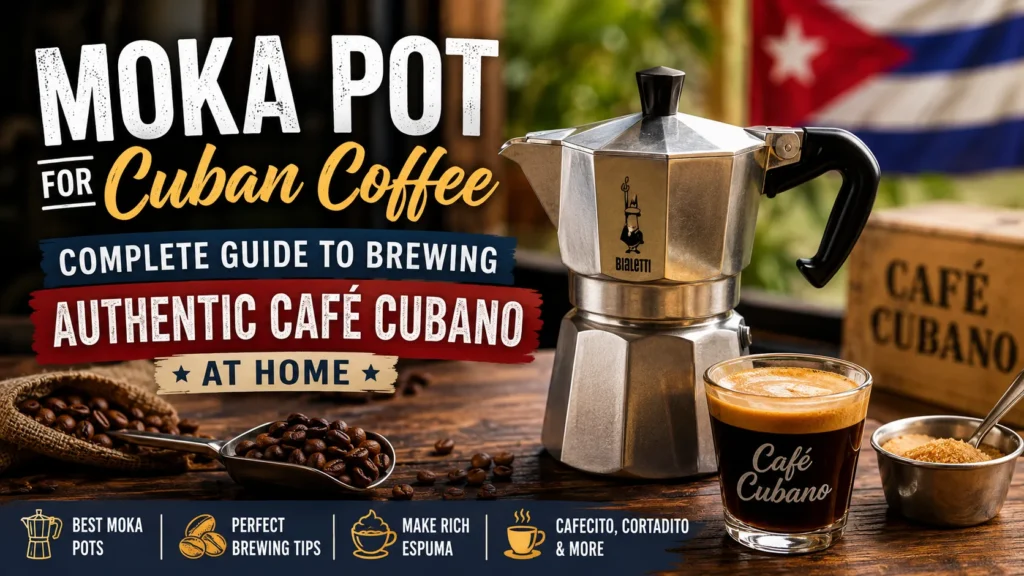
If you want to make authentic Cuban coffee at home, choosing the right moka pot for Cuban coffee is one of the most important decisions you can make. For generations, Cuban families have relied on moka pots to brew strong, concentrated coffee that forms the foundation of traditional Cafe Cubano.
While espresso machines are common in many coffee shops today, the moka pot remains deeply connected to Cuban coffee culture because it produces the bold flavor needed for creating the signature sweet foam known as espuma.
In the United States, interest in Cuban-style coffee continues to grow as more coffee lovers discover its rich taste, cultural significance, and unique preparation method.
Whether you are completely new to Cuban coffee brewing or looking to improve your technique, understanding how a moka pot works, how to create proper espuma, and how to choose the best brewer can help you achieve authentic results at home.
This guide covers everything you need to know about using a moka pot for Cuban coffee, including brewing methods, coffee selection, moka pot types, brewing science, and expert tips for producing a better cup every time.
Quick Answer: What Is the Best Moka Pot for Cuban Coffee?
A traditional aluminum moka pot, such as the Bialetti Moka Express, is often considered one of the best choices for Cuban coffee because it produces the concentrated brew needed for authentic Café Cubano and traditional espuma. Its proven design, consistent extraction, affordability, and long history in Cuban households make it a favorite among coffee enthusiasts.
For induction cooktops or modern kitchens, stainless steel moka pots can also produce excellent results while offering greater durability and compatibility with more cooking surfaces.
What Is a Moka Pot for Cuban Coffee?
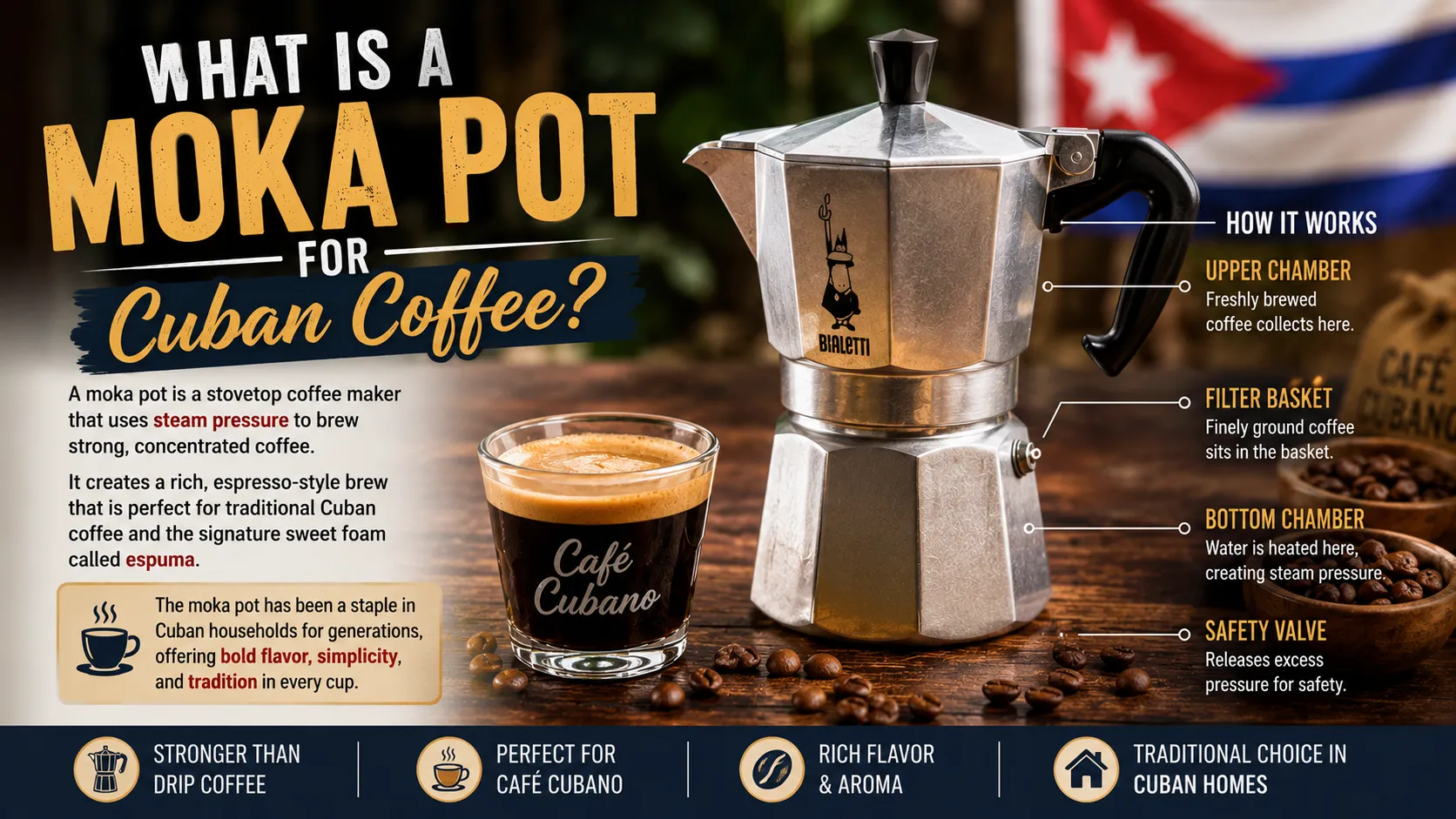
A moka pot is a stovetop coffee brewer that uses steam pressure to push hot water through finely ground coffee. The result is a concentrated coffee that is stronger than standard drip coffee and shares some characteristics with espresso.
For Cuban coffee preparation, this concentrated brew is essential. Traditional Cafe Cubano relies on strong coffee that can be mixed with sugar to create espuma, a sweet and creamy foam that defines the drink.
Unlike drip coffee makers that rely solely on gravity, moka pots use pressure brewing to extract more coffee oils, aromas, and dissolved flavor compounds. This creates the bold taste profile that Cuban coffee is known for.
The moka pot has been a staple in Cuban households for decades because it offers an affordable way to brew strong coffee without requiring a commercial espresso machine.
Why Is a Moka Pot Traditionally Used for Cuban Coffee?
The moka pot became popular throughout Cuba because it provided an accessible way to produce rich, concentrated coffee at home. Over time, it became closely associated with daily Cuban coffee rituals and family gatherings.
Traditional Cuban coffee requires a stronger brew than standard coffee makers can typically provide. Because a moka pot produces concentrated coffee with a rich body and intense aroma, it became the natural choice for preparing Café Cubano.
Many Cuban families still use moka pots today, not only because of the flavor they produce but also because of the cultural tradition attached to the brewing process. In many homes, preparing coffee is a social activity that brings family members and friends together.
How Does a Moka Pot Work?
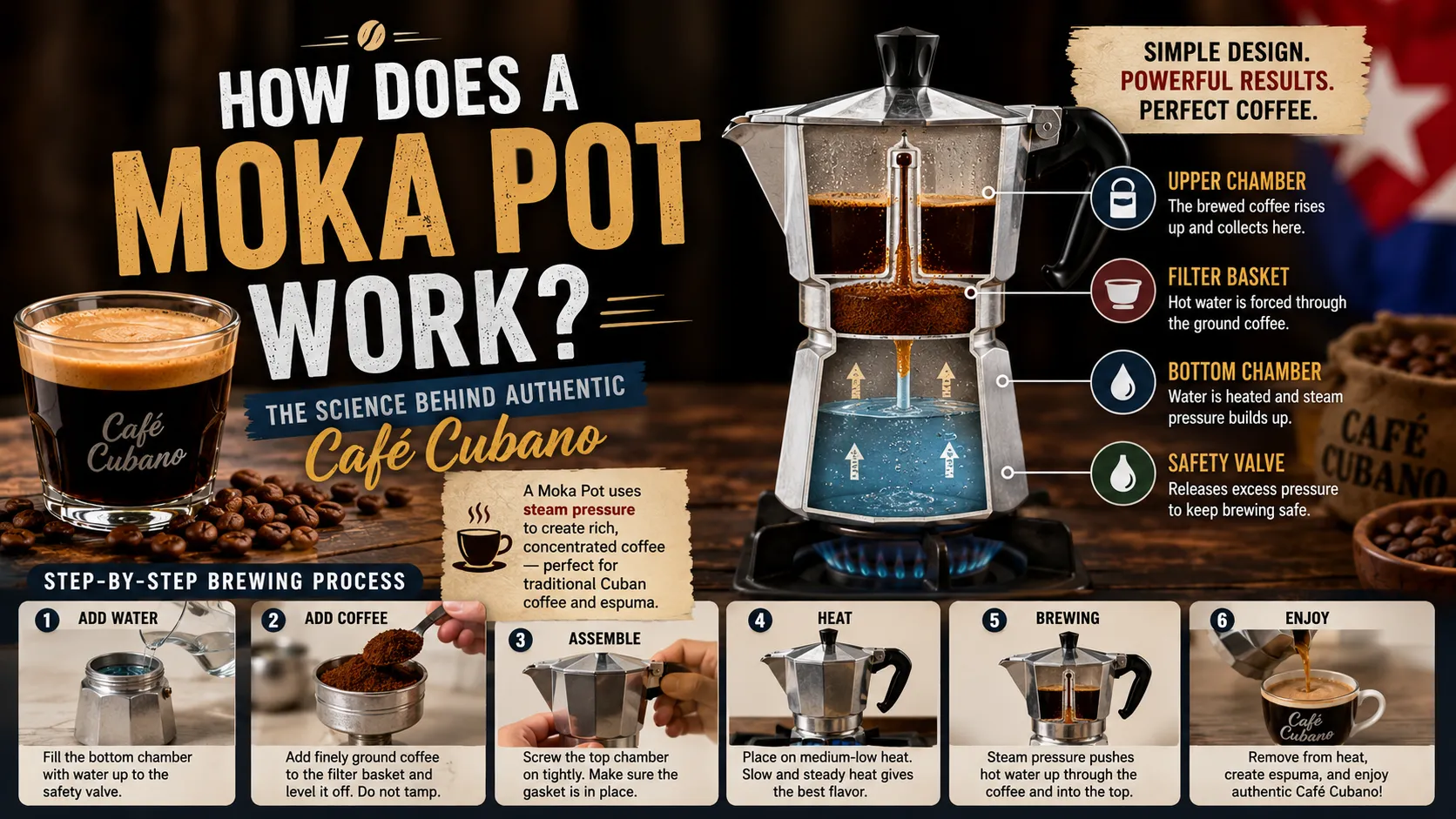
Understanding how a moka pot functions can help you improve your brewing results. A moka pot consists of three primary chambers. Water is placed in the lower chamber, ground coffee is added to the filter basket in the middle section, and brewed coffee collects in the upper chamber.
As the water heats, steam pressure develops inside the lower chamber. This pressure forces hot water upward through the coffee bed and into the top chamber, where the finished coffee is collected.
Main Components of a Moka Pot
Component | Purpose |
Bottom Chamber | Holds brewing water |
Filter Basket | Contains coffee grounds |
Upper Chamber | Collects brewed coffee |
Safety Valve | Releases excess pressure |
Gasket Seal | Creates an airtight seal |
This simple yet effective design has remained largely unchanged for decades because it consistently produces strong and flavorful coffee.
Why Does a Moka Pot Create the Right Coffee for Cafe Cubano?
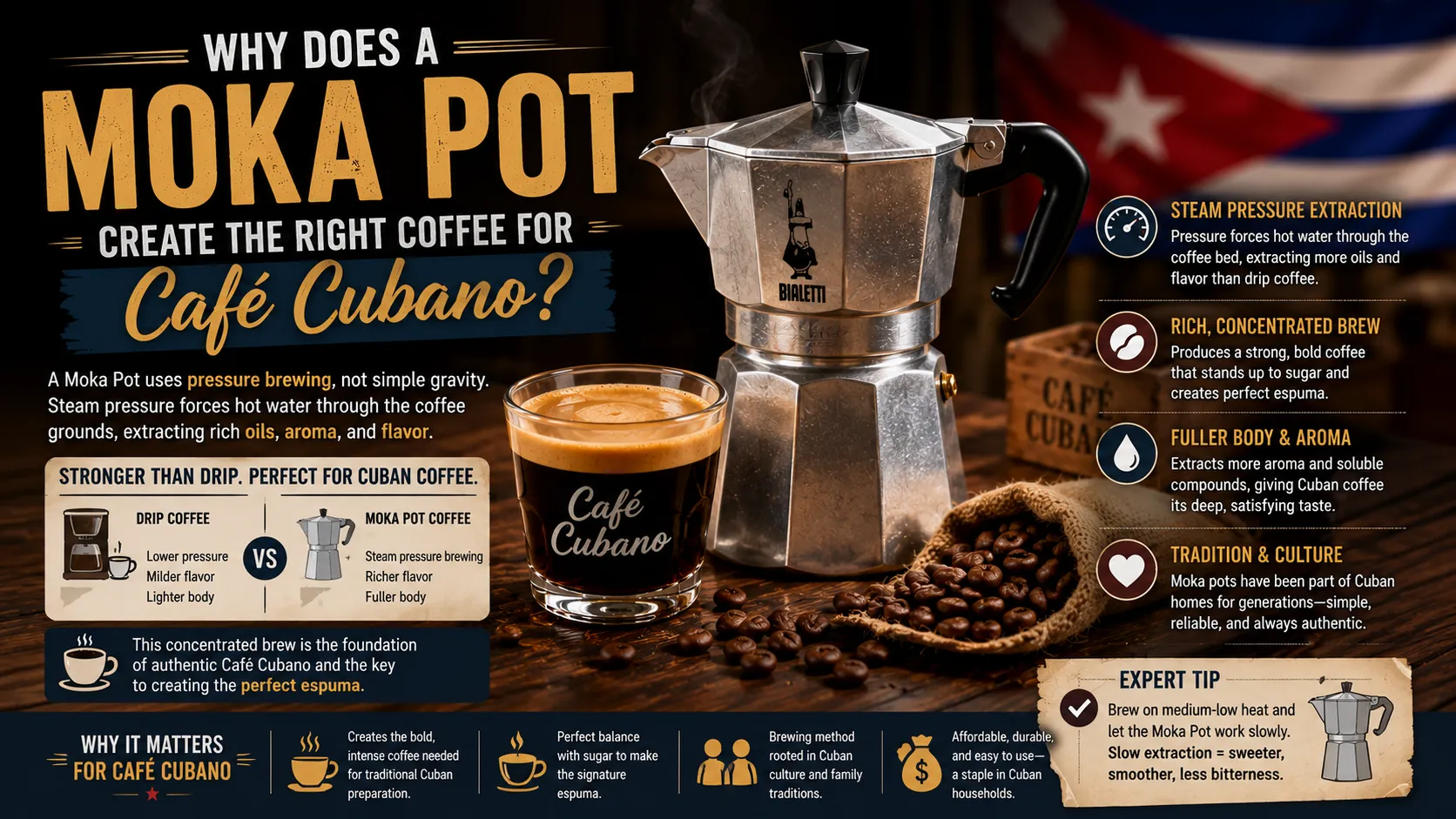
One reason the moka pot works so well for Cuban coffee is its brewing method. Unlike drip coffee makers, which use gravity alone, a moka pot uses pressure brewing. During the brewing process, steam pressure pushes water through the coffee grounds, extracting oils, aromas, and soluble compounds more effectively.
Although a moka pot does not produce the same pressure as a commercial espresso machine, it creates coffee that is significantly stronger than drip coffee and ideal for traditional Cuban coffee preparation. The resulting brew has enough body and intensity to balance the sweetness of espuma without becoming diluted or weak.
How to Use Moka Pot for Cuban Coffee
Many people searching for How to use moka pot for Cuban coffee are looking for a method that closely follows traditional Cuban preparation. The process begins by filling the lower chamber with filtered water up to the safety valve. Fresh coffee grounds are then added to the filter basket and leveled gently. Unlike espresso preparation, the grounds should not be tamped.
Once assembled, the moka pot should be placed on medium-low heat. Slow brewing helps promote even extraction and reduces the likelihood of bitterness.
While the coffee brews, sugar is added to a small metal cup. When the first few drops of coffee emerge, they are mixed vigorously with the sugar. This creates the light brown foam known as espuma. After brewing is complete, the remaining coffee is slowly poured into the espuma and stirred gently before serving.
In many home brewing tests, reducing the heat and allowing the moka pot to brew gradually often produces a sweeter and smoother cup with less bitterness. Fast brewing tends to overheat the coffee and can create harsh flavors.
What Coffee Beans Work Best for Cuban Coffee?
Coffee selection plays a major role in flavor development. Traditional Cuban coffee is usually made using dark roasted coffee because darker roasts provide the bold flavor necessary for balancing the sweetness of the espuma. Espresso roasts are also popular because they offer rich chocolate, caramel, and roasted flavor notes that complement Cuban coffee preparation.
Popular choices among coffee drinkers in the United States include Cafe Bustelo, Pilon, La Llave, and other espresso-style blends that produce strong, concentrated coffee. Freshly ground coffee generally delivers better aroma and flavor than pre-ground coffee because more volatile compounds remain intact until brewing.
What Grind Size Is Best for Cuban Coffee Brewing?
Grind size affects extraction, flavor, and brewing efficiency. Coffee that is ground too coarsely may produce weak and under-extracted coffee. Coffee that is ground too finely can restrict water flow and create excessive bitterness.
For most moka pots, a grind slightly coarser than espresso works best. This allows water to flow properly through the coffee bed while still producing a rich and concentrated brew. Consistency is equally important. Uniform coffee particles promote even extraction and help create a smoother final cup.
Best Moka Pot for Cuban Coffee Maker
Choosing the Best moka pot for Cuban coffee maker depends on your brewing preferences, kitchen setup, and budget.
Top Moka Pot Options
Moka Pot Model | Best For | Material |
Bialetti Moka Express | Traditional Cuban Coffee | Aluminum |
Grosche Milano | Beginners | Aluminum |
Primula Classic | Budget-Friendly Brewing | Aluminum |
Bialetti Venus | Induction Cooktops | Stainless Steel |
Cuisinox Roma | Long-Term Durability | Stainless Steel |
The Bialetti Moka Express remains one of the most recommended models because of its reliability, consistent brewing performance, and strong connection to traditional moka pot brewing. Its simple design has been trusted by coffee drinkers worldwide for decades and continues to be a benchmark for stovetop espresso brewers.
Should You Choose an Aluminum or Stainless Steel Moka Pot?
One of the most common debates among coffee enthusiasts involves aluminum versus stainless steel moka pots. Traditional aluminum moka pots heat quickly and have historically been used throughout Cuba. Many coffee lovers believe they provide the most authentic brewing experience because they closely resemble the brewers used by previous generations.
Stainless steel moka pots offer greater durability, corrosion resistance, and compatibility with induction cooktops. They are also easier to maintain over the long term. For coffee drinkers focused on authenticity, aluminum remains the traditional choice. For those seeking longevity and modern kitchen compatibility, stainless steel can be an excellent option.
Can You Use a Cuban Coffee Maker Electric Instead?
Interest in the Cuban coffee Maker Electric category has increased as more consumers look for convenience and portability. Electric moka pots operate similarly to stovetop versions but include built-in heating systems. This allows users to brew coffee without placing the pot on a separate burner.
Many electric coffee makers can produce concentrated coffee suitable for Cuban coffee preparation. However, traditional stovetop moka pots continue to be preferred by many enthusiasts because they preserve the traditional brewing experience.
For office environments, travel, or small apartments, electric models can provide a practical alternative while still producing coffee suitable for Cafe Cubano.
What Is Espuma and Why Is It Important?
Espuma is the sweet foam that sits on top of traditional Cuban coffee. It is created by vigorously whipping sugar together with the first few drops of freshly brewed coffee. This process transforms ordinary sugar into a creamy, caramel-colored foam that contributes both sweetness and texture.
Espuma is more than a garnish. It is considered an essential part of authentic Cuban coffee preparation because it balances the coffee’s strength and creates a smoother drinking experience. Without espuma, the beverage may still be strong coffee, but it will not fully resemble traditional Café Cubano.
Popular Cuban Coffee Drinks You Can Make with a Moka Pot
A moka pot can be used to prepare several traditional Cuban coffee beverages. Each drink begins with the same concentrated coffee base but differs in serving style and ingredients.
Drink | Description |
Cafecito | Traditional sweet Cuban coffee served in small demitasse cups |
Colada | Larger serving designed for sharing among friends and family |
Cortadito | Cuban coffee mixed with a small amount of steamed milk |
Cafe con Leche | Cuban coffee served with hot milk, often enjoyed at breakfast |
These beverages play an important role in Cuban coffee culture and highlight the versatility of moka pot brewing.
How Strong Is Cuban Coffee Compared to Regular Coffee?
Cuban coffee is generally perceived as much stronger than standard drip coffee because of its concentrated brewing method. Although serving sizes are smaller, the flavor is significantly more intense. The pressure brewing process extracts more coffee oils and flavor compounds, creating a richer body and fuller aroma.
The addition of espuma also changes the drinking experience by balancing sweetness with bold coffee flavor. For many coffee drinkers, Cuban coffee offers a stronger and more satisfying flavor profile than conventional brewed coffee.
Common Mistakes When Brewing Cuban Coffee
Even small mistakes can affect the final taste of your coffee. Using excessively high heat often causes over-extraction and bitterness. Filling the water chamber beyond the safety valve can interfere with proper pressure regulation. Using stale coffee may result in flat flavors and reduced aroma.
Poor cleaning habits can also negatively impact taste because coffee oils accumulate inside the brew chamber and filter basket over time. Another common mistake is rushing the brewing process. Slow, controlled extraction generally produces a smoother and more balanced cup.
Expert Tips for Better Cuban Coffee at Home
The difference between average and exceptional Cuban coffee often comes down to small details. Using freshly roasted coffee, filtered water, and proper grind consistency can noticeably improve flavor. Maintaining moderate heat throughout the brewing process helps prevent bitterness while preserving sweetness and aroma.
Many experienced moka pot users find that removing the brewer from the heat just before brewing finishes can help prevent overheating and preserve flavor clarity. Paying attention to these small details often leads to better results than simply purchasing more expensive equipment.
Related Coffee Topics You May Like
Frequently Asked Questions
Can I make Cuban coffee without a moka pot?
Yes. Espresso machines can also produce coffee suitable for Cuban coffee preparation, although the moka pot remains the most traditional method.
Is Cuban coffee stronger than espresso?
Espresso is generally more concentrated by volume, but Cuban coffee delivers a similarly bold flavor because of its preparation method and sweetness.
What is the best roast for Cuban coffee?
Dark roast coffee is traditionally preferred because it provides the bold flavor profile associated with Café Cubano.
What are demitasse cups?
Demitasse cups are small coffee cups traditionally used for serving concentrated coffee beverages such as Cafecito and espresso.
Can electric moka pots make authentic Cuban coffee?
Yes. Electric moka pots can produce concentrated coffee suitable for traditional Cuban coffee preparation when used correctly.
Conclusion
A moka pot for Cuban coffee remains one of the most authentic and effective ways to prepare Café Cubano at home. Its ability to produce concentrated coffee makes it ideal for creating traditional espuma and achieving the bold flavor that defines Cuban coffee culture.
From understanding How to use moka pot for Cuban coffee to selecting the Best moka pot for Cuban coffee maker, every part of the process contributes to the final experience.
Whether you choose a classic aluminum brewer, a modern stainless steel model, or a convenient Cuban coffee Maker Electric, mastering the fundamentals of Cuban coffee brewing will help you enjoy richer flavor, stronger aroma, and a deeper appreciation for one of the most beloved coffee traditions in the world.
For coffee enthusiasts across the United States, the moka pot continues to be a timeless tool for bringing authentic Cuban coffee into the home.