
Behind the Daily Brew: Why is Coffee So Expensive and Will Prices Ever Drop?
Jump To
Behind the Daily Brew: Why is Coffee So Expensive and Will Prices Ever Drop?
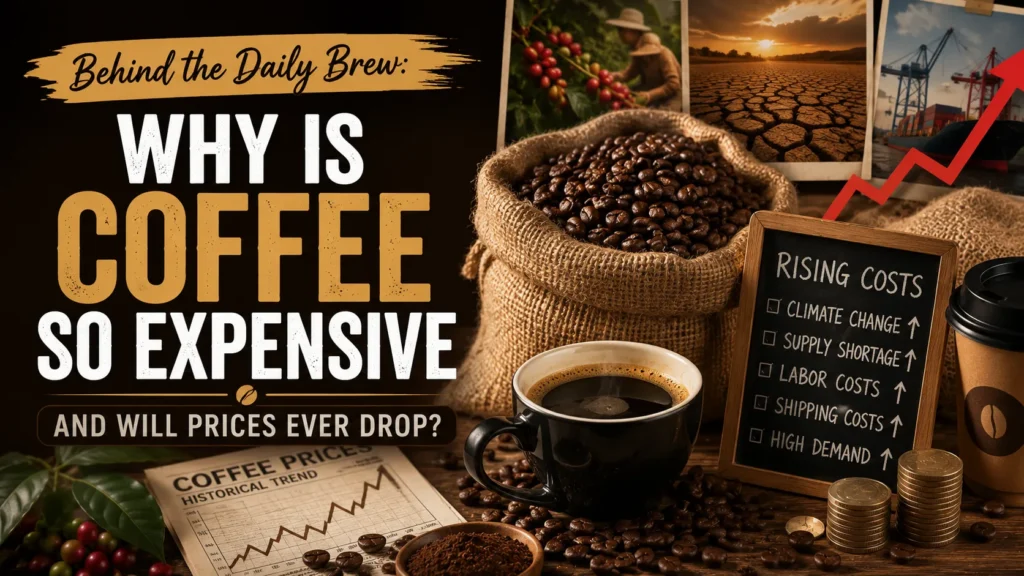
Your morning alarm rings, and you instantly crave that warm, rich cup of liquid energy. However, as you pay at your local cafe, you notice your wallet feeling lighter than ever. You are not alone in this frustration. Why is coffee so expensive? Ultimately, a perfect storm of climate change, soaring logistics costs, and intense manual labor requirements drives up the price of your daily caffeine fix.
Consequently, many coffee lovers constantly wonder why is coffee so expensive when it is just a simple bean. To answer this, we must look beyond the cardboard cup. In fact, the journey from a delicate seed in the tropics to your morning mug is incredibly complex. Each step of this global journey adds high costs to the final product.
Key Takeaways:
- Climate Disruption: Extreme weather in major coffee-producing countries like Brazil and Vietnam has severely reduced coffee crop yields.
- Labor Intensity: High-quality Arabica beans must be hand-picked individually, requiring immense manual labor and fair wages.
- Logistical Bottlenecks: Rising global shipping costs and container shortages directly inflate the price of imported beans.
- Premium Quality: The growing demand for specialty, sustainably sourced coffee naturally commands higher retail prices.
Understanding why is coffee so expensive helps consumers appreciate the massive effort behind their daily cup.
Unpacking the Global Supply Chain: Why is Coffee So Expensive?
To understand why is coffee so expensive, we must first look at the agricultural realities of coffee farming. Coffee does not grow just anywhere. Instead, it thrives exclusively in the “Bean Belt,” a narrow equatorial band around the globe. Within this region, farmers face escalating challenges that threaten their livelihoods and drive up prices.
Furthermore, the coffee plant is highly sensitive to its environment. Specifically, the premium Arabica species requires precise temperatures, abundant shade, and specific rainfall patterns to produce quality beans. Consequently, even minor environmental shifts can ruin entire harvests, immediately reducing the global supply and raising retail costs.
1. Climate Change and Crop Vulnerability
The Devastating Effects of Frost and Drought
Climate change is no longer a distant threat to agriculture. For instance, Brazil, the world’s largest coffee producer, has recently suffered from unprecedented droughts followed by historic frosts. These extreme weather events destroyed millions of coffee trees in a matter of days.
As a result, global supply plummeted, causing coffee commodity prices to spike on the stock market. Because coffee trees take several years to mature, farmers cannot simply replant and recover instantly. Therefore, the market remains highly volatile, and prices continue to climb for consumers worldwide.
The Spread of Coffee Leaf Rust
In addition to extreme weather, rising global temperatures have accelerated the spread of agricultural diseases. The most notorious of these is coffee leaf rust, a devastating fungus that suffocates the plant’s leaves. Consequently, this environmental fragility explains why is coffee so expensive in modern times.
To combat this fungus, farmers must invest heavily in organic treatments or expensive crop management systems. Alternatively, they must replace their traditional crops with disease-resistant hybrid varieties. Naturally, these necessary investments require substantial capital, which ultimately increases the retail price of your coffee.
2. The Labor-Intensive Nature of Harvesting
Why Hand-Picking Remains Crucial
Unlike wheat or corn, high-quality coffee cannot be easily harvested by large industrial machines. This is because coffee cherries on a single branch do not ripen at the same time. Therefore, workers must meticulously hand-pick only the perfectly ripe, deep-red cherries while leaving the green ones for later.
This intense manual effort is a primary reason why is coffee so expensive today. Farmworkers spend long, grueling hours navigating steep mountain slopes to harvest the beans. Consequently, the sheer volume of human labor involved in a single bag of coffee is staggering.
Moreover, hand-picking ensures that only the finest beans make it to the processing stage. While this guarantees a delicious flavor profile, it also severely limits the volume of coffee produced. As a result, the labor cost per pound of specialty coffee remains exceptionally high.
Fair Wages and Ethical Sourcing Costs
Historically, many coffee farmers worked under highly exploitative conditions. However, modern consumers increasingly demand ethically sourced products. Consequently, brands are paying higher prices to ensure farmers receive a livable wage and work in safe conditions.
Therefore, paying fair wages directly influences why is coffee so expensive at your local cafe. When you purchase Fair Trade certified coffee, a portion of the premium price goes directly to community development. This sustainable model is essential for the industry’s survival, but it does mean higher prices for the end consumer.
3. Complex Global Logistics and Shipping Hurdles
Once the coffee cherries are harvested, they must undergo complex processing, milling, and drying. After this, the green coffee beans are packed into heavy burlap sacks. Subsequently, they begin a massive logistical journey across oceans to reach roasters in North America and Europe.
When analyzing why is coffee so expensive, global shipping disruptions cannot be ignored. In recent years, ocean freight rates have fluctuated wildly due to port congestion and fuel price hikes. Because coffee is a heavy, bulky commodity, these rising shipping costs heavily impact the final retail price.
In addition, green coffee beans are highly perishable if exposed to moisture during transit. Therefore, importers must utilize specialized containers and climate-controlled shipping methods to preserve quality. These advanced shipping logistics, while necessary, add another layer of expense to the supply chain.
4. The Rise of Specialty Coffee Culture
Over the past two decades, consumer preferences have shifted dramatically. Instead of settled, pre-ground canned coffee, people now seek single-origin beans with unique flavor notes. This shift in consumer preference explains why is coffee so expensive for gourmet lovers.
Specialty coffee requires rigorous quality control at every stage. Specifically, professional tasters, known as “Q Graders,” score the coffee on a strict 100-point scale. Only coffee scoring 80 points or higher receives the coveted “specialty” designation, which commands a premium price.
Furthermore, specialty roasters buy smaller batches of beans directly from individual farms. This direct-trade model cuts out middlemen and ensures farmers get paid fairly. However, because these micro-lots are small and exclusive, the retail price reflects their rarity and superior taste.
5. Roasting, Packaging, and Retail Markups
Before coffee reaches your cup, it must undergo the delicate process of roasting. Roasting is both an art and a science, requiring expensive machinery and highly skilled operators. During this process, beans lose about 15% to 20% of their weight due to water evaporation.
As a result, packaging and roasting play a massive role in why is coffee so expensive. Roasters must charge more per pound to make up for this physical loss of product weight. Additionally, high-tech packaging with one-way degassing valves is required to keep the roasted beans fresh.
Finally, we must consider the overhead costs of operating a local coffee shop. Cafe owners face rising expenses for commercial rent, electricity, dairy products, and barista wages. Consequently, retail markup is another key factor in why is coffee so expensive when purchased by the cup.
How Consumers Can Manage Rising Coffee Costs
While learning why is coffee so expensive, you might wonder how to save money without sacrificing quality. Fortunately, there are several practical steps you can take to enjoy premium coffee on a budget.
First, consider investing in a high-quality home grinder and a simple French press or pour-over cone. By purchasing whole beans and brewing at home, you eliminate the retail markup of cafes. This simple shift can save you hundreds of dollars over the course of a year.
Second, look into coffee subscription services that deliver directly from roasters. Often, these services offer discounts on recurring orders and provide access to exclusive beans at lower prices. In addition, buying in bulk and storing your beans in airtight containers can prevent waste and save money.
Related Coffee Topics You May Like
Frequently Asked Questions About Coffee Prices
Why is coffee so expensive in 2024?
Coffee prices have risen significantly due to extreme weather events in Brazil and Vietnam, which have severely cut global supply. Additionally, rising inflation, higher shipping costs, and increased labor wages have forced roasters and cafes to raise their retail prices.
Is Arabica coffee more expensive than Robusta?
Yes, Arabica coffee is generally much more expensive than Robusta. This is because Arabica plants are more vulnerable to pests and weather, grow at higher altitudes, and must be hand-picked to ensure quality, whereas Robusta is hardier and can be harvested mechanically.
Will the price of coffee ever go down?
While commodity prices fluctuate, retail coffee prices are unlikely to drop significantly. Ongoing climate challenges, rising labor standards, and high shipping costs mean that producing high-quality coffee will remain an expensive endeavor for the foreseeable future.
Does buying Fair Trade coffee make it more expensive?
Yes, Fair Trade coffee usually costs slightly more because it guarantees a minimum price to farmers to cover sustainable production costs. This ethical pricing model is a direct factor in why is coffee so expensive, but it ensures a stable future for coffee farming communities.
Conclusion: Appreciating the Value of Your Brew
Ultimately, the question of why is coffee so expensive has a multi-layered answer. It is not simply a matter of corporate greed or cafe markups. Instead, it is the direct result of a highly complex, fragile, and labor-intensive global supply chain trying to adapt to a changing world.
The next time you sip your favorite morning brew, take a moment to appreciate the journey it took to reach you. From the steep mountain slopes of the Andes to the hot roasters in your city, hundreds of hands worked tirelessly to make that cup possible. Viewed through that lens, premium coffee is not just an expensive drink; it is an affordable luxury well worth its price.
Elevate Your Home Brewing Experience
Now that you know why is coffee so expensive, it is time to make every single drop count. Stop wasting money on stale store-bought beans and discover the incredible taste of freshly roasted, ethically sourced specialty coffee delivered right to your door.

Moses Anthony
Moses Anthony is a coffee enthusiast and home brewing specialist with over 7 years of hands-on experience testing coffee beans, espresso machines, grinders, and brewing methods. He has spent years experimenting with pour-over, French press, drip coffee, and espresso to help everyday coffee drinkers brew better coffee at home.At Best Coffee Guide, Moses focuses on practical brewing tips, honest product comparisons, and beginner-friendly coffee education based on real testing and research. His goal is to simplify coffee brewing and help readers make better choices with confidence.
How to Make Coffee Easy: Effortless Tips for Barista‑level Brew at Home
September 17, 2026
No Comments
Read More » Mastering the Art: How to Make Coffee Darker for a Richer, Bold Brew
September 16, 2026
No Comments
Read More » 
How to Make Coffee Dip: Easy Steps to Create a Rich, Coffee-infused Spread
September 15, 2026
No Comments
Read More » Latest Pots
Imagine waking up, craving a rich cup, but feeling overwhelmed by complicated machines and vague recipes. You want great coffee without the fuss, and you deserve a method that works every single time. This guide shows you exactly how to make coffee easy, turning morning…
Many coffee lovers crave a cup that looks as deep and intense as its flavor promises. If your brew often turns out light or washed out, you’re not alone—achieving that striking darkness involves more than just adding extra grounds. In the next few paragraphs we’ll…

Explore the world of coffee with honest reviews and practical advice. Find your perfect cup, one bean and machine at a time.
Main Menu
Top Categories
Newsletter
Sign up our newsletter to get updated information, promo or insight for free.
Copyright © 2025 Best Coffee Guide, All rights reserved.