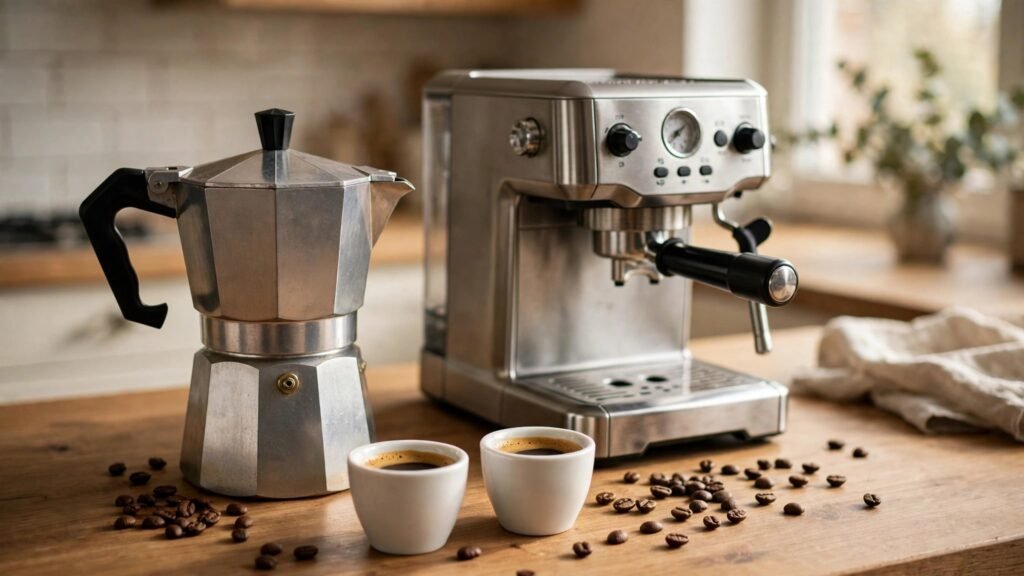
Moka Pot vs Espresso Machine: The Pressure Story (and Why It Decides Everything)
The Short Answer
A moka pot cannot make real espresso, and an espresso machine cannot match a moka pot for simple, strong coffee on a small budget. The moka pot vs espresso machine question comes down to pressure. A moka pot pushes hot water through coffee at 1–2 bar, while a pump espresso machine forces it through at 9 bar. That gap decides the crema, the body, and the price.
Choose the moka pot for bold, low-effort coffee with almost nothing to learn. Choose the espresso machine for true espresso and proper milk drinks. This guide compares the two side by side: how each one brews, how the coffee tastes, and what each one costs to own. It also settles which one makes a real latte.
What Each One Actually Makes
A moka pot brews strong, concentrated coffee on the stove. Water in the bottom chamber heats up, steam pressure pushes it through the grounds, and the brew collects in the top. The result sits between drip coffee and espresso: bold, dark, and syrupy, but not espresso.
An espresso machine brews a small, intense shot. A pump forces near-boiling water through a puck of finely ground coffee in about 25–30 seconds. The result is a short shot with a thick body and a layer of real crema on top.
The moka pot is also the traditional brewer for Cuban coffee. A cafecito is moka pot coffee whipped with sugar into espumita — proof of how strong and versatile the brew can be. See our moka pot Cuban coffee guide for the full recipe and the espumita technique.
The Pressure Story: 2 Bar vs 9 Bar
Pressure is the whole story. A moka pot works on steam pressure of about 1–2 bar — gentle, slow, and driven by the heat of your stove. An espresso machine uses a pump that holds a steady 9 bar, roughly nine times the pressure of the air around you.
That pressure gap changes everything the water does. At 9 bar, water is forced through the coffee so fast and so hard that it pulls out oils and dissolved gases, which form crema. At 1–2 bar, the water passes through more slowly and gently, and those oils mostly stay behind.
Brew time follows the same split. A moka pot takes about 3–5 minutes from the stove to the cup. An espresso shot takes 25–30 seconds once the machine is ready — though the machine itself needs time to heat up first.
Taste Side by Side
Same beans, same roast — the moka pot vs espresso machine matchup still pours two very different cups. Here is the honest side-by-side.
| Moka pot | Espresso machine | |
|---|---|---|
| Strength | Bold and concentrated | Intense and concentrated |
| Body | Full and syrupy | Thick and heavy |
| Bitterness risk | Higher if overheated | Lower with good technique |
| Crema | Thin foam that fades fast | Real, lasting crema |
| Best for | Black coffee, Cuban coffee | Espresso, lattes, cappuccinos |
Neither one is “better” in the abstract. The moka pot gives you a strong, dark cup with almost no learning curve. The espresso machine gives you a more layered shot — but only if your grind, dose, and tamp are right.
Crema: Real vs the Golden Foam
Crema is the reddish-gold foam on a fresh espresso shot. It forms when 9 bar of pressure forces dissolved carbon dioxide out of the coffee, trapping tiny bubbles in coffee oils. It lasts for a minute or two and carries much of the shot’s aroma.
A moka pot makes something that looks similar — a thin golden foam that appears as the brew rises. It is not crema. It forms at low pressure, has no real body, and fades in seconds. It still tastes fine, but it is not the same thing.
This is the myth to drop: “moka pot espresso” is not a real thing. Moka pot coffee is its own drink — strong, honest, and enjoyable — and calling it espresso only sets up a comparison it cannot win.
What It Costs to Own
A moka pot is one of the cheapest ways into strong coffee. You buy the pot, and that is nearly the whole cost: no electricity, no pump, and no grinder required if you buy pre-ground coffee. A basic pot can last for years with nothing more than a rinse after each use.
An espresso machine is a bigger commitment in every sense. The machine itself costs several times more than a moka pot, and most home setups also need a grinder that can grind fine enough for espresso. Then there is upkeep: descaling, cleaning, and the occasional part.
The gap is not just the machine. It is the whole setup around it. If you are weighing the investment, our guide to the best espresso machines lays out what the extra money actually buys.
Milk Drinks: Which One Makes a Real Latte?
A latte needs espresso and steamed milk. An espresso machine does both: it pulls the shot and steams the milk with the same boiler. The result is a balanced drink with real microfoam and a clear coffee flavour underneath.
A moka pot can only do half the job. It brews strong coffee that stands up well to milk — café con leche, the Cuban breakfast drink, is exactly this. The milk has to be heated and frothed separately, and the result is closer to a strong milky coffee than a latte.
The verdict is simple: if milk drinks are your daily habit, the espresso machine earns its keep. If you drink your coffee black or with a splash of milk, the moka pot covers you.
Effort and Everyday Use
The moka pot asks for attention, not skill. Fill the water to just below the safety valve, fill the basket and level the grounds without tamping, then watch it on medium-low heat. Pull it off the stove the moment the coffee turns pale and starts to gurgle — the last sputtering is the bitter part.
The espresso machine asks for skill, not attention. Once you learn the grind, dose, and tamp, the shot itself is automatic. The work is in the setup and the cleaning: warming up, purging, wiping the basket, and keeping the machine descaled.
Morning routine, honestly: the moka pot takes a few minutes of watching the stove. The espresso machine takes a few minutes of prep and cleanup around a 30-second shot. Neither is hard — they just demand different kinds of effort.
Who Should Buy Which
The moka pot vs espresso machine decision depends on what you drink, not on which brewer sounds fancier.
| You… | Buy |
|---|---|
| Drink your coffee black and want it strong and simple | Moka pot |
| Love lattes and cappuccinos every day | Espresso machine |
| Want the cheapest route to strong coffee | Moka pot |
| Enjoy the ritual and want café-quality shots | Espresso machine |
| Have a tiny kitchen and no counter space | Moka pot |
And if you already own a moka pot, there is no rush to upgrade. It makes excellent coffee. Buy the espresso machine when you want true espresso and milk drinks — not because someone told you the moka pot is a lesser brewer.
The Bottom Line
A moka pot brews strong, bold coffee for very little money and very little fuss. An espresso machine brews real espresso with real crema, and it makes proper milk drinks — for a bigger price and a bigger learning curve.
Pressure is the difference: 1–2 bar of steam against 9 bar from a pump. Everything else — taste, crema, cost, milk drinks — follows from that one number. Pick the brewer that matches the coffee you actually drink every day.
Frequently Asked Questions
Can a moka pot make real espresso?
No. Real espresso needs about 9 bar of pump pressure, and a moka pot only reaches 1–2 bar of steam pressure. A moka pot brews strong, concentrated coffee, but it is a different drink — with no real crema and a lighter body than a true shot.
Does a moka pot make crema?
A moka pot makes a thin golden foam as the coffee rises, but it is not real crema. True crema forms under 9 bar of pressure and holds its structure, while moka foam fades within seconds. The coffee still tastes bold — the foam is simply not the same thing.
Is moka pot coffee stronger than espresso?
Espresso is more concentrated per sip, but a moka pot brew tastes just as bold. The moka pot uses more water, so each cup is larger and milder per ounce. Yet the dark roast and small serving make it feel every bit as strong.
Can I make a latte with a moka pot?
Not a true latte. A latte needs an espresso shot plus steamed milk with fine microfoam, and a moka pot provides neither. Hot frothed milk over strong moka coffee still tastes great. The Cuban café con leche works this way, but it is not a café latte.
Do I need a grinder for a moka pot?
No. A moka pot works well with pre-ground coffee, ground medium-fine — about the texture of table salt. Freshly ground beans taste better, and a grinder helps if you buy whole beans, but it is optional. With an espresso machine, a grinder is nearly essential, because the grind must be fine and consistent.