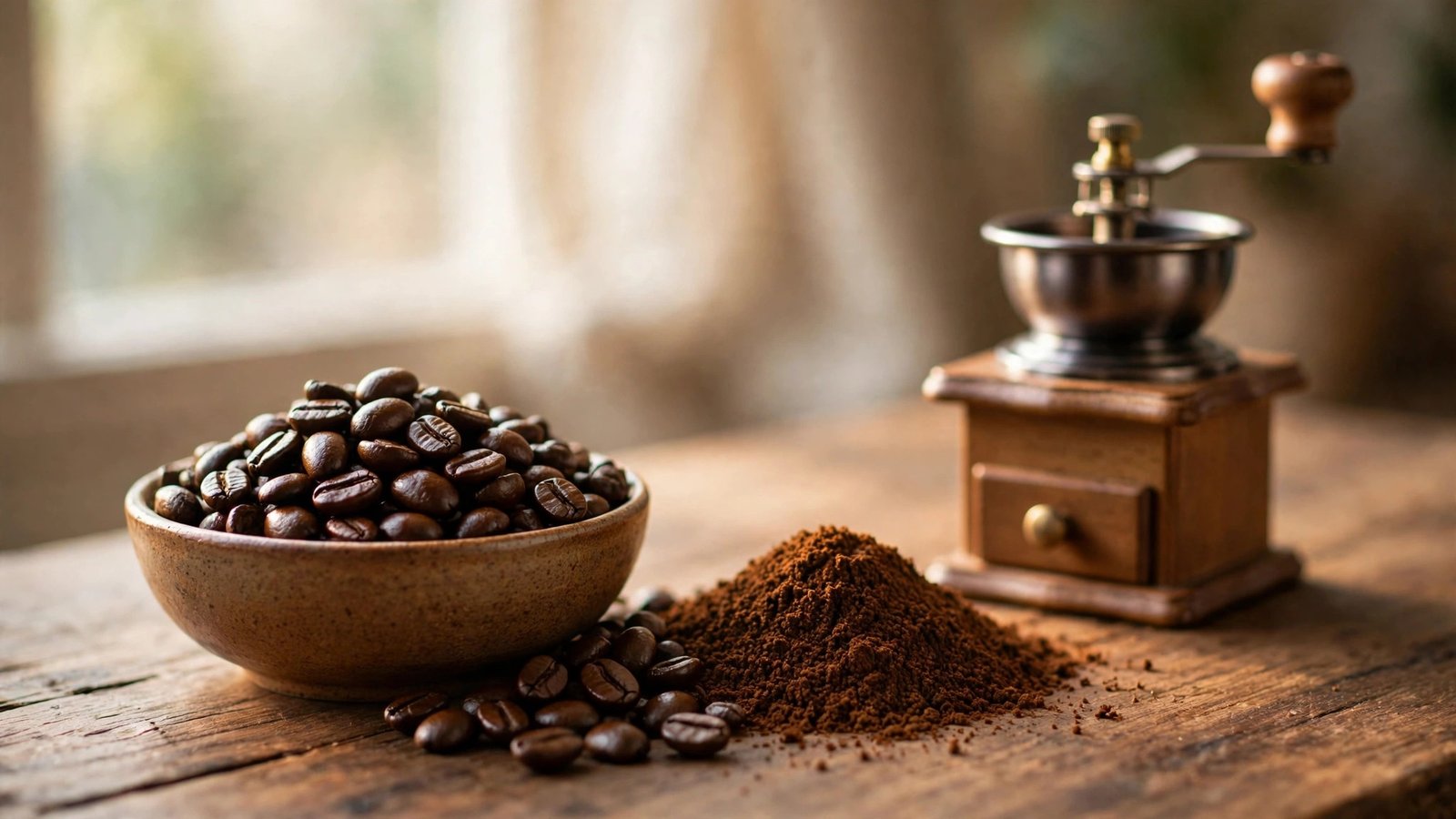
Whole Bean vs Pre-Ground Coffee: When Freshness Actually Matters (and When It Doesn’t)
Whole bean vs pre-ground coffee comes down to one thing: air. Whole beans keep their flavour locked inside for weeks, while ground coffee starts losing it within hours of grinding. If you brew daily and own even a basic grinder, whole bean wins on taste almost every time. But pre-ground is not the enemy — for some kitchens, some brewers, and some mornings, it is the right call. This guide gives you the honest answer, the freshness timeline, and the middle path most people miss.
Why Whole Bean Stays Fresh Longer
Roasted coffee is full of aromatic oils and gases that give it flavour. Grinding breaks the bean open and exposes a huge new surface to air, so oxygen gets to work on those compounds straight away. A whole bean has one small outer surface; the same beans ground for a pour-over have roughly a thousand times more surface area for air to attack. That is why ground coffee fades in days while whole beans stay lively for weeks.
The difference is not subtle, and it is not a myth invented to sell grinders. Open a bag of whole beans and a bag of pre-ground coffee on the same day, brew both a week later, and the whole-bean cup will smell stronger and taste brighter. The ground cup will taste flatter — not undrinkable, just dulled, like a song played with the treble turned down.
What actually escapes is mostly aroma. Coffee flavour is mostly smell, and the volatile compounds that carry it leave ground coffee fast. That is also why grinding right before you brew makes such a visible difference: fresh grounds bloom — they puff up and bubble when hot water hits them — while stale grounds sit flat. The bloom is the gas escaping, and gas means freshness.
The Freshness Timeline
Freshness is not a cliff; it is a slow fade. But the two forms fade at very different speeds, and the timeline below is the clearest way to see it.
| Time after roast | Whole bean (sealed, cool, dark) | Pre-ground (sealed, cool, dark) |
|---|---|---|
| First 2–4 weeks | Peak flavour — the sweet spot | Already fading fast after opening |
| About 1 month | Still good, aroma starting to soften | Noticeably stale, flat in the cup |
| About 3 months | Past its best, but drinkable | Long past its best |
| Up to a year | Unopened bags can still brew an okay cup | Not worth keeping this long |
Two things in that table deserve a closer look. First, whole beans are generally recommended within about three months of the roast date, and an unopened bag can stay usable for up to a year — the flavour will have faded, but the coffee is still fine to drink. Our coffee beans storage guide covers the full storage rules — containers, temperature, the fridge question — in detail.
Second, pre-ground coffee locks you into one grind size, which matters more than most people realise: the grind that suits a French press will choke a pour-over, and the grind that suits drip will under-extract in an espresso machine.
Taste: What You Actually Notice in the Cup
In a blind cupping, most regular coffee drinkers can tell the difference between fresh-ground whole bean and week-old pre-ground coffee. The fresh cup has a clearer aroma when you lift it, a brighter top note, and a cleaner finish. The pre-ground cup tastes muted: the same coffee, but with the edges sanded off.
That said, the gap shrinks with the brewer. A French press or a drip machine with milk and sugar hides staleness well — the bold, forgiving brew covers a lot. Pour-over and black espresso show it most, because nothing is there to mask a flat cup. So the honest rule is simple: the more delicate your brewing method, the more whole bean matters.
Roast level plays a part too. Dark roasts lose their edge a little slower than light roasts in ground form, because their flavour is mostly roast character rather than delicate origin notes. A light roast ground a week ago loses the floral and fruity notes that were the whole point of buying it. If you drink light roasts black, whole bean is not a luxury — it is the only way to get what you paid for.
The Middle Path: Grind-to-Order at the Roaster
Here is the option most guides skip: buy whole beans and have the roaster or cafe grind them for you, in the amount you will use that week. You get the freshness of a recently roasted bag and the convenience of pre-ground, without owning a grinder at all.
Ask for the grind to match your brewer — French press coarse, drip medium, pour-over medium-fine — and buy only a week or two of coffee at a time. A small bag ground fresh at the shop beats a big bag of factory-ground coffee that has sat on a shelf for months. Most good roasters will grind for free, and some will even note your brewer on the bag so the next batch comes out the same.
This middle path is also the cheapest way to test whether whole bean is worth it for you. If the shop-ground coffee tastes clearly better than your usual pre-ground, a grinder will pay for itself in flavour. If you honestly cannot tell the difference, you have just saved yourself the cost of a grinder — and you can keep buying ground with a clear conscience.
The Grinder Question: When a Cheap Grinder Makes Things Worse
Whole bean only wins if the grind is even. A cheap blade grinder chops beans into a mix of dust and chunks, and that uneven grind brews unevenly: the dust over-extracts and turns bitter while the chunks under-extract and taste sour. In that case, a bag of good pre-ground coffee — ground evenly on professional equipment — will genuinely taste better than whole beans through a bad grinder.
So the honest advice is this: if you buy whole beans, pair them with a burr grinder, even a basic hand grinder. A hand burr grinder costs little, grinds evenly, and is the single cheapest upgrade in home coffee. A blade grinder is fine for spices; for coffee, it is the one piece of gear that can make your cup worse than the bag you were trying to improve on.
If a grinder is not in the budget right now, the middle path above is your answer. Shop-ground whole beans give you even grinding and fresh roasting without buying any gear, and you can move to home grinding whenever you are ready.
When Pre-Ground Still Wins
Whole bean is better on taste, but taste is not the only thing that matters. Pre-ground wins outright in several real situations, and there is no shame in any of them.
- You have no grinder and no roaster nearby. If the only shop within reach sells pre-ground, buy the smallest bag you can and use it within a week of opening. Fresh pre-ground beats stale whole beans every time.
- Mornings are rushed. Grinding adds two minutes to a routine that is already tight. If those two minutes are the difference between brewing at home and buying a coffee out, pre-ground wins — home-brewed pre-ground still beats most cafe takeaway on price, and often on taste too.
- You brew for a crowd. A big family breakfast or an office pot needs a lot of coffee fast. Pre-ground is quicker, simpler, and nobody at a full table is cupping your coffee for origin notes.
- You travel or brew at work. A bag of pre-ground and a French press fit in a suitcase; a grinder often does not. The same goes for a desk drawer at the office.
The pattern is clear: pre-ground wins on convenience, and convenience is a real reason. Buy small, use it fast, and store it properly — and the gap to whole bean stays small.
How to Store Each One
Storage rules are the same for both forms, but they matter more for pre-ground, because it has less freshness to lose. Airtight container, cool dark cupboard, stable temperature, away from the stove and sunny windowsills. Never the fridge — it is humid and full of food smells, and beans soak both up. The freezer works for long-term storage, but only in sealed portions you thaw once and never re-freeze.
Whole beans peak in the first two to four weeks after roasting and stay good for about a month in an airtight container. Ground coffee is best within a week of opening, and it fades fast after that — seal it tight, keep it cool and dark, and do not buy more than you will use in that week.
Frozen in sealed portions, whole beans can hold up for around six months; ground coffee frozen the same way is better than ground coffee left on the counter, but it never catches up with frozen whole beans. For the full tactics — containers, portion sizes, first-in-first-out labelling — our guide on how to make coffee beans last longer walks through them step by step.
Which Should You Buy?
The right choice depends on your setup, not on what coffee snobs say. Use the table to decide in ten seconds.
| You are… | Buy… | Why |
|---|---|---|
| Daily brewer with a burr grinder | Whole bean | Best flavour, grind fresh each morning |
| Daily brewer, no grinder, roaster nearby | Whole bean, ground at the shop | Fresh roast + even grind, no gear needed |
| Daily brewer, no grinder, no roaster | Pre-ground, small bags | Use within a week; fresh pre-ground beats stale whole bean |
| Pour-over or black-coffee drinker | Whole bean | Delicate methods show staleness most |
| French press or drip with milk | Either | Forgiving brews hide the gap well |
| Rushed mornings, big households | Pre-ground | Convenience wins; buy small and use it fast |
| Travelling or brewing at work | Pre-ground | No grinder to carry, simple and quick |
If you are still unsure, run the one-week test: buy a small bag of whole beans, have the shop grind half for your brewer, and take the other half home whole. Brew both side by side for a week. Your own cup will answer the question better than any guide can — including this one.
Common Questions
Does whole bean coffee really taste better than pre-ground?
Yes, when both are equally fresh and the grind is even. Whole beans keep their aromatic compounds locked in for weeks, while ground coffee loses them within days. The difference is clearest in pour-over and black coffee, and smallest in French press or milky drinks.
How long does pre-ground coffee stay fresh?
About a week after opening, stored airtight in a cool, dark cupboard. After that it fades steadily and tastes noticeably flat by the second week. Buy small bags and use them fast — a big bag of pre-ground is the fastest route to stale coffee.
How long do whole coffee beans stay fresh?
Whole beans peak in the first two to four weeks after roasting and stay good for about a month in proper storage. They are generally best within about three months of the roast date, and an unopened bag can still brew an okay cup for up to a year.
Is a grinder worth it if I only drink one cup a day?
Yes, if you care about flavour. A hand burr grinder is cheap, grinds evenly, and turns a daily cup from flat to fresh. If the cost or the extra two minutes put you off, whole beans ground at the roaster each week get you most of the benefit with no gear.
Can I grind whole beans without a grinder?
You can, in a pinch — a rolling pin, a mortar and pestle, or short pulses in a blender will get you something brewable. But none grinds evenly, and none matches a burr grinder. Save them for a French press, where coarse and uneven matters least — a stopgap, not a routine.
The Short Answer
Whole bean vs pre-ground coffee is a freshness question, and whole bean wins it: whole beans stay lively for weeks, while ground coffee fades within days of opening. Buy whole bean if you brew daily and own — or can borrow — a burr grinder, or have a roaster grind it fresh each week.
Buy pre-ground in small bags if you have no grinder, no roaster nearby, or mornings too rushed to grind. Either way, store it airtight, cool and dark, and use it fast — fresh pre-ground beats stale whole beans every time.


