
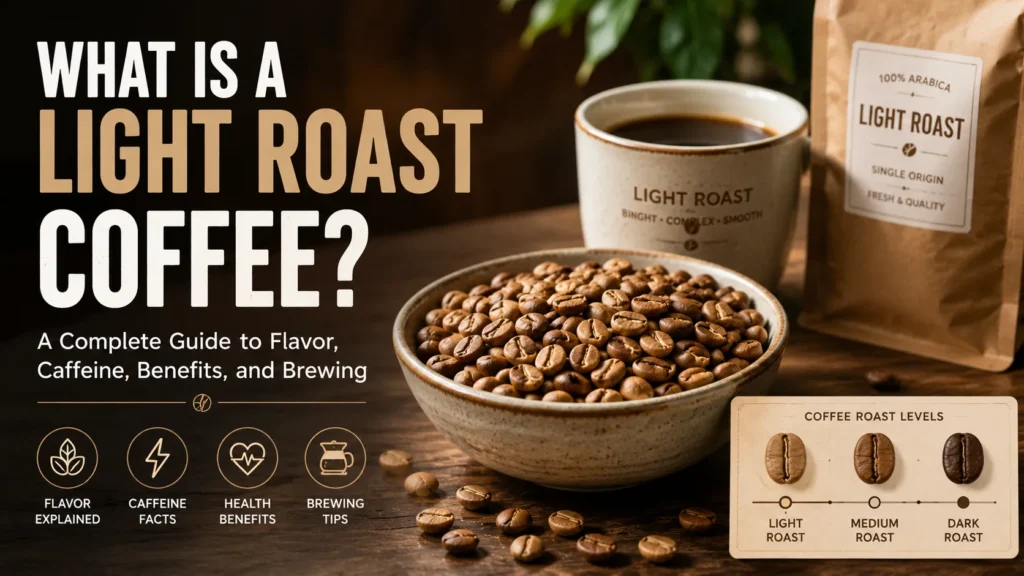
Coffee lovers often hear terms like light roast, medium roast, and dark roast, but many people still wonder, what is a light roast coffee and how it differs from other roast levels. Some assume a lighter color means weaker coffee, while others believe it contains less caffeine.
In reality, a light roast offers a unique flavor profile, preserves more of the coffee bean’s original characteristics, and often surprises people with its bright, complex taste. A light roast coffee is made by roasting green coffee beans for a shorter time at a lower final temperature than medium or dark roasts.
This shorter roasting process allows the beans to retain much of their natural acidity, fruity notes, floral aromas, and regional characteristics. Instead of tasting smoky or bittersweet, light roast coffee highlights the flavors created by the bean’s origin, growing conditions, and processing method.
In recent years, light roast coffee has become especially popular in the United States as specialty coffee shops and home brewers increasingly focus on quality, traceability, and distinctive flavor. Whether you enjoy pour-over coffee, drip coffee, or manual brewing methods, understanding light roast coffee can help you choose beans that match your personal taste.
This guide explains everything you need to know, including what is a light roast coffee beans used for, what is a light roast coffee good for, how it compares with darker roasts, and why many coffee experts consider it one of the best ways to experience premium coffee beans.
Quick Answer: What Is a Light Roast Coffee?
A light roast coffee is coffee roasted only until shortly after the first crack during the roasting process. Because it spends less time in the roaster, it retains more of the bean’s natural flavors, brighter acidity, and delicate aromas.
Light roast coffee typically has a light brown color, no oily surface, and flavor notes that reflect where the coffee was grown rather than the roasting process itself.
What Is a Light Roast Coffee?
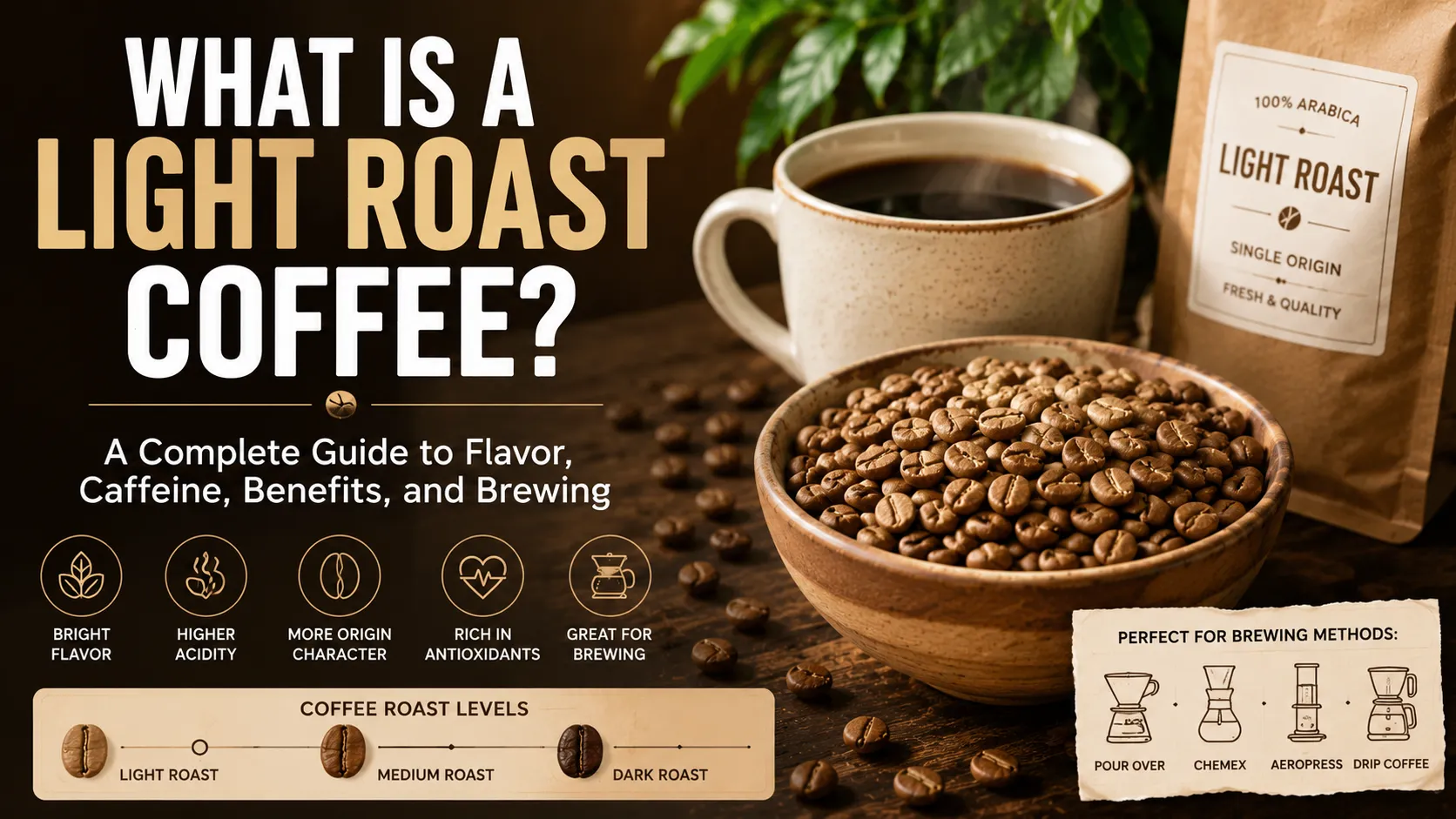
A light roast coffee refers to coffee beans roasted for the shortest amount of time among the three primary roast categories. During roasting, green coffee beans gradually change color as heat transforms their sugars, acids, and aromatic compounds. Light roasting stops early enough to preserve many of these original compounds instead of replacing them with smoky or caramelized flavors.
Unlike dark roast coffee, where roasting becomes the dominant flavor, light roast allows the bean itself to remain the star. This means two light roast coffees from different countries can taste dramatically different because each reflects its own climate, soil, altitude, and processing method.
For example, an Ethiopian light roast may offer floral aromas with citrus and berry notes, while a Colombian light roast may present balanced sweetness with hints of caramel and apple. These differences are much easier to recognize in lighter roasts than in darker ones.
This focus on origin is one of the biggest reasons specialty coffee professionals often recommend light roast coffee when evaluating bean quality.
Why Is It Called a Light Roast?
The name refers to the roasting level rather than the strength of the coffee. A light roast spends less time inside the coffee roaster, reaches a lower internal temperature, and develops fewer caramelized sugars than darker roasts. Because of this shorter roasting process, the beans remain lighter in color and preserve many of their natural compounds.
Although the roast is called “light,” the brewed coffee does not necessarily taste weak. Depending on the brewing method and coffee-to-water ratio, a light roast can produce a rich, flavorful, and satisfying cup.
How Is Light Roast Coffee Made?
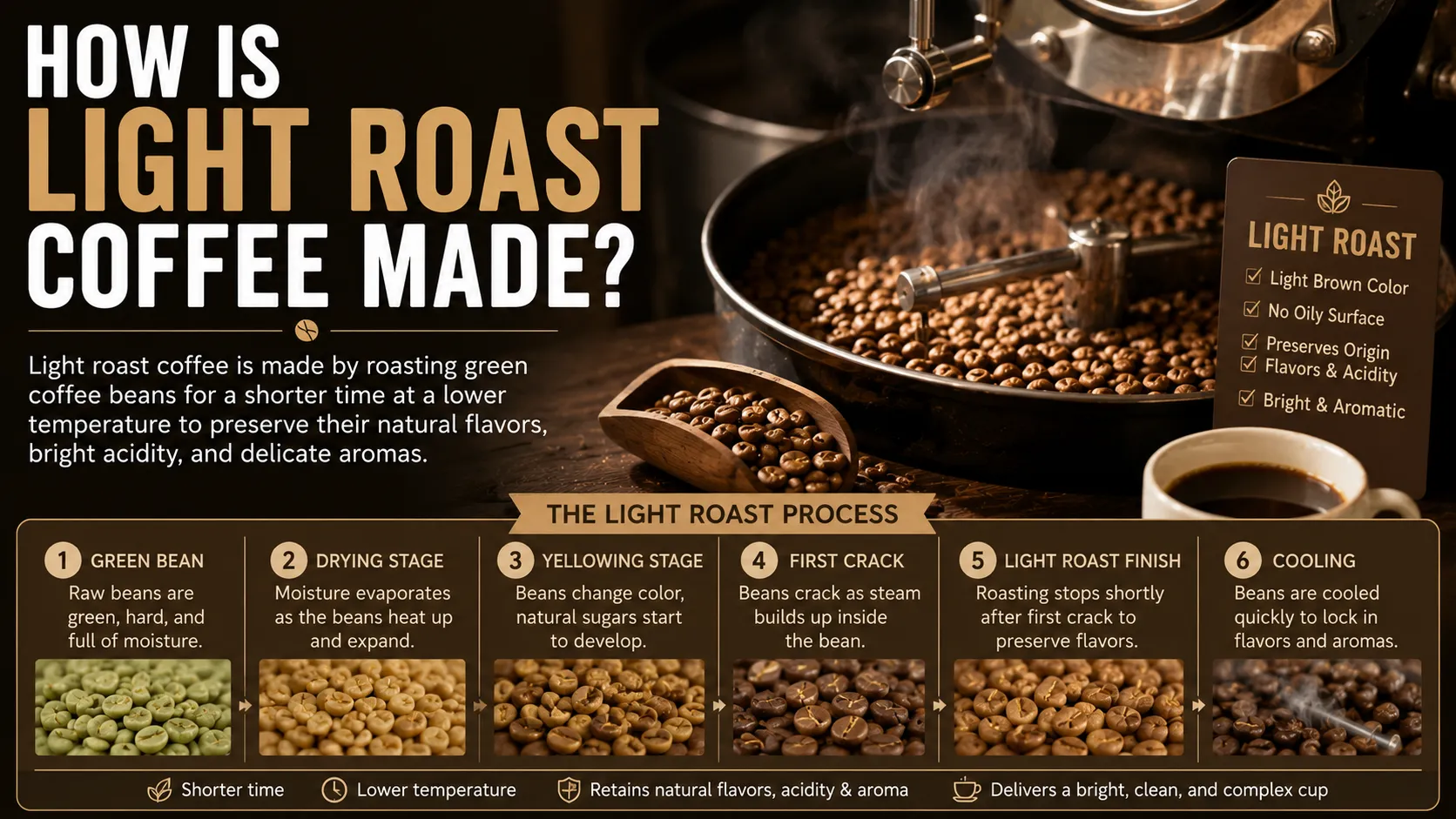
Light roast coffee begins with carefully selected green coffee beans sourced from coffee-growing regions around the world. These beans are then roasted using precise temperature control to develop flavor without overcooking the beans.
Roasters closely monitor the beans throughout the process because even a small difference in roasting time can significantly affect the final flavor. The roasting process generally follows these stages:
Roasting Stage | What Happens |
Green Bean | Fresh beans contain moisture and grassy aromas. |
Drying Stage | Moisture gradually evaporates as the beans begin to warm. |
Yellowing Stage | Natural sugars start changing, and aromas begin developing. |
First Crack | Beans expand and crack as steam pressure builds. |
Light Roast Finish | Roasting stops shortly after the first crack to preserve natural flavors. |
Stopping the roast shortly after the first crack is what creates the distinctive characteristics associated with light roast coffee. Because roasting ends relatively early, the beans usually appear:
- Light brown in color
- Dry with little or no surface oil
- Dense and firm
- Rich in natural aroma
- Bright and vibrant in flavor
What Is a Light Roast Coffee Beans Used For?
Many people ask what is a light roast coffee beans used for because they often associate certain roast levels with specific brewing methods. In reality, light roast coffee is extremely versatile, although it tends to perform especially well in brewing techniques that emphasize clarity and complexity.
Specialty coffee professionals frequently choose light roast beans for manual brewing because these methods allow subtle flavors to shine.
Light roast coffee beans are commonly used for pour-over coffee, drip coffee makers, Chemex brewing, AeroPress, siphon brewing, and cold brew. These methods preserve the coffee’s delicate acidity and layered flavor profile while allowing drinkers to appreciate the bean’s unique characteristics.
Some modern espresso bars also use light roast espresso beans to create bright, fruit-forward espresso shots with complex aromas. Although this style differs from traditional Italian espresso, it has become increasingly popular throughout the specialty coffee industry.
Light roast coffee is also widely used during coffee tasting sessions because it provides the clearest representation of the bean’s origin, processing method, and overall quality.
What Is a Light Roast Coffee Good For?
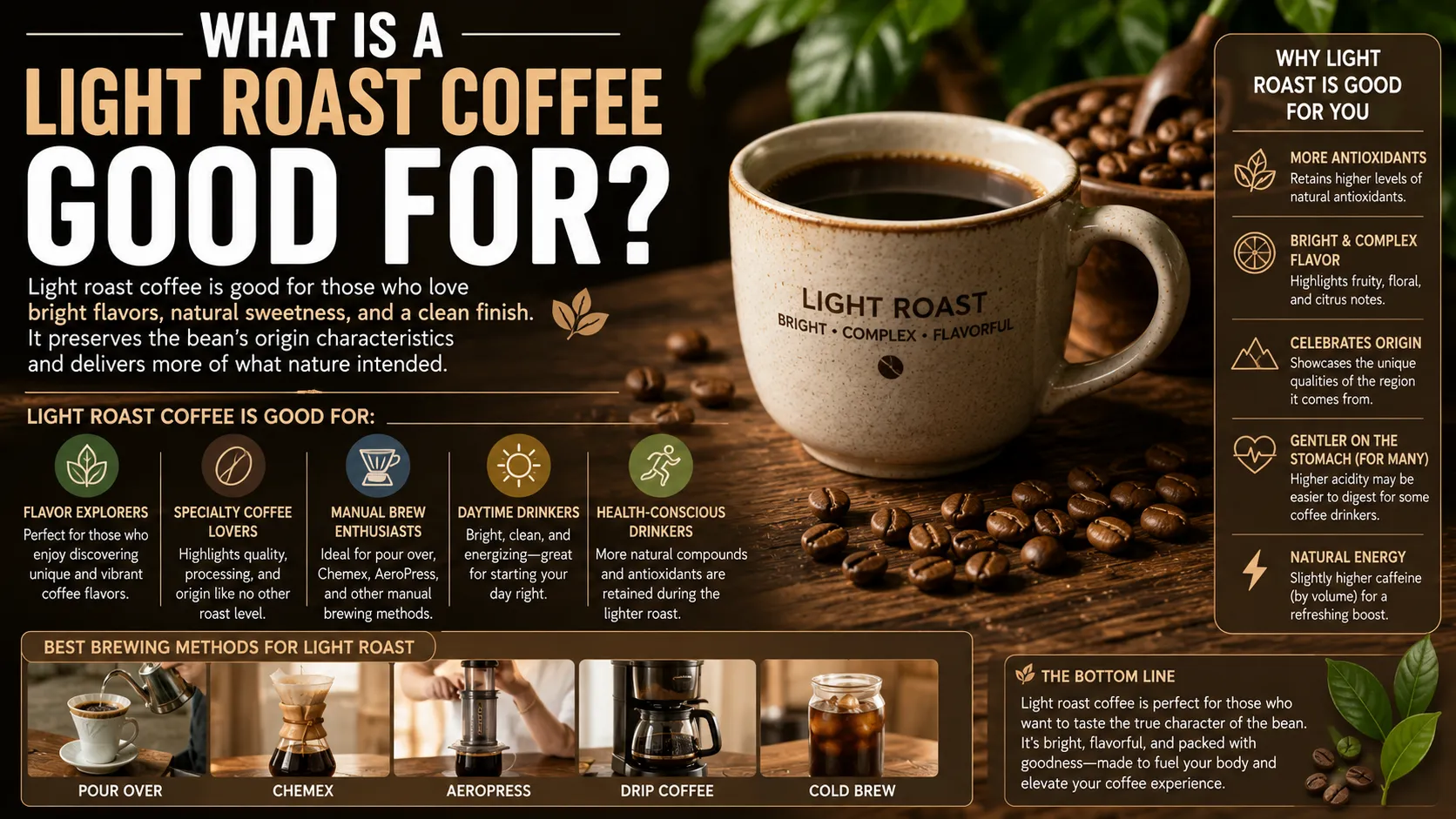
If you are wondering what is a light roast coffee good for, the answer depends on what you value most in your coffee experience.
People who enjoy complex flavors often prefer light roast because it highlights characteristics that darker roasting can hide. Instead of smoky or roasted notes, light roast coffee offers vibrant fruit flavors, floral aromas, gentle sweetness, and refreshing acidity.
From a nutritional perspective, light roast coffee also retains high levels of naturally occurring antioxidants. While all coffee contains beneficial plant compounds, lighter roasting generally preserves more chlorogenic acids than darker roasting. These compounds continue to be studied for their potential role in supporting overall health as part of a balanced diet.
Many coffee enthusiasts also appreciate light roast coffee because it delivers a cleaner finish and allows them to explore the differences between coffee-growing regions around the world. Rather than tasting similar from one bag to another, light roast coffees often provide a unique sensory experience depending on where and how the beans were grown.
What Does Light Roast Coffee Taste Like?
One of the defining features of light roast coffee is its vibrant and expressive flavor profile. Instead of emphasizing roast flavors, it highlights the bean’s natural characteristics. This creates a more dynamic cup that changes depending on the coffee’s origin, variety, altitude, and processing method.
A high-quality light roast may include tasting notes such as citrus, berries, stone fruits, honey, jasmine, chocolate, nuts, or caramel. These flavors are naturally developed during cultivation and carefully preserved through gentle roasting.
The acidity found in light roast coffee is another characteristic that often surprises new coffee drinkers. In specialty coffee, acidity does not refer to bitterness or sourness. Rather, it describes a lively brightness that gives coffee freshness and complexity, much like the pleasant acidity found in apples, oranges, or grapes.
This combination of sweetness, acidity, aroma, and origin-specific flavors is why many coffee professionals consider light roast the best way to experience exceptional coffee beans.
How Do You Choose a Good Light Roast Coffee?
Selecting a high-quality light roast begins with understanding that freshness and bean quality matter just as much as the roast level itself. When shopping for light roast coffee, look for beans that provide detailed information about their origin, roast date, and processing method.
Specialty coffee roasters often include tasting notes, farm location, altitude, and variety on the packaging because these factors influence the final flavor. Recently roasted whole beans generally deliver the best results since coffee begins losing aroma and freshness soon after grinding.
If possible, grind your beans immediately before brewing. This simple step preserves volatile aromatic compounds and produces a more flavorful cup than pre-ground coffee.
The brewing method also plays an important role. Light roast coffee often benefits from slightly hotter water and a finer grind than darker roasts because the beans are denser and require more efficient extraction.
What Is a Light Roast Coffee vs Dark Roast?
One of the most common questions among coffee drinkers is what is a light roast coffee vs dark roast. While both come from the same green coffee beans, the difference lies in how long the beans are roasted. That single factor changes the coffee’s flavor, aroma, acidity, body, appearance, and even how the bean behaves during brewing.
A light roast is designed to showcase the bean’s natural characteristics, while a dark roast develops stronger roasted flavors that often dominate the cup. Neither roast is objectively better. The right choice depends on your taste preferences, brewing method, and the kind of coffee experience you enjoy.
For example, someone who loves bright citrus notes and floral aromas may prefer a light roast, while someone who enjoys bold, smoky, chocolate-like flavors may choose a dark roast.
Light Roast vs Dark Roast: Comparison Table
Feature | Light Roast Coffee | Dark Roast Coffee |
Roast Time | Short | Long |
Bean Color | Light brown | Dark brown to almost black |
Surface | Dry with no visible oils | Oily surface |
Flavor | Fruity, floral, bright | Bold, smoky, bittersweet |
Acidity | Higher | Lower |
Body | Light to medium | Medium to full |
Origin Flavors | Highly noticeable | Less noticeable |
Aroma | Fresh and complex | Rich and roasted |
Best Brewing Methods | Pour over, Chemex, AeroPress, Drip | Espresso, French Press, Moka Pot |
Popular Among | Specialty coffee enthusiasts | Traditional coffee drinkers |
The comparison shows that roasting changes the coffee experience far beyond color alone. A light roast emphasizes the bean’s natural identity, while a dark roast highlights flavors created during roasting.
Light Roast vs Dark Roast Caffeine Content
Many coffee drinkers assume darker coffee contains more caffeine because it tastes stronger. However, this is one of the biggest myths in the coffee world. When comparing light roast vs dark roast caffeine content, the difference is actually very small.
Because light roast beans are roasted for less time, they remain slightly denser than dark roast beans. If you measure coffee using a scoop, a light roast may contain a little more caffeine because each scoop holds slightly more coffee mass. If you measure by weight, however, the caffeine content between light and dark roast is almost identical.
The stronger flavor of dark roast comes from longer roasting rather than higher caffeine levels. For everyday coffee drinkers, the brewing method, coffee-to-water ratio, and serving size have a much greater impact on caffeine intake than roast level.
Does Light Roast Give More Energy?
Many people feel that light roast provides a more energetic experience. This perception is often linked to its brighter flavor profile and the slightly higher caffeine that can occur when coffee is measured by volume. However, the actual difference is generally too small for most people to notice.
If your goal is maximum caffeine, choosing a larger serving or adjusting your brewing ratio usually has a greater effect than switching roast levels.
What Is Medium Roast Coffee?
Understanding what is medium roast coffee helps complete the picture of the three main roast categories. Medium roast sits between light and dark roast, offering a balance of natural bean flavors and roasting characteristics.
During roasting, the beans remain in the roaster longer than a light roast but are removed before developing the deep smoky flavors associated with dark roasts. This balanced approach makes medium roast one of the most popular choices in the United States because it appeals to a wide range of coffee drinkers. A medium roast typically offers:
- Balanced acidity
- Medium body
- Mild sweetness
- Smooth finish
- Gentle caramel notes
- Less fruitiness than light roast
- Less bitterness than dark roast
Many major coffee brands sell medium roast because it works well with drip coffee makers, automatic machines, espresso, and single-serve brewing systems. For people trying specialty coffee for the first time, medium roast often serves as an excellent starting point before exploring lighter or darker roast profiles.
What Is Dark Roast Coffee?
To fully understand light roast coffee, it’s important to know what is dark roast coffee. Dark roast coffee is produced by roasting beans for a longer period and at higher temperatures. During this process, many of the bean’s original flavors become less noticeable as roasting creates richer, darker, and more intense characteristics.
Dark roast beans are easy to recognize because they usually have a dark brown appearance with a shiny, oily surface. The oils naturally move to the outside of the bean as roasting progresses. Dark roast coffee is often described as having flavors such as:
- Dark chocolate
- Toasted nuts
- Molasses
- Caramelized sugar
- Cocoa
- Smoky notes
- Roasted finish
Many traditional espresso blends use dark roast because it produces a bold, full-bodied cup with lower perceived acidity. Although dark roast has been popular for decades, the rise of specialty coffee has encouraged many consumers to explore lighter roasts that better showcase the coffee bean’s origin.
Dark vs Light Roast Coffee Health Benefits
Another frequent question is dark vs light roast coffee health benefits. Both light and dark roast coffee can be part of a healthy lifestyle when consumed in moderation and without excessive added sugar or high-calorie creamers. They both contain antioxidants, naturally occurring plant compounds, and caffeine.
However, the roasting process changes the composition of these compounds. Light roast coffee generally retains higher amounts of chlorogenic acids because these natural antioxidants break down gradually as roasting continues. Researchers continue studying chlorogenic acids for their potential role in supporting overall wellness.
Dark roast coffee, on the other hand, develops different antioxidant compounds during roasting. While it may contain lower levels of chlorogenic acids, it still provides beneficial antioxidant activity through other roasting byproducts.
Neither roast should be viewed as a miracle health food. Instead, both can fit into a balanced diet alongside healthy eating habits and regular physical activity.
The healthiest choice ultimately depends on how you prepare your coffee. Black coffee or coffee with minimal added sugar is generally a better option than drinks loaded with flavored syrups, whipped cream, and sweetened toppings.
Which Roast Is Better for Sensitive Stomachs?
Some people find dark roast easier to drink because its lower perceived acidity creates a smoother flavor. However, flavor acidity and stomach irritation are not always the same thing. Individual tolerance varies widely, and factors such as brewing method, serving size, coffee quality, and personal digestive sensitivity often play a larger role than roast level alone.
If you have digestive concerns, experimenting with different brewing methods and drinking coffee with food may be more helpful than choosing a roast based solely on acidity.
Is Light Roast Better Than Dark Roast?
There is no universal winner. The better roast depends entirely on what you expect from your coffee. If you appreciate bright, complex flavors that reflect the coffee’s origin, light roast is likely the better choice. If you prefer bold, rich, smoky flavors with a heavier body, dark roast may suit your taste.
Many experienced coffee drinkers actually enjoy both. They may brew a light roast in the morning for its vibrant character and choose a darker roast later when craving a richer, more traditional cup. Rather than asking which roast is objectively better, consider which flavor profile best matches your preferences and brewing style.
Why Do Some People Think Dark Roast Coffee Is Bad?
One of the most searched questions online is why dark roast coffee is bad. The short answer is that dark roast coffee is not inherently bad. This belief usually comes from misunderstandings about flavor, roasting, and nutrition rather than scientific evidence.
Dark roast coffee is simply roasted for a longer time, which changes its taste and chemical composition. While some natural compounds decrease during extended roasting, others are created. As a result, both light and dark roast coffees have unique characteristics and can be enjoyed as part of a balanced lifestyle.
The perception that dark roast is “bad” often comes from these situations:
- Over-roasting: Low-quality beans may be roasted darker to mask defects or inconsistent flavors.
- Burnt taste: Poor roasting techniques can produce unpleasant burnt or ashy flavors that many people confuse with all dark roasts.
- Added ingredients: High-calorie creamers, flavored syrups, and excessive sugar, not the coffee itself, are often responsible for unhealthy coffee drinks.
- Personal preference: Some people simply enjoy the brighter, fruitier taste of light roast more than the bold intensity of dark roast.
A professionally roasted dark coffee made from high-quality beans can still deliver an excellent coffee experience. The key is buying from reputable coffee roasters that focus on quality and freshness rather than roasting beans until they lose their original character.
Which Brewing Methods Work Best for Light Roast Coffee?
Because light roast beans are denser than darker roasts, they often require a slightly different brewing approach to fully develop their flavors. Proper extraction helps reveal the sweetness, acidity, and complexity that make light roast coffee so popular among specialty coffee enthusiasts.
Pour Over
Pour-over brewing is one of the best ways to enjoy light roast coffee because it produces a clean, crisp cup that highlights delicate tasting notes. The slower extraction allows floral aromas, citrus flavors, and natural sweetness to shine.
Chemex
The Chemex uses a thicker paper filter that removes more coffee oils while producing an exceptionally clean cup. This brewing method is ideal for showcasing coffees with fruity and floral flavor profiles.
AeroPress
The AeroPress offers excellent versatility. By adjusting brewing time and grind size, users can produce anything from a bright, tea-like coffee to a richer, fuller-bodied cup while still preserving the bean’s unique characteristics.
Automatic Drip Coffee Maker
Modern drip coffee makers with proper temperature control can produce excellent light roast coffee. Using freshly ground beans and clean water makes a noticeable difference in flavor quality.
Cold Brew
Although many people associate cold brew with darker roasts, light roast beans create a refreshing cold brew with gentle sweetness, vibrant fruit notes, and a smooth finish that differs from the traditional chocolate-heavy profile.
How Can You Brew Better Light Roast Coffee at Home?
Great coffee starts long before the brewing process. Choosing quality beans, storing them correctly, and using the right equipment all contribute to a better cup.
Freshly roasted whole beans usually produce the best flavor because they retain more aromatic compounds than pre-ground coffee. Grinding just before brewing helps preserve these delicate aromas and creates a fresher, more flavorful experience.
Water quality is equally important. Since coffee is mostly water, filtered water without strong odors or mineral imbalances allows the coffee’s natural flavors to stand out.
Light roast coffee also benefits from slightly hotter brewing temperatures than dark roast because its denser beans require efficient extraction. Paying attention to these small details often has a greater impact on flavor than purchasing expensive equipment.
Common Mistakes People Make With Light Roast Coffee
Many people try light roast coffee once and assume they do not like it. In many cases, the issue is not the coffee itself but the brewing method. One of the most common mistakes is grinding the beans too coarsely. Under-extracted coffee can taste weak or sour because enough flavor compounds have not been dissolved during brewing.
Another mistake is using water that is too cool. Light roast coffee generally extracts more effectively with hotter brewing temperatures. Storing coffee improperly also reduces quality. Exposure to air, heat, moisture, and direct sunlight gradually damages aroma and freshness.
Finally, many people expect light roast to taste like dark roast. Since the flavor profiles are intentionally different, comparing them directly can lead to disappointment. Appreciating light roast means enjoying its brightness, clarity, and natural sweetness rather than looking for smoky intensity.
How Should You Choose the Right Light Roast Coffee?
Selecting the right coffee depends on your personal preferences rather than finding one universally “best” option. If you enjoy fruit-forward flavors, coffees from Ethiopia or Kenya often deliver vibrant berry, citrus, and floral notes.
Those who prefer balanced sweetness may appreciate Colombian or Guatemalan coffees with caramel, apple, and chocolate characteristics. When purchasing beans, look for packaging that includes:
- A recent roast date rather than only an expiration date.
- The coffee’s country or farm of origin.
- Processing method, such as washed or natural.
- Flavor notes provided by the roaster.
- Whole beans instead of pre-ground coffee whenever possible.
These details indicate that the roaster values transparency and quality, both of which are important indicators of specialty coffee.
Related Coffee Topics You May Like
Frequently Asked Questions
Is light roast coffee stronger than dark roast?
In terms of flavor, no. Dark roast usually tastes stronger because of its bold roasted characteristics. In terms of caffeine, the difference is very small, especially when coffee is measured by weight.
Does light roast coffee taste sour?
Not when brewed correctly. High-quality light roast coffee has bright acidity that adds freshness and complexity rather than unpleasant sourness. Poor brewing techniques are often responsible for sour flavors.
Can light roast coffee be used for espresso?
Yes. Many specialty coffee shops now use light roast espresso because it produces vibrant, fruit-forward shots with complex aromas and natural sweetness.
Is light roast coffee better for beginners?
It depends on personal taste. Beginners who enjoy smooth, balanced flavors may start with a medium roast, while those interested in exploring unique coffee origins often enjoy a light roast.
Does light roast coffee contain more antioxidants?
Generally, light roast coffee retains higher levels of chlorogenic acids because these compounds decrease as roasting becomes darker. However, both light and dark roast coffee contain antioxidants and can be included in a balanced diet.
Conclusion
Light roast coffee stands out for its bright acidity, natural sweetness, and flavors that reflect the coffee bean’s origin.
In this guide, we’ve covered what is a light roast coffee, what is a light roast coffee vs dark roast, what is a light roast coffee beans used for, what is a light roast coffee good for, light roast vs dark roast caffeine content, what is dark roast coffee, what is medium roast coffee, dark vs light roast coffee health benefits, and the truth behind why dark roast coffee is bad.
Neither roast is better than the other; it simply depends on your taste preferences. If you enjoy vibrant, complex flavors, light roast is an excellent choice, while dark roast is ideal for those who prefer bold, rich coffee. Try different beans and brewing methods to find the roast that best matches your taste.