
Stop Making Weak Coffee: How to Make Coffee in a Coffee Maker Like a Pro
Jump To
Stop Making Weak Coffee: How to Make Coffee in a Coffee Maker Like a Pro
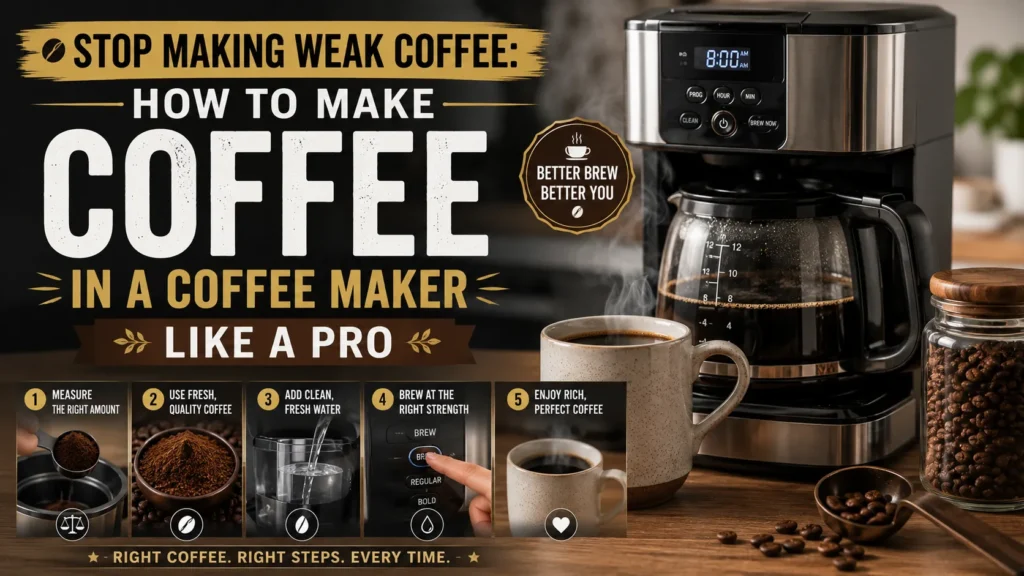
Nothing ruins a morning faster than a bitter, watery cup of coffee. If your daily brew tastes more like cardboard than a premium roast, you are likely missing a few fundamental steps. Fortunately, mastering how to make coffee in a coffee maker is incredibly simple once you know the correct ratios, grind sizes, and water temperatures. By adjusting just a few variables, you can easily transform your mediocre morning routine into a genuine café-quality experience right at home.
☕ Key Takeaways for the Perfect Brew
- The Golden Ratio: Always use 1 to 2 tablespoons of ground coffee for every 6 ounces of fresh water.
- Grind Size Matters: Choose a medium grind resembling coarse sand to prevent over-extraction and bitterness.
- Water Quality: Use filtered water to ensure no harsh chemical tastes interfere with your coffee’s delicate oils.
- Regular Cleaning: Descale your drip machine once a month to prevent bitter mineral buildup.
To begin, high-quality ingredients are the foundation of any exceptional beverage. Consequently, using stale beans or tap water filled with chlorine will yield disappointing results regardless of your equipment.
Therefore, you should always start with freshly roasted coffee beans. Furthermore, using filtered water ensures that no harsh chemical tastes interfere with the delicate oils of your coffee.
In addition, the freshness of your grind plays a critical role in the final flavor profile. If you grind your beans immediately before brewing, you will preserve the volatile aromas that typically escape within hours of grinding.
Ultimately, investing in quality ingredients is the easiest way to upgrade your morning routine. Indeed, even the most expensive drip machine cannot rescue low-quality beans or poor water.
Demystifying the Golden Ratio
To truly understand how to make coffee in a coffee maker, you must master the relationship between water and beans. Many people struggle with consistency because they simply estimate their measurements every morning.
However, achieving the perfect strength requires a reliable formula. The standard recommendation is the “Golden Ratio,” which translates to one to two tablespoons of grounds per six ounces of water.
If you prefer a stronger cup, you should lean toward the higher end of this scale. Conversely, if you prefer a lighter body, a single tablespoon will suffice for your taste buds.
Measuring your ingredients precisely will eliminate the guesswork and guarantee a delicious result. Consequently, using a digital kitchen scale is the most accurate way to ensure consistency day after day.
Meanwhile, if you do not own a scale, using standard measuring spoons is a highly effective alternative. Just ensure you are consistent with your scoop sizes to keep your brew stable.
Step-by-Step Guide: How to Make Coffee in a Coffee Maker
Now, let us walk through the actual brewing process. Following these steps carefully will ensure your automatic drip machine performs at its absolute peak performance.
First, place a high-quality paper or reusable mesh filter into the filter basket of your machine. If you are using paper, consider rinsing it with warm water first to remove any papery taste.
Next, measure your grounds according to your desired yield and pour them into the filter. Ensure the coffee bed is completely flat and level to facilitate an even extraction process.
Subsequently, pour cold, filtered water into the machine’s water reservoir. You should use the markings on the glass carafe to measure the exact volume of water you need.
Afterward, close the lid securely and place the empty carafe back onto the warming plate. Ensure it is positioned correctly to activate the drip-stop valve on the basket.
Finally, turn on the machine and wait for the brewing cycle to complete. Once the dripping stops, stir the coffee inside the carafe to distribute the flavors evenly before serving.
Ultimately, enjoying your fresh brew immediately prevents it from scorching on the hot plate. If you leave it sitting too long, the heat will quickly turn your smooth coffee bitter.
Choosing the Ideal Grind Size for Drip Machines
When you are mastering how to make coffee in a coffee maker, understanding grind size is a complete game-changer. Grind size directly dictates the rate of water extraction during the brewing cycle.
Specifically, a grind that is too fine will clog your filter basket. As a result, the water will pass through too slowly, leading to a bitter, over-extracted cup of coffee.
On the other hand, a grind that is too coarse will allow water to rush through too quickly. Consequently, your beverage will taste sour, weak, and severely under-extracted.
Therefore, you should aim for a medium grind that closely resembles coarse sand. This texture provides the perfect amount of resistance for standard drip brewers to extract maximum flavor.
If you grind your own beans, a burr grinder is highly recommended over a blade grinder. This is because burr grinders produce highly uniform particles, ensuring an even and balanced extraction.
Why Water Temperature and Quality Matter
Indeed, learning how to make coffee in a coffee maker involves paying close attention to water quality. Since water makes up over 98% of your finished cup, its quality is paramount.
Most automatic machines heat water to the ideal range of 195°F to 205°F automatically. However, cheaper models sometimes fail to reach these optimal temperatures during the cycle.
If your machine runs too cold, it cannot extract the rich flavors from the grounds. Consequently, your drink will taste flat, sour, and lack any real complexity.
To combat this, you can pre-heat your glass carafe with warm water before brewing. This simple trick helps maintain a stable temperature throughout the extraction process.
In addition, using cold water to fill the reservoir is essential. Cold water contains more dissolved oxygen, which helps release the aromatic compounds of the beans during heating.
The Difference Between Paper and Metal Filters
The type of filter you choose has a profound impact on the body and flavor of your beverage. Therefore, you should select a filter style that aligns with your personal taste preferences.
Paper filters are excellent for trapping fine particles and natural oils. Consequently, they produce a very clean, light-bodied cup with highlighted acidity and clear flavor notes.
However, paper filters can sometimes absorb the aromatic oils that give coffee its rich mouthfeel. If you want to experience those oils, a reusable metal mesh filter is a superior choice.
Metal filters allow these natural oils and tiny micro-grounds to pass into your carafe. As a result, your brew will have a much heavier body and a bolder flavor profile.
Ultimately, experimenting with both filter types is a great way to customize how to make coffee in a coffee maker to your exact liking. Try both to see which mouthfeel you prefer.
How to Troubleshoot a Bad Brew
Even with the best intentions, you may occasionally brew a cup that does not taste quite right. Fortunately, troubleshooting these issues is relatively straightforward once you know what to look for.
If your beverage tastes exceptionally bitter, it is likely over-extracted. To fix this, try using a slightly coarser grind or reducing the brewing temperature if your machine allows adjustments.
Conversely, if your drink tastes sour or weak, it is under-extracted. In this case, you should try a finer grind or increase the amount of coffee grounds you use.
Sometimes, the issue lies within the machine itself rather than your technique. If you notice a slow drip or unusual noises, it is a clear sign that you need to descale your equipment.
By learning to diagnose these issues, you will quickly perfect how to make coffee in a coffee maker under any circumstances. Small adjustments can yield massive improvements in flavor.
Selecting the Best Beans for Your Drip Machine
Not all coffee beans are created equal, and some are better suited for drip machines than others. Therefore, choosing the right roast profile is essential for achieving the best flavor.
Medium roasts are widely considered the ideal choice for automatic drip brewers. These beans offer a balanced profile, showcasing both the origin flavors and the pleasant richness of the roast.
Light roasts can also be brewed successfully, though they may sometimes taste too acidic if the water temperature is not high enough. Therefore, ensure your machine is fully heated before using them.
Dark roasts, on the other hand, provide a very bold, smoky flavor with low acidity. However, they can easily become bitter if over-extracted, so a slightly coarser grind is recommended for dark beans.
Ultimately, finding the perfect bean is a key step in mastering how to make coffee in a coffee maker. Do not hesitate to sample different origins to discover your favorite flavor notes.
Essential Maintenance for Your Brewing Equipment
Furthermore, knowing how to make coffee in a coffee maker also means knowing how to care for your machine. Over time, natural coffee oils and mineral deposits will accumulate inside your equipment.
Consequently, these residues can negatively impact the flavor of your daily drinks. To prevent this, you must clean your equipment thoroughly after every single use.
Wash the carafe, brew basket, and reusable filter with warm, soapy water daily. In addition, you should descale your machine once every month to remove calcium buildup.
This process removes calcium deposits that can slow down your brew cycle and damage internal heating elements. Simply run a mixture of equal parts white vinegar and water through the machine.
Afterward, run two or three cycles of plain, cold water to rinse out any lingering vinegar taste. If you want to know how to make coffee in a coffee maker that tastes consistently clean, descaling is non-negotiable.
Pro Tips to Elevate Your Daily Cup
If you want to take your skills to the next level, a few advanced techniques can make a massive difference. For example, consider investing in a high-quality burr grinder rather than a cheap blade grinder.
Furthermore, try to buy whole beans with a visible “roasted-on” date. Freshness is paramount, and beans are generally at their peak flavor between three to fourteen days after roasting.
Lastly, store your beans in an airtight container in a cool, dark pantry. Avoid storing them in the freezer, as moisture can damage the delicate oils and ruin the flavor profile.
Ultimately, refining how to make coffee in a coffee maker is an ongoing journey of small adjustments. By paying attention to these details, you will enjoy café-quality coffee every single morning.
Related Coffee Topics You May Like
Frequently Asked Questions
How many scoops of coffee do I need for 4 cups?
To brew 4 cups of coffee, you will generally need about 4 to 8 tablespoons of ground coffee, depending on your preferred strength. Since a standard “cup” on a coffee maker is usually only 5 or 6 ounces, this ratio ensures a balanced and flavorful extraction without being too watery.
Can I use tap water in my drip brewer?
While you can use tap water, filtered water is highly recommended. Tap water often contains chlorine and minerals that can alter the taste of your coffee and cause rapid mineral buildup inside your machine. Using filtered water ensures a cleaner, purer flavor profile.
Why does my drip coffee taste bitter?
Bitter coffee is usually the result of over-extraction. This happens if your grind is too fine, if you used too much coffee, or if the machine’s warming plate scorched the brewed coffee. To fix this, try using a slightly coarser grind and serve the coffee immediately after brewing.
How often should I clean my drip machine?
You should wash the removable parts, like the carafe and filter basket, with warm soapy water after every use. Additionally, you should descale the internal heating elements with a vinegar and water solution once a month to remove mineral scale and maintain optimal brewing temperatures.
Ready to Elevate Your Coffee Game?
Now that you know how to make coffee in a coffee maker like an expert, it is time to upgrade your beans. Explore our curated selection of freshly roasted, single-origin beans and taste the difference today!

Moses Anthony
Moses Anthony is a coffee enthusiast and home brewing specialist with over 7 years of hands-on experience testing coffee beans, espresso machines, grinders, and brewing methods. He has spent years experimenting with pour-over, French press, drip coffee, and espresso to help everyday coffee drinkers brew better coffee at home.At Best Coffee Guide, Moses focuses on practical brewing tips, honest product comparisons, and beginner-friendly coffee education based on real testing and research. His goal is to simplify coffee brewing and help readers make better choices with confidence.
How to Make Coffee Easy: Effortless Tips for Barista‑level Brew at Home
September 17, 2026
No Comments
Read More » Mastering the Art: How to Make Coffee Darker for a Richer, Bold Brew
September 16, 2026
No Comments
Read More » 
How to Make Coffee Dip: Easy Steps to Create a Rich, Coffee-infused Spread
September 15, 2026
No Comments
Read More » Latest Pots
Imagine waking up, craving a rich cup, but feeling overwhelmed by complicated machines and vague recipes. You want great coffee without the fuss, and you deserve a method that works every single time. This guide shows you exactly how to make coffee easy, turning morning…
Many coffee lovers crave a cup that looks as deep and intense as its flavor promises. If your brew often turns out light or washed out, you’re not alone—achieving that striking darkness involves more than just adding extra grounds. In the next few paragraphs we’ll…

Explore the world of coffee with honest reviews and practical advice. Find your perfect cup, one bean and machine at a time.
Main Menu
Top Categories
Newsletter
Sign up our newsletter to get updated information, promo or insight for free.
Copyright © 2025 Best Coffee Guide, All rights reserved.