

You expect coffee to wake you up, clear your mind, and give you energy. But for many people, the experience is very different. Instead of feeling light and focused, they feel heavy, uncomfortable, and sometimes even swollen.
You drink one cup, and suddenly your stomach feels tight. Your clothes feel slightly uncomfortable around your waist. Sometimes your face even looks a bit puffy in the mirror. This creates confusion because coffee is supposed to feel good, not cause discomfort.
So the real question is not just “can coffee cause bloating,” but why it happens, when it happens, and what you can actually do about it without quitting coffee completely. This guide will explain everything in a simple and practical way so you can understand your body better and fix the issue instead of guessing.
Yes, coffee can cause bloating in some people. It can increase stomach acid, stimulate digestion too quickly, and sometimes irritate the gut. This can lead to gas, discomfort, or a feeling of fullness. However, the effect depends on your body, your habits, and what you add to your coffee.
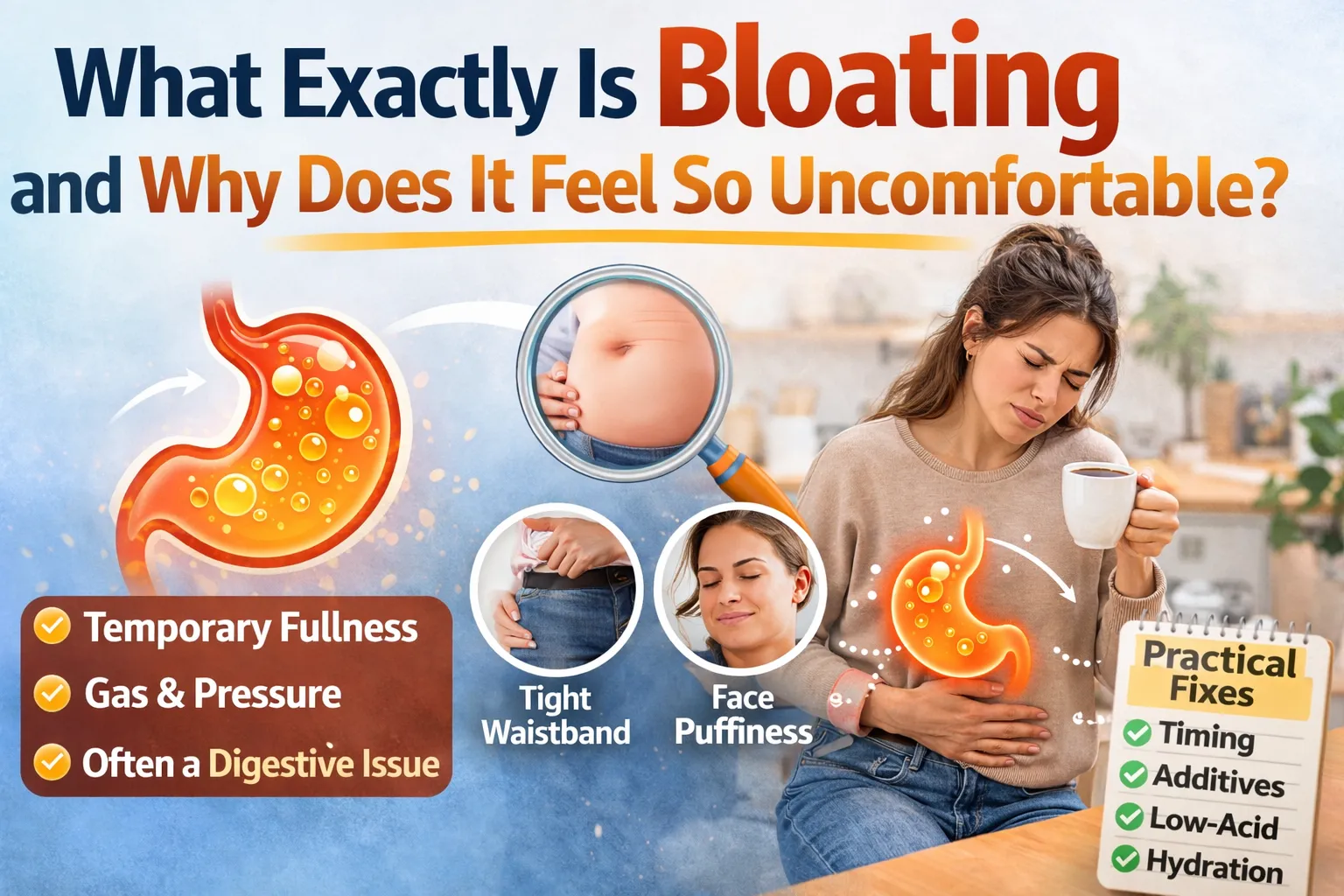
Before going deeper, it is important to understand what bloating actually is. Bloating is not fat gain. It is usually a temporary condition where your stomach feels full, tight, or swollen. This happens due to gas, water retention, or digestive imbalance.
The feeling can vary from mild discomfort to noticeable swelling. Some people feel it only in the stomach, while others feel it in the lower abdomen or even notice puffiness in the face. Coffee can trigger this process in different ways, which is why the experience is not the same for everyone.
Coffee interacts with your digestive system in a complex way. It is not just one reason. Multiple factors are working together.
One of the biggest reasons is acid production. Coffee stimulates your stomach to produce more acid. For some people, this helps digestion. But for others, it irritates the stomach lining.
When the stomach becomes irritated, it can slow down or disturb digestion. This leads to gas buildup and a bloated feeling. This effect is stronger when you drink coffee on an empty stomach because there is nothing to buffer the acid.
Coffee activates your digestive tract and can speed up bowel movement. This is why many people feel the urge to use the bathroom after drinking coffee.
While this may seem beneficial, it can also lead to:
If your digestive system is sensitive, this stimulation can create discomfort instead of relief.
Not everyone processes caffeine the same way. Some people are more sensitive to it.
If you are sensitive, caffeine can:
This can lead to bloating along with other symptoms like restlessness or slight nausea.
Many people blame coffee, but the real problem is what they add to it. Milk is one of the biggest triggers. If you have even mild lactose intolerance, it can cause gas and bloating.
Artificial creamers and flavored syrups can also disturb digestion because they contain ingredients that are harder for the body to process. Sugar can feed certain gut bacteria, which leads to more gas production. This is why black coffee feels fine for some people, while a latte causes discomfort.
This is a simple but overlooked factor. If you drink coffee quickly or talk while drinking, you may swallow extra air. This air gets trapped in your digestive system and causes bloating. It sounds minor, but it can make a noticeable difference.
If you already have a sensitive digestive system, coffee can act as a trigger rather than the root cause. Conditions like IBS make your gut more reactive. Coffee can increase symptoms such as gas, discomfort, and delayed bloating.

Yes, coffee can lead to gas, but not directly. It affects the digestive process in a way that can increase gas formation. It speeds up movement in the gut and changes how food is processed.
If digestion becomes unbalanced, gas can build up, leading to bloating and discomfort. This effect becomes stronger when coffee is combined with heavy meals, dairy, or sugary additives.
This is a very common misunderstanding. Coffee itself does not cause weight gain. It contains almost no calories when consumed black. However, bloating can make your body feel heavier and look slightly swollen. This creates the illusion of weight gain.
The real issue comes from high-calorie coffee drinks. When you add sugar, syrups, and cream, the calorie count increases significantly. Over time, this can contribute to actual weight gain. So, the difference is important. Bloating is temporary, while weight gain is long-term and related to calorie intake.

Yes, this can happen in some cases. Coffee can slightly dehydrate the body. When your body is dehydrated, it sometimes retains water as a response. This can lead to puffiness, especially in the face.
Caffeine can also increase stress hormones in some people, which may contribute to water retention. This type of bloating is usually temporary and improves with proper hydration and balanced intake.
Yes, especially under certain conditions. Drinking coffee on an empty stomach is one of the biggest reasons. The increased acid can irritate the stomach lining and cause discomfort.
Strong or highly concentrated coffee can also trigger nausea, particularly for beginners or those who are sensitive to caffeine. If your body is not used to coffee, starting with strong brews can overwhelm your digestive system.
Decaf coffee can still cause bloating, but usually to a lesser extent. Many people think decaf is completely free from digestive effects, but it still contains acids and compounds that stimulate the stomach. If your bloating is caused by acidity rather than caffeine, switching to decaf may not fully solve the problem.
Yes, and this is one of the most confusing situations. You may drink coffee in the morning and feel fine, but experience bloating later in the day.
This happens because coffee affects your digestive system over time. It can change how your body processes food and how quickly things move through your gut. So, the bloating you feel later may actually be connected to your earlier coffee habit, combined with the meals you ate afterward.
Consider a typical routine. You wake up and drink coffee immediately without eating anything. Your stomach produces acid, and your digestive system becomes active. Later, you eat a heavy meal. Your stomach is already sensitive, and digestion becomes slightly disturbed.
By afternoon, you feel bloated and uncomfortable. You blame lunch, but the process actually started with your morning coffee habit. This is why understanding the full picture is important.
The goal is not to quit coffee, but to adjust how you drink it.
Coffee Type | Bloating Risk | Main Reason |
Black Coffee | Medium | High acidity |
Cold Brew | Low | Lower acid levels |
Espresso | Medium | Concentrated but small quantity |
Latte | High | Dairy content |
Flavored Coffee | High | Sugar and additives |
Decaf Coffee | Medium | Contains acids |
For beginners, it is better to start with mild or low-acid coffee and avoid strong brews. Busy professionals should focus on timing. Drinking coffee after a light meal can prevent discomfort.
People with sensitive stomachs should consider reducing caffeine intake and avoiding dairy-based coffee drinks. Fitness-focused individuals should stick to simple coffee options without added calories to avoid confusion between bloating and weight gain.
Yes, if your body is sensitive or if your daily habits include triggers like dairy or excess sugar.
It may be due to stomach sensitivity, caffeine reaction, or additives in your coffee.
Yes, it is generally less acidic and easier on the stomach.
Yes, it can cause temporary swelling due to gas or irritation.
Not necessarily. Adjusting your habits often solves the problem.
Moderate consumption is usually safe. Problems arise with overconsumption and poor dietary habits.
So, can coffee cause bloating? Yes, it can, but it depends on your body and your habits. Coffee may lead to gas, discomfort, or even bloating hours later, especially if you drink it on an empty stomach or add dairy and sugar.
It is also important to know that coffee can cause bloating and weight gain, which is mostly a misunderstanding. Bloating is temporary, not real fat gain. Issues like can coffee cause gas or can coffee cause bloating in the face are usually linked to digestion and hydration.
The good part is you do not need to quit coffee. By adjusting timing, choosing the right type, and avoiding triggers, you can reduce or even eliminate bloating. Keep it simple: understand your body, make small changes, and enjoy coffee without discomfort.





Contact Us Jump To Why Everyone Asks: What Is Flat White Coffee? If you have ever looked at a coffee menu and paused at the words flat white, you are not alone. Many people actively search for what is flat white coffee because the name…
Contact Us Jump To When Coffee Feels Wrong Instead of Right You expect coffee to wake you up, clear your mind, and give you energy. But for many people, the experience is very different. Instead of feeling light and focused, they feel heavy, uncomfortable, and…

Contact Us Jump To Top 5 Most Expensive Coffee Makers of 2026 Most people think a coffee maker is just a simple kitchen machine. You press a button, and coffee comes out. But once you start exploring the world of premium coffee, everything changes. High-end…

Explore the world of coffee with honest reviews and practical advice. Find your perfect cup, one bean and machine at a time.