

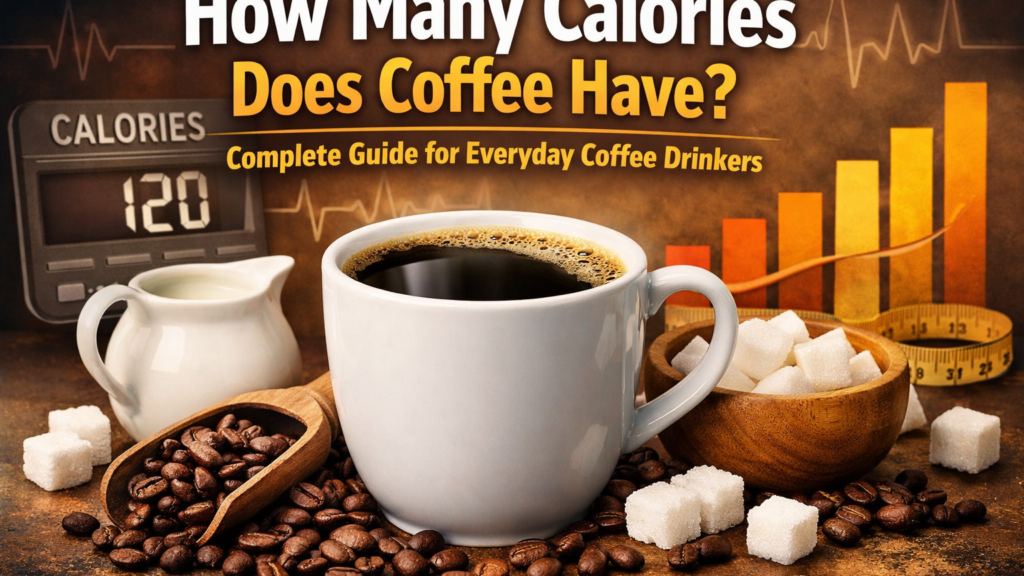
A cup of plain black coffee has around 2 calories. That is the short answer, and it is worth knowing, because the calories in coffee almost never come from the coffee itself. They come from everything you add afterwards: milk, sugar, cream, syrups, and the generous serving sizes of café drinks.
So if you are tracking calories, do not blame the beans. Blame the additions. Let us walk through the numbers properly, so you can enjoy your coffee without guessing.
Coffee is brewed from ground beans and water. During brewing, the water picks up flavour, aroma, and caffeine, but very little energy. The beans hold onto most of their calories, and since you do not eat the grounds, they never reach your cup.
That is why black coffee sits at roughly 2 calories per 240 ml cup — essentially nothing. A single espresso shot is about 3 calories. These numbers are so small that they make no meaningful difference to your daily intake, whatever your diet.
Here is the honest part: almost nobody who asks this question is drinking plain black coffee. The moment you add things, the count climbs, and it climbs faster than most people expect.
A teaspoon of sugar adds about 16 calories. A tablespoon of whole milk adds about 9, while a tablespoon of cream adds around 50. A pump of vanilla or caramel syrup in a café drink adds roughly 20 to 25 calories. None of these sound like much on their own, but stack two sugars, a splash of whole milk, and three cups a day, and you are quietly drinking an extra 150 to 200 calories daily.
Cup size multiplies the problem. Home mugs are usually 240 to 350 ml, while café “large” cups can hold 450 ml or more. More volume means more milk, more syrup, and more calories in every serving.
The table below uses widely published approximate values for standard servings. Treat them as ballpark figures — recipes vary between cafés, and your homemade version will differ depending on how generous you are with the milk and sugar.
| Drink (typical serving) | Calories (approx.) |
|---|---|
| Black coffee, 240 ml cup | ~2 |
| Espresso, single shot | ~3 |
| Cold brew, black, 350 ml | ~2–5 |
| Coffee with a splash of whole milk | ~7–15 |
| Coffee with 1 tbsp whole milk + 1 tsp sugar | ~25–30 |
| Coffee with 1 tbsp cream + 1 tsp sugar | ~65–70 |
| Cappuccino, 350 ml with whole milk | ~80 |
| Café latte, 350 ml with whole milk | ~120–150 |
| Vanilla latte, 350 ml with whole milk + syrup | ~190–250 |
| Mocha, 350 ml with chocolate + whipped cream | ~280–330 |
| Frappé-style blended coffee drink, 450 ml | ~300–400 |
If you make your drink at home, remember the pattern: milk and sugar are the two ingredients that matter. Everything else in the cup is decoration.
Flavoured syrups. They are the single biggest hidden source. Each pump carries 20 to 25 calories of pure sugar, and a standard flavoured latte gets three or four pumps. That alone is close to 100 calories before you have touched the milk.
Cream and whole milk. Whole milk has about 60 calories per 100 ml, and cream is roughly 200 per 100 ml. In a milky 350 ml latte, most of the calories come from the milk, not the coffee.
Sugar and whipped cream toppings. Two teaspoons of sugar add about 32 calories, and a dollop of whipped cream can add 50 or more. These sit on top of everything else, so they stack fast.
Blended and frozen drinks. Frappés and similar blended drinks often contain ice cream, sweetened bases, or both. They are desserts that happen to contain coffee, and the calorie counts show it.
You do not have to give up your favourite drink to cut the calories. Small changes work surprisingly well:

One more habit that helps: if you drink several cups a day, keep one of them black. Three black coffees and one milky latte beat four milky lattes by hundreds of calories a week.
Black coffee on its own is about as calorie-friendly as a drink gets. It will not meaningfully affect your weight either way. What matters is the pattern: if your daily coffee habit includes hundreds of calories of milk and sugar, that is what shows up on the scales over time — not the coffee, and not the caffeine.
And no, caffeine does not cause weight gain. It has no meaningful calories of its own. If your weight is creeping up, check the syrup bottle before you blame the coffee.
A plain 240 ml cup of black coffee has around 2 calories. Add milk and sugar and it can reach 25 to 70 calories; café-style milky drinks typically range from 80 to over 300 calories depending on size and syrups.
Not quite zero, but close enough to treat it that way. A standard cup has about 2 calories, and a single espresso about 3. These amounts have no practical effect on your daily calorie intake.
Black coffee has almost none. Carbs arrive through the same additions that add calories: sugar (roughly 4 g per teaspoon), milk (about 5 g of natural milk sugars per 100 ml), and flavoured syrups.
It depends on the milk and the amount. A splash of whole milk in black coffee adds around 7 to 15 calories. A 350 ml latte made with whole milk lands around 120 to 150 calories, since the drink is mostly milk.
Plain black coffee has only about 2 calories, so most people consider it acceptable during a fast. Once you add milk, sugar, or cream, it counts as food and will break the fast.
Black, either hot or as cold brew. If you cannot face it black, a coffee with a small amount of skimmed milk and no sugar is the next best option at roughly 15 to 25 calories.
Coffee itself is one of the lowest-calorie drinks you can have. The number only climbs when you add milk, sugar, syrups, and cream — and café drinks can hide hundreds of calories in a single cup. Keep the additions light, watch the serving size, and you can keep your coffee habit comfortably inside any calorie budget.




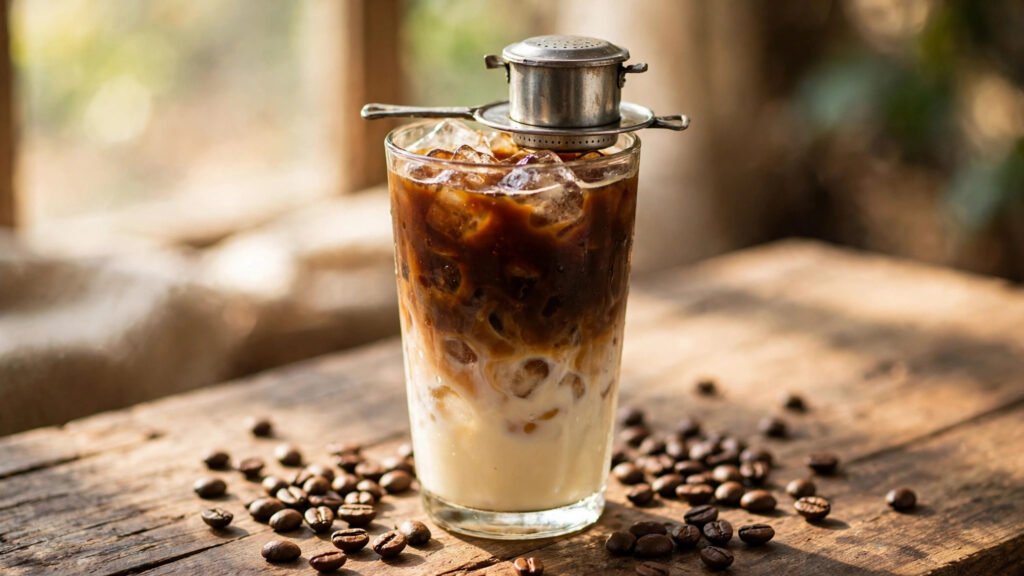
Jump To Vietnamese Iced Coffee (Ca Phe Sua Da): The Real Recipe, Plus the No-Phin Version Vietnamese iced coffee — ca phe sua da — is dark, strong coffee dripped slowly through a small metal phin filter onto sweetened condensed milk, then stirred and poured…

Jump To What Is Single Origin Coffee? (And Why It Isn’t Automatically Better) What is single origin coffee? It is coffee that comes from one place — one country, one region, one farm, or even one small plot of land. A blend, by contrast, mixes…

Jump To How to Froth Milk: Steam Wand vs No Machine, and Why Oat, Soy and Dairy Foam Differently How to froth milk comes down to two jobs done at once: add air, and heat the milk. A steam wand does both in one go…

Explore the world of coffee with honest reviews and practical advice. Find your perfect cup, one bean and machine at a time.