
Coffee is one of the most widely consumed beverages in the United States. Millions of people start their mornings with a cup of coffee because they expect it to increase alertness, improve concentration, and provide a boost of energy. For most people, caffeine does exactly that.
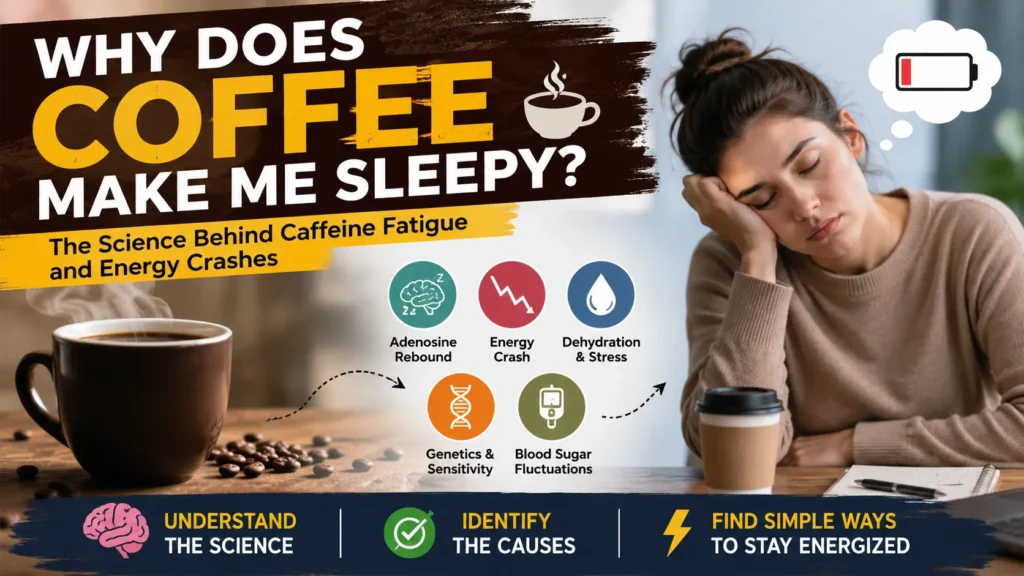
However, some individuals experience the opposite effect and feel tired shortly after drinking coffee. If you have ever wondered why does coffee make me sleepy, you are not alone. Although caffeine is known as a stimulant, several factors can cause coffee to trigger feelings of fatigue instead of alertness.
Poor sleep, stress, dehydration, blood sugar fluctuations, genetics, and caffeine sensitivity can all influence how your body reacts to coffee. Understanding why this happens can help you make better decisions about your caffeine intake and identify potential lifestyle factors that may be contributing to your fatigue.
Quick Answer: Coffee can make some people sleepy because of adenosine rebound, poor sleep, stress, dehydration, blood sugar fluctuations, or individual caffeine sensitivity. While caffeine temporarily blocks fatigue signals, underlying tiredness may become more noticeable once its effects begin to fade.
In this guide, we will explore the science behind coffee-related fatigue, explain why some people feel sleepy after drinking coffee or energy drinks, and discuss practical ways to maintain healthy energy levels throughout the day.
How Does Coffee Normally Increase Alertness?
To understand why coffee can sometimes make you feel tired, it is important to first understand how caffeine works.
Coffee contains caffeine, a natural stimulant that affects the central nervous system. One of its primary functions is blocking a chemical called adenosine. Throughout the day, adenosine gradually accumulates in the brain. As adenosine levels rise, your body receives signals that it is becoming tired and ready for sleep.
When caffeine blocks adenosine receptors, those fatigue signals are temporarily interrupted. This allows people to feel more awake, focused, and mentally alert. Caffeine also stimulates the release of neurotransmitters such as dopamine and norepinephrine. These chemicals help improve concentration, reaction time, and overall cognitive performance.
For most individuals, caffeine begins working within 15 to 45 minutes and may continue affecting the body for several hours. However, caffeine does not affect everyone in the same way, which helps explain why some people feel sleepy instead of energized.
Why Does Coffee Make Me Sleepy Instead of Awake?
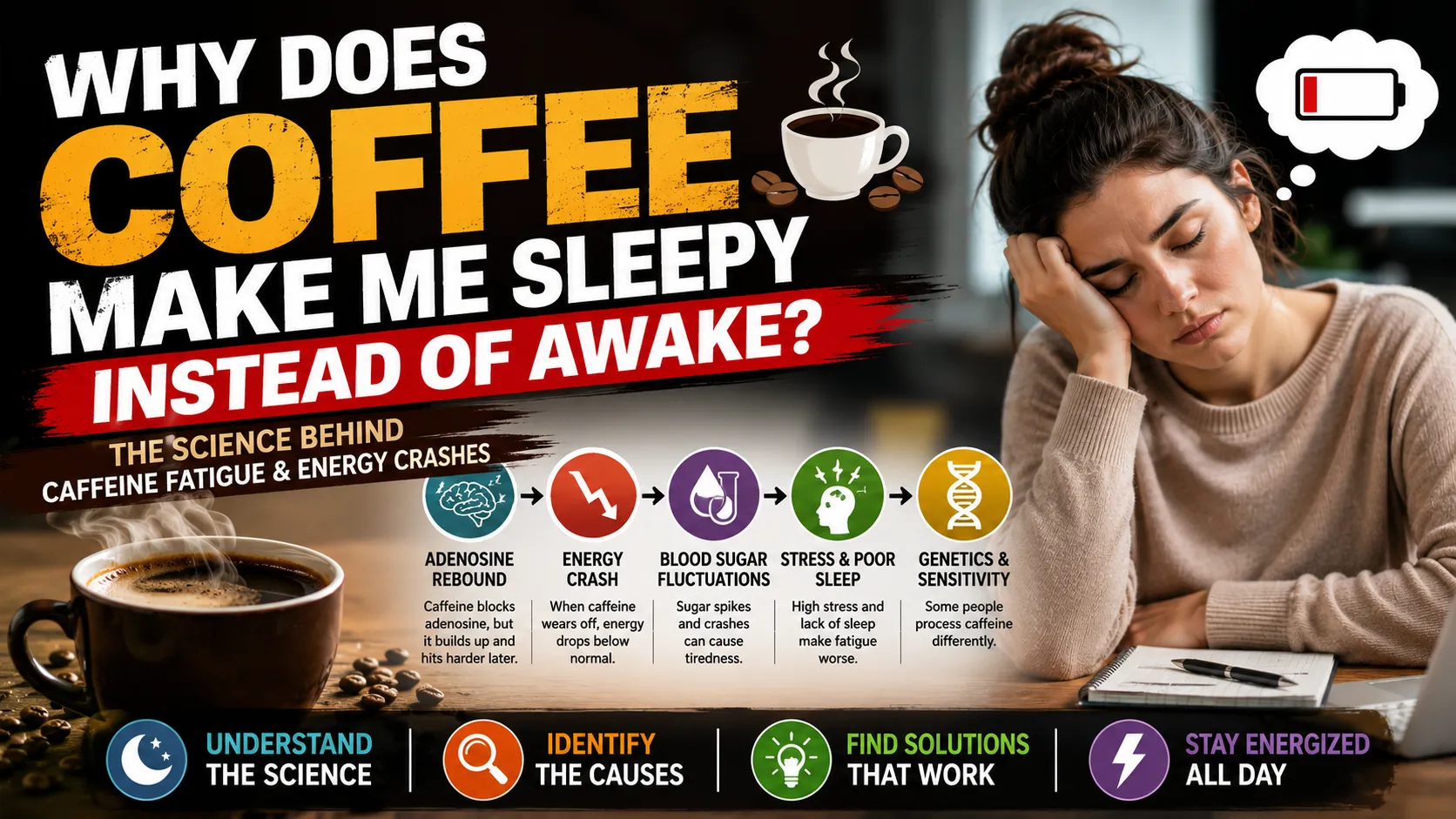
The answer often involves what is happening inside your body before and after drinking coffee. Coffee usually does not directly cause fatigue. Instead, it can temporarily hide tiredness and then reveal it once the stimulant effect fades. In other situations, biological factors may change the way your body processes caffeine. Several explanations may account for this unexpected reaction.
The Adenosine Rebound Effect
Although caffeine blocks adenosine receptors, it does not stop the body from producing adenosine. While caffeine is active, adenosine continues building up in the background. When caffeine starts leaving the system, that accumulated adenosine can suddenly interact with the brain again. This process is commonly called an adenosine rebound. As a result, some people experience:
Effect | What You May Feel |
Increased Adenosine Activity | Sudden tiredness |
Reduced Alertness | Difficulty focusing |
Mental Fatigue | Brain fog |
Energy Decline | Need for rest or sleep |
This is one of the most common explanations for feeling sleepy after coffee.
Overstimulation Can Lead to Exhaustion
Many people assume that consuming more caffeine automatically produces more energy. In reality, excessive stimulation can eventually become exhausting. Large amounts of caffeine increase nervous system activity. Heart rate may rise, stress hormones may increase, and the brain becomes more active.
After remaining in this heightened state for several hours, the body often attempts to restore balance. Some individuals experience this recovery process as fatigue or sleepiness.
Can Caffeine Make You Tired Instead of Awake?
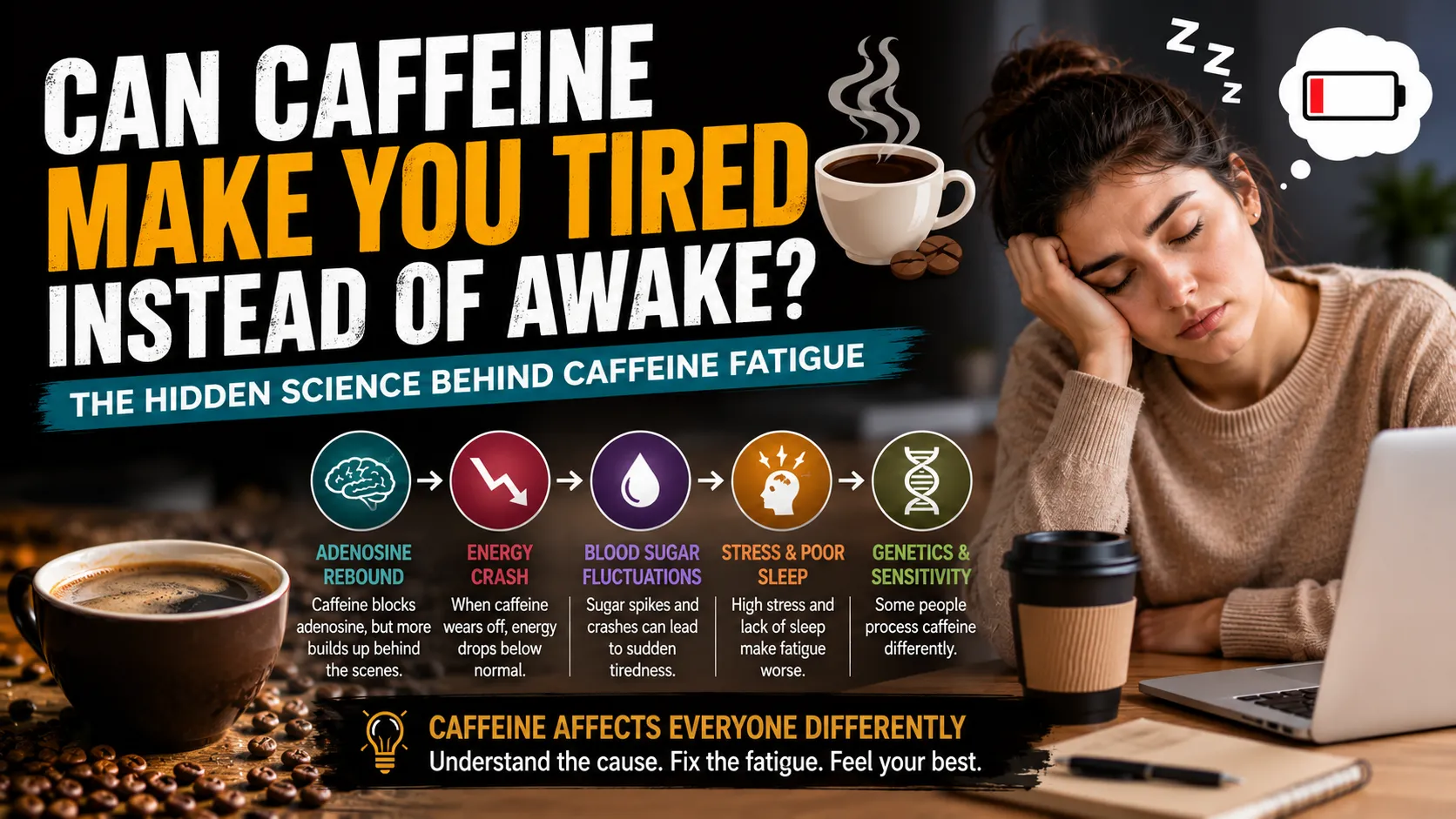
Yes, the answer to can caffeine make you tired instead of awake is surprisingly simple: it can. Although caffeine is classified as a stimulant, the final effect depends on several personal factors. Genetics, sleep quality, stress levels, caffeine tolerance, and overall health all influence how caffeine affects the body.
For some people, caffeine creates a short burst of alertness followed by a noticeable decline in energy. Others may feel overstimulated initially and exhausted later. This is why two people can drink the same coffee and have completely different experiences.
Why Do I Feel Sleepy After Drinking Coffee or Energy Drink?
Many people notice fatigue after consuming coffee beverages, energy drinks, or highly caffeinated products. One common reason involves blood sugar changes. Many flavored coffee drinks contain syrups, sweeteners, whipped toppings, and creamers. Energy drinks often contain significant amounts of sugar as well.
After consuming large amounts of sugar, blood glucose levels rise rapidly. The body responds by releasing insulin. In some cases, blood sugar then drops quickly afterward. This sudden decline may result in fatigue, reduced concentration, brain fog, and sleepiness.
Therefore, when people ask why do I feel sleepy after drinking coffee or energy drink, the answer may involve a sugar crash rather than caffeine itself. Another explanation involves the contrast effect. Energy drinks often create an intense feeling of stimulation. Once that stimulation begins to fade, normal energy levels may feel unusually low by comparison.
Why Does Coffee Make Me Sleepy When I Don’t Drink It Often?
Many occasional coffee drinkers are surprised when caffeine does not provide the energy boost they expected. People who rarely consume caffeine often experience stronger nervous system reactions. Increased heart rate, mild anxiety, jitteriness, or overstimulation can occur more easily. After this initial response, the body may react with fatigue.
For example, someone who rarely drinks coffee may order a large specialty coffee before a busy workday. The caffeine may initially increase alertness, but a few hours later they may feel mentally drained. This helps explain why does coffee make me sleepy when I don’t drink it often despite consuming caffeine for energy.
Why Does Hot Coffee Make Me Sleepy But Not Cold?
Many people report that hot coffee feels relaxing while iced coffee feels energizing. In most cases, the difference is not caused by caffeine content alone. Hot beverages are often associated with comfort, relaxation, and slower routines. People frequently drink hot coffee while reading, working quietly, or relaxing at home.
Cold coffee is usually consumed more quickly and often in more active environments. The refreshing sensation of a cold beverage may contribute to a greater feeling of alertness. This is why some people ask why does hot coffee make me sleepy but not cold even when both beverages contain similar amounts of caffeine.
Does Poor Sleep Reduce the Benefits of Coffee?
One of the biggest reasons people feel tired after coffee is simple sleep deprivation. Coffee can temporarily reduce feelings of fatigue, but it cannot replace actual sleep. When someone repeatedly sleeps fewer hours than their body requires, sleep debt accumulates. Eventually, the body’s need for recovery becomes stronger than caffeine’s ability to mask tiredness.
For example, someone who sleeps only four hours and then drinks two large coffees may temporarily feel alert during the morning. However, once the caffeine begins to wear off, the underlying sleep debt often becomes more noticeable, leading to a sudden feeling of fatigue later in the day. No amount of coffee can fully replace quality sleep.
How Long Does Caffeine Stay in Your System?
Many people assume coffee should provide energy throughout the day, but caffeine does not remain equally active for that long. On average, caffeine has a half-life of approximately 3 to 7 hours. This means that several hours after consuming coffee, a significant portion of the caffeine may still be present in the body. The exact duration depends on factors such as:
- Age
- Genetics
- Medications
- Liver function
- Hormonal factors
- Overall caffeine sensitivity
Some people process caffeine quickly and experience a short period of stimulation. Others metabolize caffeine slowly and may continue feeling its effects for much longer.
For example, two coworkers may drink the same coffee during lunch. One feels completely normal by evening, while the other struggles to fall asleep because caffeine remains active in the system. Understanding caffeine metabolism helps explain why energy responses vary dramatically between individuals.
How Stress and Cortisol Can Affect Your Response to Coffee
Stress has a major influence on energy levels. When you experience ongoing stress, the body releases hormones such as cortisol and adrenaline. These hormones are designed to help you respond to challenges, but prolonged exposure can contribute to exhaustion.
Coffee may temporarily increase alertness in stressed individuals. However, once the stimulant effect fades, underlying fatigue often becomes more noticeable. In many situations, the real issue is not the coffee itself but chronic stress and insufficient recovery.
People experiencing burnout often discover that caffeine becomes less effective over time because the body is already operating under significant physical and mental strain.
Can Genetics Affect How Coffee Impacts Your Energy Levels?
Yes, Genetics play a major role in determining how your body responds to caffeine. Researchers have identified genetic variations that affect caffeine metabolism. Some individuals process caffeine quickly, while others metabolize it much more slowly. The following comparison highlights these differences:
Factor | Fast Metabolizers | Slow Metabolizers |
Caffeine Breakdown | Faster | Slower |
Energy Response | Shorter Duration | Longer Duration |
Sensitivity | Lower | Higher |
Sleep Disturbance Risk | Lower | Higher |
Unusual Reactions | Less Common | More Common |
Because of these differences, some individuals are naturally more likely to experience fatigue, anxiety, or sleep disturbances after drinking coffee.
Signs You May Be Sensitive to Caffeine
Not everyone responds to caffeine the same way. Some individuals have a naturally higher sensitivity to caffeine and may experience symptoms that differ from the typical energy boost most people expect. Common signs of caffeine sensitivity include:
- Feeling tired after drinking coffee
- Increased anxiety
- Rapid heartbeat
- Jitters or shakiness
- Difficulty sleeping
- Headaches after caffeine consumption
- Digestive discomfort
For example, a person who rarely drinks coffee may consume a single large latte and feel both energized and exhausted within a few hours. This unusual response often suggests higher caffeine sensitivity. Recognizing these signs can help determine whether coffee is the right choice for your body.
Could Dehydration Be Contributing to Fatigue?
Although moderate coffee consumption does not usually cause serious dehydration, inadequate fluid intake can still contribute to low energy levels. When the body becomes dehydrated, physical and mental performance often declines. Symptoms such as headaches, sluggishness, dizziness, and reduced concentration may appear.
Someone who drinks multiple cups of coffee but very little water throughout the day may mistakenly blame coffee for fatigue when dehydration is actually contributing to the problem. Maintaining proper hydration is essential for stable energy levels.
If Coffee Makes Me Sleepy What Will Wake Me Up?
Many people eventually ask, if coffee makes me sleepy what will wake me up. The answer depends on the underlying cause of fatigue.
If poor sleep is responsible, additional caffeine is unlikely to solve the problem. If dehydration is the issue, water may be more effective than another cup of coffee. If blood sugar fluctuations are contributing, balanced meals can help stabilize energy levels. Long-term energy is usually supported by healthy habits rather than increasing caffeine consumption.
Some of the most effective ways to maintain steady energy include getting adequate sleep, staying hydrated, eating balanced meals, spending time outdoors, and engaging in regular physical activity. These approaches support natural energy production and reduce reliance on stimulants.
When Should You Talk to a Healthcare Professional?
Occasional sleepiness after coffee is usually not a cause for concern. However, if you regularly feel unusually tired after drinking coffee despite getting enough sleep, staying hydrated, and maintaining healthy habits, it may be worth discussing your symptoms with a healthcare professional.
Persistent fatigue can sometimes be associated with conditions such as sleep disorders, thyroid problems, iron deficiency, nutritional deficiencies, or other health concerns that require proper evaluation. A healthcare provider can help identify the root cause and recommend appropriate treatment when necessary.
Related Coffee Topics You May Like
Frequently Asked Questions
Why does coffee suddenly make me sleepy?
Changes in sleep quality, stress levels, hydration, caffeine sensitivity, or overall health can alter how your body responds to coffee.
Can caffeine have the opposite effect?
Yes. Some individuals experience fatigue, sleepiness, or energy crashes due to genetics, overstimulation, or adenosine rebound.
Why do energy drinks make me tired later?
Many energy drinks contain large amounts of sugar. After the initial energy boost fades, blood sugar levels may drop, contributing to fatigue.
Is it normal to feel sleepy after one cup of coffee?
Yes. Although caffeine usually increases alertness, some people experience fatigue due to individual biological factors or underlying sleep deprivation.
Should I stop drinking coffee if it makes me sleepy?
Not necessarily. First, evaluate your sleep habits, hydration, stress levels, and overall health. If symptoms continue, consult a healthcare professional.
Conclusion
If you have been asking why does coffee make me sleepy, the answer often involves more than caffeine itself. Adenosine rebound, poor sleep, stress, dehydration, blood sugar fluctuations, caffeine sensitivity, and genetics can all influence how your body responds to coffee.
While caffeine helps many people feel more alert, others may experience unexpected fatigue instead. Understanding the reason behind that reaction is the first step toward improving your energy levels.
In most cases, lasting energy comes from quality sleep, proper hydration, balanced nutrition, regular physical activity, and healthy stress management rather than consuming more caffeine. By addressing the underlying cause of fatigue, you can make better decisions about your coffee habits and enjoy more consistent energy throughout the day.