

Few coffee brewing methods have gained as much popularity in recent years as pour over coffee. Walk into almost any specialty coffee shop in the United States, and there is a good chance you will see a barista carefully pouring hot water over freshly ground coffee. While the process may look simple, it is one of the most effective ways to produce a flavorful and balanced cup.
Learning how to brew pour over coffee allows you to control every major brewing variable, including water temperature, grind size, brewing time, and coffee-to-water ratio. Unlike automatic coffee makers that make these decisions for you, manual brewing gives you complete control over extraction and flavor development.
The result is often a cleaner, brighter, and more expressive cup of coffee that highlights the unique characteristics of the beans. Whether you are completely new to manual coffee brewing or looking to improve your technique, understanding the fundamentals can dramatically improve your results.
This guide explains everything from choosing the right equipment and understanding coffee extraction to mastering brewing ratios and avoiding common mistakes. By the end of this article, you will have a clear understanding of how to consistently brew delicious pour over coffee at home.
Quick Answer: How to Brew Pour Over Coffee
To brew pour over coffee, use a medium grind size, a coffee-to-water ratio of approximately 1:16, and water heated between 195°F and 205°F. Saturate the grounds with a small amount of water and allow them to bloom for 30–45 seconds. Continue pouring the remaining water slowly in circular motions until brewing is complete. Most pour over brews finish within 2½ to 4 minutes and produce a balanced cup with excellent flavor clarity.
What Is Pour Over Coffee?
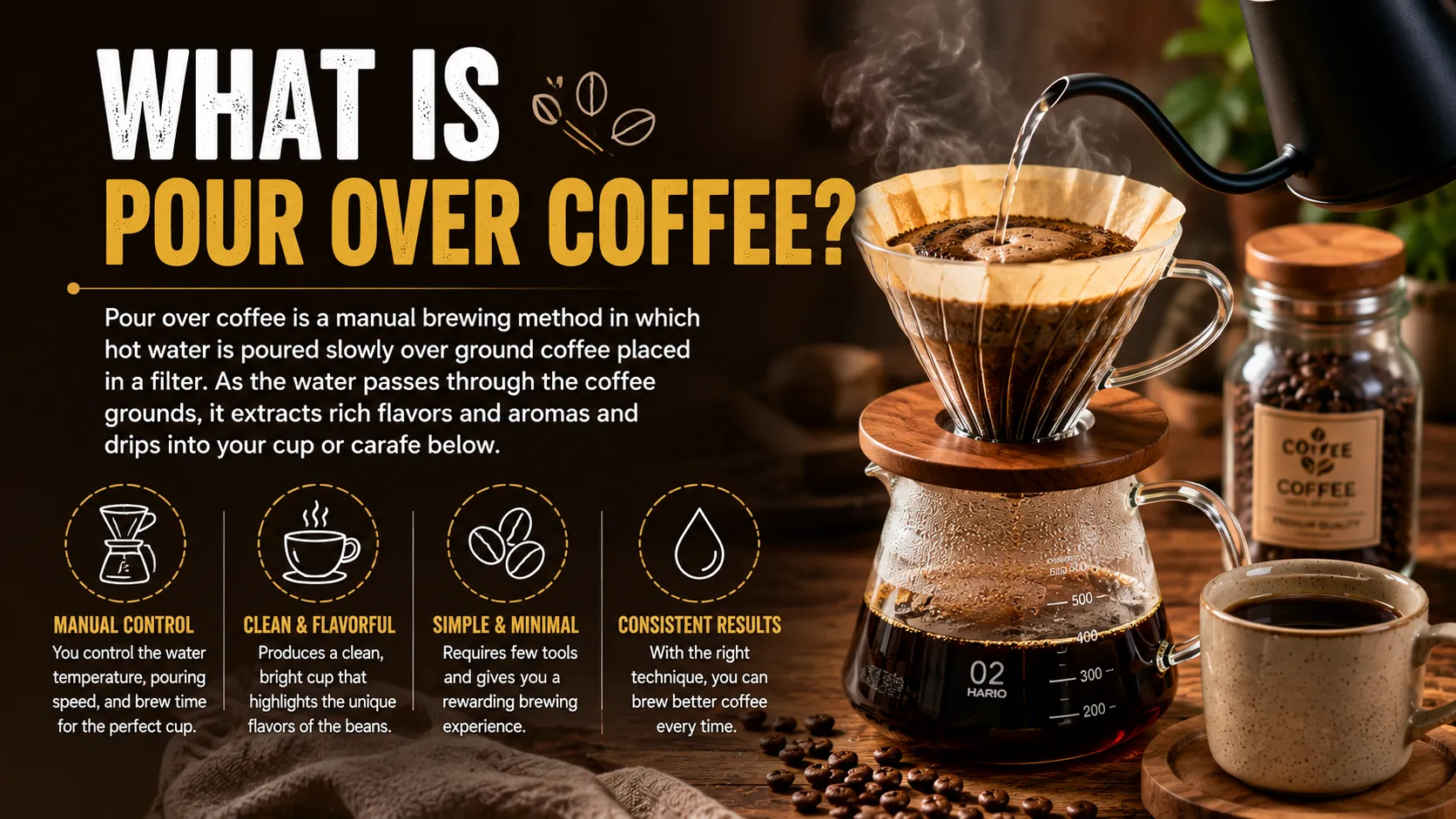
Pour over coffee is a manual brewing method where hot water is poured over coffee grounds held inside a filter. Gravity pulls the water through the coffee bed, extracting flavors and aromas before the brewed coffee drips into a mug or carafe below.
Unlike immersion brewing methods such as French press, where coffee grounds remain submerged in water, pour over brewing continuously moves fresh water through the grounds. This process creates a cleaner cup and often reveals more subtle flavor notes.
The method is popular among specialty coffee professionals because it allows greater control over extraction. Small adjustments to pouring technique, grind size, or water temperature can significantly influence the final taste.
Why Has Pour Over Coffee Become So Popular?
One reason pour over coffee continues to grow in popularity is the level of control it offers. Many coffee drinkers discover that the same coffee beans can taste completely different depending on how they are brewed.
During side-by-side home brewing experiments, a coffee that tastes ordinary in an automatic drip machine can reveal floral aromas, chocolate sweetness, or fruit notes when brewed using a pour over method.
Another reason for its popularity is accessibility. Unlike espresso machines that can cost hundreds or thousands of dollars, a quality pour over setup is affordable and easy to use at home.
The process also encourages a deeper understanding of coffee. Instead of simply pressing a button, you learn how extraction, grind size, water flow, and brewing ratios influence flavor.
What Equipment Do You Need for Pour Over Coffee?
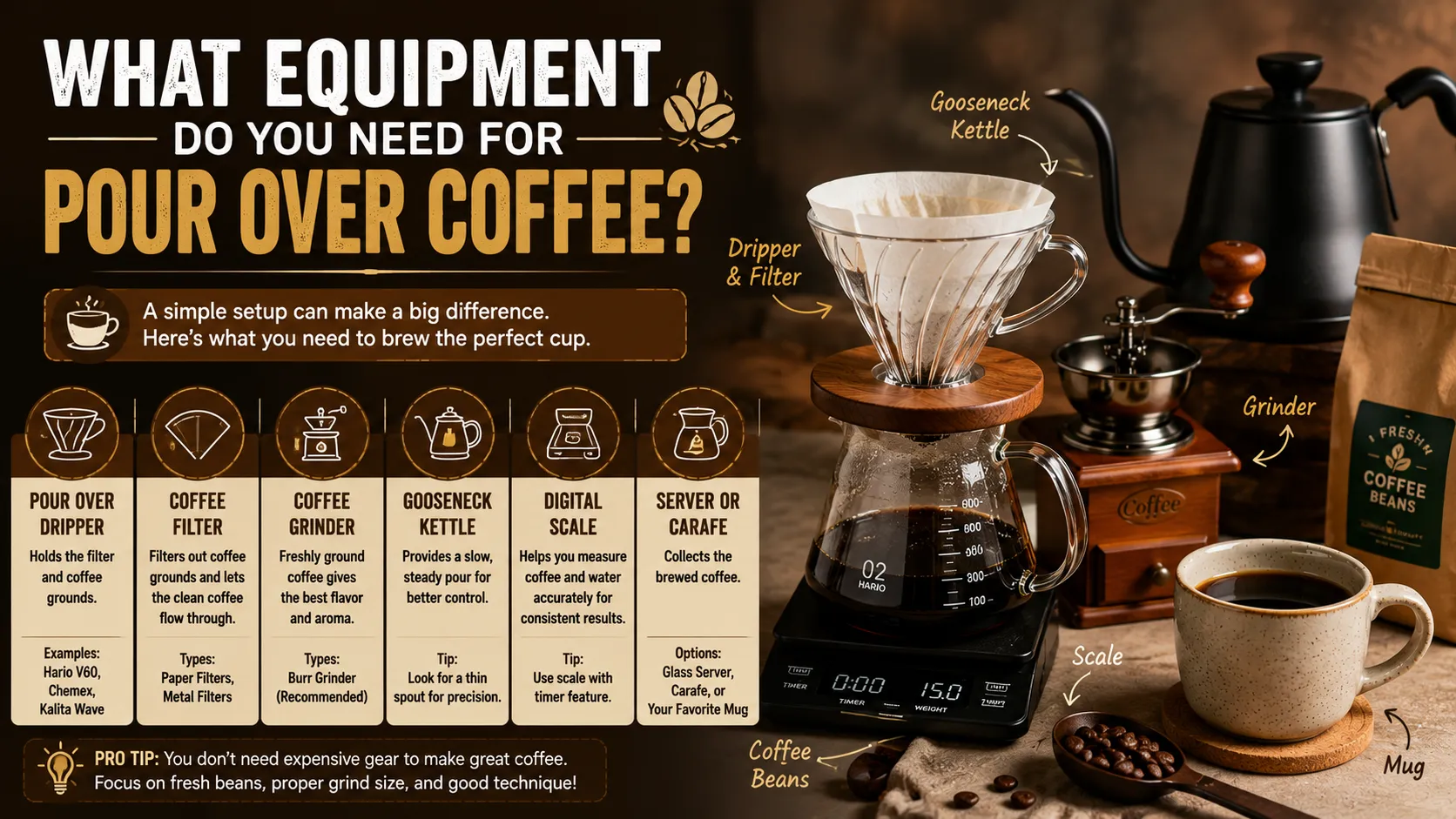
You do not need expensive equipment to begin making excellent coffee. A basic setup includes a brewer, filter, grinder, kettle, and coffee beans. While additional tools can improve consistency, beginners can start with simple equipment and upgrade later.
Essential Pour Over Brewing Equipment
Equipment | Purpose |
Pour Over Dripper | Holds the coffee filter and grounds |
Paper or Metal Filter | Separates grounds from brewed coffee |
Coffee Grinder | Produces fresh coffee grounds |
Gooseneck Kettle | Allows controlled pouring |
Digital Scale | Improves measurement accuracy |
Mug or Carafe | Collects brewed coffee |
Fresh coffee beans are arguably more important than any piece of equipment. Even a simple brewer can produce excellent coffee when paired with freshly roasted beans.
Choosing the Right Pour Over Brewer
Several brewers dominate the specialty coffee industry, and each offers a slightly different brewing experience.
Hario V60
The Hario V60 is one of the most widely used pour over brewers in the world. Its cone shape and large drainage opening allow brewers to control extraction through pouring technique. In side-by-side brewing tests, many coffee enthusiasts find that the V60 performs best with a slightly finer grind than brewers such as the Chemex.
Chemex
The Chemex is known for producing exceptionally clean coffee. Its thick paper filters remove more oils and fine particles, creating a bright and crisp cup. Many people appreciate the Chemex not only for its flavor profile but also for its elegant design.
Kalita Wave
The Kalita Wave uses a flat-bottom design that promotes even extraction. Because of this design, many beginners find it easier to achieve consistent results. While all three brewers can produce excellent coffee, technique matters more than brewer choice.
Understanding Coffee Extraction
One of the most important concepts in coffee brewing is extraction. Extraction refers to the process of water dissolving flavor compounds from coffee grounds. Every cup of coffee contains hundreds of compounds that contribute sweetness, acidity, bitterness, aroma, and body. The goal is not to extract the maximum amount possible. The goal is balanced extraction.
Under-Extraction
Under-extracted coffee often tastes sour, sharp, or weak. This usually happens when water moves through the coffee bed too quickly or when the grind is too coarse.
Balanced Extraction
Balanced extraction creates the sweet spot that most brewers aim for. Sweetness becomes more noticeable, acidity feels pleasant rather than aggressive, and flavors appear complete.
Over-Extraction
Over-extracted coffee can taste bitter, dry, or harsh. Excessively fine grinds and very long brew times are common causes. Understanding extraction makes troubleshooting much easier because it helps identify why a coffee tastes the way it does.
Why Grind Size Matters So Much
If there is one variable that can dramatically change your cup, it is grind size. Many beginners assume that poor flavor comes from bad coffee beans. In reality, grind size is often the cause. When coffee is ground too fine, water struggles to pass through the bed of coffee. This increases extraction and may create bitterness.
When coffee is ground too coarse, water flows through too quickly. The result is often weak or sour coffee. For most pour over methods, a medium grind similar to sea salt works well.
A useful habit is changing only one variable at a time. If you adjust grind size, water temperature, and brew time simultaneously, it becomes difficult to identify which change improved the coffee.
What Is a Brew Bed?
The brew bed is the layer of coffee grounds sitting inside the filter during brewing. Professional baristas often examine the brew bed after brewing because it provides valuable information about extraction quality.
A flat and even brew bed generally indicates that water flowed consistently through the coffee. Uneven beds may suggest channeling, where water creates preferred pathways through certain areas of the grounds.
Channeling causes some coffee particles to become over-extracted while others remain under-extracted. Maintaining a level coffee bed throughout brewing helps improve consistency and flavor balance.
Understanding Drawdown and Contact Time
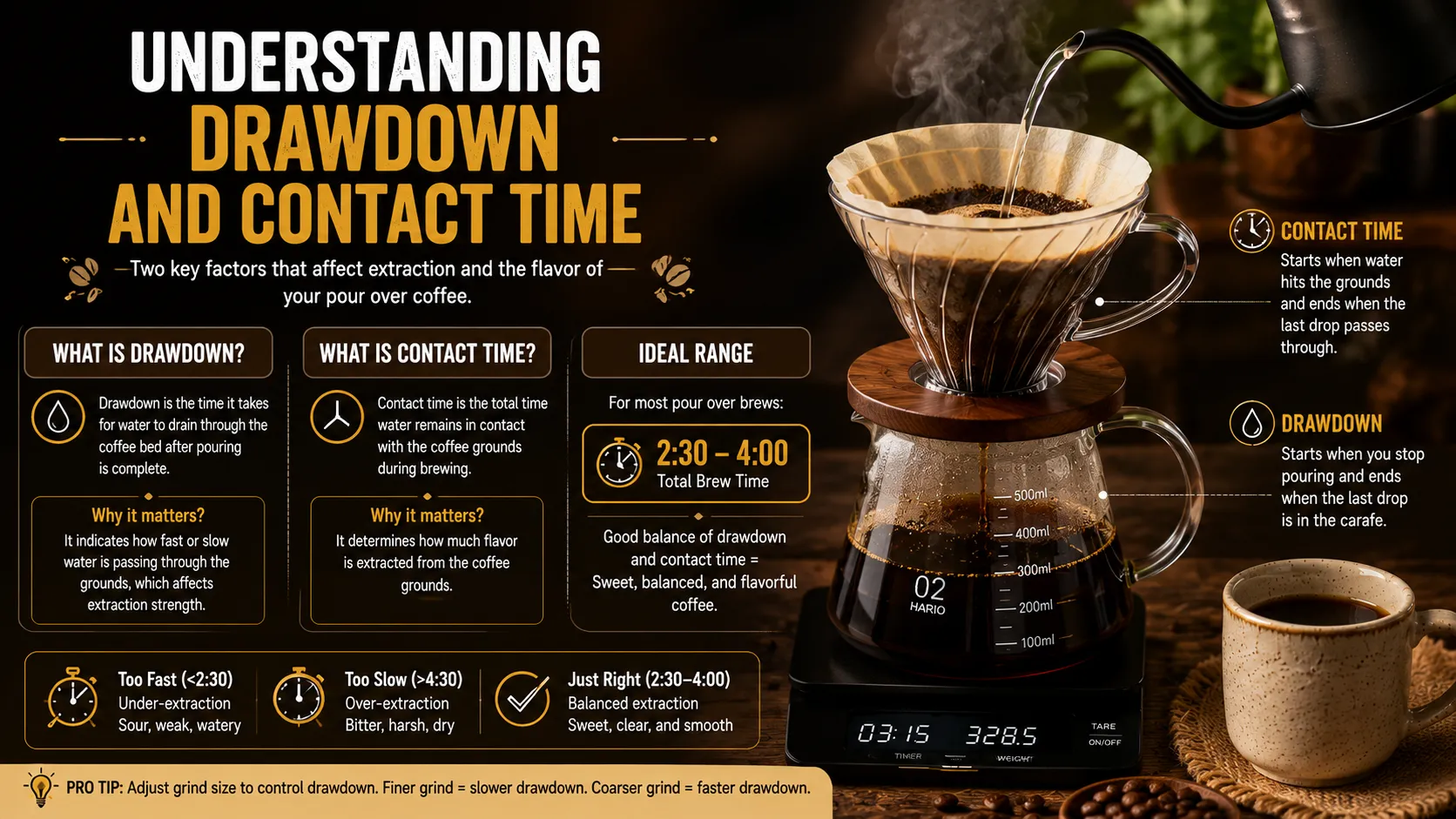
Two terms frequently discussed in specialty coffee are drawdown and contact time. Drawdown refers to the period when water drains through the coffee bed after pouring has finished. Contact time refers to the total amount of time water remains in contact with the coffee grounds.
For most hand-brewed coffee recipes, total brewing time falls between 2½ and 4 minutes. If drawdown becomes excessively slow, bitterness may develop. If water drains too quickly, the coffee may taste thin or underdeveloped. Monitoring brew time is one of the easiest ways to diagnose brewing issues.
What Is the Ideal Pour Over Coffee Ratio?
The coffee-to-water ratio is one of the most important variables in manual coffee brewing. Most specialty coffee professionals recommend starting with a ratio of approximately 1:16. This means one gram of coffee is paired with sixteen grams of water. For a single serving, approximately 15 grams of coffee and 250 grams of water create a balanced cup suitable for most coffee drinkers.
Some people prefer a stronger cup and may increase the coffee dose slightly. Others may reduce the amount for a lighter flavor profile. The key is consistency. Once you find a ratio you enjoy, use it regularly before making further adjustments.
Pour Over Coffee Ratio 1 Cup Explained
People searching for the best pour over coffee ratio 1 cup are often looking for a simple starting point. For one cup, use approximately 15 grams of coffee and 250 grams of water. This ratio provides a balanced extraction and works well across different brewing devices.
Coffee drinkers who enjoy stronger coffee may increase the dose to 16 or 17 grams, while those who prefer a lighter cup can reduce it slightly. The exact ratio matters less than using the same ratio consistently so you can accurately evaluate your brewing results.
Pour Over Coffee Tablespoons Per Cup
Not everyone owns a digital scale, especially beginners. For a standard 8-ounce cup, approximately 2½ tablespoons of medium-ground coffee is a practical starting point.
This measurement is commonly used by people searching for pour over coffee ratio tbsp or pour over coffee tablespoons per cup. Although weight measurements are more accurate, tablespoons can still produce very good results for everyday home brewing.
What Makes Fresh Coffee Beans So Important?
One observation that experienced coffee drinkers frequently make is that fresh coffee beans have a greater impact on flavor than expensive equipment. A basic dripper paired with freshly roasted coffee often produces better results than a premium brewing setup using stale beans.
Fresh beans contain more aromatic compounds and natural sweetness. As coffee ages, these flavors gradually diminish. For the best results, try to use coffee within a few weeks of its roast date and store it in an airtight container away from heat, moisture, and direct sunlight.
The Coffee Origins That Shine in Pour Over Brewing
Pour over coffee is particularly effective at highlighting origin characteristics. Ethiopian coffees are often known for floral aromas, berry-like sweetness, and bright fruit flavors. Colombian coffees frequently offer balanced sweetness, caramel notes, and chocolate characteristics that appeal to a wide range of coffee drinkers.
Kenyan coffees often display vibrant acidity and juicy fruit notes, while Guatemalan coffees commonly showcase cocoa-like sweetness and a rich body. Because pour over brewing produces a clean cup, these differences become easier to recognize and appreciate.
How to Brew Pour Over Coffee Step by Step
Now that you understand extraction, grind size, brew beds, and coffee ratios, it is time to put everything together. The brewing process itself is simple, but consistency matters. Small details often make the difference between an average cup and an exceptional one.
Step 1: Heat Your Water
Start by heating filtered water to approximately 195°F–205°F (90°C–96°C). Water temperature plays a significant role in extraction. Water that is too cool may lead to under-extraction, while excessively hot water can contribute to bitterness. If you do not own a thermometer, bring water to a boil and allow it to sit for about 30 seconds before brewing.
Step 2: Rinse the Filter
Place your paper filter inside the brewer and rinse it thoroughly with hot water. This step serves two important purposes. First, it removes any paper taste that might affect the coffee. Second, it preheats the brewer and carafe, helping maintain brewing temperature. Discard the rinse water before proceeding.
Step 3: Add the Coffee Grounds
Place your ground coffee into the filter and gently shake the brewer to create an even coffee bed. An even coffee bed helps water flow consistently through the grounds and reduces the risk of channeling.
Step 4: Bloom the Coffee
Pour enough water to saturate all the coffee grounds. For a 15-gram dose of coffee, approximately 30–40 grams of water works well. Allow the coffee to bloom for 30–45 seconds. Blooming releases trapped carbon dioxide from freshly roasted coffee. Skipping this step often results in uneven extraction and reduced flavor clarity.
Step 5: Continue Pouring Slowly
After blooming, continue adding water slowly in gentle circular motions. Try to keep the coffee bed evenly saturated throughout the brew. Many home brewers find that steady and controlled pouring produces more consistent results than rushing through the process.
Step 6: Allow the Coffee to Finish Brewing
Once all the water has been added, allow the coffee to drain completely through the filter. For most brewing setups, total brew time should fall between 2½ and 4 minutes. If brewing finishes significantly faster or slower, adjustments to grind size may be necessary.
The Role of Agitation in Pour Over Brewing
Agitation refers to the movement of coffee grounds during brewing. Every pour creates some level of agitation. The amount of movement influences extraction because it changes how water interacts with the coffee bed. Too little agitation may contribute to under-extraction, while excessive agitation can create bitterness.
Most experienced brewers use a gentle circular pouring pattern because it provides enough movement for balanced extraction without excessively disturbing the grounds. One common observation during home brewing is that improving pouring consistency often produces better results than purchasing new equipment.
How to Make Pour-Over Coffee Without a Scale
Many beginners wonder if a scale is necessary. While scales improve consistency, they are not required to make excellent coffee. To prepare a single cup without a scale, use approximately 2½ tablespoons of medium-ground coffee and 8 ounces of water.
The brewing process remains the same. Bloom the grounds for about 30 seconds and then continue pouring slowly until all water has been added. Many people successfully brew flavorful coffee every day without weighing their ingredients. The key is using the same measurements consistently.
How to Make Pour Over Coffee With a Scale
Using a scale provides the highest level of accuracy. Professional baristas and coffee enthusiasts often rely on scales because they eliminate guesswork and make it easier to repeat successful brews. For a balanced single cup, use approximately:
- 15 grams of coffee
- 250 grams of water
A scale also helps control bloom water, total water volume, and brewing ratios. Over time, this consistency makes it much easier to refine your technique.
How to Make Pour Over Coffee With Metal Filter
Reusable metal filters have become increasingly popular among home brewers who enjoy a fuller-bodied cup. Unlike paper filters, metal filters allow more natural coffee oils and microscopic particles to pass through. This creates a richer mouthfeel and a heavier body. The brewing process is nearly identical to paper-filter brewing.
However, many brewers prefer using a slightly coarser grind because metal filters typically drain faster than paper filters. Coffee brewed with a metal filter often tastes bolder, while paper-filter coffee generally emphasizes clarity and brightness. Neither approach is objectively better. The choice depends on personal preference.
How to Make Pour Over Coffee With Just a Filter
There are situations where a brewer may not be available. While not ideal, it is possible to improvise using only a paper filter and a mug. Carefully secure the filter over a cup, add coffee grounds, and slowly pour hot water over the coffee.
Results may not be as consistent as using a dedicated dripper, but this method can work surprisingly well during travel or emergencies. The same principles still apply:
- Use a medium grind.
- Bloom the coffee first.
- Pour slowly and evenly.
Pour Over Coffee vs French Press
Both brewing methods are capable of producing excellent coffee, but they create very different drinking experiences.
Pour Over vs French Press Comparison
Feature | Pour Over Coffee | French Press |
Flavor Clarity | High | Medium |
Body | Light to Medium | Heavy |
Sediment | Very Low | Higher |
Brewing Control | High | Medium |
Clean Cup | Excellent | Moderate |
Learning Curve | Moderate | Easy |
Coffee drinkers who enjoy distinct flavor notes often prefer pour over brewing. Those who enjoy a richer body and heavier texture may gravitate toward French press coffee.
Common Mistakes That Ruin Pour Over Coffee
Even experienced brewers occasionally encounter disappointing results. The good news is that most brewing problems stem from a small number of common mistakes.
- Using stale coffee beans
- Grinding too fine or too coarse
- Skipping the bloom stage
- Using water that is too hot
- Pouring too quickly
- Ignoring brewing ratios
- Changing multiple variables at the same time
When troubleshooting, it is usually best to adjust only one variable at a time. This approach makes it easier to identify what caused the improvement.
Pour Over Coffee Taste Troubleshooting Guide
One of the fastest ways to improve your brewing skills is learning how to diagnose flavor problems.
Pour Over Coffee Troubleshooting Table
Taste Issue | Likely Cause | Recommended Solution |
Sour Coffee | Under-extraction | Use a finer grind |
Weak Coffee | Too little coffee | Increase coffee dose |
Watery Coffee | Too little coffee | Increase coffee dose |
Bitter Coffee | Over-extraction | Use a coarser grind |
Harsh Finish | Water too hot | Lower water temperature |
Slow Brewing | Grind too fine | Coarsen the grind |
Fast Brewing | Grind too coarse | Make the grind finer |
This simple troubleshooting method often solves most brewing issues without requiring new equipment.
Real-World Brewing Lessons That Improve Results
One lesson many coffee enthusiasts learn over time is that expensive equipment cannot compensate for poor fundamentals. A basic pour over dripper combined with fresh coffee beans and a consistent technique can easily outperform an expensive setup using stale coffee. Another common mistake is chasing perfection too quickly.
Many beginners adjust grind size, water temperature, coffee dose, and pouring speed all at once. While this may seem logical, it makes troubleshooting nearly impossible.
Experienced brewers usually change only one variable at a time and evaluate the results before making additional adjustments. This approach produces more reliable improvements and builds a deeper understanding of extraction.
Pour Over Coffee for Beginners: Practical Tips
If you are new to manual coffee brewing, keep things simple. Focus on consistency rather than perfection.
- Start with a 1:16 coffee-to-water ratio.
- Use freshly roasted coffee beans whenever possible.
- Grind coffee immediately before brewing.
- Aim for a brew time between 2½ and 4 minutes.
- Keep your pouring steady and controlled.
Most beginners see significant improvements simply by following these fundamentals consistently.
Related Coffee Topics You May Like
Frequently Asked Questions
What is the easiest way to brew pour over coffee?
Use a medium grind size, a 1:16 coffee-to-water ratio, and bloom the coffee for 30–45 seconds before slowly adding the remaining water.
Can I make pour over coffee without a scale?
Yes, Approximately 2½ tablespoons of coffee per 8-ounce cup works well for most brewing situations.
What is the ideal pour over coffee ratio?
Most specialty coffee professionals recommend starting with a 1:16 coffee-to-water ratio.
Is a metal filter better than a paper filter?
Metal filters create a fuller-bodied cup, while paper filters produce cleaner and brighter coffee. The better choice depends on personal preference.
Why does my pour over coffee taste bitter?
Bitterness is often caused by over-extraction. Common causes include a grind that is too fine, excessive brew time, or water that is too hot.
What grind size is best for pour over coffee?
A medium grind similar to sea salt is the best starting point for most pour over brewers.
How long should pour over coffee take?
Most successful brews finish within 2½ to 4 minutes.
What water temperature is best for pour over coffee?
The ideal range is between 195°F and 205°F (90°C–96°C).
Conclusion
Learning how to brew pour over coffee is one of the most rewarding ways to improve your daily coffee experience. While the method may seem technical at first, the fundamentals are surprisingly straightforward. Fresh coffee, proper grind size, balanced brewing ratios, and consistent pouring technique form the foundation of great coffee.
Whether you are exploring pour over coffee for beginners, learning how to make pour-over coffee without a scale, experimenting with how to make pour over coffee with a metal filter, or refining your technique using a digital scale, success comes from understanding extraction and making small, deliberate adjustments.
Start with a medium grind, a 1:16 coffee-to-water ratio, and a brew time of roughly three minutes. As your experience grows, you will begin noticing how different beans, brewing devices, and techniques influence flavor.
The beauty of pour over coffee is that it transforms an everyday routine into a craft. With a little patience and practice, you can consistently brew coffee that rivals many specialty cafés while developing a deeper appreciation for the beans in your cup.