

A lot of people try roasting coffee at home with excitement, but the results often disappoint them. The beans either taste too bitter, too sour, or completely flat. The confusion usually starts because most guides oversimplify the process. They tell you to “heat the beans and wait,” but they do not explain what is actually happening inside the beans or how small changes affect flavor.
When you start learning how to roast coffee beans, you quickly realize that timing, temperature, and even how fast you cool the beans all matter. The difference between a smooth, rich cup and a harsh, burnt one often comes down to just a minute or two.
This guide is written to remove that confusion. It explains the process in a clear and practical way, so even a beginner can get good results.
To roast coffee beans, you heat green coffee beans evenly until they reach the desired roast level. You monitor changes in color, smell, and listen for cracking sounds. Once the beans reach your preferred roast, you immediately cool them to stop further cooking.
Coffee roasting is not just heating beans until they turn brown. Inside each bean, there is moisture, natural sugars, and complex compounds that react to heat. As the temperature rises, water inside the bean starts to evaporate.
This creates pressure, and eventually the bean expands and cracks. At the same time, sugars begin to caramelize, and this is what creates the aroma and flavor you associate with coffee, especially in richer profiles like dark roast coffee.
This is why roasting is so sensitive. If the heat is too low, the beans never fully develop their flavor. If the heat is too high, the outer layer burns before the inside develops. The key is balance. In real life, this means you are not just roasting for color. You are roasting for taste, aroma, and texture, whether you are aiming for a light roast or a bold dark roast coffee.
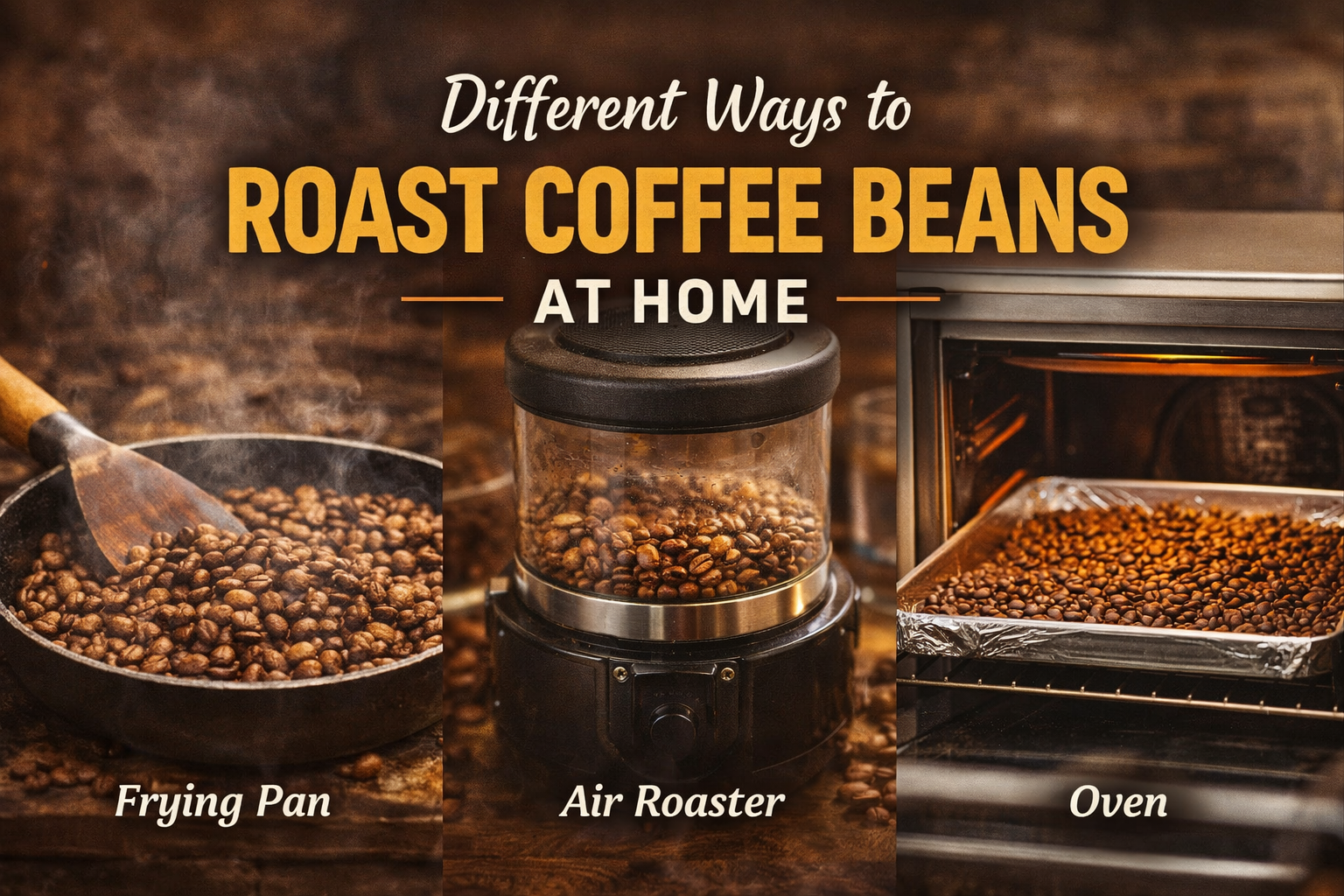
There is no single “right” way to roast coffee beans. The method you choose depends on your budget, your kitchen setup, and how serious you are about coffee.
Pan roasting is the simplest method, and the one most beginners start with. You use a thick pan on a stove and continuously move the beans to prevent burning. This method gives you direct control over heat, but it requires attention.
In real kitchens, this method works well for small batches. However, it produces smoke and requires constant focus. If you stop stirring even for a few seconds, some beans may burn while others remain under-roasted.
Oven roasting is more convenient if you want to roast a larger quantity at once. You spread the beans on a baking tray and roast them at a high temperature.
The challenge with ovens is uneven heat distribution. Some beans roast faster than others, which can result in mixed flavors. It works, but it is not the most precise method.
Air fryers have become popular for roasting coffee because they circulate hot air evenly. This creates more consistent roasting compared to an oven.
However, not all air fryers are designed for this purpose. You still need to monitor the process carefully, shake the basket occasionally, and avoid overheating.
If you want consistent, high-quality results, a coffee roasting machine is the best option. These machines are designed specifically for roasting coffee, with controlled heat and airflow, and they work best when paired with a quality Coffee Grinder to maintain consistency from roasting to brewing.
In real-world use, this means fewer mistakes and better flavor consistency. This is why professionals and serious coffee enthusiasts prefer this method, often combining precise roasting with a reliable Coffee Grinder for optimal results.
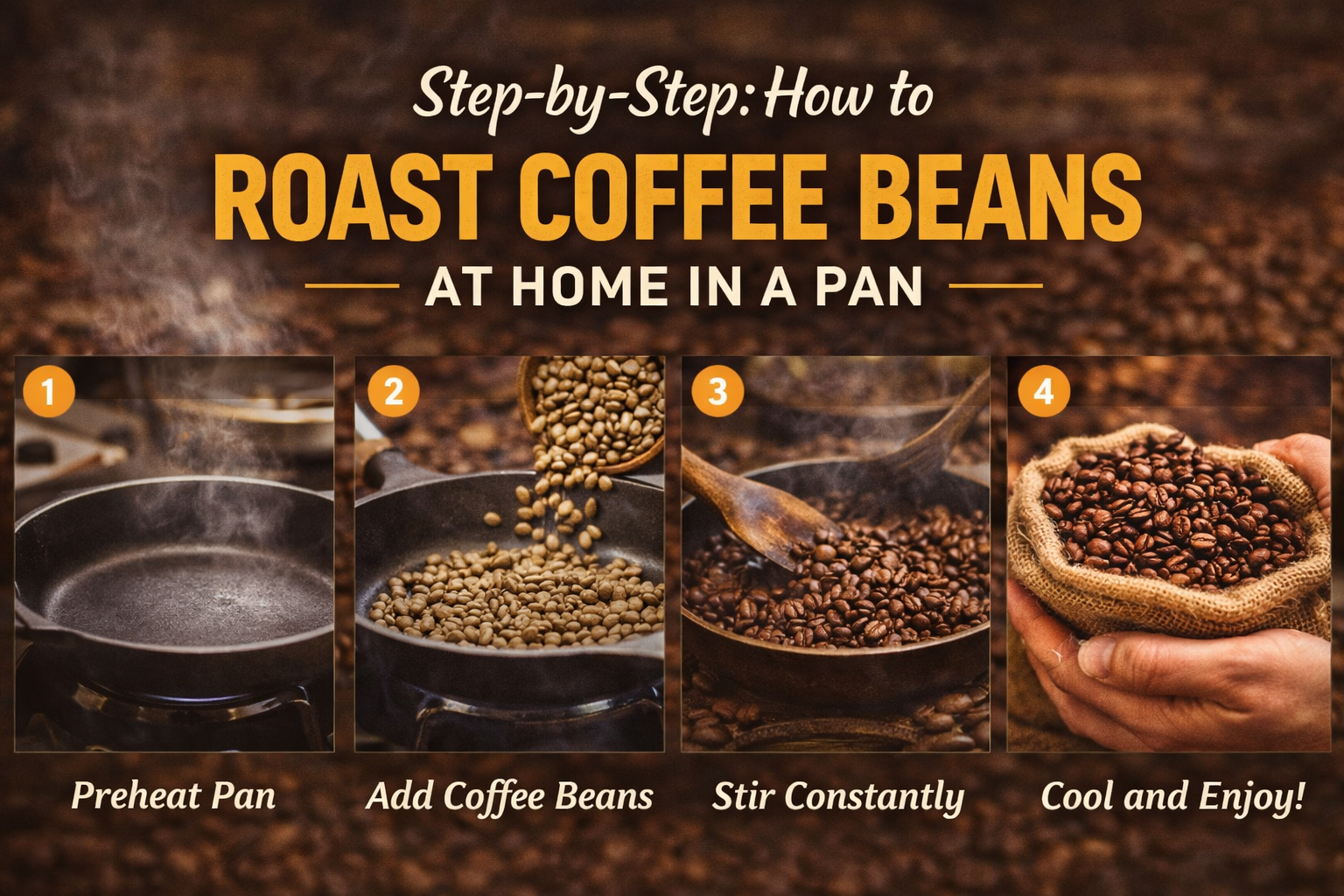
This is the easiest method for beginners.
Use medium heat. Too high heat burns beans quickly.
Spread them evenly. Do not overcrowd.
Keep beans moving to avoid uneven roasting.
Transfer beans to a metal tray or colander. Cooling stops roasting.
Wait 12–24 hours before brewing for the best flavor.
Espresso requires a slightly different approach compared to regular coffee. When learning how to roast coffee beans for espresso, the goal is balance. Espresso extraction is intense, so the beans need enough development to avoid sourness but not so much that they become bitter.
Espresso extraction is intense, so the beans need enough development to avoid sourness but not so much that they become bitter. A medium-dark roast is usually ideal. This means roasting slightly beyond the first crack but stopping before the beans become too oily.
In practical terms, this gives espresso a rich body, balanced acidity, and smooth flavor, which is exactly what defines the performance difference in espresso beans vs coffee beans.
Method | Cost | Control | Flavor Quality | Best For |
Pan | Low | Medium | Good | Beginners |
Oven | Low | Low | Average | Large batches |
Air Fryer | Medium | Medium | Good | Convenience |
Coffee Roasting Machine | High | High | Excellent | Advanced users |
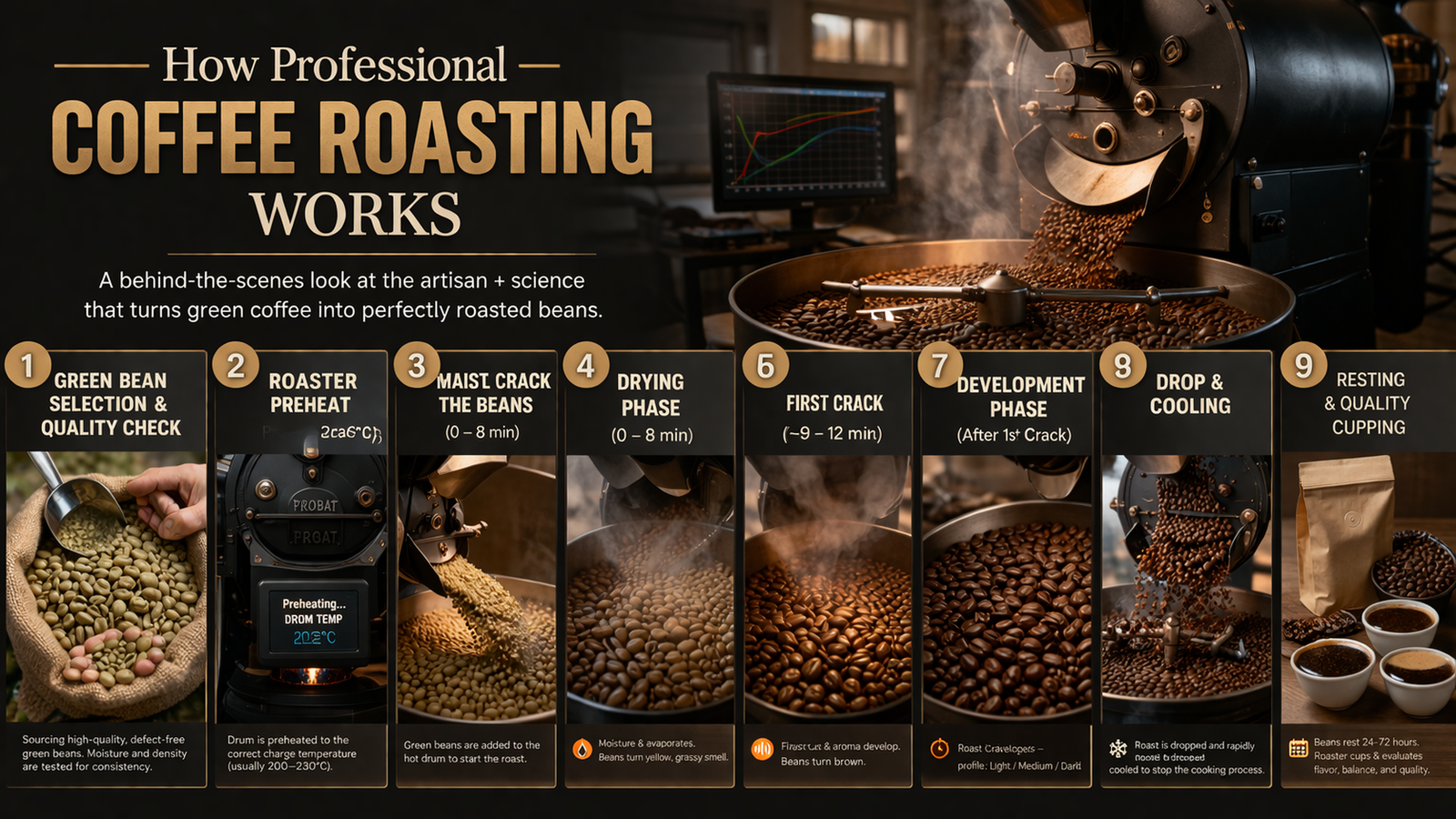
Professional roasting focuses on consistency and precision. Instead of guessing, professionals use temperature tracking and time control to develop roasting profiles. These profiles define how heat changes throughout the roasting process, especially when aiming for specific profiles like French Roast Coffee.
In real-world roasting facilities, even small temperature adjustments can change the final taste. This is why professional roasters carefully monitor every stage. The goal is not just to roast beans, but to maintain the same quality every time.
If you want to experiment with flavored coffee, the safest approach is to add flavor after roasting. For example, you can store roasted beans with natural ingredients like vanilla pods or cinnamon sticks. Over time, the beans absorb subtle flavors without damaging their structure.
Trying to add syrups or artificial flavor during roasting often leads to burnt or unpleasant results. Heat breaks down these additives and negatively affects taste.
One of the most common mistakes is using very high heat to speed up the process. This often burns the outside of the beans while leaving the inside underdeveloped. Another issue is uneven roasting caused by poor stirring or overcrowding. This leads to inconsistent flavors within the same batch.
Many beginners also ignore the importance of cooling. Beans continue to cook even after being removed from the heat, so slow cooling can ruin the roast. Using the best coffee beans for espresso is important, but even high-quality beans can lose their potential if the cooling process is not handled properly.
Using low-quality or old green beans is another overlooked factor. Even perfect roasting cannot fix poor raw material. Finally, skipping the resting period can result in unstable and sharp flavors. Freshly roasted beans need time to settle.
If you want better results, focus on consistency rather than speed. Roast smaller batches so you can control the heat more effectively. Pay attention to sound, smell, and color together. These three indicators give you a better sense of roast level than relying on time alone.
Keeping a simple record of each roast, including time and observations, helps you improve faster. Ventilation is also important. Coffee roasting produces smoke, so make sure your space is well ventilated.
If you are completely new, pan roasting is the best starting point because it teaches you the fundamentals. If you want convenience and faster results, an air fryer can work well with proper monitoring.
If coffee is more than just a casual hobby for you, investing in a coffee roasting machine will give you better control and consistency. For espresso lovers, focusing on medium-dark roasting will help achieve the best balance in flavor.
It usually takes between 8 and 15 minutes, depending on the method and roast level.
Yes, but results may not be very consistent due to uneven heat distribution.
The cracking happens because moisture inside the beans expands and creates pressure.
In many cases, yes. Green coffee beans are often more affordable than pre-roasted beans.
Yes, air fryers can work well if you control the temperature and monitor the process closely.
Resting allows gases to release, which improves flavor and extraction.
Learning how to roast coffee beans is a process that improves with practice. It is not about getting everything perfect on the first try. It is about understanding how heat, timing, and cooling affect flavor.
Once you start noticing these details, your results improve quickly. What begins as a simple kitchen experiment can turn into a skill that gives you better coffee every single day.





Contact Us Jump To Does Black Coffee Have Calories Real Truth About Fasting, Weight Loss & Health You switch to black coffee, thinking it is the safest drink for weight loss. No sugar, no milk, almost no calories. It feels like a smart move. But…
Contact Us Jump To How to Roast Coffee Beans at Home (Beginner to Pro Guide) A lot of people try roasting coffee at home with excitement, but the results often disappoint them. The beans either taste too bitter, too sour, or completely flat. The confusion…
Contact Us Jump To Baratza Encore Coffee Grinder A Beginner Friendly Guide to Grind Quality, Settings, Upgrades, and Whether It Is Still Worth Buying You buy good coffee beans, follow a recipe, and still get a cup that tastes flat, bitter, or oddly sour. For…

Explore the world of coffee with honest reviews and practical advice. Find your perfect cup, one bean and machine at a time.