

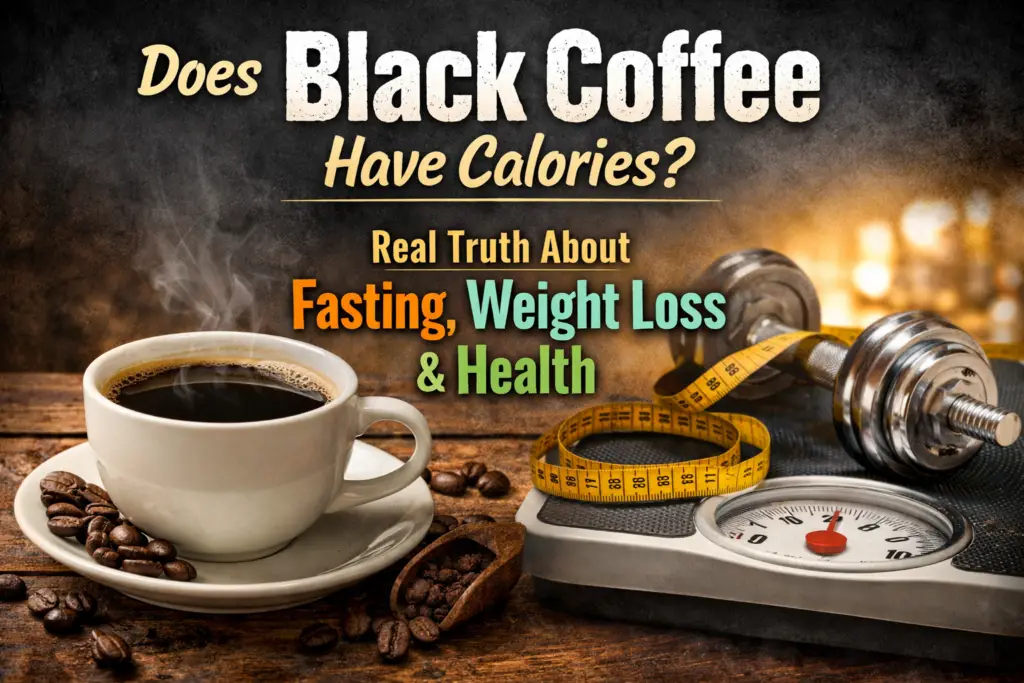
Short answer: yes, but barely. A standard 8oz cup of plain black coffee has about 2 calories — so close to zero that most people treat it as calorie-free. The calories don’t come from caffeine. They come from tiny traces of oils, proteins, and acids the water pulls out of the ground beans.
That’s it. If your coffee is genuinely black — no sugar, no milk, no cream, no flavored syrup — the calorie question is basically settled. Where things get interesting is everything people add to it.
Black coffee is just water that’s extracted compounds from roasted coffee beans. Along with caffeine, that brew carries antioxidants, natural acids, and those trace amounts of oils and proteins I mentioned.
Espresso and French press tend to carry slightly more of those oils because there’s no paper filter catching them. Drip or pour-over, with its paper filter, tends to be the leanest. In practice? The difference is a calorie or two at most. Not worth losing sleep over.
Plain coffee is never the problem. Additions are. Here’s what one typical serving of common additions adds to your cup:
| What you add | Typical serving | Adds roughly |
|---|---|---|
| White sugar | 1 teaspoon | 16 calories |
| Brown sugar | 1 teaspoon | 15 calories |
| Honey | 1 teaspoon | 21 calories |
| Whole milk | 1 tablespoon | 9 calories |
| Half-and-half | 1 tablespoon | 20 calories |
| Heavy cream | 1 tablespoon | 50 calories |
| Flavored syrup (vanilla, caramel) | 1 tablespoon | 50–60 calories |
| Sweetened condensed milk | 1 tablespoon | 55 calories |
| Coffee creamer (dairy) | 1 tablespoon | 20 calories |
| Zero-calorie sweetener (stevia, sucralose) | 1 packet | 0–4 calories |
See the pattern? A splash of milk is nothing to worry about — around 9 calories per tablespoon. It’s the sugar and the flavored syrups that turn a 2-calorie drink into a small dessert. Two teaspoons of sugar plus a flavored syrup pump can easily push a single cup past 100 calories, and most people drink that two or three times a day.
If you want a fuller breakdown of how calories change across different coffee drinks — lattes, cappuccinos, frappes — our guide on how many calories coffee has covers the whole menu.
For most people doing intermittent fasting, plain black coffee does not break a fast. Two calories won’t meaningfully raise insulin or kick you out of a fat-burning state, which is why fasting guides almost universally allow it.
The moment you add sugar, milk, cream, or even a “light” flavored creamer, that’s no longer a fast-friendly drink. Those calories and carbs are exactly what a fast avoids.
One caveat: some people find black coffee on an empty stomach makes them feel jittery or acidic. If that’s you, it’s fine to have it after a small meal or switch to a low-acid roast — no point forcing a habit that makes you miserable.
Let’s be straight here, because the internet is full of nonsense on this topic. Black coffee does not burn fat. It doesn’t melt belly fat. There is no fat-burning window, and anyone promising that is selling something.
What black coffee can do is more modest and still genuinely useful:
The pattern that actually works: black coffee supports a calorie deficit; it doesn’t create one. People who drink black coffee and still eat more than they burn will not lose weight, and that’s not the coffee’s fault.
Most healthy adults can handle 2 to 4 cups a day, which keeps caffeine within the widely cited limit of about 400 mg per day. A typical cup lands around 80–100 mg of caffeine.
Go well beyond that and you’re looking at the usual over-caffeination suspects: jitteriness, anxiety, a racing heart, and sleep trouble. Poor sleep then messes with appetite hormones, which quietly sabotages any weight-loss effort. There’s a sweet spot — find yours by paying attention to your body rather than chasing a number.
If caffeine is a concern for you, it’s also worth knowing exactly how much caffeine per day is safe and where your other sources add up.
Black coffee wins on pure calorie math — 2 calories versus whatever your milk and sugar add. But milk coffee isn’t the enemy. A tablespoon of milk in your coffee is roughly 9 calories; that’s a rounding error in most diets.
The honest answer: the “best” option is the one you’ll actually stick with. If you hate black coffee and a splash of milk is the difference between drinking it and ordering a caramel frappe, take the milk. Sustainability beats perfection every time.
The “just a little sugar” habit. One teaspoon is 16 calories. Sounds like nothing — until it’s three cups a day, every day, for a year. That’s the most common way black coffee drinkers quietly add calories.
Drinking more to lose more. Coffee is not a fat burner, so upping your intake chasing weight loss just gets you jittery and sleep-deprived.
Flavored everything. Flavored syrups, sweetened creamers, and “coffee milkshakes” marketed as coffee drinks are where the real calories hide. Read the label if it comes from a bottle.
Ignoring the basics. Coffee supports good habits; it doesn’t replace them. Sleep, food, and movement do the heavy lifting.
Yes — about 2 calories per 8oz cup. Close enough to zero that it doesn’t matter for dieting or fasting.
Plain black coffee doesn’t break a fast for most people. Adding sugar, milk, or cream does.
No drink targets belly fat specifically. Black coffee can support weight loss by replacing higher-calorie drinks and slightly reducing hunger, but fat loss comes from a sustained calorie deficit.
Calorie-wise, yes. But a small splash of milk (about 9 calories per tablespoon) is fine if it helps you stick with the habit.
Yes — most healthy adults do fine with 2 to 4 cups a day. Just watch your total caffeine and don’t drink it late in the day.
Does black coffee have calories? Technically yes — about 2 per cup. Practically? It’s the lowest-calorie drink most people touch all day, and it stays that way as long as you keep it plain. It’s not a weight-loss miracle, but it’s a genuinely useful habit: near-zero calories, appetite control, and pre-workout energy in one cup. Keep it simple, skip the sugar, and let it do the quiet work it does best.




Here’s a question most of us never actually answer: how much caffeine did you really have today? That morning latte, the mid-afternoon cold brew, the cola with lunch — they add up fast, and almost nobody does the math. So we built this caffeine calculator…
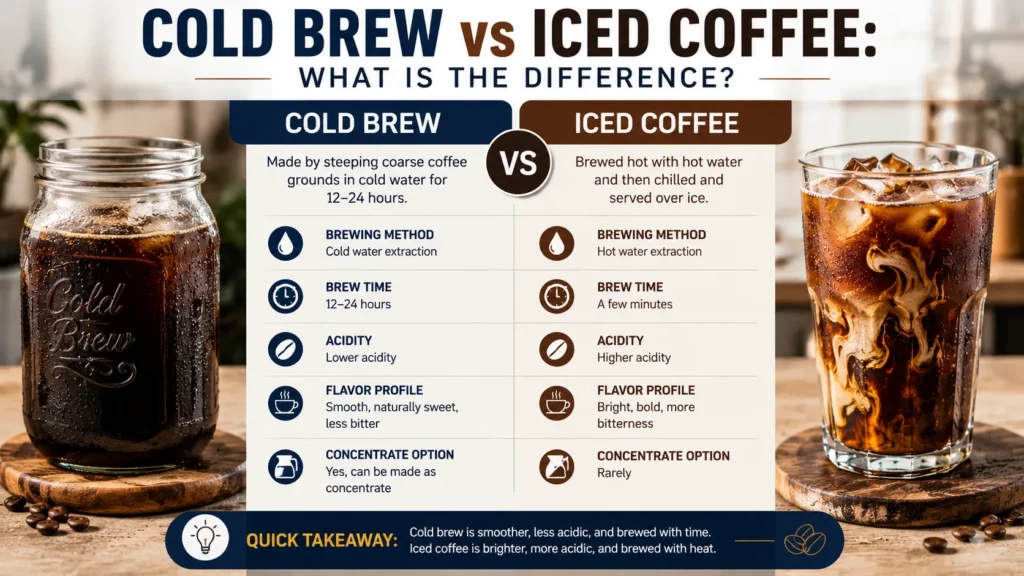
Cold brew vs iced coffee vs iced espresso — the summer menu looks simple until you have to choose. They all show up in a glass of ice. But they don’t taste the same, they aren’t made the same way, and they don’t take the…

French press vs pour over vs espresso — three brewers, three very different cups of coffee. None of them is objectively “the best.” They just suit different mornings, different budgets, and different tastes. This guide compares all three honestly: how each one works, what the…

Explore the world of coffee with honest reviews and practical advice. Find your perfect cup, one bean and machine at a time.