
Cold brew vs iced coffee vs iced espresso — the summer menu looks simple until you have to choose. They all show up in a glass of ice. But they don’t taste the same, they aren’t made the same way, and they don’t take the same effort.
Once you know what separates them, you’ll know which one to order — and more importantly, which one’s worth making in your own kitchen. This guide breaks all three down side by side and includes a full step-by-step cold brew recipe to get you started.
Key Takeaways
- Cold brew is coffee steeped in cold water for 12–18 hours. It’s smooth, naturally sweet, and low in perceived acidity — but it needs planning ahead.
- Iced coffee is regular hot coffee brewed double-strength and poured over ice. It’s bright, familiar-tasting, and ready in about 10 minutes with gear you probably already own.
- Iced espresso is espresso shots served over ice (often shaken). It’s bold and intense, and it’s the base for iced lattes — but true espresso needs an espresso machine.
- Cold brew is typically the strongest per ounce before diluting, while iced coffee is closest to a normal cup of coffee in strength.
- For most home brewers, iced coffee is the easiest starting point and cold brew is the best batch option for the week ahead.
Cold Brew: Slow-Steeped and Smooth
How It’s Made
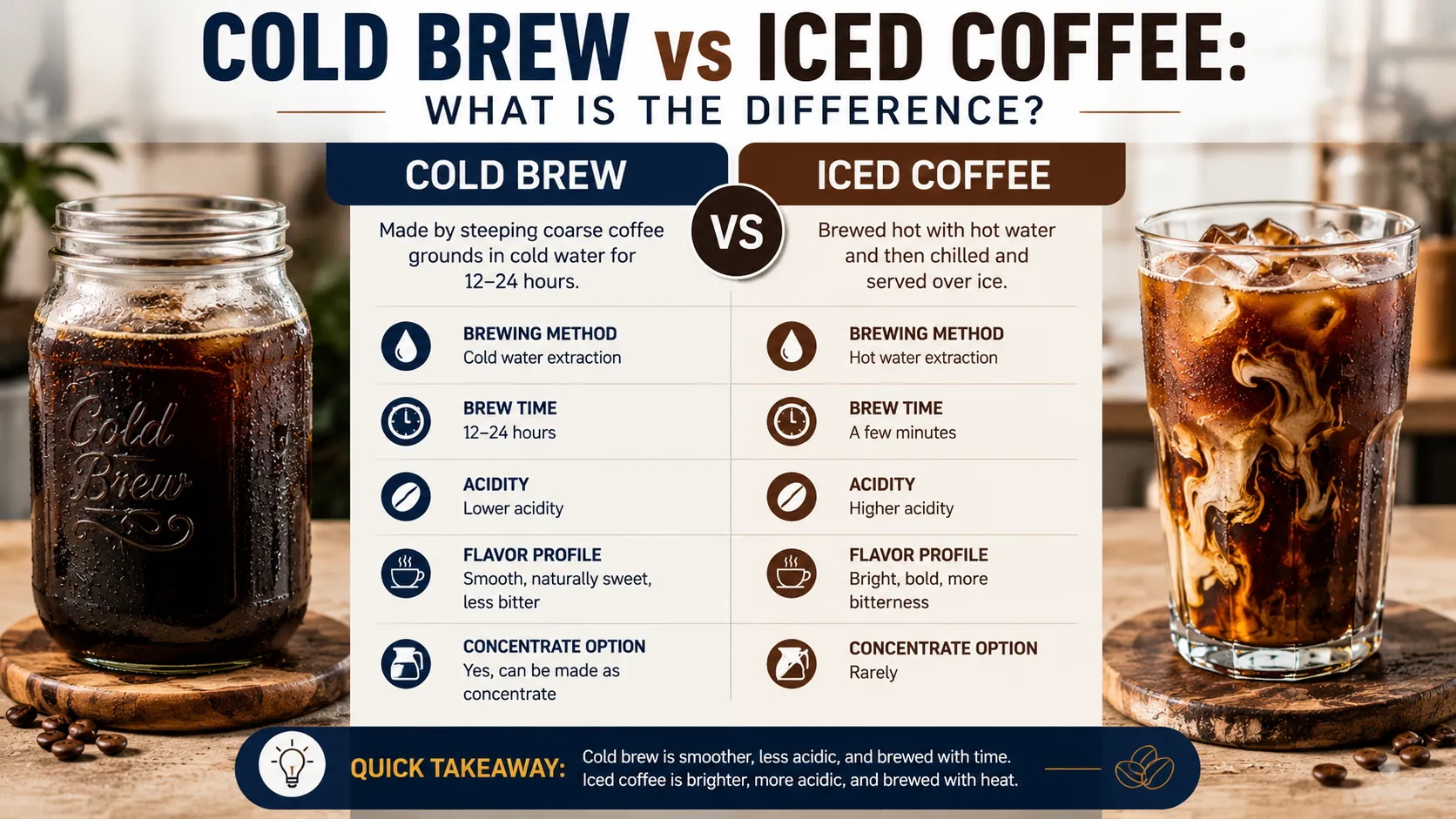
Cold brew is made by steeping coarsely ground coffee in cold or room-temperature water for a long time — usually 12 to 18 hours, though some recipes go up to 24. No heat at all. You combine the grounds and water in a jar or pitcher, let time do the work, then strain out the grounds.
Most home recipes make a concentrate (a common ratio is about 1 part coffee to 8 parts water by weight) that you dilute with water or milk before drinking. You can also brew it ready-to-drink at a weaker ratio, around 1:15 or 1:16. Either way, all you need is coarse grounds, cold filtered water, and patience.
What It Tastes Like
Cold brew is famous for being smooth. Heat pulls acids and bitter compounds out of coffee aggressively; cold water doesn’t. So the cold-steep method gives you a cup that tastes naturally sweet, mellow, and chocolatey, with noticeably less perceived acidity. People who find hot coffee harsh or sour tend to love cold brew for exactly this reason.
The trade-off is complexity. Some of the bright, fruity, floral notes that heat brings out stay muted in cold brew. It’s less “interesting” than a great pour-over, but more consistently pleasant.
Caffeine Character
Cold brew concentrate is typically the strongest of the three per ounce — which is exactly why you’re meant to dilute it. Cut a concentrate 1:1 with water or milk and a serving lands in a strong-but-reasonable range. Drink the concentrate straight (not recommended for most people) and expect a serious jolt.
Time, Effort & Cost
- Active time: about 5 minutes to combine grounds and water, plus a few minutes to strain.
- Total time: 12–18 hours of waiting — this is a plan-ahead drink, not a spontaneous one.
- Effort: very low. No technique required.
- Cost: minimal. A large jar, a strainer, and a paper filter or cheesecloth are enough. No special brewer needed, though dedicated cold brew makers exist if you make it often.
Iced Coffee: Hot-Brewed, Flash-Chilled
How It’s Made
Iced coffee is simply hot coffee served cold. The standard home method: brew your coffee at roughly double strength (twice the grounds or half the water), then pour it straight over a full glass of ice. The ice chills it instantly and melts into the brew, bringing it back down to normal strength.
There’s a refined version called Japanese-style iced coffee (or flash-chilled coffee): you brew a pour-over directly onto ice, replacing part of the brewing water with ice in the carafe, so the hot coffee hits the ice the moment it drips through. Takes a little measuring, but the cup tastes noticeably fresher.
What It Tastes Like
Iced coffee tastes like… coffee. Since it’s brewed hot, it keeps the full flavor profile of the beans: brighter acidity, more aromatics, and those fruity or floral notes that cold brew mutes. If you love how your morning pour-over or drip coffee tastes, iced coffee is that same flavor, just cold.
The risk is bitterness. Hot brewing extracts more, so over-extracted or stale beans taste worse iced than they do in a forgiving cold brew. Fresh beans and a decent grinder matter more here.
Caffeine Character
A glass of iced coffee is roughly comparable to a regular hot cup of the same size — moderate and familiar. You brewed it double-strength, then the melting ice diluted it back down. The math evens out to about a standard serving.
Time, Effort & Cost
- Active time: about 10 minutes, start to finish.
- Total time: 10 minutes — no waiting, no planning.
- Effort: low to medium. If you can brew hot coffee, you can make iced coffee.
- Cost: nothing extra if you already own any coffee brewer — drip machine, pour-over, French press, or AeroPress all work.
Iced Espresso: Bold Shots Over Ice
How It’s Made
Iced espresso starts with real espresso: finely ground coffee forced through with hot water under high pressure (around 9 bars in a proper machine), producing a small, concentrated shot topped with crema. For the iced version, pull one or two shots and pour them over ice — or shake them with ice in a cocktail shaker. Shaking chills the shots fast, adds a light foam, and slightly mellows the intensity (a style similar to the Italian shakerato).
Here’s the honest part: true espresso requires an espresso machine. A moka pot or AeroPress can make strong, concentrated coffee that works well over ice and in milk drinks, but it isn’t technically espresso. No espresso machine? A moka pot is the most affordable way to get in the ballpark.
What It Tastes Like
Bold and intense. Espresso is concentrated by nature, so iced espresso hits harder than the other two — syrupy body, deep roasted flavors, a pleasant bitterness. Poured over ice, the crema dissipates quickly, but the intensity stays. This is also the foundation of iced lattes and iced Americanos: add cold milk to iced espresso and you’ve got an iced latte; add cold water and you’ve got an iced Americano.
Caffeine Character
It depends entirely on the number of shots. A double shot over ice is a strong, fast-acting serving — roughly in the same neighborhood as a large strong coffee, though the small volume makes it feel more potent. Because it’s so concentrated, it’s easy to overdo it without realizing.
Time, Effort & Cost
- Active time: 5 minutes or less once the machine is heated.
- Total time: minutes — the fastest of the three if your machine is ready.
- Effort: medium. Espresso takes some dialing in (grind size, dose, timing), though iced drinks are forgiving.
- Cost: the highest barrier. Espresso machines run from a couple hundred dollars upward, plus a capable grinder. A moka pot (usually under $40) is the budget alternative for strong iced coffee drinks.
Cold Brew vs Iced Coffee vs Iced Espresso: Side-by-Side Comparison
| Cold Brew | Iced Coffee | Iced Espresso | |
|---|---|---|---|
| Brew method | Coarse grounds steeped in cold water | Hot coffee brewed double-strength, poured over ice | Espresso shots over ice (or shaken) |
| Brew time | 12–18 hours (5 min active) | ~10 minutes | ~5 minutes |
| Taste | Smooth, sweet, low acidity, chocolatey | Bright, familiar, full coffee flavor | Bold, intense, syrupy |
| Typical caffeine | Higher (concentrate, served diluted) | Medium (like a regular cup) | Varies — depends on number of shots |
| Planning needed | Yes — start the night before | No | No |
| Equipment cost | Very low (jar + strainer) | None extra (use your brewer) | High for true espresso; low with moka pot |
| Best for | Batch brewing for the week | A quick single glass | Milk-based iced drinks, intensity lovers |
| Keeps well? | Yes — about a week refrigerated | No — best fresh | No — best fresh |
Which Should You Make at Home?
Forget “which is best” — the right answer depends on your taste, your gear, and your routine. Find yourself below:
Make cold brew if: you dislike acidic or bitter coffee and prefer something smooth and naturally sweet; you like prepping ahead (a Sunday-night jar covers your whole week); or you want the lowest-effort method with the least equipment. Drink a lot of iced coffee? One batch beats brewing single glasses all week.
Make iced coffee if: you want it right now with zero planning; you already own a drip machine, pour-over, or French press; or you love the bright, complex flavors of your favorite beans and want those same flavors cold. Easiest entry point for beginners.
Make iced espresso if: you own an espresso machine (or are willing to get one); you mostly drink milk-based drinks like iced lattes; or you want maximum intensity in minimum volume. No machine? Try the moka pot route first — excellent strong iced coffee for very little money.
Still torn? Start with iced coffee this week — it costs nothing extra and takes ten minutes. Making it daily? Graduate to a weekend cold brew batch. And if milk drinks are your thing, that’s your sign to explore espresso or moka pot brewing.
Featured Recipe: Classic Cold Brew Concentrate
This makes about 800 ml of concentrate — roughly 6 to 8 servings once diluted. You’ll need a large jar or pitcher, coarse-ground coffee, cold filtered water, a fine-mesh strainer, and a paper coffee filter or cheesecloth.
- Grind it coarse. Grind 100 grams of coffee (about 1¼ cups of whole beans) to a coarse texture, like raw sugar or breadcrumbs. Too fine and your cold brew turns bitter and muddy; too coarse and it tastes weak. Buying pre-ground? Ask for a French-press grind.
- Combine with cold water. Add the grounds to your jar, then pour in 800 ml (about 3⅓ cups) of cold, filtered water. This 1:8 ratio makes a concentrate. Stir gently so all the grounds get wet — dry clumps won’t extract.
- Steep 16 hours. Cover and leave it at room temperature for 12 to 18 hours (16 is a reliable middle ground). Prefer a cleaner, slightly sweeter cup? Steep in the fridge for 18 to 24 hours instead — it just takes longer when cold.
- Strain twice. First pour the brew through a fine-mesh strainer to catch the big grounds. Then strain it again through a paper coffee filter or a double layer of cheesecloth set in the strainer. The second pass is what gives you a clean, sediment-free concentrate. Don’t squeeze the grounds — it pushes bitterness through.
- Dilute to taste. Start with a 1:1 ratio — equal parts concentrate and cold water — poured over plenty of ice. Prefer it stronger? Use less water. For a creamy version, dilute with cold milk instead.
- Store it right. Keep the concentrate in a sealed jar or bottle in the fridge. It stays fresh for about a week, often up to two. Smells off or tastes sour in a bad way? Pour it out and brew fresh.
Troubleshooting: weak and watery usually means the grind was too coarse or the steep too short — go finer or longer next time. Harsh or bitter usually means the grind was too fine or it steeped too long — go coarser or shorter.
Frequently Asked Questions
Is cold brew stronger than iced coffee?
Per ounce, cold brew concentrate usually is — that’s why you dilute it. But a finished glass of diluted cold brew and a glass of iced coffee are often in a similar range. The bigger difference is taste (smooth vs. bright), not just strength.
Can I heat up cold brew?
Yes. Dilute the concentrate with hot water instead of cold for a smooth, low-acid hot coffee. Just don’t microwave the concentrate itself repeatedly — heat only what you’ll drink.
Why does my homemade iced coffee taste watery?
Almost always because it was brewed at normal strength and then the ice diluted it too far. Fix it by brewing double-strength, using more ice so it chills faster with less melting, or freezing coffee into ice cubes so the meltwater doesn’t weaken your drink.
Can I make iced espresso drinks without an espresso machine?
You can get close. A moka pot makes strong, concentrated coffee that works well over ice and with milk — many people can’t tell the difference in a latte. An AeroPress with a fine grind and short brew works too. It won’t be true espresso, but it’s a very good stand-in for iced drinks.
How long does cold brew last in the fridge?
The concentrate keeps for about a week in a sealed container in the refrigerator, and often up to two weeks. Ready-to-drink (already diluted) cold brew is best within a few days. Trust your nose — if it smells off, make a fresh batch.
Final Thoughts
Cold brew, iced coffee, and iced espresso aren’t really competitors — they’re three different answers to three different needs. Cold brew rewards planners with a week’s worth of smooth coffee. Iced coffee rewards spontaneity with a great glass in ten minutes. Iced espresso rewards gear lovers with bold, café-style drinks at home.
Try the cold brew recipe above this weekend, make yourself an iced pour-over on a busy weekday, and see which one you reach for more. Whichever wins, you’ll be drinking better iced coffee than most cafés serve — for a fraction of the price.