Jump To
- Why water changes your coffee so much
- The SCA water standard, in plain English
- What each number means
- Tap water: common problems
- Water types compared
- Filter options without the hype
- Simple checks you can do at home
- A simple routine that works
- Common questions
- Bottom line
Best Water for Coffee: What the SCA Standard Actually Means for Your Tap (and Your Filter)
The best water for coffee is clean, fresh, and balanced. It should taste good on its own. It should not smell like a pool. It should not leave heavy scale in your kettle.
The Specialty Coffee Association, or SCA, gives a useful target for this. Its published standard points to water that lets coffee flavor come through. You do not need lab gear to use it.
Why Water Changes Your Coffee So Much
Coffee is mostly water. A brewed cup is around 98 percent water. That means water is not a small detail. It carries flavor from the grounds to your cup.
It also pulls flavor out while brewing. Bad water can dull a good coffee. Good water can make the same coffee taste clear and sweet.
You can buy great beans and grind them fresh. You can brew at the right heat. Poor water can still hold the cup back. Many brewers blame the beans first.
Water also affects your gear. Hard water leaves scale behind. Scale builds up in kettles and machines. It can change heat and flow over time.
The SCA Water Standard, in Plain English
The SCA publishes a water standard for coffee brewing. The numbers below come from that standard. They are targets, not strict rules for home use. They give you a clear aim.
| SCA target | Published value |
|---|---|
| Total dissolved solids | Around 150 ppm, range 75 to 250 ppm |
| Alkalinity | Around 40 ppm |
| pH | 6.5 to 7.5 |
| Chlorine | Zero |
PPM means parts per million. It measures dissolved stuff in water. TDS means total dissolved solids. Think of TDS as the total mineral load.
Alkalinity is a buffer. It keeps acidity in check during brewing. pH tells you how acidic or basic water is. Chlorine is a disinfectant used in tap water.
The SCA target for chlorine in brewing water is zero.
You do not need to hit each number exactly. Home brewing is not a lab test. Aim near the middle where you can. Taste still matters most.
If water tastes clean and fresh, you are close.
What Each Number Means
Total Dissolved Solids
TDS covers minerals dissolved in water. Calcium and magnesium are common examples. Some minerals help pull flavor from coffee. Too few minerals can make coffee taste flat.
Too many can make it taste heavy or dull. Start near 150 ppm if you can check it.
Alkalinity
Alkalinity acts like a cushion. It softens sharp acids in coffee. A little alkalinity helps balance a bright cup. Too much can mute acidity and fruit notes.
Too little can let sour notes stand out. The SCA target sits around 40 ppm.
pH
pH runs from 0 to 14. Seven is neutral. Below seven is acidic. Above seven is basic.
The SCA range is 6.5 to 7.5. That is near neutral.
Water in this range tends to taste clean. Very low or high pH can taste strange.
Chlorine
Chlorine keeps tap water safe to drink. It does not help coffee flavor. Even a small amount can add a chemical taste. It can mask delicate notes in light roasts.
The SCA target is zero for brewing. A basic carbon filter can help reduce it.
Tap Water: Common Problems
Tap water varies a lot by city. It also varies by season and by pipes. One home may have great tap water. A home one town over may not.
- Chlorine taste and smell. It smells like a pool. It can flatten aroma fast.
- Hard water and scale. Hard water has high mineral levels. It leaves white crust in kettles.
- Soft water that tastes flat. Very low mineral water can taste empty. Coffee brewed with it may taste thin.
- Stale taste from pipes. Water that sits in pipes can taste stale. A short flush can help in some homes.
- Strong local flavors. Some tap water has an earthy or metallic note. That note often lands in the cup too.
None of this means tap water is always bad. Many people brew great coffee with tap water. The test is simple. Taste the water plain first.
If you would not enjoy a glass of it, do not brew with it.
Water Types Compared
This table gives a quick, general comparison. Your local water may differ. Use it as a starting guide, not a final verdict.
| Water type | Taste risk | Scale risk | Good for coffee? |
|---|---|---|---|
| Plain tap water | Chlorine or local flavors | Varies by hardness | Often yes, if it tastes clean |
| Pitcher-filtered water | Lower chlorine taste | Lower than hard tap | Often a good step up |
| Faucet-filtered water | Lower chlorine taste | Lower than hard tap | Often a good step up |
| Distilled water | Flat, low mineral taste | Very low | Needs minerals added back |
| Reverse-osmosis water | Flat, low mineral taste | Very low | Needs minerals added back |
| Bottled spring water | Varies by source | Varies by source | Can work, check the label |
Distilled and reverse-osmosis water start almost empty. That sounds pure. It can still brew a weak cup. Coffee needs some minerals to extract flavor well.
That is why remineralizing matters for these types. Follow the product guide if you use one.
Filter Options Without the Hype
You do not need a complex setup. Start with the simplest fix that solves your problem.
Pitcher Filters
Pitcher filters are cheap and simple. They sit in your fridge. They can reduce chlorine taste and odor. They can soften water a little.
They also need regular cartridge changes.
Faucet Filters
Faucet filters attach to your tap. They give filtered water on demand. They can reduce chlorine taste too. They suit homes that brew often.
Check flow and fit before you buy.
Filters for Distilled or Reverse-Osmosis Water
Reverse-osmosis systems strip most minerals out. Distilled water has almost none to start. Both need minerals added back for coffee. Remineralizing products aim to do this.
Use them as directed. Taste the result before you commit to a full batch.
Taste is the real test. Change filters on time.
Simple Checks You Can Do at Home
Try these checks in order.
- Taste the water plain. Pour a glass. Smell it first. Sip it cool, not ice cold.
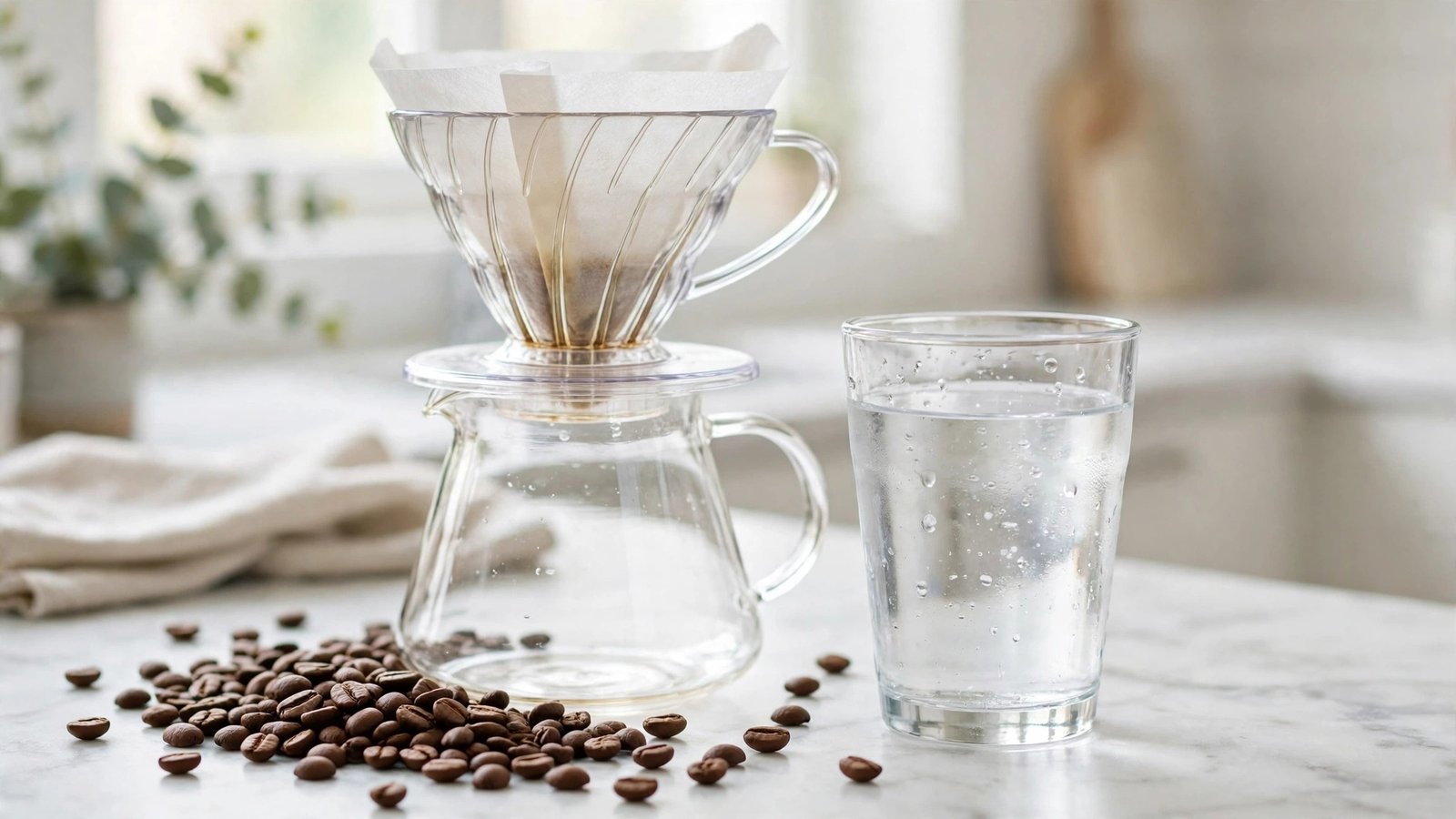
- Brew a small test cup. Use the same beans and grind. Try filtered water for one cup. Try tap water for one cup. Compare them side by side.
- Look for scale. Check your kettle base. White crust points to hard water.
- Read your local water report. Most suppliers publish one each year. Search for your city plus water quality report. Look for hardness, chlorine, pH, and TDS if listed.
- Try a TDS meter if you like data. Handheld meters are simple to use. They give a rough total mineral reading. They do not show which minerals are present.
A Simple Routine That Works
Use this routine as a base. Adjust it to your water and your brewer.
- Taste your tap water plain each week.
- Fill your brewer with water you enjoy drinking.
- Change filter cartridges on schedule.
- Descale your kettle or machine as the maker directs.
- Store brewing water in a clean, covered jug.
- Do not reuse water left in a brewer overnight.
- Retest after any filter change or move.
For heat guidance, see best temperature for coffee.
Common Questions
Is tap water fine for coffee?
It can be. Taste it plain first. If it tastes clean, brew with it. If it smells like chlorine, filter it.
If scale builds fast, filter or soften it.
Is distilled water best since it is pure?
No, not on its own. Pure water lacks minerals for extraction. Coffee can taste flat with it. Add minerals back if you use it.
Can water fix sour or bitter coffee?
It can help, but it is not the only cause. Sour coffee can come from grind or brew time. Bitter coffee can come from heat or over-extraction.
For a wider fix list, see how to make coffee better. Check water first. Then check grind, dose, and heat.
Bottom Line
Good coffee water is not a mystery. It is clean, fresh, and near the SCA targets. Taste your water plain. Filter out chlorine if you need to.
Watch for scale if your water is hard. Add minerals back if your water starts empty. Keep filters fresh. Keep your routine simple.
Start with one change this week. Taste plain tap water against filtered water. Brew the same coffee with each. Pick the cup you enjoy more.
That side-by-side test beats any chart.