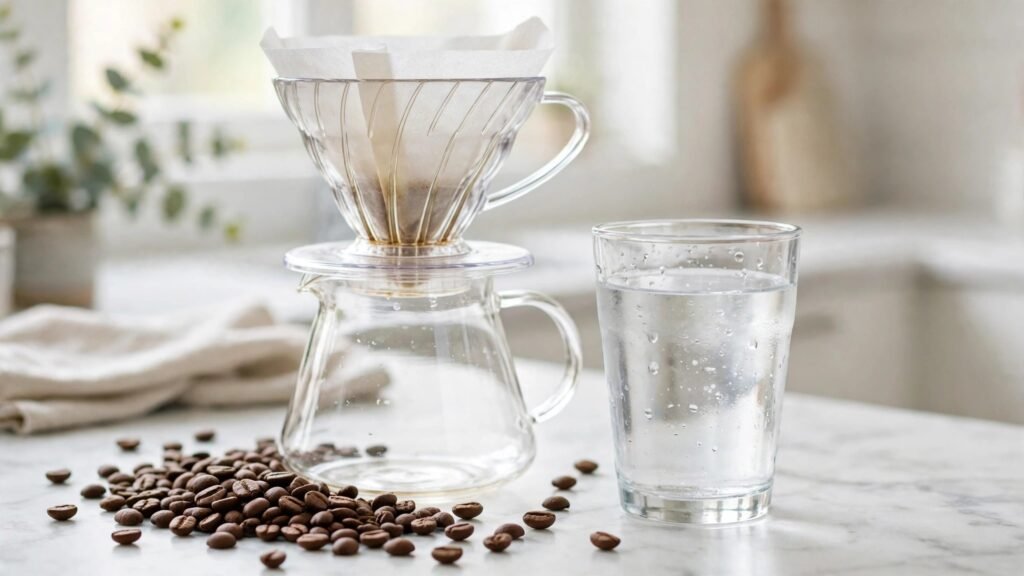
If you are asking why does my coffee taste bitter, you are not alone. Bitter coffee usually means the brew pulled too much out of the grounds. It can also mean the roast is very dark. It can mean the gear needs a clean. The trick is to find which one applies to your cup. Then change just that one thing.
Match Your Symptom First
Bitter is not one problem. It shows up in different ways. Each way points to a different cause. Start here, before you change your grind or buy new beans.
| What you taste | Most likely cause | Change first |
|---|---|---|
| Bitter and thin or watery | Dose too low for the water used | Add a little more coffee, keep grind the same |
| Bitter and heavy or muddy | Grind too fine, with fine dust in the cup | Go one step coarser |
| Bitter and worse as the cup sits | Coffee left on heat or sitting on grounds | Pour it out promptly, shorten brew time |
| Bitter and burnt or ashy | Roast too dark, or water too hot | Use cooler water, try a medium roast next |
| Bitter and dry or puckering | Over-extraction, often called astringency | Shorten brew time, then go coarser |
Notice how the fixes differ. A coarser grind will not help a cup that sat on a hot plate. Cooler water will not fix dirty gear. Matching the symptom saves you from random tweaks.
What Bitter Coffee Really Means
Over-extraction, in plain terms
Brewing is extraction. Hot water dissolves flavor compounds out of ground coffee. Some taste sweet and rich. Others taste harsh and bitter. Sweet compounds tend to come out early. Harsh compounds tend to come out late. If water stays in contact too long, it pulls more harsh ones. The cup turns bitter.
Grind size, water heat, brew time, and dose all control that process. A fine grind gives water more surface to work on. Hot water pulls compounds out faster. A long brew gives water more time. Any one of these can push a cup past balance.
Bitter is not the same as sour
Sour and bitter get mixed up a lot. Sour coffee tastes sharp, bright, or vinegary. It often means under-extraction. Bitter coffee tastes harsh, dark, or dry. It often means over-extraction.
If your cup is both sour and bitter, the grind may be uneven. Some grounds extract too fast. Others extract too slow. A burr grinder helps here. It makes more even particles than a blade grinder.
The One-Change Fix Method
This method sounds slow. It is actually the fastest way to a better cup. Change one variable at a time. Taste the result. Then decide the next step.
- Brew your normal cup and write down what tastes wrong.
- Pick the single most likely cause from the table above.
- Change that one thing only. Keep everything else the same.
- Brew again and taste it fresh, not after it has sat.
- Keep the change if the cup improves. Undo it if the cup gets worse.
Do not change grind, heat, and dose on the same morning. You will not know which change helped. One change keeps the lesson clear. For broader brewing habits, see our guide on how to make coffee better.
Keep a short note on your phone. Record grind, dose, water heat, and brew time. Patterns show up fast once you can see them.
Cause 1: Grind Too Fine
A fine grind is the most common cause of bitter coffee. Fine grounds have a large surface area. Water extracts them very fast. They can also slow a pour-over. Slow flow means longer contact time.
Signs of a grind that is too fine include:
- A muddy or silty cup, with dust at the bottom
- A pour-over that drains very slowly or stalls
- Bitterness with a heavy, thick feel
- A French press cup with lots of sludge
Fix it by going one step coarser. One step is enough to taste a difference. If the cup turns sour, you went too far. Step back halfway, if your grinder allows it.
Grind size also depends on method. Espresso needs a fine grind. French press needs a coarse grind. Pour-over sits in between. For method-by-method guidance, see our guide on how to grind coffee beans.
Cause 2: Water Too Hot
Boiling water can scorch a brew. It pulls harsh compounds out fast. The result tastes burnt and bitter at once.
For most hot brewing methods, aim for 195 to 205 degrees Fahrenheit. Breville’s brewing temperature guide cites the same range, with the same warning about water that is too hot.
No thermometer? Boil the kettle, then wait about 30 seconds. That short rest usually brings water off a full boil. It often makes a clear difference.
Dark roasts need extra care here. They extract more easily than light roasts. Try the cooler end of the range for a dark roast. Try a few degrees cooler before you change anything else.
Cause 3: Brew Time Too Long
Time is extraction. More time means more compounds in the cup. That includes the bitter ones. People often leave coffee steeping while they get ready. They let a pot sit on a hot plate.
Watch the clock for your method. French press usually steeps about four minutes. Pour-over usually finishes in two to four minutes. Espresso runs in seconds, not minutes.
If your cup is bitter, shorten the brew by a small amount. For a French press, try 30 seconds less. For a pour-over, check if the drawdown is dragging. A slow drawdown often means the grind is too fine.
Also, serve coffee promptly after brewing. Do not leave it sitting on the grounds. Do not leave it on a hot plate for an hour. Heat keeps extracting and cooking the coffee. A thermal carafe holds heat without a hot plate.
Cause 4: Dose Too High
More coffee does not always mean better coffee. A high dose can make a cup strong and bitter at once. The extra grounds give water more bitter compounds to pull. The cup can feel heavy and dry.
Start with a steady ratio, then adjust by taste. A common starting point is about 1 to 2 tablespoons of ground coffee per 6 ounces of water. Weighing your coffee gives more repeatable results. Scoops vary a lot by grind size and bean size.
If your cup is bitter and strong, try a slightly smaller dose. Keep grind, heat, and time the same. Taste the next cup fresh. If it turns weak, you went too far.
Too little coffee for the water can taste thin. It can still taste bitter if the brew runs long. Strong plus bitter points to dose. Thin plus bitter points to ratio or time.
Cause 5: Roast Too Dark or Beans Gone Stale
Sometimes the brew is fine. The beans are the problem. Very dark roasts taste bitter by design. They have smoky, charred, and ashy notes.
If every method tastes burnt, try a medium roast. Medium roasts often keep more sweetness. They still have body and depth. They are a good middle ground for troubleshooting.
Stale beans cause a different problem. They lose aroma and sweetness over time. The bitter edge stands out more. The cup tastes flat and harsh, not rich. Buy beans in smaller bags if you brew slowly. Store them in an airtight container, away from light and heat. Grind just before brewing when you can.
Check the roast date on the bag. Fresh beans do not fix a bad grind. But stale beans can hide a good grind.
Cause 6: Dirty Equipment
Old coffee oils turn rancid. They coat brewers, carafes, and grinders. They add a stale, bitter taste to fresh coffee. This cause is easy to miss.
Signs of dirty gear include:
- A bitter taste that appears slowly over weeks
- A stale or cardboard note, even with fresh beans
- Visible oil buildup in a carafe or filter basket
- A grinder that smells stale when you open it
Clean your brewer on a regular schedule. Rinse a carafe and filter basket after each use. Wash them with soap and hot water often. Descale a drip machine or kettle as the maker directs. Wipe a French press mesh well. Oils hide in the mesh.
Rinse well after any cleaning product. Soap residue tastes bad too. A clean brewer lets the beans speak.
Quick Fixes by Brewing Method
Each method has its own weak spot. Use this table as a starting point.
| Method | If it tastes bitter, try first | Watch out for |
|---|---|---|
| Pour-over | One step coarser, steady slow pour | Drawdown that stalls or runs very slow |
| French press | Shorter steep, coarser grind | Sludge from fine grounds, coffee left on grounds |
| Drip machine | Fresh filter, clean carafe, correct dose | Old grounds left in the basket, hot plate sitting |
| Espresso | Coarser grind or shorter shot | Very dark roast plus high heat, stale beans |
| Cold brew | Shorter steep, coarser grind | Steep that runs far past your usual time |
Cold brew uses time instead of heat. A steep that runs too long can still turn bitter. Taste it at your usual time first.
Common Questions
Why does my coffee taste bitter all of a sudden?
Something changed, even if it seems small. A new bag may be darker. A grinder setting may have shifted. Retrace the last change you made. Undo it first.
Does adding milk or sugar fix bitter coffee?
Milk and sugar can soften bitterness. They mask it more than they fix it. Try fixing the brew first. Then add milk if you still want it.
Can water itself make coffee bitter?
Yes, water can play a role. Very hard water can dull a cup. Try filtered water for a few brews. Keep everything else the same.
A Calmer Cup, One Change at a Time
Bitter coffee ruins a quiet morning fast. But it is usually a simple fix. Match your symptom first. Change one thing next. Taste the result fresh. Repeat until sweetness and body return.
Start with the easiest win. Clean the gear if it has been a while. Check the water heat. Go one step coarser on the grind. Shorten the brew a little.
Keep your notes short. Keep your changes small.