
Why Your Brew Tastes Bitter: Finding the Best Temperature for Coffee to Unlock Perfect Flavor
Jump To
Why Your Brew Tastes Bitter: Finding the Best Temperature for Coffee to Unlock Perfect Flavor
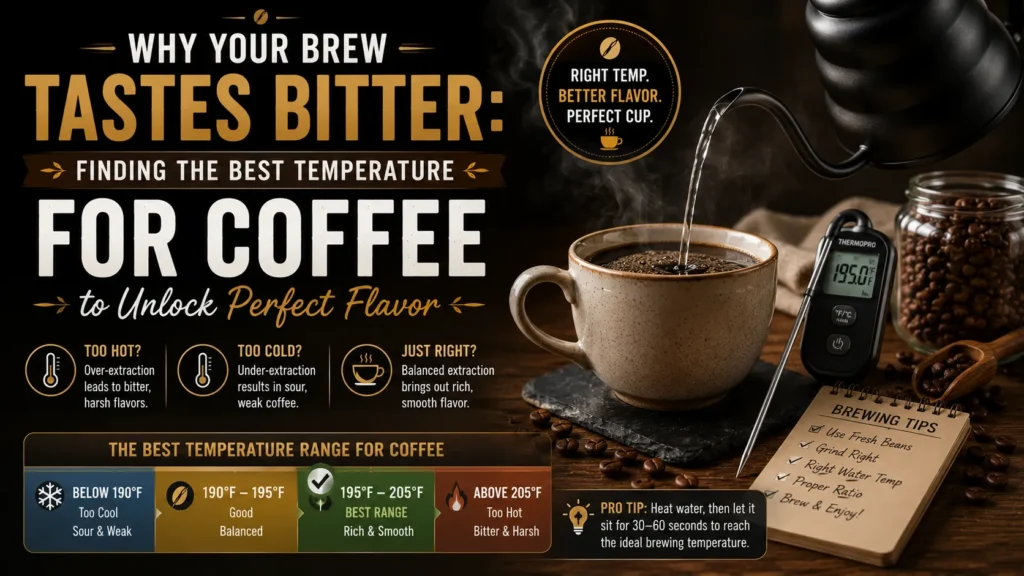
Have you ever poured a fresh cup of coffee, taken an eager sip, and immediately winced at the harsh, bitter taste? This common disappointment rarely stems from bad beans. Instead, it usually happens because your brewing water was far too hot.
If your morning cup tastes surprisingly bitter or disappointingly sour, you might be ignoring the best temperature for coffee brewing. Water temperature acts as the primary key that unlocks the complex flavors hidden inside your coffee grounds.
To fix this instantly, you must target the sweet spot. The absolute optimal brewing temperature is between 195°F and 205°F (90°C to 96°C). Furthermore, the ideal temperature for drinking your brew ranges from 120°F to 140°F (49°C to 60°C). Consequently, finding the best temperature for coffee is the single easiest way to upgrade your daily routine.
Key Takeaways
- The Golden Range: The best temperature for coffee extraction is strictly between 195°F and 205°F.
- Avoid Boiling Water: Boiling water (212°F) burns the coffee grinds, resulting in an unpleasant, bitter taste.
- Match the Roast: Use hotter water (205°F) for stubborn light roasts and cooler water (195°F) for delicate dark roasts.
- Drinking Sweet Spot: Let your coffee cool to 120°F–140°F to experience the full flavor profile.
The Science of Extraction: Why Heat Matters in Your Mug
Water acts as a solvent that extracts flavor compounds from your coffee grounds. Specifically, hot water pulls out acids, caffeine, lipids, and sugars in a highly delicate sequence. If the water lacks sufficient heat, these delicious compounds remain trapped inside the grinds.
Consequently, your beverage will taste sour, watery, and incredibly flat. This state is known as under-extraction, which fails to showcase the bean’s true potential. Therefore, using warm water instead of hot water is a recipe for a disappointing cup.
Conversely, excessively hot water acts too aggressively on the delicate coffee grounds. It quickly extracts heavy, bitter compounds that ruin the natural sweetness of the bean. Therefore, understanding how water interacts with grinds helps explain why the best temperature for coffee is so critical.
In addition, the rate of extraction increases exponentially with every degree of heat. A slight variation can completely alter the final flavor profile of your cup. As a result, maintaining tight control over your water temperature is essential for consistent brewing.
Ultimately, water makes up about 98% of your brewed coffee. If the water is not at the correct temperature, it cannot properly interact with the coffee’s organic compounds. Consequently, even the most expensive specialty beans will taste mediocre if your water temperature is off.
The Golden Range: What is the Best Temperature for Coffee Brewing?
Brewing a spectacular cup requires staying within a very specific thermal window. As a result, professional baristas agree that the best temperature for coffee extraction sits between 195°F and 205°F.
This specific range sits just below the boiling point of 212°F. Consequently, you should never use boiling water directly from a kettle. If you go above this range, you destroy delicate oils, which is why the best temperature for coffee never exceeds 205°F.
Meanwhile, dropping below 195°F leads to severe under-extraction. The water simply lacks the thermal energy required to dissolve the desirable flavor solids. Therefore, staying within this golden range ensures a balanced, sweet, and aromatic cup every time.
Furthermore, altitude can affect how water behaves at these temperatures. If you live in a high-altitude area, water boils at a lower temperature. Consequently, you may need to adjust your brewing technique to compensate for the lower boiling point.
However, for most home brewers, staying within the 195°F to 205°F range is highly achievable. By simply letting your boiling kettle rest for a minute, you can easily hit this target. Therefore, consistency is well within your reach.
Optimal Temperatures for Different Brewing Methods
Each brewing method utilizes unique mechanics to extract flavor. Consequently, you must adjust your thermal targets based on the equipment you use.
Pour Over and Drip Coffee
Pour-over methods rely entirely on gravity to pull water through the coffee bed. Because heat escapes quickly during the pouring process, you need a slightly hotter starting temperature. Consequently, the best temperature for coffee brewed via pour-over leans toward the higher end of the spectrum, around 202°F to 205°F.
Furthermore, standard drip machines often struggle to maintain consistent heat. If you use a manual pour-over cone, preheating your brewer is incredibly helpful. This prevents the cold ceramic or plastic from instantly dropping your water temperature.
French Press
French press is an immersion brewing method where grinds steep in water for several minutes. Because the water remains in contact with the grounds for so long, heat retention is excellent. Therefore, starting with water at exactly 200°F yields a beautifully balanced body without over-extracting bitter notes.
In addition, immersion brewing is highly forgiving. If your water cools down slightly during the four-minute steep, the flavor remains excellent. However, starting with boiling water will still ruin the batch, so caution is required.
Espresso
Espresso machines use intense pressure to force water through finely ground coffee in seconds. Therefore, the best temperature for coffee extracted under pressure is slightly lower than standard drip methods, usually between 190°F and 196°F.
In addition, higher pressure increases the extraction rate dramatically. If your espresso machine runs too hot, the resulting shot will taste burnt and metallic. However, lowering the temperature slightly preserves the rich crema and complex acidity.
Cold Brew
Cold brew completely rejects the use of heat, relying instead on time. Specifically, you steep coarse grinds in room temperature or cold water for 12 to 24 hours. As a result, this slow extraction process produces an incredibly smooth, low-acid beverage.
Meanwhile, because no heat is involved, the bitter compounds are never extracted. This explains why cold brew tastes naturally sweeter than hot coffee. Consequently, it remains a favorite option for those with sensitive stomachs.
The Ideal Temperature for Drinking and Serving
Many coffee lovers make the mistake of drinking their beverage immediately after brewing. However, the best temperature for coffee consumption is significantly cooler than the brewing temperature.
Human taste buds cannot accurately perceive complex flavors at scalding temperatures. Specifically, extremely hot liquids numb your sensory receptors and mask the natural sweetness of the coffee. As a result, the best temperature for coffee enjoyment is between 120°F and 140°F.
At this cooler temperature range, the subtle notes of fruit, chocolate, and caramel truly shine. Furthermore, you avoid burning your tongue, allowing you to fully appreciate the body and acidity. Therefore, let your mug sit for a few minutes before taking your first sip.
Conversely, if you prefer your coffee piping hot, try to keep it around 150°F. This temperature provides a comforting warmth without completely obliterating the flavor. However, avoid keeping your coffee on a heated hot plate, as this will bake the liquid and create a bitter taste.
How Roast Levels Affect Your Ideal Water Temperature
Not all coffee beans are created equal, and roast profiles dictate how easily flavor is extracted. Consequently, you should customize your water temperature based on the color of your beans.
Light Roasts
Lightly roasted beans are dense and highly stubborn when it comes to extraction. Therefore, they require more thermal energy to release their complex organic acids and floral notes. Conversely, the best temperature for coffee using light roasts is closer to 205°F to extract those stubborn floral notes.
If you use cooler water on a light roast, the result is often sour and grassy. Consequently, don’t be afraid to push the limits of heat with these beans. The extra thermal energy is exactly what is needed to unlock their vibrant acidity.
Dark Roasts
Dark roasted beans have a highly porous structure because they spend more time in the roaster. Because dark beans are highly soluble, the best temperature for coffee with a dark roast profile is around 195°F.
Using hotter water on dark roasts quickly extracts unpleasant, smoky, and ash-like flavors. However, lowering the temperature preserves the rich, chocolatey, and nutty notes without the harsh bitterness. Therefore, gentle brewing is always recommended for dark roasts.
Practical Tools for Temperature Precision
Achieving consistency in your home kitchen requires the right equipment. Fortunately, you do not need a professional laboratory to get accurate readings.
Investing in a temperature-controlled kettle is the easiest way to lock in the best temperature for coffee every single morning. These kettles allow you to select your exact target temperature and hold it there.
Alternatively, a simple digital instant-read thermometer works wonderfully. If you do not have a thermometer, simply bring your water to a boil and let it sit off the heat for 30 to 45 seconds. This simple trick naturally drops the temperature into the ideal golden range.
Furthermore, preheating your favorite mug can keep your drink in the ideal consumption zone for longer. Simply fill your mug with hot water while your coffee brews, then dump it out before pouring. Consequently, your coffee will stay at the perfect drinking temperature without getting cold too quickly.
Related Coffee Topics You May Like
Frequently Asked Questions
What is the best temperature for coffee brewing?
The absolute best temperature for coffee brewing is between 195°F and 205°F (90°C to 96°C). This golden range ensures that you extract the sweet, acidic, and complex flavors of the bean without pulling out the harsh, bitter compounds.
Is 200 degrees the best temperature for coffee?
Yes, 200°F (93°C) is widely considered the ultimate sweet spot and the best temperature for coffee brewing across most methods. It sits perfectly in the middle of the golden range, offering excellent extraction balance for medium and dark roasts alike.
Does boiling water burn coffee?
Yes, boiling water at 212°F (100°C) is too hot and will over-extract the coffee grounds. This process burns off delicate aromatic oils and releases excessive bitter compounds, resulting in a flat, bitter, and over-extracted cup.
What temperature should coffee be served at?
Coffee is best served and consumed between 120°F and 140°F (49°C to 60°C). At this temperature, your taste buds can fully perceive the delicate flavor notes, sweetness, and pleasant acidity without the risk of burning your tongue.
Ready to Brew the Perfect Cup?
Now that you know the best temperature for coffee, it is time to elevate your home brewing game. Upgrade your setup with a temperature-controlled kettle and taste the difference precision makes today!

Moses Anthony
Moses Anthony is a coffee enthusiast and home brewing specialist with over 7 years of hands-on experience testing coffee beans, espresso machines, grinders, and brewing methods. He has spent years experimenting with pour-over, French press, drip coffee, and espresso to help everyday coffee drinkers brew better coffee at home.At Best Coffee Guide, Moses focuses on practical brewing tips, honest product comparisons, and beginner-friendly coffee education based on real testing and research. His goal is to simplify coffee brewing and help readers make better choices with confidence.
How to Make Coffee Easy: Effortless Tips for Barista‑level Brew at Home
September 17, 2026
No Comments
Read More » Mastering the Art: How to Make Coffee Darker for a Richer, Bold Brew
September 16, 2026
No Comments
Read More » 
How to Make Coffee Dip: Easy Steps to Create a Rich, Coffee-infused Spread
September 15, 2026
No Comments
Read More » Latest Pots
Imagine waking up, craving a rich cup, but feeling overwhelmed by complicated machines and vague recipes. You want great coffee without the fuss, and you deserve a method that works every single time. This guide shows you exactly how to make coffee easy, turning morning…
Many coffee lovers crave a cup that looks as deep and intense as its flavor promises. If your brew often turns out light or washed out, you’re not alone—achieving that striking darkness involves more than just adding extra grounds. In the next few paragraphs we’ll…

Explore the world of coffee with honest reviews and practical advice. Find your perfect cup, one bean and machine at a time.
Main Menu
Top Categories
Newsletter
Sign up our newsletter to get updated information, promo or insight for free.
Copyright © 2025 Best Coffee Guide, All rights reserved.