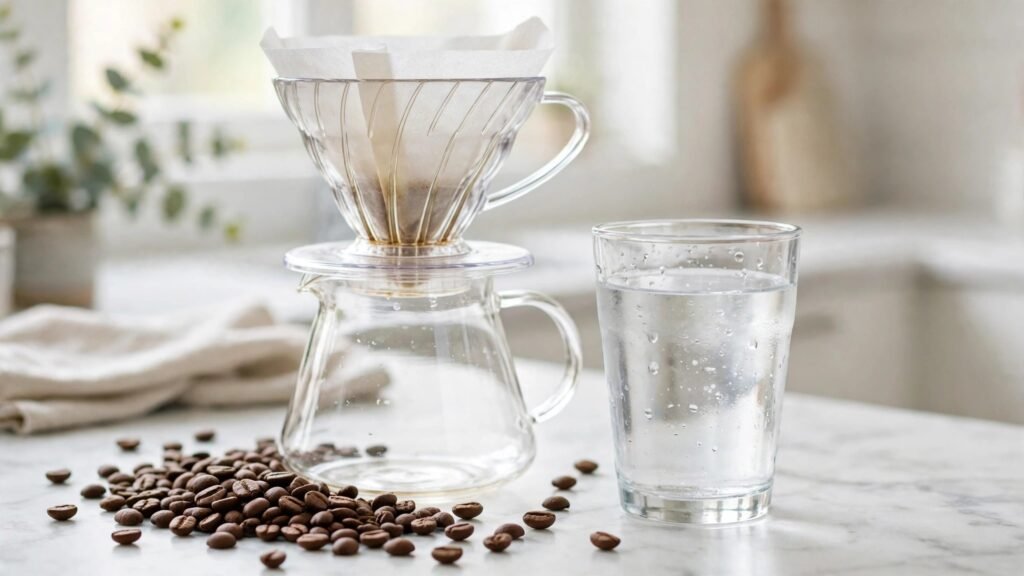
Cold brew gets most praise for cold coffee. It is smooth and sweet. But snap-chilled vs cold brew vs flash brew is a wider contest.
Each of these iced coffee methods treats heat, time, and chill differently. That changes what you taste.
Flash brew keeps bright aromatics best. Cold brew feels smoothest. Flash brew is also fastest at home.
Snap-chilled coffee aims for a middle path. It brews hot, then chills fast by machine. Read on for the full split, plus simple home steps.
The Short Answer
- Best aromatics: Flash brew. Hot water lifts floral and fruity notes. Ice locks them in fast.
- Smoothest cup: Cold brew. A long cold steep softens sharp edges.
- Fastest at home: Flash brew. You can finish in minutes, not hours.
- Best for cafes and cans: Snap-chilled coffee. Machines chill it fast at scale.
- Best all-round home pick: Flash brew for flavor. Cold brew for ease.
No method wins on every point in a cold brew vs flash brew contest. Pick by taste, time, and gear.
What Is Cold Brew?
Cold brew uses cool or room-temperature water. Ground coffee steeps in that water for a long time. General guidance puts that steep at 12 to 24 hours.
Strain out the grounds. The result can be concentrate or ready-to-drink. Concentrate is strong, so dilute it with water, milk, or ice.
Ready-to-drink needs no dilution. Time does the work heat does in hot brewing.
Cold brew tends to taste sweet and round, with low bite. Bright notes can fade in the long steep.
What Is Flash Brew?
Flash brew is also called Japanese iced coffee. You brew hot coffee straight over ice. The hot brew hits cold ice at once. It chills in seconds, not hours.
That speed helps hold fresh aromatics. Start with a 60/40 split: 60 percent hot water, 40 percent ice. Adjust by taste.
More ice gives a lighter cup. Less ice gives a stronger cup.
Use a pour-over brewer for best control. Use a medium grind. Brew as for hot coffee, but with less water over ice below.
Stir once brewing finishes. Serve right away.
Flash brew coffee tastes closer to hot coffee than cold brew does, with more brightness and a lighter body.
What Is Snap-Chilled Coffee?
Snap-chilled coffee starts hot, like flash brew, then chills very fast by machine. The goal is speed without slow cooling, which can dull aroma.
This is a commercial process in most cases.
Cafes and brands use machines built for rapid chilling. This guide lists no machine specs, as they vary by maker.
The key idea stays simple. Brew hot, chill fast, serve cold. Snap-chilled coffee can taste bright, clean, and close to the original hot brew. That suits canned or bottled cold coffee.
At home, flash brew is the closest match. You get the same hot-then-fast-chill idea, with simple gear.
Snap-Chilled vs Cold Brew vs Flash Brew: The Table
| Method | Time | Flavor profile | Body | Acidity impression | Best for |
|---|---|---|---|---|---|
| Cold brew | 12 to 24 hours steep | Sweet, round, mellow | Full and smooth | Low sharpness | Easy batch brewing and smooth iced lattes |
| Flash brew | Minutes | Bright, clear, aromatic | Light to medium | Brighter and crisper | Fresh flavor and single fresh cups |
| Snap-chilled | Brew hot, then machine-chill fast | Clean, bright, close to hot brew | Light to medium | Bright, but balanced | Cafes, cans, and fresh-tasting cold coffee at scale |
Use this table as a starting point for this cold coffee comparison. Bean, grind, and ratio still shape the cup. Fresh beans matter most.
Taste: Aromatics, Body, and Acidity
Which method keeps aromatics best?
Flash brew leads here. Hot water draws out aromatic compounds fast. Ice then cools the brew right away.
Less warm time means less aroma loss. Snap-chilled coffee follows the same logic, through a machine. Cold brew trails here, as its long steep fades bright notes.
Floral, citrus, and berry notes show up most in flash brew. If you buy beans for scent, flash brew shows it best.
Which method is smoothest?
Cold brew wins for smoothness. Cold water extracts gently, so the cup feels soft.
Sharp edges tend to fade, so cold brew feels easy to drink black. It also pairs well with milk and holds up in iced lattes.
Flash brew and snap-chilled coffee feel livelier. That lift is a style choice, not a flaw.
How does acidity feel in each cup?
Acidity here means perceived brightness, not stomach upset. Cold brew feels least bright. Flash brew feels most bright.
Snap-chilled coffee sits near flash brew, bright yet clean. Roast shifts this picture: light roasts taste brighter, dark roasts deeper.
Adjust one variable at a time. Small changes make a clear difference.
How to Make Flash Brew at Home
You need a pour-over brewer, filter, scale, and ice. Use fresh beans, ground just before brewing.
- Weigh your coffee as you would for hot pour-over
- Place ice in the vessel below the brewer
- Use the 60/40 split as a starting point
- Rinse the filter, then discard that rinse water
- Add grounds, then bloom with a small hot pour
- Pour in slow circles to the hot-water target
- Let the brew drip over the ice, then stir well
Taste before you change anything.
- Thin: use less ice next time
- Strong: use a touch more ice
- Sour: grind finer
- Bitter: grind coarser
How to Make Cold Brew at Home
You need coarse coffee, a jar, water, and a strainer. A French press also works. No heat is required.
- Add coarse grounds to a clean jar
- Pour in cool or room-temperature water
- Stir gently until all grounds are wet
- Cover and steep for 12 to 24 hours
- Strain through fine mesh, then paper if you can
- Taste straight first, then dilute to suit your taste
Cold brew suits batch prep. Make a large jar, then drink it across a few days. Stir before pouring, and dilute concentrate with equal parts water as a start.
For step-by-step detail, read how to make cold brew coffee.
Can You Make Snap-Chilled Coffee at Home?
Not in the same way. Snap-chilling relies on commercial rapid-chill machines. Home freezers cool too slowly for the same effect.
An ice bath can help, but it is not the same process. Flash brew is the home version of the same idea. It brews hot and chills fast with ice.
Borrow the core lesson: chill hot coffee fast, not slowly. Do not leave a hot pot to cool on the counter, as slow cooling dulls aroma.
Brew over ice instead. Serve cold right away.
Which One Should You Pick?
- Pick flash brew if you love bright, aromatic coffee and you brew fresh cups
- Pick cold brew if you want smooth, sweet coffee with almost no daily effort
- Pick snap-chilled if you buy canned or cafe cold coffee and you want fresh flavor
- Pick flash brew if you have a pour-over setup and ten free minutes
- Pick cold brew if you want iced lattes that stay smooth with milk
Still unsure? Brew the same beans two ways, then taste them side by side, black and plain. The gap will be clear.
See cold brew coffee vs iced coffee to compare cold brew with regular iced coffee.
Common Questions
Is snap-chilled coffee the same as flash brew?
No, but they share a core idea: both brew hot, then chill fast. Flash brew uses ice at home, while snap-chilled coffee uses a commercial machine.
Is cold brew stronger than flash brew?
It can be, but only as concentrate. Ready-to-drink cold brew is not stronger by default. Flash brew strength depends on ratio, so check dilution first.
Does cold brew taste less acidic?
It tends to feel less sharp, as long cold steeping softens bright edges. Acidity still exists, but it feels rounder.
Flash brew keeps more crisp brightness. Snap-chilled coffee keeps brightness in a cleaner form.
Final Verdict
Flash brew is the flavor winner at home. It keeps aromatics alive and brews in minutes. Cold brew is the comfort winner, smooth and made for batch prep.
Snap-chilled coffee is the commercial winner. It brings hot-brew flavor to cold cans and cafe cups.
Start with flash brew to taste beans clearly, or cold brew for easy, smooth iced coffee. Try snap-chilled coffee on a cafe menu when you can.