
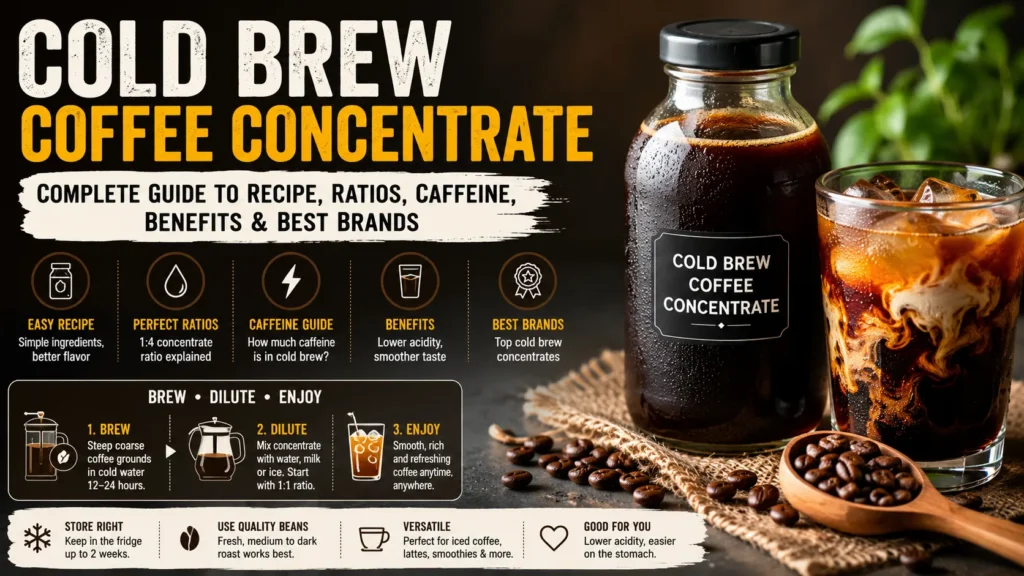
Cold brew coffee concentrate is a strong, smooth coffee extract made by steeping coarse coffee grounds in cold water for several hours. It contains a richer flavor, lower acidity, and higher caffeine concentration than regular iced coffee, making it popular for home brewing and cafe-style drinks.
Unlike traditional hot coffee, cold brew concentrate is designed to be diluted before drinking. Many people use it for iced coffee, lattes, protein shakes, and quick morning caffeine without daily brewing.
What Is Cold Brew Coffee Concentrate?
Cold brew coffee concentrate is a concentrated form of cold-brewed coffee created through slow extraction. Instead of using heat, coffee grounds remain submerged in cold or room-temperature water for 12 to 24 hours.
This slow brewing method changes the flavor profile significantly. The result is smoother coffee with softer bitterness and a fuller body. Because the concentrate is highly concentrated, most people mix it with water, milk, or ice before serving.
Why Is Cold Brew Coffee Concentrate So Popular?
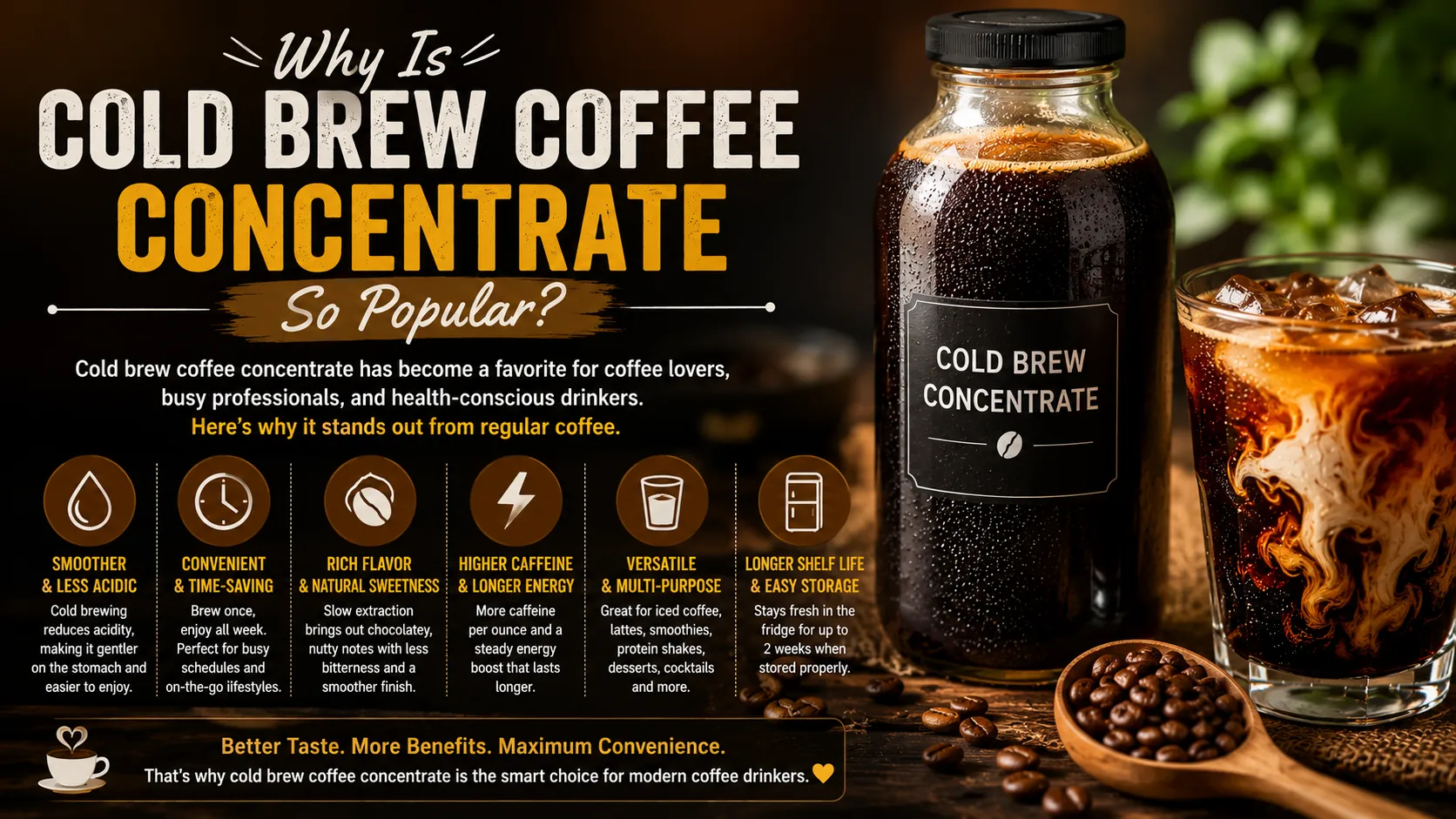
Cold brew coffee concentrate has become one of the fastest-growing coffee trends worldwide. Many coffee drinkers prefer it because it combines convenience with a smoother drinking experience.
Unlike traditional iced coffee, cold brew develops a mellow finish that many people describe as naturally sweeter. The lower acidity also appeals to individuals who find hot coffee harsh on the stomach.
Coffee shops and ready-to-drink brands have further increased their popularity by offering bottled concentrates that are easy to store and prepare at home. Some office workers and students also prefer cold brew because the caffeine effect often feels steadier during long working hours.
How Does Cold Brew Concentrate Taste?
Cold brew concentrate usually tastes smoother and deeper than regular brewed coffee. The absence of heat during brewing changes how compounds are extracted from the coffee beans. This often creates:
- softer bitterness
- fuller mouthfeel
- chocolate-like notes
- cleaner finish
Medium and dark roast beans are especially popular because they produce nutty and rich flavor profiles in cold brewing. The final taste also depends on brewing time, bean origin, grind size, and dilution ratio.
Cold Brew Coffee Concentrate Recipe
How to Make Cold Brew Coffee Concentrate at Home
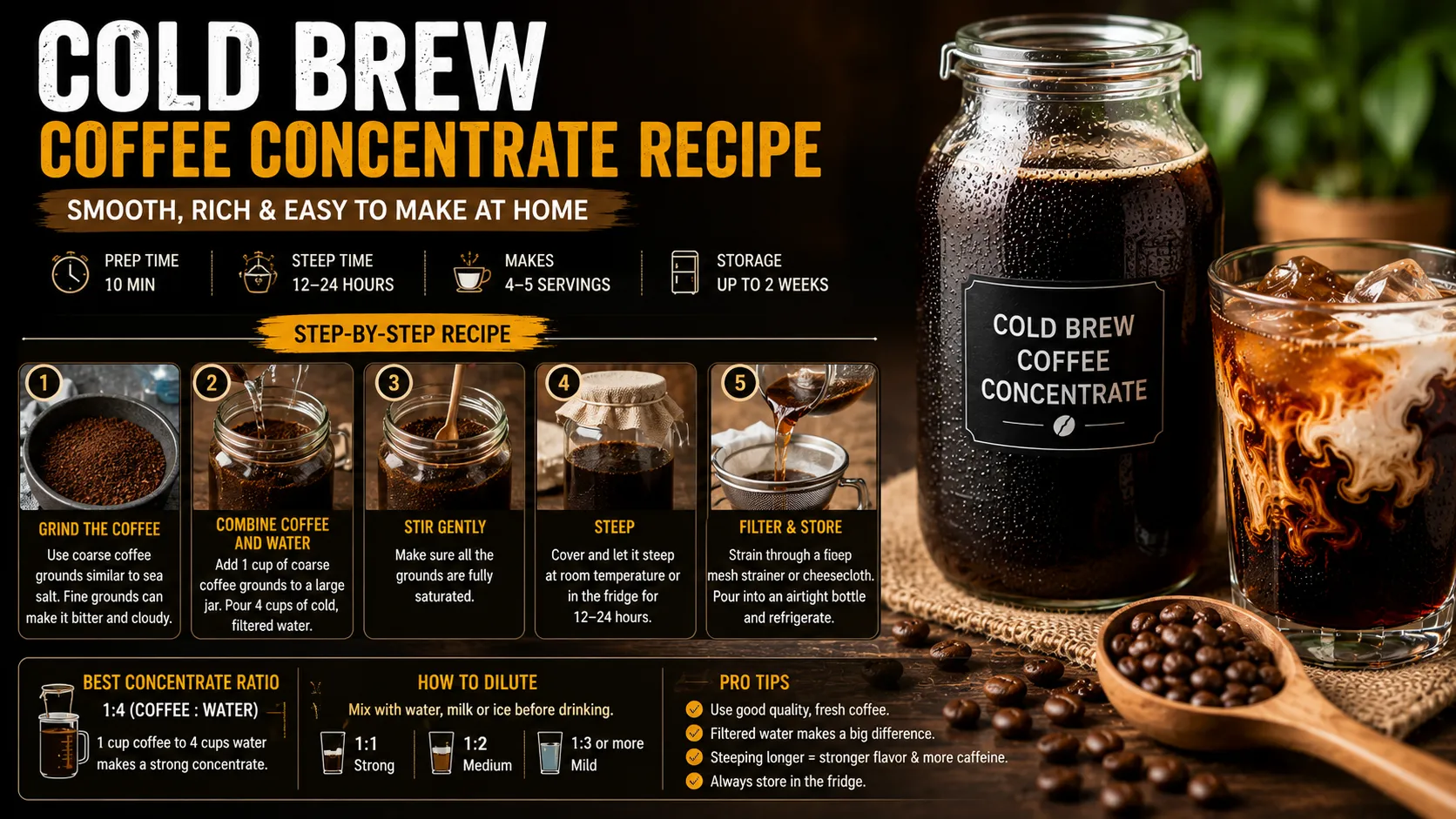
Making cold brew coffee concentrate at home is simple and cost-effective. You only need coffee, water, and patience.
Ingredients
Ingredient | Quantity |
Coarse ground coffee | 1 cup |
Cold filtered water | 4 cups |
Step-by-Step Cold Brew Coffee Concentrate Recipe
Step 1: Choose the Right Coffee Grind
Use coarse coffee grounds similar to sea salt texture. Fine grounds can over-extract and create muddy coffee. Freshly ground beans usually produce a better aroma and clearer flavor clarity.
Step 2: Combine Coffee and Water
Place the grounds inside a large glass jar or pitcher. Slowly pour filtered cold water over the coffee while stirring gently. Make sure all grounds become fully saturated.
Step 3: Allow Long Steeping
Cover the container and leave it for 12 to 24 hours. Longer brewing creates stronger extraction, deeper body, and higher caffeine concentration.
Step 4: Filter Carefully
Strain the coffee using a fine mesh strainer lined with cheesecloth or a paper filter. This step improves texture and removes unwanted sediment.
Step 5: Refrigerate the Concentrate
Transfer the filtered concentrate into an airtight bottle and refrigerate immediately. Properly stored concentrate can remain fresh for up to two weeks.
Best Cold Brew Concentrate Ratio
The cold brew concentrate ratio controls both flavor intensity and caffeine strength. Most home brewers use a 1:4 coffee-to-water ratio because it creates a balanced concentrate suitable for multiple drink styles.
Coffee | Water | Result |
1 cup | 4 cups | Strong concentrate |
1 cup | 5 cups | Medium concentrate |
1 cup | 8 cups | Ready-to-drink cold brew |
Some people prefer slightly lighter ratios for smoother texture, while others use stronger extraction for espresso-style drinks.
How to Dilute Cold Brew Concentrate
Cold brew concentrate is rarely consumed straight because it is intentionally brewed strong. Most people dilute it based on their taste preferences and caffeine tolerance.
A balanced serving usually combines equal parts concentrate and water or milk. Oat milk and almond milk are commonly used because they complement the smooth texture of cold brew.
Some coffee drinkers prefer a stronger concentration for iced lattes, while others use extra water for lighter daily drinking.
Cold Brew Coffee Concentrate Caffeine Content
How Much Caffeine Is in Cold Brew Concentrate?
Cold brew coffee concentrate generally has higher caffeine content than standard coffee because more coffee grounds are used during brewing.
The exact caffeine level depends on:
- bean type
- roast level
- brewing duration
- dilution method
On average, an 8-ounce serving of diluted cold brew concentrate may contain between 150 and 300 milligrams of caffeine.
Coffee Type | Average Caffeine Per 8 oz |
Regular brewed coffee | 80–120 mg |
Standard cold brew | 100–200 mg |
Cold brew concentrate | 150–300 mg |
A stronger taste does not always mean higher caffeine. Some lighter roasts actually contain slightly more caffeine than darker roasts due to bean density differences.
Is Cold Brew Less Acidic Than Regular Coffee?
Many studies and coffee industry observations suggest cold brew may contain slightly lower acidity than hot brewed coffee.
Because heat is avoided during extraction, certain acidic oils and compounds are released differently. This often creates a smoother drinking experience for people sensitive to acidic beverages.
However, acidity levels still depend on:
- bean origin
- roast profile
- brew strength
- dilution ratio
Cold brew is not acid-free, but many drinkers report that it feels gentler compared to traditional hot coffee.
Best Cold Brew Coffee Concentrate Brands
The best cold brew coffee concentrate depends on flavor preference, caffeine needs, and ingredient quality. Some brands focus on organic beans, while others emphasize stronger energy or smoother flavor balance.
Popular Cold Brew Concentrate Brands
Brand | Known For |
Starbucks Cold Brew Concentrate | Smooth balanced taste |
Chameleon Cold Brew | Organic coffee |
Stok Cold Brew | Strong caffeine profile |
Califia Farms | Dairy-free blends |
Javy Coffee Concentrate | Ultra-concentrated liquid coffee |
Many ready-made concentrates are designed for convenience and quick preparation.
Cold Brew Coffee Concentrate Starbucks
Starbucks Cold Brew Concentrate is one of the most recognized products in the ready-to-drink coffee market. It is typically sold in refrigerated bottles and designed to be mixed with equal parts water before serving.
The flavor profile usually includes:
- chocolate notes
- smooth finish
- medium roast balance
Starbucks also offers flavored versions, including vanilla and caramel. Its popularity comes from consistent flavor, convenience, and strong brand trust among coffee consumers.
What Is Cold Brew Espresso Concentrate?
Cold brew espresso concentrate is a highly concentrated cold brew designed to imitate the richness of espresso-style drinks. It is important to understand that it is not true espresso because it is not brewed under pressure.
However, it works well for:
- iced lattes
- protein drinks
- dessert recipes
- café-style beverages
Compared to espresso, cold brew espresso concentrate usually feels smoother and less sharp on the palate.
Cold Brew Coffee Concentrate vs Iced Coffee
Many people confuse cold brew and iced coffee because both are served cold. However, their preparation methods are very different.
Iced coffee is brewed hot first and then cooled with ice. Cold brew concentrate uses slow cold-water extraction from the beginning.
Feature | Cold Brew Concentrate | Iced Coffee |
Brewing Method | Cold steeping | Hot brewing |
Brewing Time | 12–24 hours | Few minutes |
Flavor Profile | Smooth and mellow | Sharper and brighter |
Acidity | Lower | Higher |
Texture | Fuller body | Lighter body |
This brewing difference changes the entire drinking experience.
Where to Buy Cold Brew Coffee Concentrate
Cold brew concentrate is widely available in supermarkets, online marketplaces, and coffee shops. Popular online stores include Amazon, Walmart, and Target. Grocery chains like Costco, Whole Foods, and Trader Joe’s also carry multiple cold brew brands.
Many local cafes now bottle their own concentrate because customer demand continues to grow. When buying concentrate, it helps to check:
- caffeine level
- ingredient quality
- sugar content
- roast type
Unsweetened concentrates are often preferred because they allow better flavor customization.
How Long Does Cold Brew Concentrate Last?
Homemade cold brew concentrate usually stays fresh for 7 to 14 days when refrigerated properly. Glass bottles with airtight lids help preserve freshness and reduce flavor loss.
Over time, oxidation may slowly flatten the flavor profile. That is why many coffee enthusiasts prefer consuming fresh batches within one week. If the concentrate develops an unusual odor, sourness, or cloudiness, it should not be consumed.
Best Coffee Beans for Cold Brew Concentrate
Medium and dark roast coffee beans are commonly recommended for cold brew because they create smoother flavor depth and balanced sweetness. Brazilian and Colombian beans are popular choices due to their:
- chocolate notes
- nutty finish
- low acidity
- round mouthfeel
Fresh beans usually produce better extraction quality and a stronger aroma. Grinding coffee immediately before brewing can also improve freshness significantly.
Is Cold Brew Coffee Healthier?
Cold brew coffee may offer certain advantages for some coffee drinkers. Its smoother extraction profile often reduces the need for excessive sugar or flavored syrups. Lower acidity may also feel easier on sensitive stomachs.
At the same time, cold brew concentrate can contain high caffeine levels, especially when consumed without proper dilution.
Too much caffeine may contribute to:
- sleep disruption
- increased heart rate
- anxiety symptoms
- dehydration in sensitive individuals
Moderation remains important regardless of brewing style.
Common Mistakes When Making Cold Brew Concentrate
Many cold brew problems happen because of incorrect brewing techniques. Using finely ground coffee is one of the most common mistakes because it can create bitterness and a muddy texture. Brewing too long may also over-extract certain compounds and reduce flavor balance.
Poor water quality can affect clarity and mouthfeel as well. Filtered water generally produces a cleaner-tasting concentrate. Incorrect ratios can also create coffee that tastes either weak or overpowering.
How to Use Cold Brew Coffee Concentrate
Cold brew concentrate is extremely versatile and fits many modern coffee habits. Some people use it for quick morning iced coffee, while others mix it into smoothies or protein shakes before workouts.
It also works well in desserts like tiramisu, coffee ice cream, and chocolate cakes. One reason cold brew remains popular is convenience. A single batch can support several drinks throughout the week without daily brewing.
Related Coffee Topics You May Like
FAQ About Cold Brew Coffee Concentrate
What is cold brew coffee concentrate?
Cold brew coffee concentrate is a strong coffee extract made by slowly steeping coarse coffee grounds in cold water for several hours.
Why does cold brew sometimes feel stronger than iced coffee?
Cold brew often uses more coffee grounds during extraction, which can increase caffeine concentration even when the flavor tastes smoother.
What is the best cold brew concentrate ratio?
A 1:4 coffee-to-water ratio is commonly considered ideal for balanced concentrate.
Does cold brew concentrate contain more caffeine?
Yes. Cold brew concentrate usually contains more caffeine per ounce than regular brewed coffee.
Can cold brew concentrate be heated?
Yes. Many people mix it with hot water to make quick hot coffee.
How long does homemade cold brew concentrate last?
It usually stays fresh for up to two weeks in the refrigerator when stored properly.
Is Starbucks cold brew concentrate pre-diluted?
Most Starbucks cold brew concentrates are designed to be diluted before drinking.
Final Thoughts
Cold brew coffee concentrate has changed how many people enjoy coffee at home and in cafés. Its smooth extraction, rich texture, and flexible preparation make it one of the most practical modern coffee options.
Whether you prepare your own cold brew coffee concentrate recipe or buy ready-made products like Starbucks Cold Brew Concentrate, understanding brewing ratios, caffeine content, and storage methods can significantly improve quality and consistency.
As coffee culture continues evolving, cold brew concentrate remains popular because it combines convenience, flavor depth, and long-lasting freshness in a single brewing method.