If your coffee tastes different every morning, the problem usually isn’t your beans — it’s your measurements. A coffee scale is the single most impactful upgrade for home brewing: it replaces scoops and guesswork with exact coffee-to-water ratios, so every cup tastes like your best one.
But not every scale works for coffee. Standard kitchen scales are too slow and too coarse — 1-gram increments aren’t precise enough for brewing. Coffee-specific scales add what brewers actually need: 0.1-gram precision, a built-in brew timer, and fast, stable readings that keep up with your pour.
This guide compares the 10 best coffee scales for 2026, from budget picks under $40 to smart, espresso-ready models. Our rankings come from published specifications, feature comparisons, and aggregated user feedback from the brewing community — not paid placements. Whether you brew pour over, espresso, AeroPress, or French press, you’ll find the right scale for your setup and budget below.
The BOOKOO Themis Mini is built for brewers who want data with their espresso — compact, precise, and loaded with brewing modes, all in a footprint small enough to fit most espresso machine drip trays. It pairs 0.1g accuracy with Bluetooth connectivity, and honestly, the smart feature set is what makes it special: real-time flow-rate feedback, app integration, and automatic brewing modes — capabilities you’d normally only find on scales costing much more.
Features
Who it’s for
Specs: Accuracy ±0.1g · Capacity ~1–2kg · USB-C rechargeable · Price range ~$120–140
Pros
Cons
Also consider: Timemore Basic 2.0 (better value), Normcore Pocket V3 (more portable)
Verdict: The best smart pick for espresso lovers who want precision plus brew data in a drip-tray-friendly package.
Ask around any brewing community and one name keeps coming up: the Timemore Basic 2.0. It delivers what actually matters — 0.1g accuracy, a built-in auto-start timer, and flow-rate feedback — at a price well below premium brands. It’s the default recommendation for brewers moving up from a kitchen scale, and it’s earned that spot.
Features
Who it’s for
Specs: Accuracy ±0.1g · Capacity 2000g · USB-C rechargeable · Price range ~$55–65
Pros
Cons
Also consider: Greater Goods Digital (cheaper), Hario V60 Scale (simpler pour-over pick)
Verdict: The best value coffee scale you can buy — pro-level brewing features without the premium price tag.
The FELICITA ARC sits comfortably between budget and premium: a stable, accurate scale with a thoughtful design and an easy-to-read display. It’s a popular step-up for home brewers who want reliable daily performance without smart-scale complexity.
Features
Who it’s for
Specs: Accuracy ±0.1g · Capacity 2000g · AAA batteries · Price range ~$100–120
Pros
Cons
Also consider: Timemore Basic 2.0 (better value), Greater Goods Digital (budget alternative)
Verdict: A polished, dependable mid-range scale that nails the fundamentals — accuracy, stability, and ease of use.
The Hario V60 scale is the longtime favorite of pour-over brewers, and it’s easy to see why: simple, reliable, and designed specifically for manual brewing. Its dedicated timer and straightforward interface make it one of the easiest scales to brew with — no learning curve, no fuss.
Features
Who it’s for
Specs: Accuracy ±0.1g · Capacity 2000g · AAA batteries · Price range ~$45–55
Pros
Cons
Also consider: Timemore Basic 2.0 (more features), Greater Goods Digital (cheaper all-rounder)
Verdict: The classic pour-over companion — simple, accurate, and proven over years of daily brewing.
The Greater Goods Digital Coffee Scale proves you don’t need to spend much for 0.1g precision and a built-in timer. It’s a straightforward, dependable scale that outperforms generic kitchen scales where it counts: stable readings under light weights and a timer that keeps your brews consistent.
Features
Who it’s for
Specs: Accuracy ±0.1g · Capacity 2000g · AAA batteries · Price range ~$30–40
Pros
Cons
Also consider: KitchenTour EK6002 (even cheaper), Timemore Basic 2.0 (feature upgrade)
Verdict: The best budget coffee scale — accurate, simple, and reliable for everyday brewing.
The MHW-3BOMBER Cube 2.0 packs modern brewing features — fast sensors, auto timer, USB-C charging — into a distinctive compact cube that looks as good as it performs. It’s a strong pick if you want contemporary features and a small footprint without paying premium prices.
Features
Who it’s for
Specs: Accuracy ±0.1g · Capacity 2000g · USB-C rechargeable · Price range ~$30–45
Pros
Cons
Also consider: Timemore Basic 2.0 (more refined), Greater Goods Digital (simpler and cheaper)
Verdict: A smart, compact choice for modern brew stations — impressive features for the money.
The Normcore Pocket V3 is built for brewers on the move: ultra-compact, accurate, and small enough to disappear into a bag — yet it still delivers 0.1g precision, a timer, and USB-C charging. It feels equally at home on an espresso machine drip tray or in a travel pour-over kit.
Features
Who it’s for
Specs: Accuracy ±0.1g · Capacity 2000g · USB-C rechargeable · Price range ~$35–45
Pros
Cons
Also consider: BOOKOO Themis Mini (smarter espresso pick), Timemore Basic 2.0 (best full-size value)
Verdict: The best travel-friendly coffee scale — precision and a timer in a pocket-size package.
The Maestri House Mini keeps things practical: 0.1g accuracy, a built-in timer, and a compact footprint at a budget price. No apps, no flow-rate graphs — just dependable measurements for everyday brewing in small spaces.
Features
Who it’s for
Specs: Accuracy ±0.1g · Capacity 2000g · Batteries · Price range ~$25–35
Pros
Cons
Also consider: KitchenTour EK6002 (similar price), Normcore Pocket V3 (more portable)
Verdict: A no-fuss, accurate mini scale — ideal for small setups and first-time precision brewers.
The KitchenTour EK6002 is the simplest way to step up from a kitchen scale: 0.1g precision, a brew timer, and a backlit display at one of the lowest prices in this guide. It covers the essentials well enough for daily pour-over, AeroPress, and drip brewing.
Features
Who it’s for
Specs: Accuracy ±0.1g · Capacity 2000g · AAA batteries · Price range ~$20–30
Pros
Cons
Also consider: Greater Goods Digital (slightly better everyday pick), Maestri House Mini (more compact)
Verdict: The cheapest credible entry into precision brewing — a solid first coffee scale.
The EVERANGE Digital Coffee Scale sticks to the essentials — accurate 0.1g measurements, an integrated timer, auto-tare, and a compact body. That makes it a dependable daily driver for beginners and casual brewers who don’t need advanced features.
Features
Who it’s for
Specs: Accuracy ±0.1g · Capacity 2000g · Batteries · Price range ~$25–35
Pros
Cons
Also consider: Greater Goods Digital (better build), Timemore Basic 2.0 (best value upgrade)
Verdict: A solid, simple, affordable scale that handles everyday brewing without fuss.
| Product | Accuracy | Built-in Timer | Power | Capacity | Price Range | Best For |
|---|---|---|---|---|---|---|
| BOOKOO Themis Mini | ±0.1g | Yes | USB-C rechargeable | ~1–2 kg | ~$120–140 | Smart espresso brewing |
| Timemore Basic 2.0 | ±0.1g | Yes | USB-C rechargeable | 2 kg | ~$55–65 | Best value all-rounder |
| FELICITA ARC | ±0.1g | Yes | Batteries (AAA) | 2 kg | ~$100–120 | Balanced mid-range |
| Hario V60 Drip Scale | ±0.1g | Yes | Batteries (AAA) | 2 kg | ~$45–55 | Classic pour-over |
| Greater Goods Digital | ±0.1g | Yes | Batteries (AAA) | 2 kg | ~$30–40 | Budget pick |
| MHW-3BOMBER Cube 2.0 | ±0.1g | Yes (auto) | USB-C rechargeable | 2 kg | ~$30–45 | Compact & modern |
| Normcore Pocket V3 | ±0.1g | Yes | USB-C rechargeable | 2 kg | ~$35–45 | Portable / travel |
| Maestri House Mini | ±0.1g | Yes | Batteries | 2 kg | ~$25–35 | Small & simple |
| KitchenTour EK6002 | ±0.1g | Yes | Batteries (AAA) | 2 kg | ~$20–30 | Entry level |
| EVERANGE Digital | ±0.1g | Yes | Batteries | 2 kg | ~$25–35 | Affordable daily use |
The single most important spec: look for 0.1g precision. Small differences in dose or water weight change extraction noticeably, and a good coffee scale shows those changes instantly — no lag, no fluctuation. Avoid scales with only 1g increments. Fine for the kitchen, not for brewing.
A timer that runs alongside the weight readout is what separates coffee scales from kitchen scales. It lets you track bloom time and total brew time without a separate stopwatch. Auto-start timers (which begin when they sense the first pour) are especially handy for pour over.
How fast the reading updates when you pour matters — a laggy scale makes it easy to overshoot your target weight. Look for low-latency sensors and stable readings that don’t drift during a brew. This matters most for espresso dosing and pour-over control.
Most brewing scales handle 2 kg, which covers everything from espresso dosing to large pour-overs. Compact espresso scales sometimes top out lower — fine for shots, but check before using one for batch brewing. Also consider footprint: the scale should fit your drip tray (espresso) or sit stably under your dripper.
Coffee stations are wet places. Look for splash-resistant surfaces, a stable non-slip base, and solid buttons. A silicone heat mat (included with some models) protects against hot vessels.
Battery-powered scales are simple; USB-C rechargeable models save money and waste over time if you brew daily. Either works — pick rechargeable if you brew multiple cups a day.
To be transparent: we didn’t lab-test these scales ourselves. Our picks come from comparing published specifications (accuracy, capacity, timer features, power source), aggregating user feedback from retail reviews and coffee brewing communities, and weighing long-term reliability reports — how models hold up after months of daily use.
When we describe something as “fast” or “accurate,” we’re summarizing widely reported user experiences, not our own measurements. Prices shown are typical ranges and change frequently — always check the current price before buying.
For consistent brewing, you need a coffee scale. Most kitchen scales only measure in 1-gram increments and react slowly — that’s not precise enough to dial in coffee-to-water ratios. A 0.1g coffee scale with a timer is the standard tool for repeatable results.
Yes. A built-in timer tracks weight and brew time together, which is essential for pour over (bloom and drawdown timing) and espresso (shot timing). It removes the need for a separate stopwatch and makes recipes repeatable.
2 kg covers nearly all home brewing, from single espresso doses to large pour-overs. If you only brew espresso, a compact lower-capacity scale is fine — just confirm it fits your machine’s drip tray first.
Look for a compact scale with fast response and 0.1g precision that fits under your machine. From this list, the BOOKOO Themis Mini and Normcore Pocket V3 are strong choices; the Acaia Lunar is the widely cited premium reference for espresso workflows.
Up to a point. A mid-range scale (~$50–70) already gives you 0.1g accuracy, a timer, and USB-C charging — everything most brewers need. Premium models add flow-rate tracking, app integration, and better build materials, which matter most to enthusiasts and professionals.
The best coffee scale is the one that matches your brewing style: the Timemore Basic 2.0 for the best all-round value, the BOOKOO Themis Mini or Normcore Pocket V3 for espresso and compact setups, and the Greater Goods or KitchenTour EK6002 if you’re brewing on a budget.
Whatever you choose, moving from scoops to a 0.1g scale with a timer will improve your consistency more than any other single upgrade. Compare the table above, pick your match, and start brewing repeatable cups.

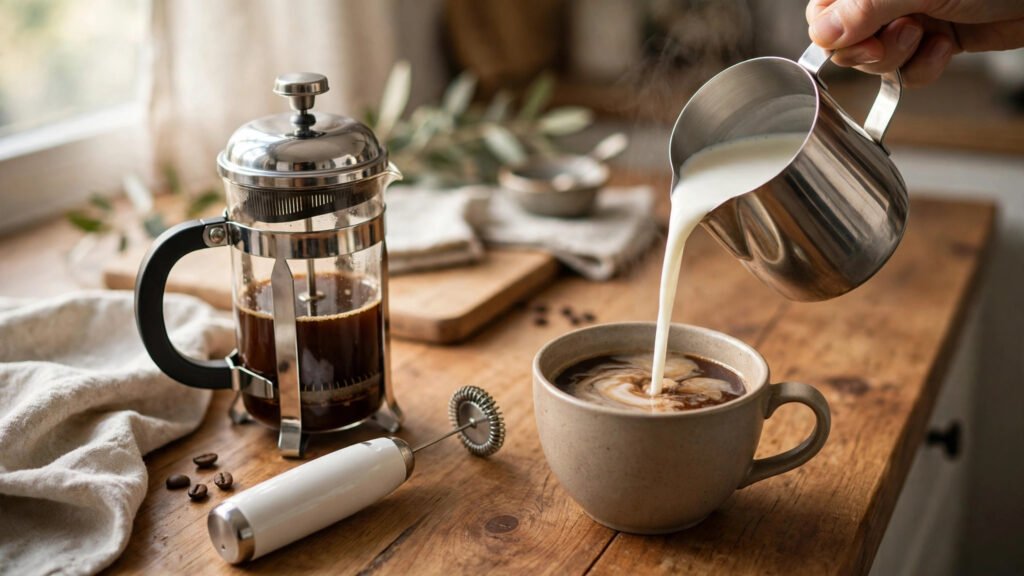
Jump To How to Froth Milk: Steam Wand vs No Machine, and Why Oat, Soy and Dairy Foam Differently How to froth milk comes down to two jobs done at once: add air, and heat the milk. A steam wand does both in one go…
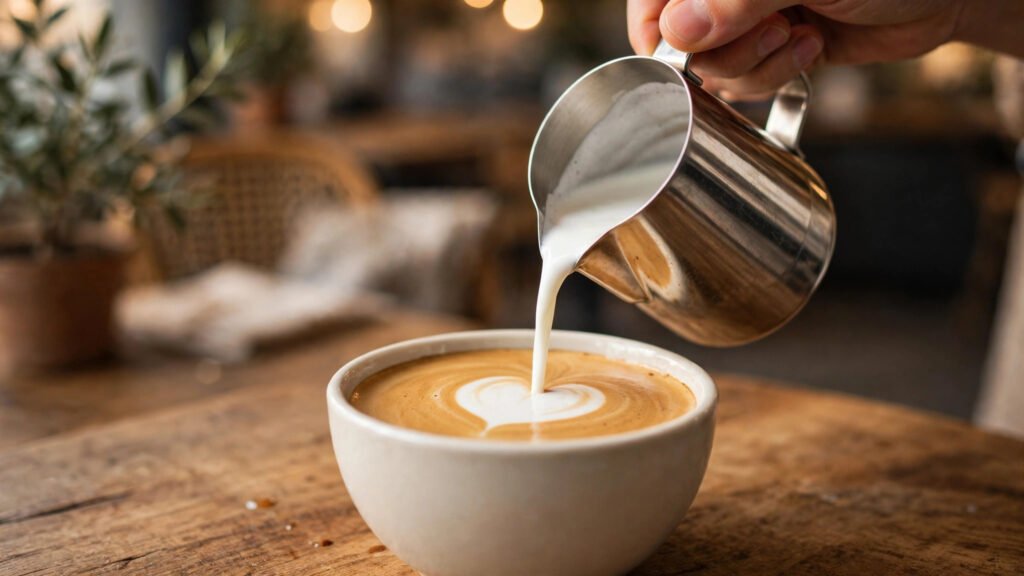
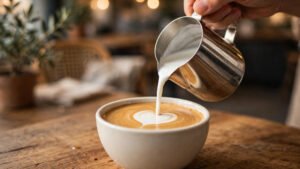
Jump To Latte Art for Beginners: Milk First, Art Second — the Heart Before You Try Anything Fancy Latte art for beginners starts with the milk, not the pour. If your steamed milk is smooth, glossy microfoam — tiny bubbles, the texture of wet paint…
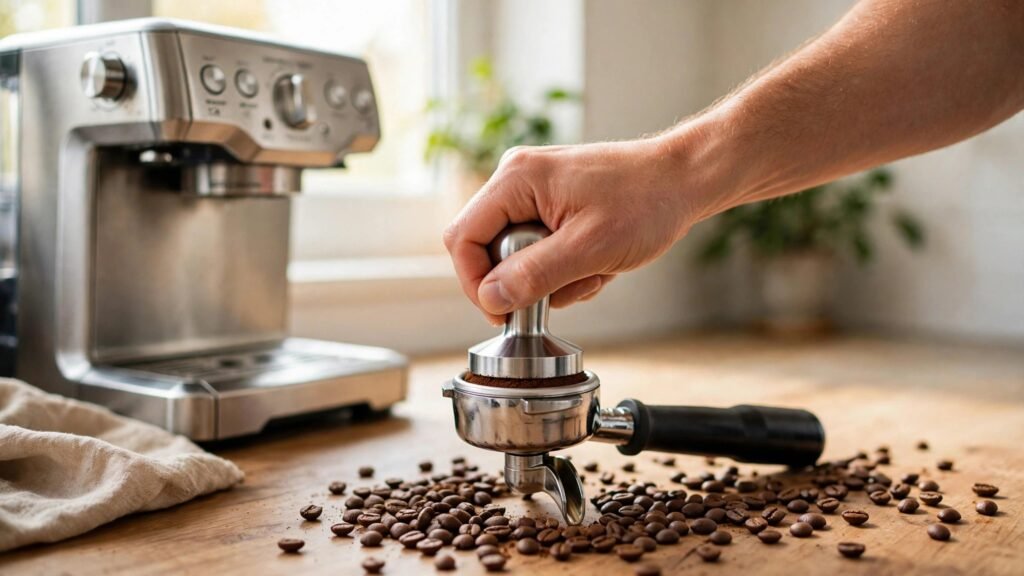
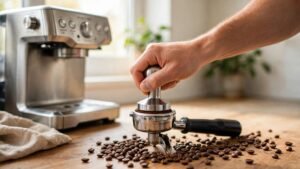
Jump To How to Tamp Espresso: Level, Even and Repeatable — the Pressure Number Matters Less Than You Think How to tamp espresso is one of the first skills a home barista learns, and one of the most overcomplicated. Tamping means pressing the ground coffee…

Explore the world of coffee with honest reviews and practical advice. Find your perfect cup, one bean and machine at a time.