


Making good coffee at home is simpler than it looks. The whole thing comes down to five things: decent coffee beans, the right grind for your brewer, clean water at the right temperature, a sensible coffee-to-water ratio, and fresh grounds. Get those right and any method — drip, French press, pour over — will taste dramatically better than stale pre-ground coffee from a big tin.
If you’re starting from zero, here’s how to make coffee for beginners in one line: use fresh beans, grind them right before brewing, and measure your coffee and water. Everything below just fills in the details.
You don’t need a fancy setup. The minimum useful kit:
That’s it. Everything else is optional until you decide you love this.
Start with a medium roast from a local roaster or a reputable online seller, roasted within the last few weeks. Medium roasts are forgiving: they taste good across methods and don’t demand precise technique the way very light roasts do. Avoid the giant tins of pre-ground coffee — they go stale fast and taste flat no matter what you do.
Don’t overthink the origin yet. Your first job is learning the process, not tasting notes.
Grind size controls how fast water extracts flavour from the grounds. Too fine for your method and the coffee tastes bitter and harsh; too coarse and it tastes weak and sour. Match the grind to your brewer:
| Brewer | Grind size | Feels like |
|---|---|---|
| Drip machine | Medium | Sea salt |
| Pour over (V60/Chemex) | Medium-fine | Table salt |
| French press | Coarse | Breadcrumbs |
| AeroPress | Fine-medium | Fine sand |
| Espresso | Fine | Powdered sugar |
A burr grinder (not a blade grinder) gives you consistent particle size, which is what actually matters — a blade grinder makes a mix of dust and chunks that brews unevenly.
The standard starting point is 2 tablespoons of coffee per 6 ounces of water, which works out to roughly a 1:16 ratio by weight. That means about 10 grams of coffee for every 160 ml of water.
Weighing is more accurate than scoops, but tablespoons are fine while you’re learning. The key point: measure both the coffee and the water the same way every time, so when a cup tastes great you can repeat it.
These steps work for drip, pour over, and French press — only the timing and grind differ (see the table above).
Bloom tip (pour over and French press): after the first pour, let the grounds sit and bubble for 30–45 seconds before continuing. Fresh coffee releases trapped CO2 — this “bloom” lets it escape so extraction is even.
| Mistake | What it tastes like | Fix |
|---|---|---|
| Water too hot (full boil) | Bitter, harsh | Let water sit 30 seconds off boil |
| Grind too fine for method | Bitter, muddy | Go coarser one step |
| Grind too coarse | Sour, weak, watery | Go finer one step |
| Stale pre-ground coffee | Flat, dull | Buy whole beans; grind fresh |
| No measuring | Inconsistent every day | Use a spoon or scale |
| Dirty equipment | Rancid, off flavours | Rinse after each use; deep-clean weekly |
Once your basic cup tastes good consistently, the upgrades that matter most are: a better burr grinder, trying a pour-over dripper for more control, and experimenting with a 1:15 ratio for a stronger cup or 1:17 for a lighter one. Take it one change at a time — that’s how you learn what you actually like.
The standard starting point is 2 tablespoons of ground coffee per 6 ounces of water (about a 1:16 ratio). Scale up or down from there.
Between 195°F and 205°F (90–96°C) — just off a full boil. A simple trick: boil the kettle, then wait about 30 seconds before pouring.
Whole bean, if you can. Pre-ground coffee goes stale within days of opening, while whole beans stay fresh for weeks. A basic burr grinder pays for itself in better-tasting coffee fast.
Usually the water is too hot, the grind is too fine for your method, or the coffee is over-extracted. Try slightly cooler water or a coarser grind, and change only one thing at a time.



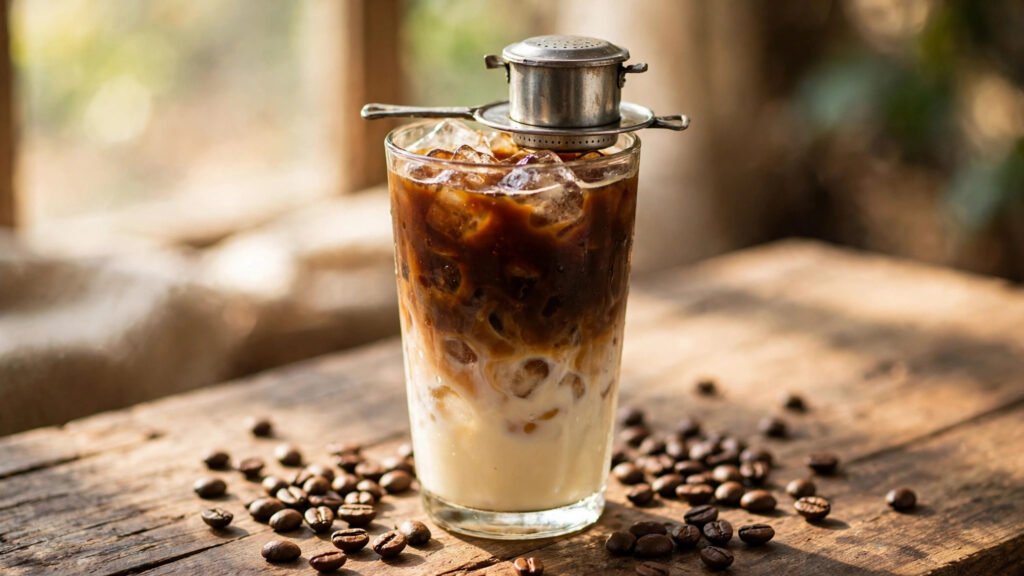
Jump To Vietnamese Iced Coffee (Ca Phe Sua Da): The Real Recipe, Plus the No-Phin Version Vietnamese iced coffee — ca phe sua da — is dark, strong coffee dripped slowly through a small metal phin filter onto sweetened condensed milk, then stirred and poured…

Jump To What Is Single Origin Coffee? (And Why It Isn’t Automatically Better) What is single origin coffee? It is coffee that comes from one place — one country, one region, one farm, or even one small plot of land. A blend, by contrast, mixes…
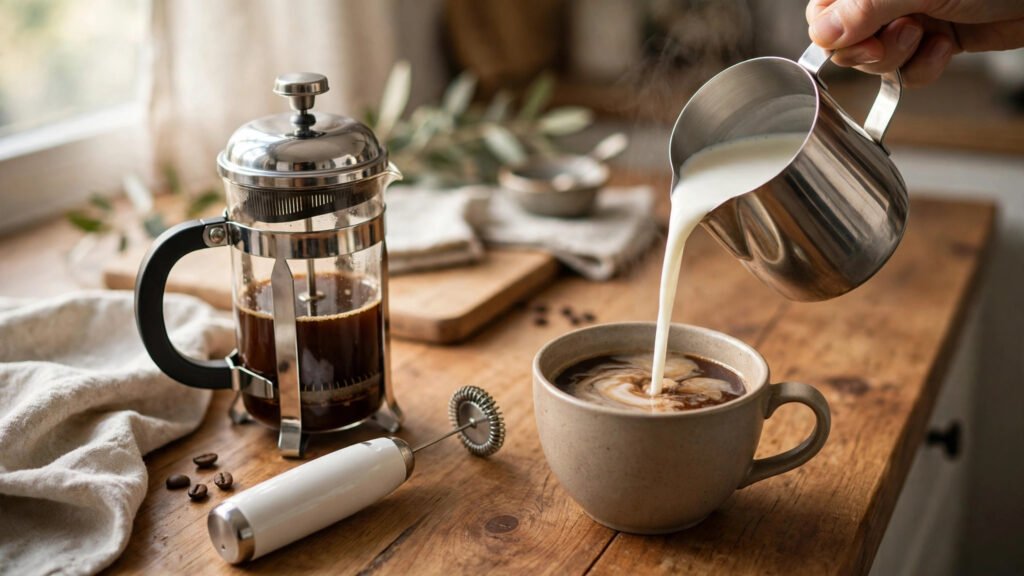
Jump To How to Froth Milk: Steam Wand vs No Machine, and Why Oat, Soy and Dairy Foam Differently How to froth milk comes down to two jobs done at once: add air, and heat the milk. A steam wand does both in one go…

Explore the world of coffee with honest reviews and practical advice. Find your perfect cup, one bean and machine at a time.