
How to Make Coffee at Home Without Machine: Simple Techniques for Rich Flavor Every Morning
Jump To
How to Make Coffee at Home Without Machine: Simple Techniques for Rich Flavor Every Morning
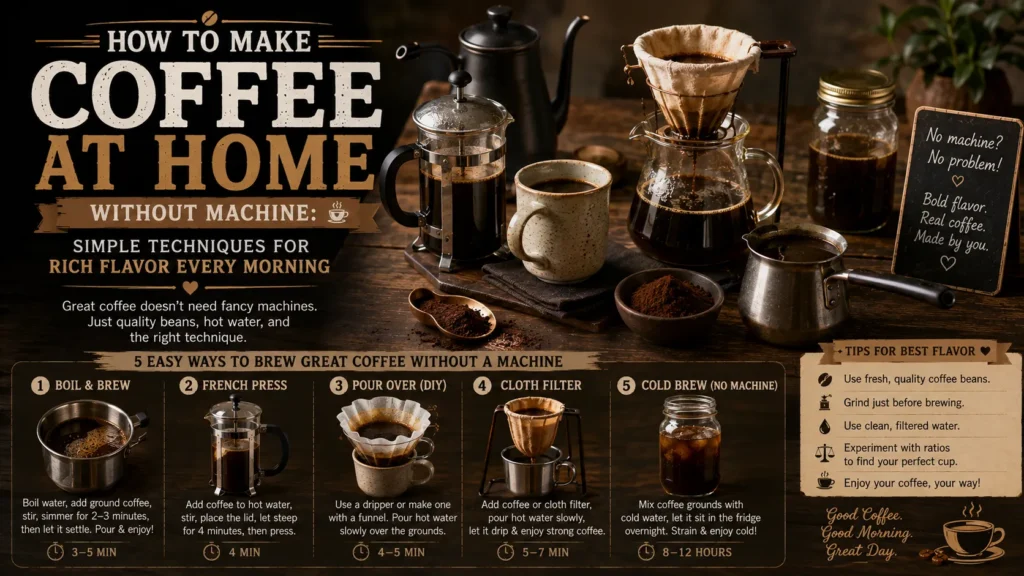
Many coffee lovers wake up craving a perfect cup but lack a fancy espresso machine or drip brewer. The good news is that you can still enjoy café‑quality coffee using only basic kitchen tools and a few clever tricks. This guide walks you through every step, from bean selection to brewing, so you can master how to make coffee at home without machine in minutes.
Whether you are traveling, living in a dorm, or simply prefer a minimalist setup, the methods covered here require no electricity beyond a kettle or stove. You will discover affordable alternatives, learn how to control extraction, and unlock flavors that rival any automatic brewer. By the end, you’ll feel confident brewing a delicious cup anytime, anywhere.
Key Takeaways
- You only need a heat source, a filter or cloth, and freshly ground coffee.
- Water temperature between 195°F and 205°F extracts optimal flavor without bitterness.
- Pour‑over, French press, and cowboy methods each give distinct taste profiles.
- Consistent grind size and brew time are crucial for balance.
- Cleaning your tools after each use prevents stale oils from ruining future cups.
Essential Tools You Need
Before you start, gather a few inexpensive items that most kitchens already have. A sturdy mug or heat‑proof carafe serves as your brewing vessel. A fine‑mesh sieve, cheesecloth, or paper filter works as a makeshift filter. Finally, a kettle or pot for heating water completes the basic setup.
Furthermore, a kitchen scale helps you measure coffee and water accurately, though you can use tablespoons as a fallback. A spoon or stirrer ensures even saturation of the grounds. Having these tools ready eliminates guesswork and makes the process repeatable.
Choosing the Right Beans
The foundation of great coffee lies in the beans you select. Look for freshly roasted whole beans, ideally within two weeks of the roast date. Light to medium roasts preserve nuanced acidity, while darker roasts deliver bold, chocolatey notes.
Moreover, grind size must match your chosen method. A coarse grind resembles sea salt and works best for immersion techniques like French press. A medium grind, similar to sand, suits pour‑over styles. Adjusting grind size lets you control extraction and avoid over‑ or under‑brewed results.
How to Make Coffee at Home Without Machine: The Pour‑Over Method
This technique mimics a drip brewer using only a funnel and filter. Place your filter in a funnel or DIY paper cone set over your mug. Add the ground coffee, then pour a small amount of hot water to bloom the grounds for 30 seconds.
After blooming, continue pouring water in slow, concentric circles, maintaining a steady stream. Aim for a total brew time of three to four minutes. The result is a clean, bright cup that highlights the bean’s natural flavors.
French Press Immersion Approach
If you prefer a fuller body, the French press delivers rich, syrupy coffee. Add coarse grounds to the press, pour hot water, and stir gently. Place the lid on top with the plunger pulled up, and let the mixture steep for four minutes.
After steeping, press the plunger down slowly and evenly. Pour the coffee immediately into your mug to prevent over‑extraction. This method yields a robust cup with a pleasant mouthfeel and subtle sediment.
Cowboy or “Boil” Method
When you have only a pot and a heat source, the cowboy method is your best friend. Combine water and coarsely ground coffee directly in the pot, using roughly two tablespoons per six ounces of water. Bring the mixture to a gentle boil, then remove from heat.
Let the grounds settle for a minute, or add a splash of cold water to speed sinking. Carefully pour the liquid into your mug, leaving the sludge behind. Though less refined, this approach delivers a strong, hearty brew perfect for camping.
Cold Brew Without Machinery
For a smooth, low‑acid drink, cold brew requires only time and patience. Mix coarse grounds with cold water in a jar at a ratio of 1:8. Stir to ensure all grounds are wet, then seal and refrigerate for 12 to 18 hours.
After steeping, filter the concentrate through a cheesecloth or fine sieve into another container. Dilute with water or milk to taste, and serve over ice. This method produces a concentrate that stays fresh for up to two weeks.
Controlling Water Temperature
Water that is too hot extracts bitter compounds, while water that is too cool yields sour, under‑extracted coffee. The ideal range is 195°F to 205°F (90°C to 96°C). If you lack a thermometer, bring water to a boil and let it sit for 30 seconds before pouring.
Moreover, pre‑heating your brewing vessel helps maintain temperature throughout the process. A warm mug or carafe prevents rapid heat loss, ensuring consistent extraction from start to finish.
Timing Your Brew
Brew time directly influences strength and flavor. For pour‑over, aim for three to four minutes; French press thrives at four minutes; cowboy method benefits from a two‑minute boil followed by a one‑minute settle. Adjusting these variables lets you tailor each cup to your preference.
In addition, keeping a simple log of grind size, water temperature, and brew time helps you replicate successful batches. Over time, you’ll develop an intuitive sense of what works best for your palate.
Cleaning and Maintenance
Residual oils can turn rancid and spoil future brews, so clean your tools after each use. Rinse filters, sieves, and presses with hot water, and use a mild detergent if needed. Avoid abrasive scrubbers that could damage delicate meshes.
Furthermore, store your coffee beans in an airtight container away from light, heat, and moisture. Proper storage preserves freshness and ensures that each cup tastes as vibrant as the first.
Experimenting with Flavors
Once you master the basics, feel free to add spices, sweeteners, or alternative milks. A pinch of cinnamon, a dash of vanilla extract, or a spoonful of cocoa powder can transform a plain cup into a specialty treat.
Moreover, trying different beans from various regions exposes you to unique flavor profiles—from fruity Ethiopian notes to chocolaty Brazilian blends. Exploration keeps your coffee routine exciting and personalized.
Troubleshooting Common Issues
If your coffee tastes bitter, check for over‑extraction: reduce brew time, use a coarser grind, or lower water temperature. Sour, weak coffee often signals under‑extraction; increase brew time, fine‑tune grind size, or raise temperature slightly.
Additionally, uneven wetness can cause channeling in pour‑over methods. Ensure you pour water slowly and evenly, stirring gently if needed. Addressing these factors quickly restores balance to your brew.
Cost Comparison: Manual vs. Machine Brewing
Investing in a high‑end espresso machine can cost hundreds of dollars, while manual methods require less than $20 in basic supplies. Over a year, the savings can be substantial, especially if you drink multiple cups daily.
Furthermore, manual brewing offers portability and simplicity—no electricity, no complicated maintenance, and no noisy operation. For many, the trade‑off in convenience is outweighed by the financial and experiential benefits.
Related Coffee Topics You May Like
Final Thoughts on Mastering Manual Coffee
Learning how to make coffee at home without machine empowers you to enjoy quality coffee wherever you are. With a few inexpensive tools, attention to detail, and a willingness to experiment, you can rival any café’s offerings.
Remember that consistency comes from practice. Keep refining your grind, temperature, and timing, and soon you’ll be brewing cups that impress even the most discerning palate. Embrace the process, and let each sip remind you that great coffee doesn’t need a machine—just a little know‑how and passion.
Ready to Elevate Your Coffee Game?
Download our free printable cheat sheet with grind charts, temperature guides, and step‑by‑step checklists for every manual method.
What is the best grind size for making coffee without a machine?
The ideal grind size depends on the brewing method you choose. For immersion techniques like the French press or cowboy method, a coarse grind resembling sea salt works best because it allows slower extraction and reduces sediment. For pour‑over or drip‑style methods, a medium grind similar to table sand provides balanced flow and clarity. If you grind too fine, you risk over‑extraction and bitterness; too coarse leads to weak, sour coffee. Adjusting grind size while keeping other variables constant lets you fine‑tune flavor to your preference.
Can I use regular tap water for manual coffee brewing?
Yes, you can use tap water, but its quality significantly impacts the final taste. Hard water with high mineral content can produce a flat or chalky cup, while heavily chlorinated water may introduce off‑flavors. If your tap water tastes good on its own, it will likely brew decent coffee. For optimal results, consider using filtered water or letting tap water sit uncovered for a few minutes to allow chlorine to dissipate. Consistent water quality ensures repeatable results and highlights the bean’s natural characteristics.
How long should I bloom the coffee grounds when using a pour‑over method?
Blooming involves pouring just enough hot water to saturate the grounds and release trapped carbon dioxide. This step usually takes 30 to 45 seconds. You’ll see the coffee bubble and expand as gases escape. Skipping the bloom can cause uneven extraction, leading to sour or bitter notes. After the bloom, continue pouring water in slow, controlled circles to maintain an even slurry and achieve a clean, bright cup.
Is it possible to make espresso‑style coffee without a machine?
True espresso requires about nine bars of pressure, which is difficult to replicate without specialized equipment. However, you can create a strong, concentrated coffee that mimics espresso’s intensity using a Moka pot, AeroPress with pressure technique, or a French press with a very fine grind and short brew time. These methods produce a rich, full‑bodied shot that works well for milk‑based drinks like lattes or cappuccinos when steamed milk is added. While not identical to machine‑pulled espresso, they offer a satisfying alternative for home baristas.

Moses Anthony
Moses Anthony is a coffee enthusiast and home brewing specialist with over 7 years of hands-on experience testing coffee beans, espresso machines, grinders, and brewing methods. He has spent years experimenting with pour-over, French press, drip coffee, and espresso to help everyday coffee drinkers brew better coffee at home.At Best Coffee Guide, Moses focuses on practical brewing tips, honest product comparisons, and beginner-friendly coffee education based on real testing and research. His goal is to simplify coffee brewing and help readers make better choices with confidence.
How to Make Coffee Easy: Effortless Tips for Barista‑level Brew at Home
September 17, 2026
No Comments
Read More » Mastering the Art: How to Make Coffee Darker for a Richer, Bold Brew
September 16, 2026
No Comments
Read More » 
How to Make Coffee Dip: Easy Steps to Create a Rich, Coffee-infused Spread
September 15, 2026
No Comments
Read More » Latest Pots
Imagine waking up, craving a rich cup, but feeling overwhelmed by complicated machines and vague recipes. You want great coffee without the fuss, and you deserve a method that works every single time. This guide shows you exactly how to make coffee easy, turning morning…
Many coffee lovers crave a cup that looks as deep and intense as its flavor promises. If your brew often turns out light or washed out, you’re not alone—achieving that striking darkness involves more than just adding extra grounds. In the next few paragraphs we’ll…

Explore the world of coffee with honest reviews and practical advice. Find your perfect cup, one bean and machine at a time.
Main Menu
Top Categories
Newsletter
Sign up our newsletter to get updated information, promo or insight for free.
Copyright © 2025 Best Coffee Guide, All rights reserved.