

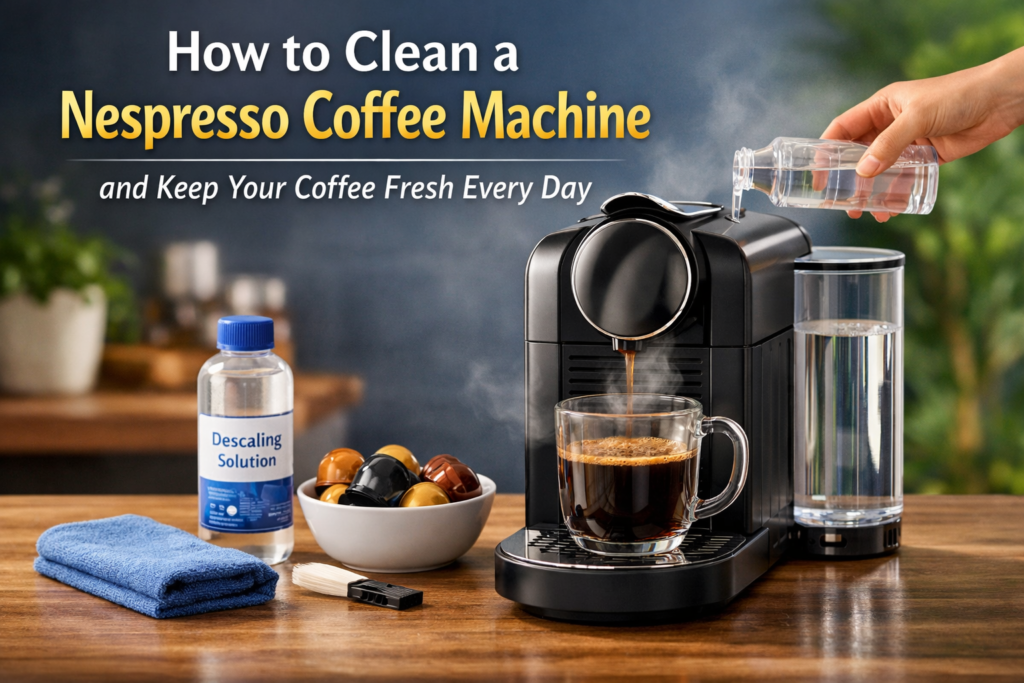
You press the button on your Nespresso machine expecting a rich and smooth cup of coffee. Instead, you notice a strange taste, weak flavor, or slow coffee flow. Many coffee lovers face this problem, but they often ignore the real reason behind it. The truth is that even the best coffee machines lose performance when they are not cleaned regularly.
Coffee oils, mineral deposits from water, and leftover residue slowly build up inside the machine. Over time, this buildup affects the flavor of your coffee and can even damage your coffee maker. Many people think their machine is broken when the real issue is simply poor cleaning.
If you want your coffee to taste fresh and strong every day, then proper maintenance is essential. Knowing how to clean a Nespresso coffee machine can extend the life of your machine, protect the quality of your coffee, and prevent expensive repairs.
In this guide, you will learn simple and safe methods to clean your Nespresso machine step by step. You will also discover how descaling works, how to clean different Nespresso models, and how to maintain your machine without using complicated tools. By the end of this article, you will know exactly how to keep your coffee machine running like new.
A Nespresso machine works with high pressure and hot water to extract flavor from coffee capsules. During this process, coffee oils and minerals from water remain inside the internal system. If this buildup is not removed regularly, it affects the taste and performance of the machine.
To properly maintain your coffee maker, you should clean both the external and internal parts. Start by unplugging the machine and removing the water tank, capsule container, and drip tray. Wash these removable parts with warm water and mild dish soap.
After washing, wipe the outer surface of the machine with a soft cloth. Avoid using strong chemicals because they can damage the machine’s surface.
Once the external cleaning is done, you should run a water cycle through the machine without inserting a coffee capsule. This process removes leftover coffee residue from the brewing system. Regular cleaning keeps your machine hygienic and ensures that every cup of coffee tastes fresh and balanced.
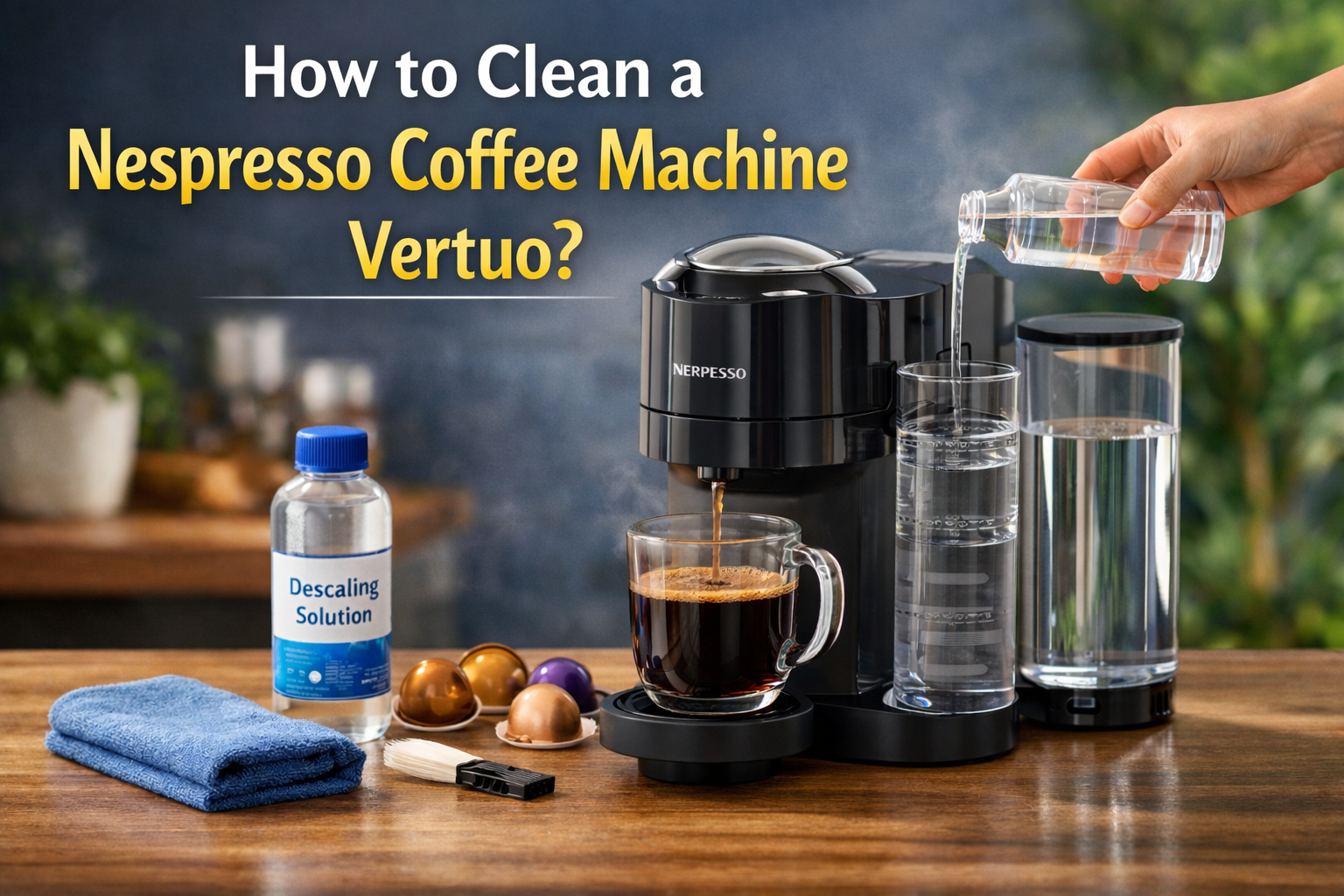
The Vertuo series uses a different brewing technology compared to traditional Nespresso machines. Because of this system, it requires careful cleaning to maintain performance.
Begin by removing the used capsule container and drip tray. Wash them thoroughly with warm water and allow them to dry completely. Next, remove the water tank and rinse it well.
Fill the tank with fresh water and place a container under the coffee outlet. Turn on the machine and run a cleaning cycle. The machine will push hot water through the internal system and remove coffee residue.
The process may take several minutes, but it helps maintain the brewing pressure and ensures smooth coffee extraction. Many users ignore this step, which eventually leads to weak coffee or slow brewing.
Mineral buildup from water is one of the most common problems in coffee machines. Descaling removes these minerals and keeps the internal heating system working properly. To descale the machine, fill the water tank with a descaling solution mixed with water. Place a large container under the coffee outlet.
Activate the descaling mode on the machine and allow the solution to run through the internal system. The process usually takes around fifteen minutes.
After the cycle finishes, rinse the water tank and run another cleaning cycle using clean water. This step removes any leftover descaling solution from the machine. Performing this process every few months helps prevent blockages and protects the internal components.
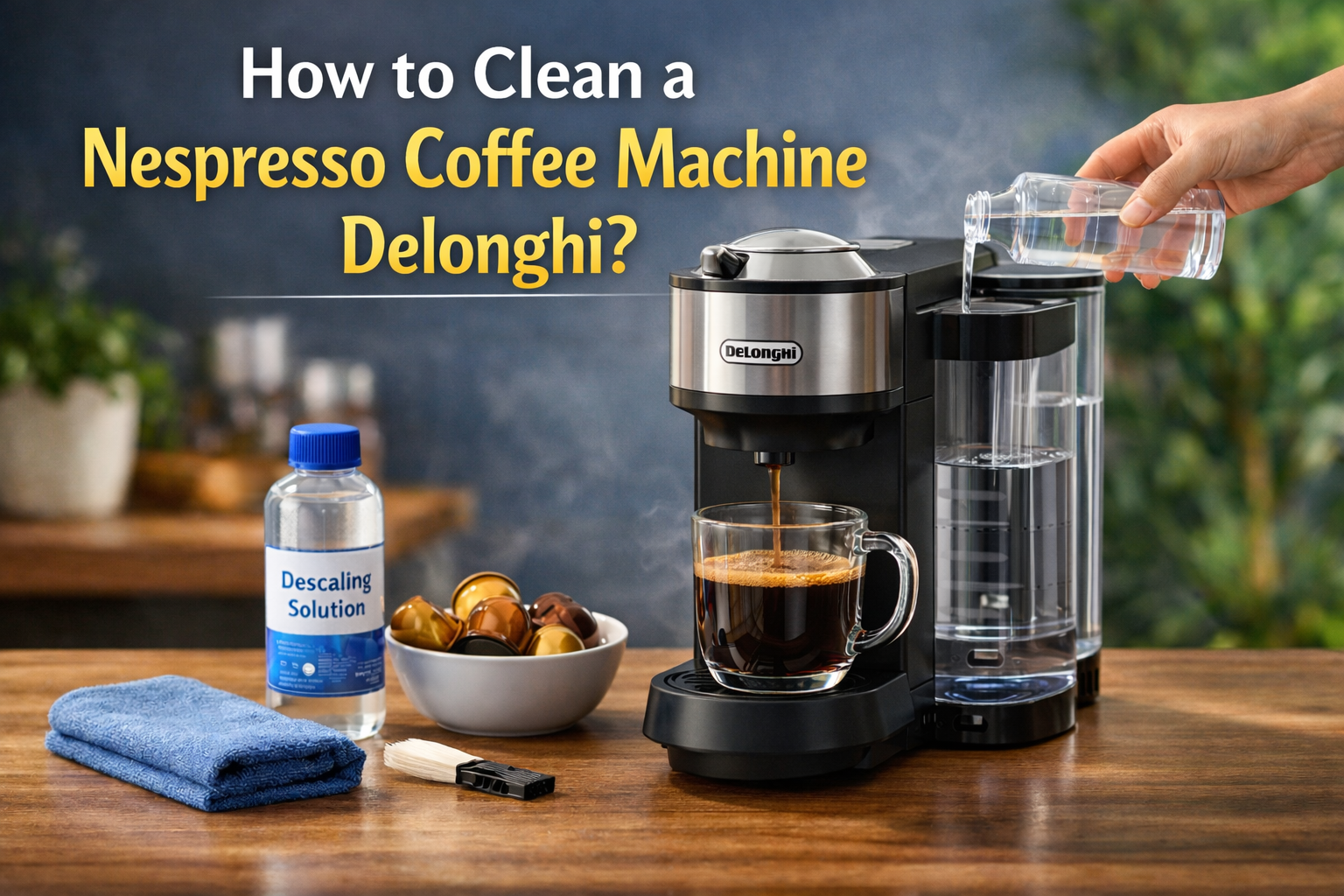
Many Nespresso machines are manufactured by DeLonghi, and they require regular maintenance like other models. Start by removing the water tank and capsule container. Wash these parts carefully and allow them to dry before placing them back.
Next, wipe the coffee outlet area and capsule holder because coffee residue often collects there. Run a water cycle through the machine without inserting a capsule. This simple process helps remove leftover coffee oils. Regular maintenance ensures that your DeLonghi machine continues to produce rich espresso and smooth coffee every day.
The filter area plays an important role in maintaining the quality of coffee extraction. If the filter becomes blocked, it can affect the taste and pressure of the machine. To clean the filter, first remove any visible coffee residue around the brewing head. Use a soft brush or clean cloth to gently wipe the area.
Next, run a water cycle through the machine to flush out any remaining particles. Avoid using sharp objects near the filter because they may damage the brewing mechanism. Keeping the filter clean ensures a consistent coffee flow and prevents bitter flavors.

Many people believe that descaling alone is enough to clean a coffee machine. In reality, the process should always be followed by a proper rinse. After completing the descaling cycle, empty the container and rinse the water tank. Fill it again with clean drinking water.
Run the machine several times without inserting a capsule. This step removes any leftover descaling solution from the internal system. Cleaning the machine after descaling ensures that your coffee does not carry any unwanted taste. This simple step also protects the internal components of the machine and keeps your coffee safe to drink.
Some users prefer to clean their machines using household methods instead of commercial descaling products. While professional solutions are recommended, some alternatives can help in basic cleaning. One common method involves using a mixture of water and white vinegar. Fill the water tank with this mixture and run a brewing cycle without inserting a capsule.
After the cycle finishes, rinse the water tank thoroughly and run several cycles with clean water. This helps remove any vinegar smell from the machine. Although this method can help remove light mineral buildup, it should not replace proper descaling solutions used for deeper cleaning.
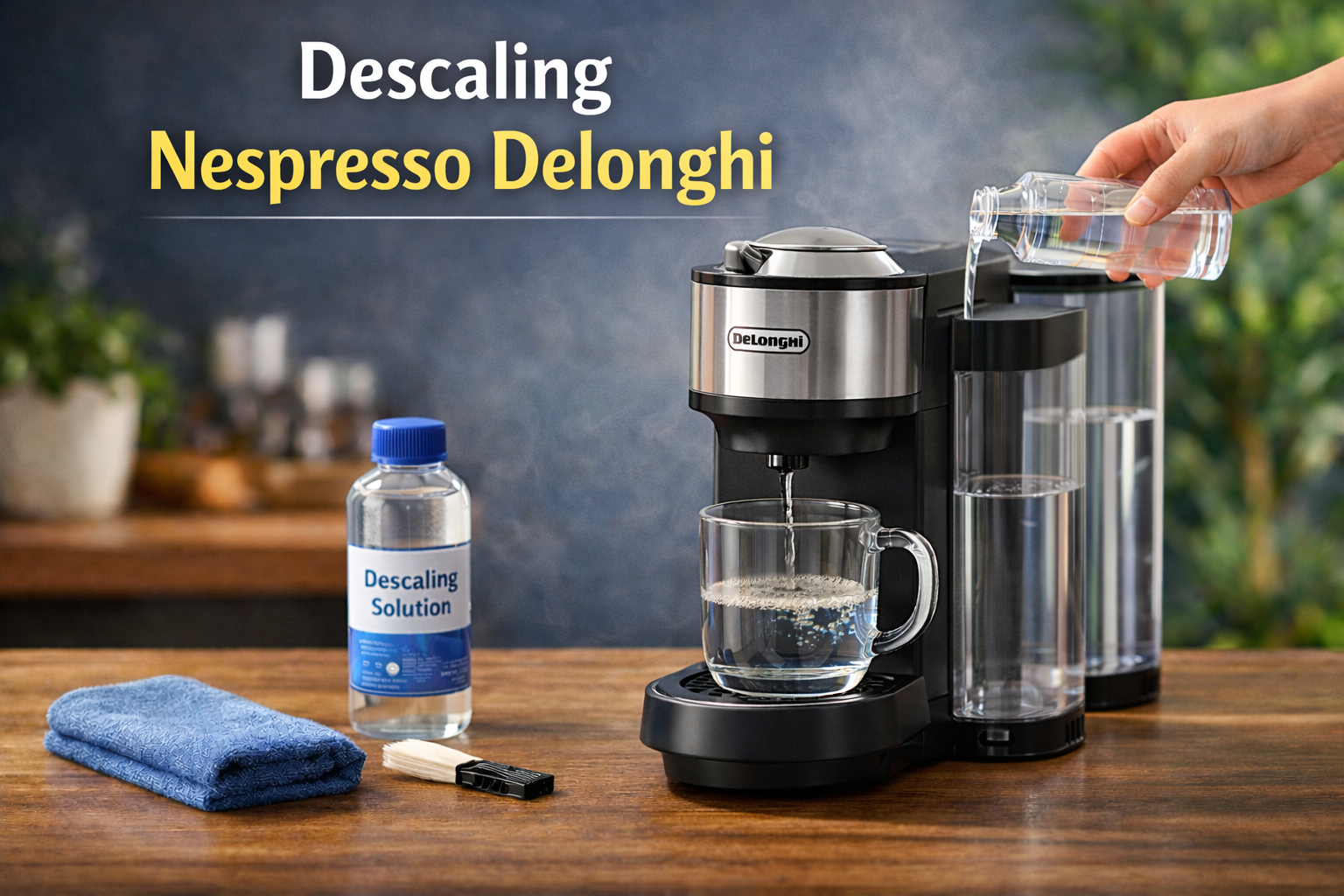
Descaling is one of the most important maintenance steps for Nespresso machines made by DeLonghi. Mineral deposits from tap water slowly collect inside the heating system and pipes. If this buildup continues, it can reduce water pressure and damage internal parts.
To descale the machine, mix the descaling solution with water in the tank and start the descaling program. Allow the solution to run completely through the machine. Once the process is finished, rinse the tank and run clean water through the machine several times. Regular descaling helps maintain brewing temperature and keeps the coffee taste consistent.
The Nespresso descaling kit is designed specifically for cleaning Nespresso machines. It contains a safe solution that removes mineral deposits without damaging internal components. Using the official kit provides better results compared to many homemade solutions because it is developed for the machine system.
The process is simple. Mix the solution with water according to the instructions and start the descaling mode on your machine. After the cycle finishes, rinse the machine with fresh water to remove any remaining solution. Using the proper kit ensures that your coffee machine stays protected while maintaining excellent coffee flavor.
Fill the water tank with fresh water, place a container under the coffee outlet, and run the machine without inserting a capsule. Let hot water pass through the system to remove coffee residue and oils.
Remove the capsule container and drip tray, wash them with warm water, then run several water cycles through the machine without a capsule. This helps clean the internal brewing system.
You can use a mixture of water and white vinegar to remove light mineral buildup. Run the mixture through the machine and then rinse the system several times with clean water.
Deep cleaning includes washing removable parts, wiping the brewing area, and running a descaling solution through the machine. After descaling, rinse the machine with fresh water to remove any remaining solution.
Usually running the water cycle three to five times without a capsule is enough to flush the system and remove leftover coffee residue.
Empty the used capsule container, wash the drip tray and water tank, wipe the machine surface, and run clean water through the machine to clear the brewing system. Regular descaling keeps it working properly.
Keeping your coffee machine clean is the secret to great tasting coffee. Many coffee lovers replace capsules or adjust brewing settings when the taste changes. However, the real solution often lies in proper maintenance.
Knowing how to clean a Nespresso coffee machine helps remove coffee oils, mineral buildup, and residue that affect the flavor of your drink. Regular cleaning also improves brewing pressure and protects the internal components of the machine.
By following the methods explained in this guide, you can keep your Nespresso machine working smoothly for many years. Whether you use a Vertuo model, a DeLonghi machine, or a standard capsule system, consistent cleaning will always improve coffee quality.
A clean coffee machine does not just protect your investment. It also ensures that every cup you brew delivers the rich aroma and smooth taste that coffee lovers expect.





Contact Us Jump To Does Black Coffee Have Calories Real Truth About Fasting, Weight Loss & Health You switch to black coffee, thinking it is the safest drink for weight loss. No sugar, no milk, almost no calories. It feels like a smart move. But…

Contact Us Jump To How to Roast Coffee Beans at Home (Beginner to Pro Guide) A lot of people try roasting coffee at home with excitement, but the results often disappoint them. The beans either taste too bitter, too sour, or completely flat. The confusion…

Contact Us Jump To Baratza Encore Coffee Grinder A Beginner Friendly Guide to Grind Quality, Settings, Upgrades, and Whether It Is Still Worth Buying You buy good coffee beans, follow a recipe, and still get a cup that tastes flat, bitter, or oddly sour. For…

Explore the world of coffee with honest reviews and practical advice. Find your perfect cup, one bean and machine at a time.