

The coffee roasting process is the most important stage that transforms raw green coffee beans into the rich aromatic coffee people enjoy every day. Many coffee lovers buy premium beans but still fail to experience great flavor. The reason is often poor roasting or a lack of knowledge about how roasting works.
Green coffee beans have very little aroma and taste before roasting. The roasting stage develops the oils, sugars, and compounds inside the beans that produce flavor, aroma, and color. When roasting is done correctly, coffee can taste smooth, balanced, and full of character. When roasting goes wrong, coffee becomes bitter, burnt, or flat.
Many coffee drinkers struggle with questions such as why their coffee tastes bitter, why some coffee smells better than others, and how professional roasters create consistent flavor. The answer lies inside the science and craft of roasting.
This detailed guide explains every part of the coffee roasting process, including roasting stages, roasting types, roasting equipment, and professional roasting techniques. By the end of this guide, you will clearly see how roasting turns simple beans into the complex drink loved worldwide.
The coffee roasting process is a controlled heating procedure that changes the chemical structure of coffee beans. Heat triggers reactions inside the beans that create aroma, flavor, and color.
At the beginning, green beans contain moisture and natural sugars but have almost no smell. As the beans heat up, the moisture evaporates, and the beans expand. Chemical reactions start to form hundreds of aroma compounds that define the flavor of coffee.
Roasting also causes beans to change color. They move from green to yellow, then light brown, and finally dark brown, depending on the roast level. The oils inside the beans start to migrate toward the surface as roasting continues.
The roasting stage is where the personality of coffee develops. Light roasting highlights natural acidity and origin flavors. Medium roasting produces balanced sweetness. Dark roasting brings a strong body and bold taste. Because roasting has such a strong effect on taste, professional roasters carefully monitor temperature, time, and airflow during the entire roasting cycle.
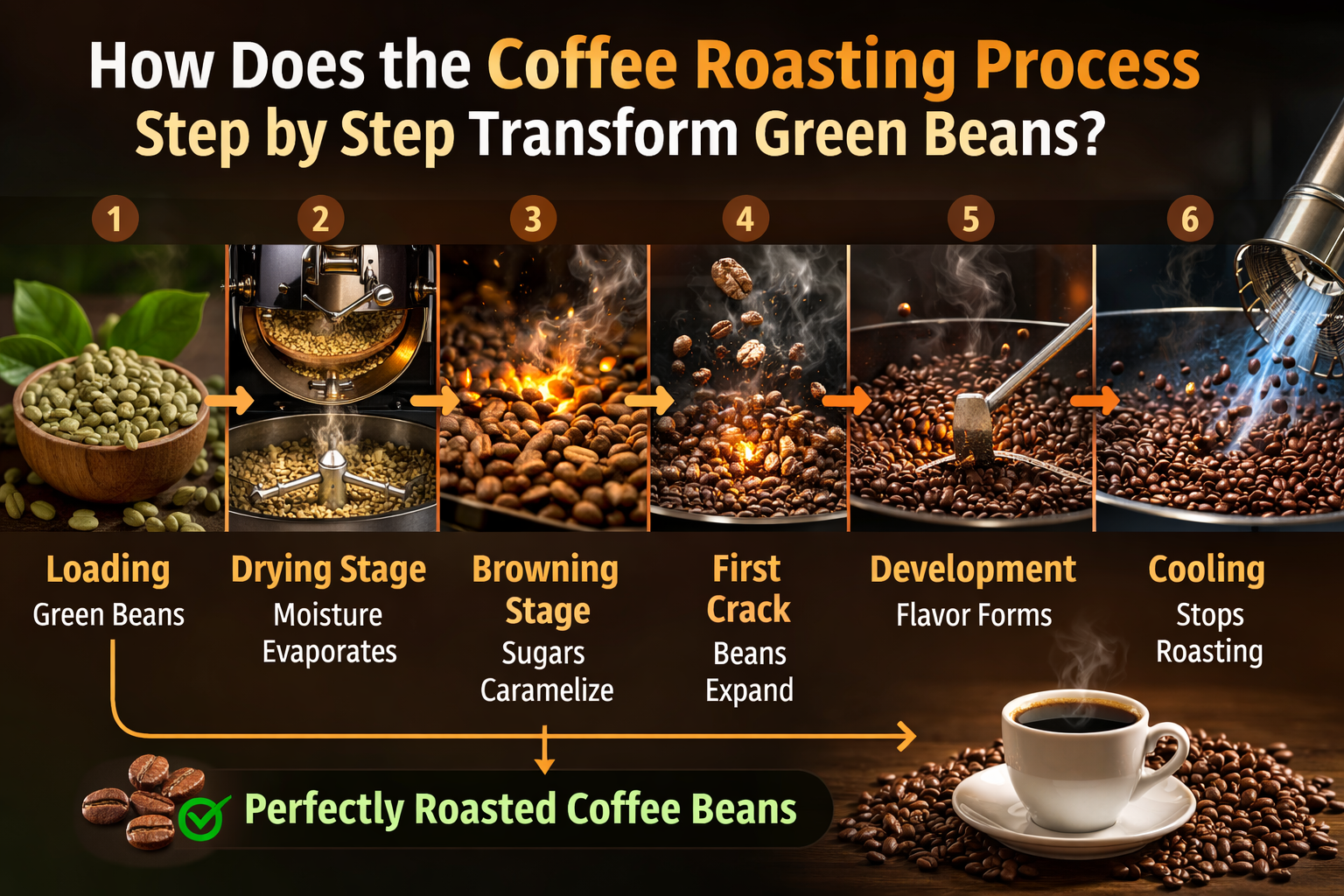
The coffee roasting process, step by step, follows a clear progression that professional roasters carefully control to achieve the desired roast level. The first stage begins with loading green beans into a roasting machine that heats them with hot air or a rotating drum. The beans slowly absorb heat, and their internal temperature begins to rise.
The second stage is called the drying phase. Moisture inside the beans starts to evaporate. During this phase, beans turn from green to pale yellow and produce a grassy smell. The third stage is the browning stage. Sugars inside the beans begin to caramelize and create aroma compounds. The beans start turning light brown, and the smell becomes similar to toasted bread.
The fourth stage is the first crack. This is an audible popping sound that occurs when pressure inside the beans forces them to expand. At this moment, the beans officially become roasted coffee. The fifth stage is development time. Roasters decide how long to continue roasting after the first crack. This stage determines whether the roast becomes light, medium, or dark.
The final stage is cooling. Beans must cool quickly to stop the roasting process. Professional machines use strong airflow to cool beans within minutes. This step-by-step roasting method allows roasters to control flavor, acidity, body, and aroma.
A coffee roasting process flow chart helps roasters visualize each stage of roasting and maintain consistency in production. In professional roasting operations, consistency is critical because customers expect the same flavor every time they buy coffee.
A roasting flow chart usually begins with green coffee selection. Roasters evaluate bean quality, size, and moisture level before roasting. The next stage is roasting preparation, where the machine is preheated to the correct temperature.
After preparation, beans enter the roasting drum and move through several controlled heating stages. Temperature and airflow remain carefully adjusted throughout the roasting cycle.
The next stage is the development phase, where roasters determine the roast profile. This is where flavor characteristics such as sweetness, acidity, and body are shaped. Once roasting reaches the desired level, beans move into the cooling stage. Rapid cooling prevents over-roasting and preserves the intended flavor profile.
Finally, roasted beans rest for a short period to release carbon dioxide before packaging or grinding. A roasting flow chart acts as a roadmap that allows professional roasters to repeat the same roasting profile again and again.
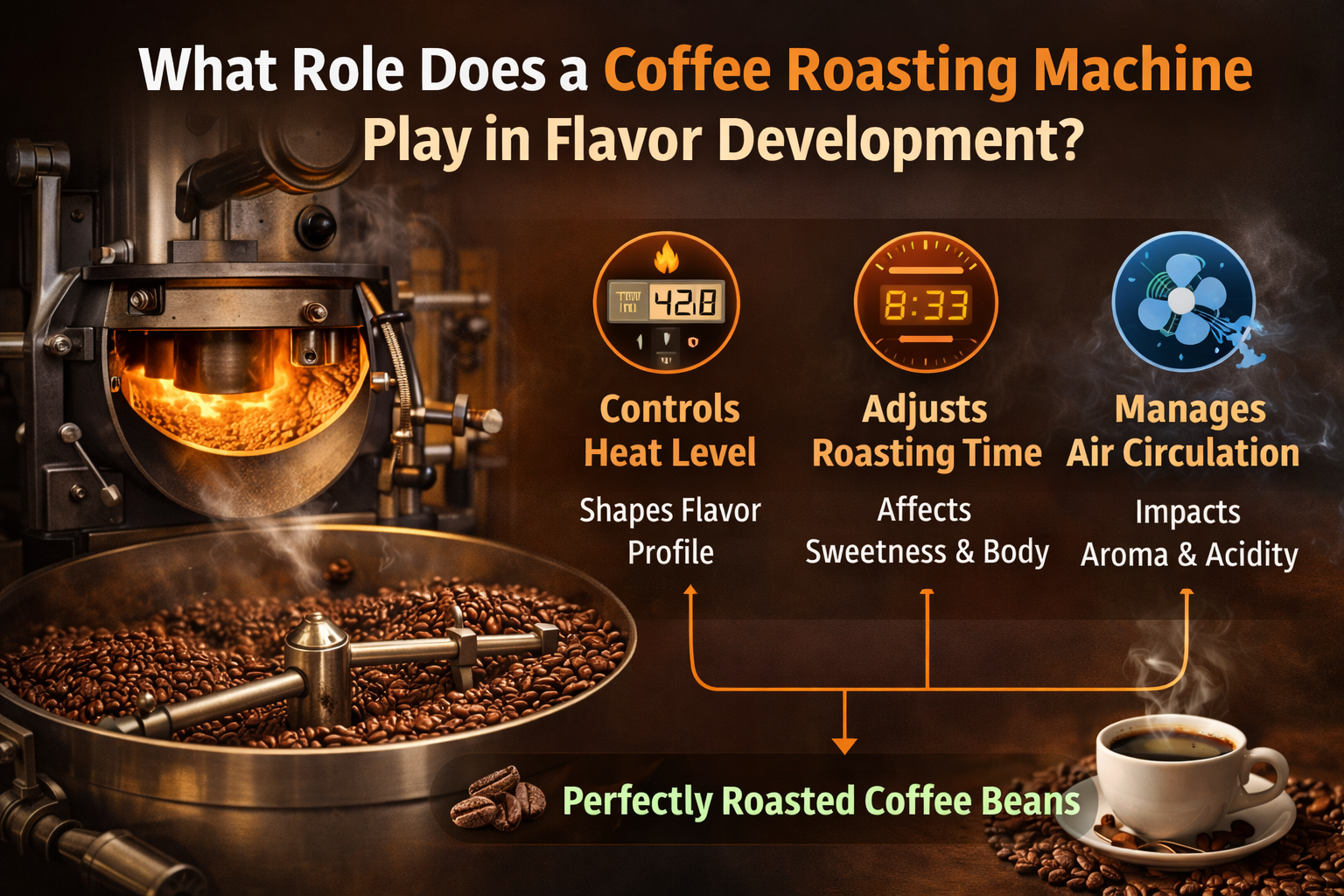
A coffee roasting machine is the heart of the roasting operation. This equipment controls heat, airflow, and roasting time to create the desired flavor. Most professional roasters use drum roasting machines. In this system, beans rotate inside a heated drum while hot air circulates them. This ensures even roasting and balanced flavor.
Another roasting technology is hot air roasting. This system uses strong hot air to suspend beans during roasting. The beans roast quickly and evenly, which produces a bright and clean flavor.
Modern roasting machines include digital controls that allow roasters to track temperature changes and roasting curves. This technology helps maintain consistency and precision.
Professional roasting machines also include cooling trays and ventilation systems to remove smoke and control heat. Choosing the right roasting machine is essential for coffee businesses that want to produce high-quality coffee with reliable flavor.
Many people ask what the 4 types of coffee roast are because roast level has the strongest effect on flavor. Light roast coffee is roasted for a shorter time and keeps the natural flavor of the coffee’s origin. These beans are light brown and have higher acidity with fruity or floral notes.
Medium roast coffee is the most balanced roast level. The beans appear medium brown and produce a smooth flavor with balanced acidity and sweetness. Medium dark roast coffee develops a deeper flavor and a stronger body. Beans become darker brown and may begin to show slight oil on the surface.
Dark roast coffee is roasted longer and produces a bold, intense flavor. These beans are dark brown and oily. Dark roast often carries smoky or chocolate-like notes. Each roast level offers a different experience and appeals to different coffee drinkers.
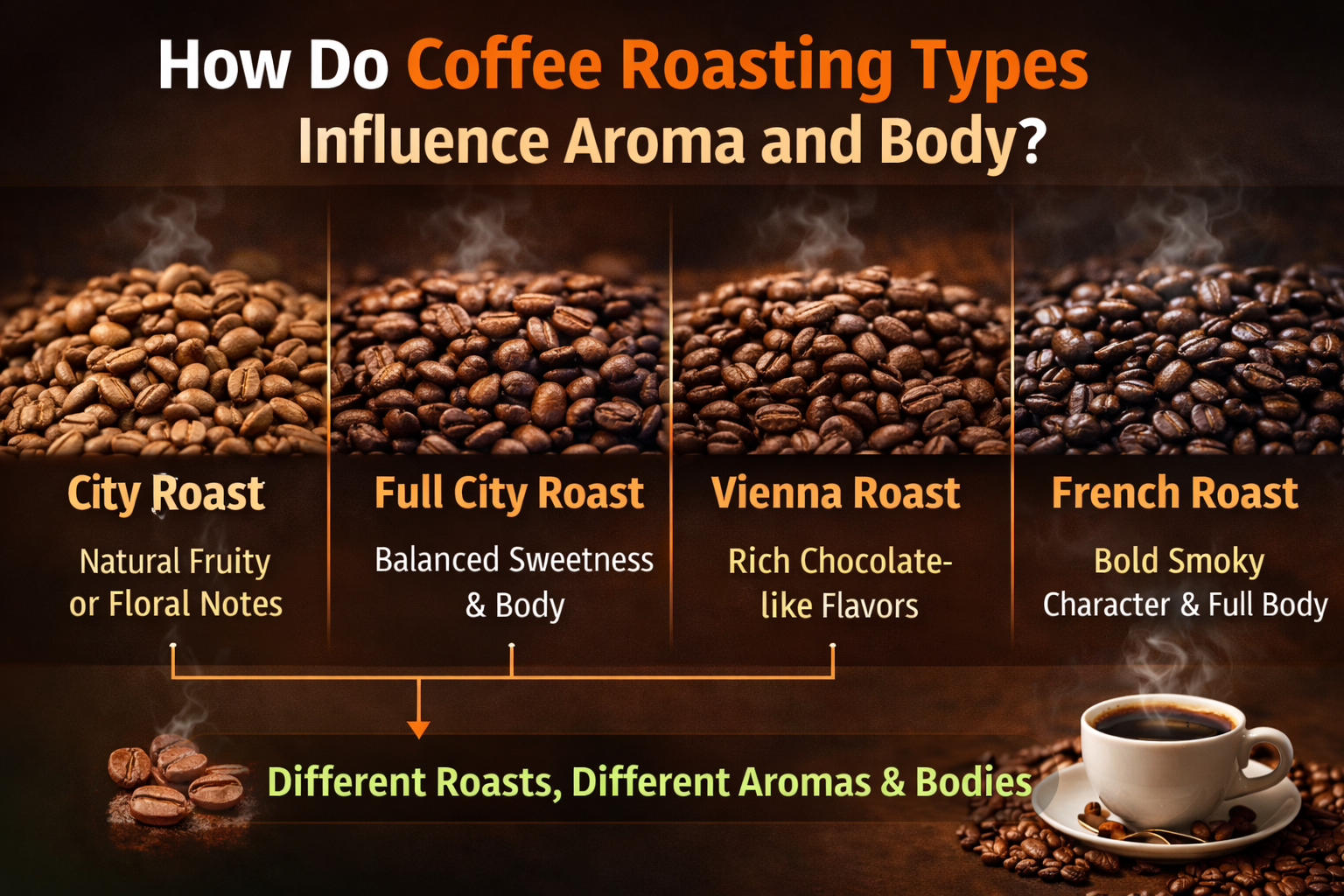
Different coffee roasting types influence how coffee tastes and smells in the cup. Roasters choose roasting styles based on the flavor they want to highlight. City roast is a light roasting style that highlights natural coffee origin characteristics such as fruit or floral notes. Full city roast produces a balanced flavor with deeper sweetness and moderate body.
Vienna roast pushes beans slightly darker and develops richer chocolate-like flavors. French roast is a very dark roasting style that emphasizes bold smoky character and strong body. The roasting type affects how coffee performs in brewing methods such as espresso, drip coffee, or cold brew.
The coffee roasting stages are responsible for building the aroma compounds that give coffee its signature smell. The first stage is the drying stage, where moisture leaves the beans. This stage prepares beans for chemical reactions. The second stage is the browning stage, where sugars caramelize, and aromatic compounds begin forming.
The third stage is the first crack stage, where beans expand and release steam and gases. The fourth stage is the development stage, where flavor complexity increases, and oils move toward the surface. The final stage is cooling, which locks the flavor profile in place. These roasting stages work together to produce the rich aroma that coffee lovers recognize instantly.
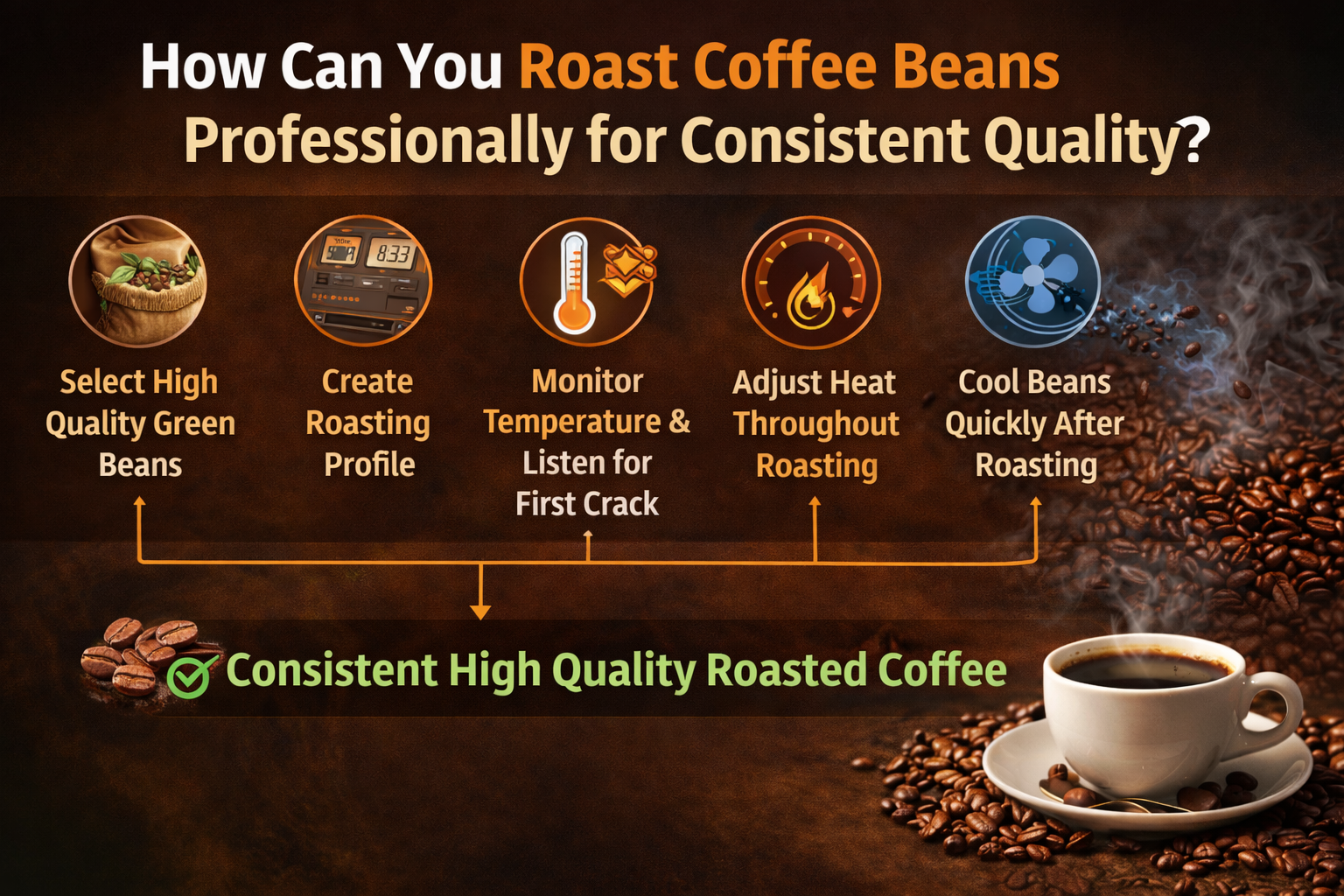
Many coffee enthusiasts ask how to roast coffee beans professionally because roasting requires both skill and precision. Professional roasting begins with selecting high-quality green coffee beans. Roasters then create a roasting profile that defines temperature changes and roasting duration.
During roasting, professionals closely monitor bean temperature and listen for the first crack, which signals a major stage in the roasting process. Roasters adjust heat levels during development time to shape sweetness, acidity, and body. Cooling must happen quickly after roasting to stop further heat development.
Professional roasters also evaluate the final product by tasting the coffee through a process called cupping. This allows them to analyze flavor, aroma, and balance before releasing coffee to customers. Through careful monitoring and experience, professional roasters can create consistent, high-quality coffee every time.
The biggest enemies of coffee beans are air, heat, moisture, and light. These factors quickly destroy freshness and cause coffee to lose aroma and flavor.
Medium roast coffee is the most popular because it offers balanced flavor, moderate acidity, and a smooth aroma that suits most brewing methods.
Starbucks is well known for using dark roast coffee. Their roasting style produces bold flavor, strong body, and a slightly smoky taste.
Starbucks mainly uses Arabica coffee beans. Arabica beans provide a smoother flavor, better aroma, and higher quality compared to Robusta.
Medium roast coffee is usually considered the smoothest. It offers balanced acidity, mild bitterness, and a pleasant flavor profile.
Arabica is generally considered better because it has a smoother flavor, lower bitterness, and a more complex aroma. Robusta contains more caffeine but often tastes stronger and more bitter.
The three main roasting stages are the drying stage, where moisture leaves the beans, the browning stage, where sugars caramelize and aroma develops, and the development stage, where the final flavor of coffee forms.
The coffee roasting process is the crucial stage that transforms simple green coffee beans into the rich, flavorful beverage enjoyed by millions of people worldwide. Every detail of roasting influences how coffee tastes in the final cup. From roasting stages and roast types to roasting machines and professional techniques, each element plays a role in shaping aroma, body, and flavor balance.
When roasters control heat, timing, and development carefully, they unlock the full potential of coffee beans. This is why roasting remains both a science and a craft within the coffee industry. Understanding the coffee roasting process allows coffee lovers and professionals alike to appreciate the journey from raw bean to perfectly brewed coffee.





Contact Us Jump To Does Black Coffee Have Calories Real Truth About Fasting, Weight Loss & Health You switch to black coffee, thinking it is the safest drink for weight loss. No sugar, no milk, almost no calories. It feels like a smart move.But after…

Contact Us Jump To How to Roast Coffee Beans at Home (Beginner to Pro Guide) A lot of people try roasting coffee at home with excitement, but the results often disappoint them. The beans either taste too bitter, too sour, or completely flat. The confusion…

Contact Us Jump To Baratza Encore Coffee Grinder A Beginner Friendly Guide to Grind Quality, Settings, Upgrades, and Whether It Is Still Worth Buying You buy good coffee beans, follow a recipe, and still get a cup that tastes flat, bitter, or oddly sour. For…

Explore the world of coffee with honest reviews and practical advice. Find your perfect cup, one bean and machine at a time.