

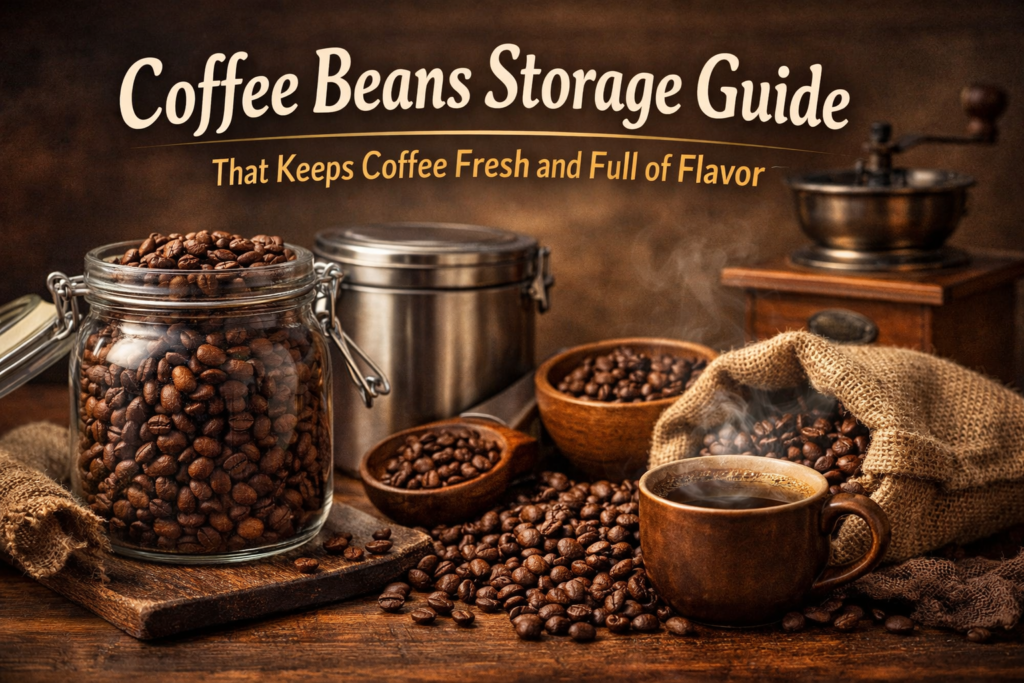
Fresh coffee is not just a drink. For many people, it is the most important part of the morning routine. But many coffee lovers face the same problem. They buy high-quality beans, but after a few days, the coffee starts tasting dull, flat, or even bitter. The rich aroma disappears, and the flavor becomes weak. This happens because coffee beans lose freshness quickly when they are stored the wrong way.
Many people think that coffee beans last for months without any care. Some people store them in the fridge. Others leave them open on the kitchen shelf. Many people even freeze them without knowing the correct method. All of these mistakes slowly destroy the oils and aroma that make coffee taste amazing.
This coffee beans storage guide will solve those problems step by step. In this article, you will learn how to store beans properly, how temperature affects freshness, whether the fridge or freezer is safe, and how you can keep your coffee beans fresh for months without losing flavor. If you truly want every cup of coffee to taste rich and aromatic, this guide will help you protect the quality of your beans.
Coffee beans are delicate and sensitive to the environment around them. Oxygen, moisture, heat, and light are the four biggest enemies of coffee freshness. When beans come into contact with these elements, they begin to lose their aroma and flavor very quickly.
A proper coffee beans storage guide always focuses on protecting beans from these four elements. The goal is to keep the beans in a stable environment where air and humidity cannot damage them.
Fresh roasted beans contain natural oils and aromatic compounds. These oils give coffee its deep flavor and pleasant smell. When beans are exposed to air, the oils start to oxidize. This process slowly removes the rich taste of coffee and makes it taste stale.
To store coffee beans correctly, you should place them in an airtight container and keep them in a cool, dark place. A cupboard away from heat sources like ovens or sunlight works perfectly. This simple method helps protect the beans and keeps the flavor strong for a longer time.
Another important factor is buying the right amount of coffee. Purchasing very large quantities may look convenient, but beans taste best when consumed within a few weeks after roasting.

Many coffee lovers want their beans to stay fresh for a long time. Freshness depends on how well you protect beans from air exposure and temperature changes. When coffee beans are stored properly, they can maintain a strong flavor for several weeks and in some cases even months. The key is minimizing contact with oxygen and moisture.
A good method is using airtight containers made from glass or stainless steel. These containers protect beans from air and keep them away from humidity that may damage their oils. Storing beans in a dark cupboard also prevents light from degrading their natural flavor compounds.
Grinding beans only when needed is another important practice. Whole beans remain fresh much longer than ground coffee because their surface area is smaller. Once coffee is ground, it begins losing aroma quickly. Keeping beans sealed and grinding them right before brewing allows you to enjoy rich coffee flavor every day.
Some coffee drinkers freeze their beans because they want to extend the shelf life. Freezing can work if it is done carefully, but it must follow specific steps. In this coffee beans storage guide in the freezer, the most important rule is preventing moisture from entering the beans. Coffee beans easily absorb odors and humidity from the freezer environment.
If you choose to freeze beans, they should be placed in completely sealed containers or vacuum-sealed bags. This prevents moisture from reaching the beans and protects their oils from damage.
Another important step is avoiding repeated freezing and thawing. Temperature changes create condensation, which harms the beans and removes flavor. If beans are frozen, they should be divided into small portions so that only one portion is removed at a time.
Freezing beans can help with long-term storage, but for daily coffee use, it is often better to keep them in a cupboard where the temperature remains stable.
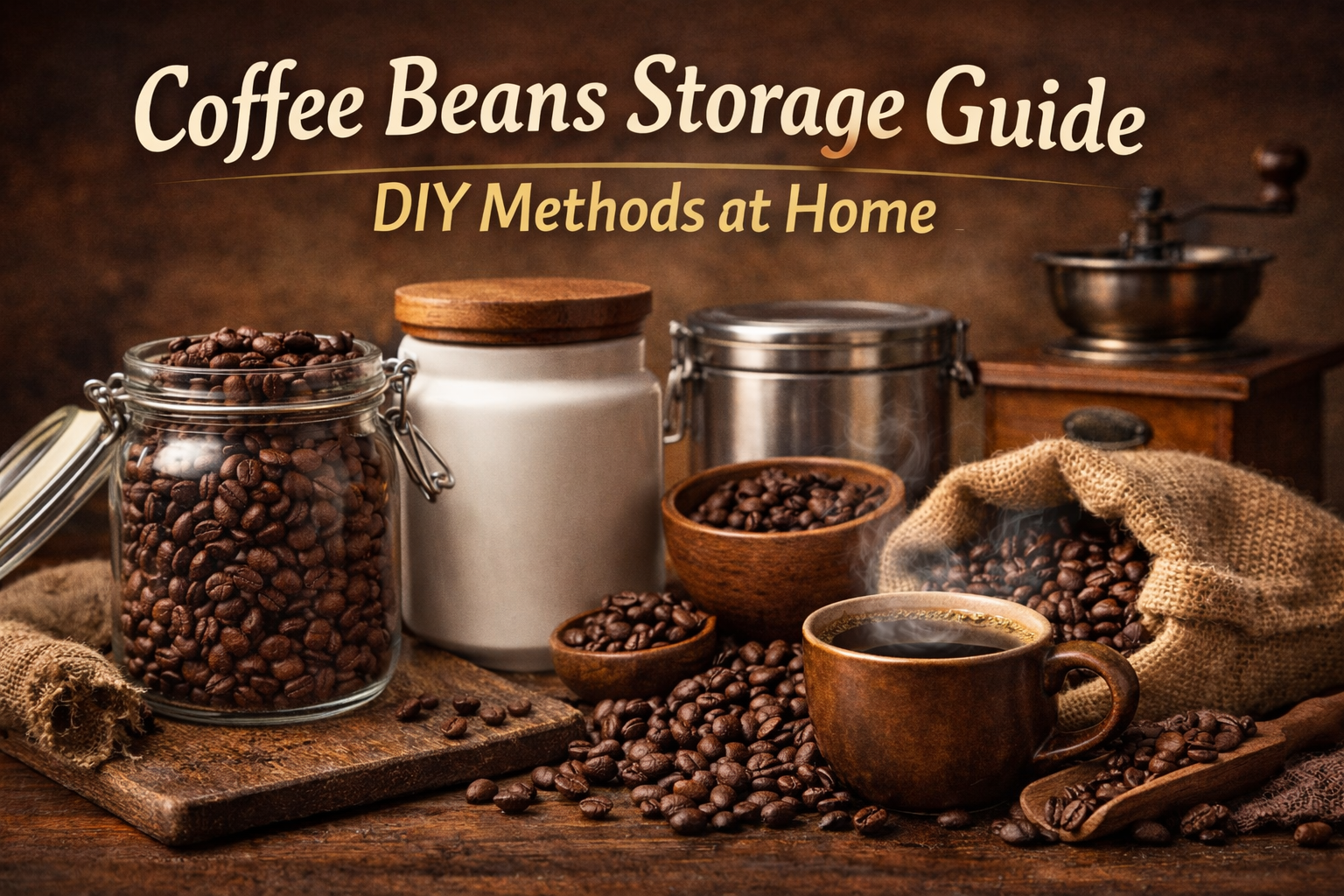
Many people want simple storage methods that work well without buying expensive equipment. Fortunately, several practical home methods can protect coffee beans effectively.
In this coffee beans storage guide diy, the focus is on everyday containers and smart kitchen practices. Glass jars with tight lids are a common and effective solution. They keep air away from beans and allow easy storage inside a cupboard.
Another useful method is using ceramic containers with lids that seal tightly. Ceramic blocks light and help maintain a stable environment inside the container.
Some people also use stainless steel coffee canisters that include a one-way valve. This valve allows gases released by fresh beans to escape while preventing air from entering. Even simple storage solutions can work well if the beans are kept away from heat, moisture, and light.
Coffee beans often come in sealed bags that include a small valve. Many people wonder if they should keep beans in the original bag or move them into a container. In many cases, storing coffee beans in the original bag is acceptable if the bag is resealed carefully and kept in a cool cupboard. Most modern coffee bags are designed to protect beans from air and light.
However, once the bag is opened, it becomes easier for oxygen to enter. Transferring beans into an airtight container often provides better protection. If you prefer to keep beans in their original packaging, the bag should be folded tightly and sealed with a clip to limit air exposure. Proper sealing ensures that the aroma and oils remain preserved for as long as possible.

Temperature plays a very important role in maintaining coffee quality. If beans are stored in a place that is too warm, the oils inside them begin to degrade quickly. The best coffee beans storage temperature is typically between fifteen and 24 degrees Celsius. This temperature range keeps beans stable and protects the natural oils responsible for flavor.
High heat speeds up oxidation and makes coffee taste stale. Storing beans near ovens, stovetops, or windows exposed to sunlight should always be avoided.
A cool kitchen cupboard is usually the best location for maintaining the right storage temperature. It keeps beans protected from heat while also shielding them from light. Maintaining a stable temperature is one of the simplest yet most powerful ways to preserve coffee freshness.
Many people believe refrigeration helps preserve food freshness. However, coffee behaves differently from many other foods. Storing coffee beans in the fridge often creates more problems than benefits. Refrigerators contain moisture and strong food odors. Coffee beans easily absorb both.
When beans absorb moisture, they lose their crisp structure, and the oils inside them begin to degrade. This leads to dull flavor and poor aroma during brewing.
In addition, coffee beans can absorb smells from other foods stored in the refrigerator. This can alter the taste of your coffee in unpleasant ways. Because of these factors, most coffee experts recommend avoiding refrigerator storage and using airtight containers in a cupboard instead.

The debate between coffee beans in the fridge or freezer often confuses coffee lovers. Each method has different effects on bean quality. Refrigerators introduce moisture and odor exposure, which can damage flavor quickly. This makes them a poor choice for storing coffee beans.
Freezers can be useful for long-term storage if beans are sealed properly and divided into small portions. The freezing environment slows down oxidation, which helps maintain flavor.
However, frequent removal from the freezer causes temperature changes that produce condensation. This is why beans should only be frozen in portions that will be used once. For most households, the best solution is storing beans in airtight containers in a cool, dark cupboard.
Coffee quality depends heavily on freshness. Even the most expensive beans cannot produce great coffee if they are stored incorrectly. Proper storage protects the delicate oils that carry flavor and aroma. When these oils remain intact, the brewed coffee tastes richer, smoother, and more balanced.
Good storage practices also reduce waste. Many people throw away beans because they believe the coffee quality is poor when the real problem is improper storage. By following simple storage methods, you can ensure that every cup delivers the full flavor intended by the coffee roaster.
The best method is to keep coffee beans in an airtight container in a cool, dark cupboard. This protects the beans from air, heat, moisture, and light that reduce freshness.
Coffee beans usually stay fresh for about two to four weeks after opening a sealed bag. If the bag remains properly sealed and stored in a cool place, the flavor can last a little longer.
Glass containers are generally better because they do not absorb odors and they seal tightly. Plastic containers may allow small amounts of air to enter and can affect flavor over time.
For six months of storage, coffee beans should be placed in airtight freezer safe containers and stored in the freezer in small portions. Only remove one portion at a time to prevent moisture from forming.
The biggest enemies of coffee beans are oxygen, heat, moisture, and light. These elements quickly break down the natural oils that give coffee its aroma and flavor.
The best container is an airtight container made of glass, ceramic, or stainless steel. These materials protect beans from the air and keep the flavor intact for a longer time.
The freezer is better than the fridge if beans must be stored for a long time. Refrigerators contain moisture and food odors that can damage the flavor of coffee beans.
Fresh coffee begins with proper storage. Many coffee lovers spend time choosing high-quality beans but overlook the importance of storing them correctly. Without the right storage method, even the best beans lose their aroma and flavor quickly.
This coffee beans storage guide shows that protecting beans from air, heat, moisture, and light is the key to preserving their quality. Storing beans in airtight containers, maintaining the right temperature, and avoiding refrigerator moisture can keep coffee tasting fresh and rich.
Whether you prefer simple kitchen storage or occasional freezer use for long-term preservation, the right methods will ensure your coffee stays aromatic and flavorful. When beans remain fresh, every cup becomes more enjoyable, and your daily coffee routine becomes truly satisfying.





Contact Us Jump To Does Black Coffee Have Calories Real Truth About Fasting, Weight Loss & Health You switch to black coffee, thinking it is the safest drink for weight loss. No sugar, no milk, almost no calories. It feels like a smart move. But…

Contact Us Jump To How to Roast Coffee Beans at Home (Beginner to Pro Guide) A lot of people try roasting coffee at home with excitement, but the results often disappoint them. The beans either taste too bitter, too sour, or completely flat. The confusion…

Contact Us Jump To Baratza Encore Coffee Grinder A Beginner Friendly Guide to Grind Quality, Settings, Upgrades, and Whether It Is Still Worth Buying You buy good coffee beans, follow a recipe, and still get a cup that tastes flat, bitter, or oddly sour. For…

Explore the world of coffee with honest reviews and practical advice. Find your perfect cup, one bean and machine at a time.