
How to Make Coffee Beans into Instant Coffee
Jump To
How to Make Coffee Beans Into Instant Coffee: A Simple Home Guide
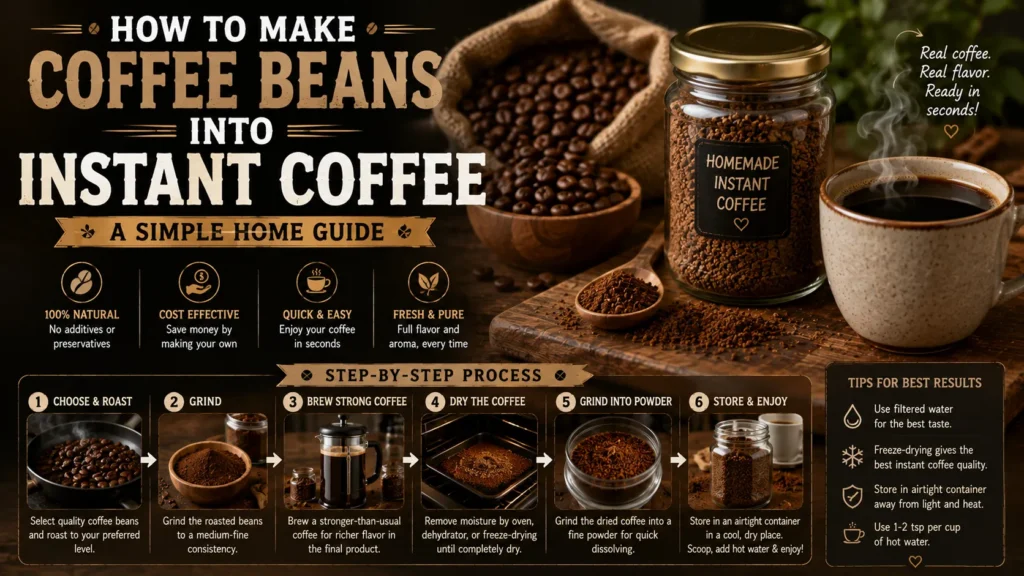
Ever wondered how to make coffee beans into instant coffee and turn your favorite roasted beans into a quick-dissolve powder that rivals store-bought options? The process is simpler than you might think, and it lets you control the flavor, roast level, and ingredients from start to finish. In this guide, you’ll learn every step from selecting the right beans to brewing and dehydrating the coffee so you can make your own instant coffee at home.
Key Takeaways
- Choose high‑quality Arabica or Robusta beans and roast them to your preferred profile.
- Brew a strong concentrate (roughly 1:4 coffee‑to‑water ratio) before dehydration.
- Home dehydration works best with a low‑temperature oven, food dehydrator, or freeze‑dryer.
- Store the final powder in an airtight container away from light, heat, and moisture.
- Reconstitute with 1‑2 teaspoons per 6‑8 oz of hot water for a cup comparable to commercial instant.
Understanding Instant Coffee: What Sets It Apart?
Instant coffee is brewed coffee with the water removed, leaving soluble solids that re‑dissolve quickly. Unlike regular grounds, the soluble fraction is extracted under high pressure and temperature, then dried into granules or powder. This yields a product that dissolves almost instantly, preserving caffeine and flavor compounds while eliminating the need for filtration.
The Science Behind Dehydration
Two primary industrial methods produce instant coffee: spray drying and freeze drying. Spray drying atomizes the concentrate into a hot chamber, evaporates the water in seconds, and forms fine particles. Freeze drying first freezes the concentrate, then sublimates ice under vacuum, preserving more aromatic volatiles. Both aim to retain soluble coffee solids while removing moisture to below 3 % water activity.
Selecting and Preparing Your Beans
Begin with fresh, whole beans. Arabica offers nuanced acidity and sweetness; Robusta contributes body and higher caffeine. Roast level influences flavor: light roasts preserve floral notes, medium roasts balance acidity and bitterness, dark roasts deliver smoky, chocolatey tones. After roasting, cool the beans quickly and store them in an opaque, airtight container for no more than two weeks before grinding.
Grinding for Optimal Extraction
Grind the beans to a fine consistency, similar to table salt, to maximize surface area during brewing. A burr grinder ensures uniform particle size, preventing over‑extraction of fines and under‑extraction of larger chunks. Aim for a dose of about 20 g of ground coffee per 100 ml of water for the concentrate stage.
Brewing a Strong Concentrate
Use a method that yields high extraction efficiency, such as an espresso machine, AeroPress with a metal filter, or a stovetop Moka pot. Brew at a ratio of 1 part coffee to 4 parts water (by weight) to create a concentrate roughly double the strength of regular drip coffee. This concentrated liquid will be the substrate for dehydration.
Dehydration Methods You Can Try at Home
Oven‑Drying (Low‑Temperature)
Spread the concentrate thinly on a silicone baking mat or parchment paper. Set your oven to its lowest setting, ideally 150 °F (65 °C), and prop the door open slightly to allow moisture to escape. Dry for 2‑4 hours, stirring every 30 minutes, until the material forms a brittle sheet that snaps when bent. Break the sheet into granules and pulse in a food processor to achieve uniform particle size.
Food Dehydrator
If you own a dehydrator, set it to 135 °F (57 °C) and pour the concentrate onto the fruit‑roll‑up sheets. Dry for 6‑8 hours, checking periodically. The result is a crisp film that can be milled into powder. This method offers more consistent airflow than an oven.
Freeze‑Drying (Home Unit)
Home freeze‑dryers are becoming more accessible. Pour the concentrate into shallow trays, freeze solid, then run the machine according to the manufacturer’s instructions. The sublimation process preserves volatile aromatics better than heat‑based methods, yielding a product that closely mimics commercial freeze‑dried instant coffee.
Pan‑Drying (Stovetop)
For a quick experimental batch, pour a thin layer of concentrate into a non‑stick skillet over the lowest heat. Stir constantly with a silicone spatula to prevent scorching. As water evaporates, the mixture will thicken and eventually form a dry, crumbly mass. This method requires vigilant attention but can produce usable granules in under an hour.
Milling and Sizing the Final Product
Once the dried sheets or flakes are brittle, transfer them to a clean coffee grinder or spice mill. Pulse in short bursts to avoid heating the powder, which could degrade flavor. Sift the ground material through a fine mesh (≈300 µm) to remove larger chunks; re‑grind any oversize particles. Store the sieved powder immediately.
Proper Storage for Longevity
Place the instant coffee in an airtight glass jar or vacuum‑sealed bag. Include a food‑grade silica packet to control humidity. Keep the container in a cool, dark pantry; avoid refrigeration unless you live in a very humid climate, as condensation can reintroduce moisture. Properly stored, homemade instant coffee retains peak flavor for 3‑4 months.
Reconstituting Your Homemade Instant Coffee
Use 1‑2 teaspoons (≈3‑6 g) of powder per 6‑8 oz of hot water (just off the boil, ~200 °F/93 °C). Stir vigorously for 10‑15 seconds until fully dissolved. Adjust the dose to taste; because you control roast and bean origin, you may find you need slightly less powder than a commercial brand to achieve the same strength.
Expert Tips for Better Flavor
- Experiment with blending beans: a 70/30 Arabica‑Robusta mix can add crema‑like body without excessive bitterness.
- Add a pinch of salt to the concentrate before drying; it can suppress perceived bitterness.
- For a vanilla‑note, split a vanilla bean and steep it in the hot concentrate for 5 minutes before dehydration.
- If you prefer a less acidic cup, opt for a darker roast and consider a short “rest” period (12‑24 h) after roasting before grinding.
Common Pitfalls and How to Avoid Them
Over‑drying leads to a scorched, bitter taste; keep temperatures low and monitor color changes. Under‑drying results in clumping and mold risk; ensure the final moisture content is below 3 % by feeling for brittleness. Inconsistent particle size causes uneven dissolution; sieve and re‑grind as needed. Finally, avoid exposing the powder to light or oxygen, which accelerates staling.
Related Coffee Topics You May Like
Frequently Asked Questions
Can I use pre‑ground coffee instead of grinding my own beans?
You can, but pre‑ground coffee loses volatile aromatics quickly, which may result in a flatter instant product. For the best flavor, grind beans immediately before brewing the concentrate.
Is it safe to dehydrate coffee concentrate in a regular oven?
Yes, as long as you keep the temperature below 180 °F (82 °C) and provide adequate ventilation. Higher temperatures risk scorching the sugars and producing off‑flavors.
How does homemade instant coffee compare nutritionally to store‑bought versions?
Nutritionally, both contain similar caffeine and micronutrient levels. Homemade versions allow you to avoid additives like anti‑caking agents or added sugars that some commercial brands include.
Can I add flavors like cinnamon or cocoa directly to the instant powder?
Absolutely. Mix in finely ground spices or cocoa powder after milling, storing the blend in an airtight container. This creates a customized flavored instant coffee without extra brewing steps.
What is the shelf life of homemade instant coffee if I vacuum‑seal it?
When vacuum‑sealed and stored away from light and heat, the product can retain optimal flavor for up to six months. Periodically check for any signs of moisture or off‑odors before use.
Ready to Brew Your Own Instant Coffee?
Grab your favorite beans, follow the steps above, and enjoy a cup that’s truly yours. Share your results in the comments below or tag us on social media with #HomebrewInstant.

Moses Anthony
Moses Anthony is a coffee enthusiast and home brewing specialist with over 7 years of hands-on experience testing coffee beans, espresso machines, grinders, and brewing methods. He has spent years experimenting with pour-over, French press, drip coffee, and espresso to help everyday coffee drinkers brew better coffee at home.At Best Coffee Guide, Moses focuses on practical brewing tips, honest product comparisons, and beginner-friendly coffee education based on real testing and research. His goal is to simplify coffee brewing and help readers make better choices with confidence.
How to Make Coffee Easy: Effortless Tips for Barista‑level Brew at Home
September 17, 2026
No Comments
Read More » Mastering the Art: How to Make Coffee Darker for a Richer, Bold Brew
September 16, 2026
No Comments
Read More » 
How to Make Coffee Dip: Easy Steps to Create a Rich, Coffee-infused Spread
September 15, 2026
No Comments
Read More » Latest Pots
Imagine waking up, craving a rich cup, but feeling overwhelmed by complicated machines and vague recipes. You want great coffee without the fuss, and you deserve a method that works every single time. This guide shows you exactly how to make coffee easy, turning morning…
Many coffee lovers crave a cup that looks as deep and intense as its flavor promises. If your brew often turns out light or washed out, you’re not alone—achieving that striking darkness involves more than just adding extra grounds. In the next few paragraphs we’ll…

Explore the world of coffee with honest reviews and practical advice. Find your perfect cup, one bean and machine at a time.
Main Menu
Top Categories
Newsletter
Sign up our newsletter to get updated information, promo or insight for free.
Copyright © 2025 Best Coffee Guide, All rights reserved.