

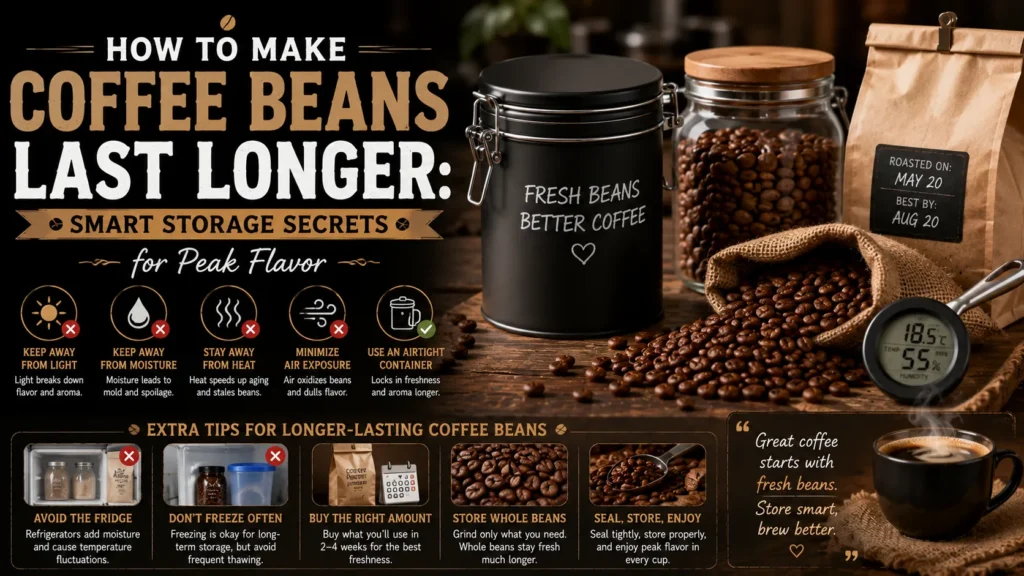
Opening a bag of fresh coffee only to find stale, flat beans weeks later is a frustration every coffee lover knows. The good news is that with a few proven storage tactics, you can extend the life of your beans and keep that vibrant aroma and taste intact for months. In this guide, you’ll learn exactly how to make coffee beans last longer, from choosing the right container to controlling light, heat, and moisture.
Key Takeaways
Coffee beans are porous and reactive. Exposure to oxygen triggers oxidation, which degrades the delicate oils responsible for aroma and flavor. Light, especially UV rays, accelerates this process, while heat speeds up molecular movement, causing volatile compounds to escape. Moisture can lead to mold growth and unwanted flavor changes. Understanding these enemies is the first step in learning how to make coffee beans last longer.
This subheading contains the exact focus keyword because it directly answers the reader’s core question. The following techniques are backed by food science and barista best practices.
An airtight container is non‑negotiable. Look for jars with a rubber gasket and a locking lid, such as ceramic canisters or stainless‑steel coffee vaults. Avoid clear glass unless you store it in a dark pantry, because light penetrates glass and speeds oxidation. If you prefer glass, wrap it in a opaque sleeve or keep it inside a cabinet.
Heat is a catalyst for staleness. Aim for a stable temperature between 15‑20 °C (59‑68 °F). Avoid placing beans near ovens, stovetops, or sunny windows. Humidity should stay below 60 %; excess moisture invites mold. A small silica gel packet (food‑grade) inside the container can help absorb stray moisture without affecting flavor.
UV light breaks down chlorogenic acids, leading to flat, cardboard‑like notes. Opaque containers or a dark cupboard solve this problem. If you must display beans for aesthetic reasons, use a UV‑filtering glass jar and keep it away from direct sunlight.
The refrigerator introduces fluctuating temperatures and moisture each time you open the door, which can cause condensation on the beans. If you must refrigerate (e.g., in a hot climate), seal the beans in a double‑layered, airtight bag and let them reach room temperature before opening to prevent condensation. The freezer can work for long‑term storage, but only if you divide beans into weekly portions, vacuum‑seal each portion, and thaw them completely before grinding.
Freshness peaks within two to four weeks after roasting. Purchase beans in amounts you’ll consume within that window. Always check the roast date on the bag; a “best by” date is less useful than the actual roast date. When possible, buy from local roasters who roast in small batches and provide transparent dates.
Label each container with the roast date and the date you opened it. When you open a new bag, place it behind the older one so you always use the oldest beans first. This simple habit prevents forgotten bags from languishing in the back of the pantry.
Even seasoned coffee enthusiasts slip up. Recognizing these pitfalls helps you refine your storage routine.
Most coffee bags are not truly airtight once opened; the thin paper or plastic allows oxygen to seep in. Transfer beans to a proper container as soon as you open the bag.
Scooping beans with a damp spoon introduces moisture. Always use a dry scoop or pour beans directly from the container.
Ground coffee has a much larger surface area, accelerating oxidation. Grind only what you need for each brew session.
For those who want to push the limits of freshness, consider these extra steps.
A home vacuum sealer removes virtually all oxygen, dramatically slowing oxidation. Seal beans in portion‑sized bags and store them in a cool, dark place.
Some premium containers replace oxygen with nitrogen, an inert gas that prevents oxidation. While more expensive, this method can keep beans fresh for up to six months.
Small, inexpensive strips change color when exposed to excess oxygen or moisture. Placing one inside your container gives a visual cue that it’s time to refresh your storage method.
Fresh beans exhibit a strong, pleasant aroma and a slight oily sheen (especially for darker roasts). Stale beans smell flat, cardboard‑like, or even sour. Perform a quick “bloom” test: pour a small amount of hot water over a teaspoon of grounds; fresh beans will release a vigorous burst of bubbles. Weak or absent bubbling indicates loss of CO₂, a sign of aging.
When stored properly in an airtight, opaque container away from light, heat, and moisture, roasted coffee beans retain peak flavor for about 2‑4 weeks. Beyond that, they gradually lose aromatic compounds but remain safe to drink for up to three months if kept sealed.
Yes, but only if you take precautions. Divide beans into weekly portions, vacuum‑seal each portion, and place them in the freezer. When ready to use, let the sealed bag thaw completely at room temperature before opening to avoid condensation. Repeated thawing and refreezing degrades quality, so avoid frequent temperature swings.
Most coffee bags are not designed for long‑term storage after opening. Even with a clip, tiny gaps allow oxygen and moisture to enter. For best results, transfer beans to a dedicated airtight container as soon as you open the bag.
Opaque, food‑grade stainless steel or ceramic with a rubber gasket and locking lid offers the best protection against light, oxygen, and moisture. Clear glass can be used only if stored in a dark place and wrapped in an opaque sleeve.
Darker roasts have more surface oils, which can oxidize faster, making them slightly more perishable than light roasts. However, the difference is modest; proper storage practices outweigh roast‑level effects. Regardless of roast, keep beans cool, dry, dark, and sealed.
Start by swapping your bag for an airtight, opaque container. Click below to explore our top‑rated coffee storage solutions and enjoy fresh‑tasting brews every morning.
By applying the strategies outlined above—choosing the right container, controlling temperature and humidity, limiting light, avoiding unnecessary refrigeration, buying in sensible quantities, and practicing FIFO—you’ll master how to make coffee beans last longer. The result is a richer, more aromatic cup every time you brew, saving you money and preserving the joy of your daily ritual. Implement these habits today, and notice the difference in flavor within just a few days.





Here’s a question most of us never actually answer: how much caffeine did you really have today? That morning latte, the mid-afternoon cold brew, the cola with lunch — they add up fast, and almost nobody does the math. So we built this caffeine calculator…

Cold brew vs iced coffee vs iced espresso — the summer menu looks simple until you have to choose. They all show up in a glass of ice. But they don’t taste the same, they aren’t made the same way, and they don’t take the…
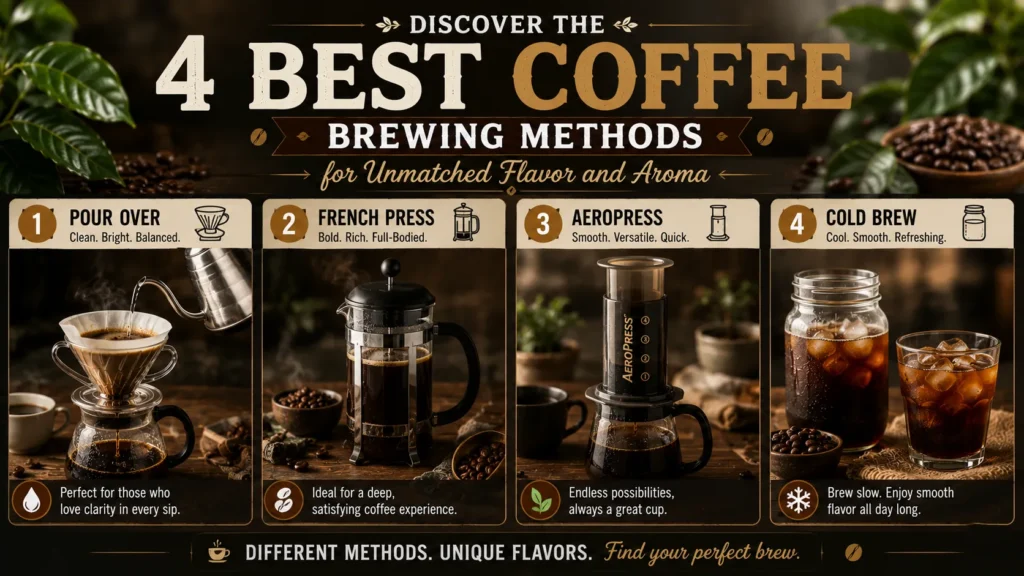
French press vs pour over vs espresso — three brewers, three very different cups of coffee. None of them is objectively “the best.” They just suit different mornings, different budgets, and different tastes. This guide compares all three honestly: how each one works, what the…

Explore the world of coffee with honest reviews and practical advice. Find your perfect cup, one bean and machine at a time.