
How to Make Coffee at Home Without Machine: 6 Easy Ways
No espresso machine? No drip brewer? Doesn’t matter. With just hot water, ground coffee, and a mug, you can brew a genuinely great cup at home. Below are six methods that actually work — plus the grind sizes, ratios, and timings that keep each one tasting right.
Quick answer: what you need
At minimum: a heat source (kettle, pot, or stove), ground coffee, and something to hold it while it steeps. A filter helps but isn’t mandatory — a fine-mesh sieve, cheesecloth, or even a clean cotton cloth does the job. That setup is enough for every method on this page.
The basics that make or break your cup
Grind size by method
| Method | Grind | Looks like |
|---|---|---|
| French press / cowboy / cold brew | Coarse | Sea salt |
| Pour-over / Moka pot | Medium | Table sand |
| AeroPress | Medium-fine | Slightly finer than sand |
Too fine and you’ll get bitterness; too coarse and the cup tastes weak and sour. Match the grind to the method above and you’re halfway there.
Water temperature
Aim for 195–205°F (90–96°C). No thermometer? Bring water to a rolling boil, then let it sit for about 30 seconds before pouring. Water straight off the boil scorches the grounds; water that’s too cool under-extracts and tastes sour.
Golden ratio
Start with 1:16 — roughly 2 tablespoons of ground coffee per 6 ounces of water. Adjust to taste from there: bolder drinkers go 1:15, lighter cups go 1:17. A kitchen scale is nice, but tablespoons work fine.
Method 1: DIY pour-over
This mimics a drip brewer with zero equipment beyond a filter and something to sit it in — a funnel, a mason jar ring, even a paper cone folded from printer paper works.
- Set your filter over a mug and rinse it with hot water (ditch the rinse water).
- Add 2 tablespoons of medium-ground coffee per 6 ounces of water.
- Pour just enough hot water to soak the grounds and wait 30–45 seconds — this “bloom” releases trapped gas.
- Pour the rest of the water in slow, steady circles. Total brew time: 3–4 minutes.
The result is a clean, bright cup that shows off the bean’s natural character. This is the best pick if you like lighter, more nuanced coffee.
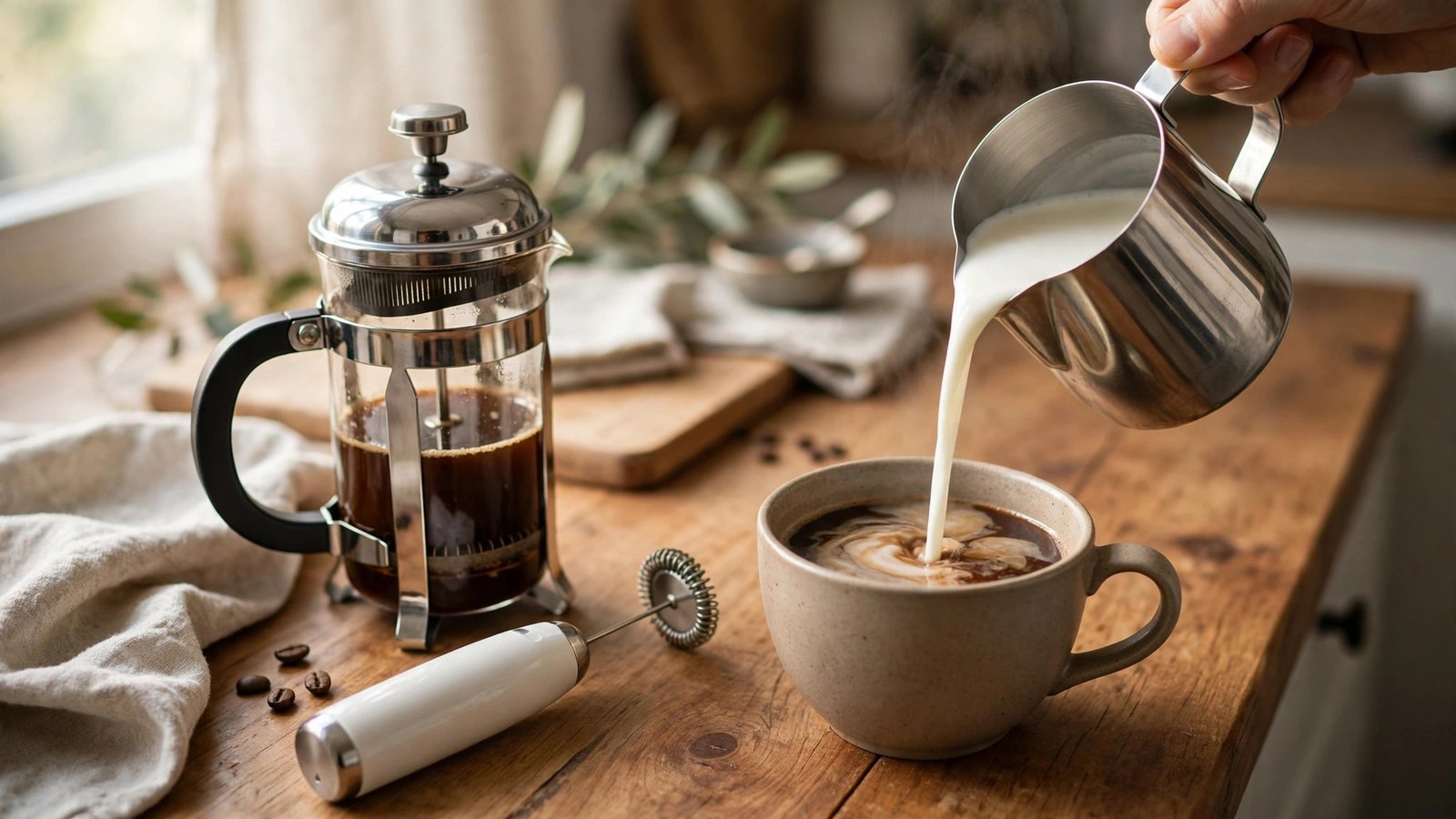
Method 2: French press
The king of full-bodied coffee. If you own an actual French press, great — but the immersion idea works with any heat-proof container plus a sieve for pouring.
- Add coarse grounds to the press (or jar): 2 tablespoons per 6 ounces of water.
- Pour hot water over the grounds and stir gently so everything gets wet.
- Lid on, plunger up, steep for 4 minutes.
- Press down slowly and pour immediately so it doesn’t keep extracting.
You get a rich, syrupy cup with a pleasant weight to it. If you’re choosing between presses, our guide to the best French press coffee makers walks through the options.
Method 3: Cowboy coffee (the campfire classic)
The oldest method here, and the only one that needs nothing but a pot.
- Combine water and coarse grounds directly in a pot — about 2 tablespoons per 6 ounces.
- Bring to a gentle boil, then take it off the heat.
- Let the grounds settle for a minute, or splash in a little cold water to hurry them down.
- Pour carefully into your mug, leaving the sludge at the bottom.
It’s rustic and bold rather than refined — perfect for camping or when the power’s out.
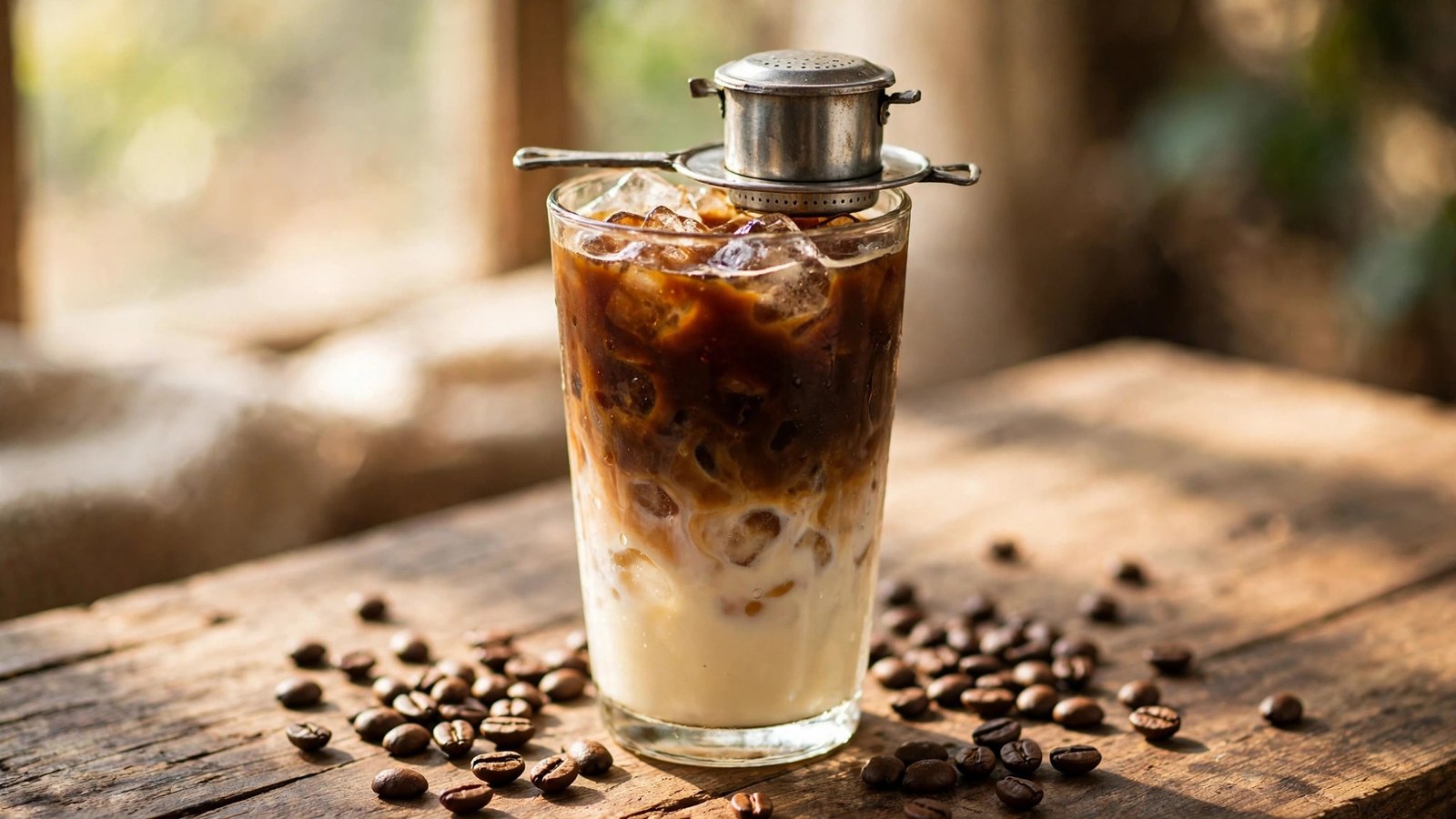
Method 4: Cold brew (no heat at all)
For a smooth, low-acid drink that stays good for days:
- Mix coarse grounds with cold water in a jar at a 1:8 ratio.
- Stir so all the grounds are wet, seal, and refrigerate 12–18 hours.
- Strain through cheesecloth or a fine sieve into another container.
- Dilute with water or milk and serve over ice.
The concentrate keeps in the fridge for up to two weeks, so one batch covers a lot of mornings.
Method 5: Moka pot (espresso-style)
A Moka pot costs a fraction of an espresso machine and runs on any stovetop. Fill the bottom chamber with water up to the valve, add medium-ground coffee to the basket (level it, don’t pack it), assemble, and heat on medium. When it starts gurgling, take it off the heat. The result is a strong, concentrated brew that’s lovely in milk drinks.
Method 6: AeroPress (pressurized, portable)
The AeroPress uses gentle air pressure to push water through the grounds, giving you a clean, espresso-adjacent shot in about a minute. Add medium-fine grounds, pour hot water to the number you want, stir, insert the plunger, wait about 60 seconds, then press. Light, unbreakable, and ideal for travel.
Method comparison at a glance
| Method | Time | Body | Best for |
|---|---|---|---|
| Pour-over | 3–4 min | Light, clean | Nuanced single origins |
| French press | 4 min | Full, rich | Everyday bold cups |
| Cowboy | 5 min | Heavy, rustic | Camping, power outages |
| Cold brew | 12–18 hrs | Smooth, sweet | Iced coffee fans |
| Moka pot | 5 min | Strong, intense | Milk drinks |
| AeroPress | 1–2 min | Clean, punchy | Travel, quick cups |
Choosing beans and storing them right
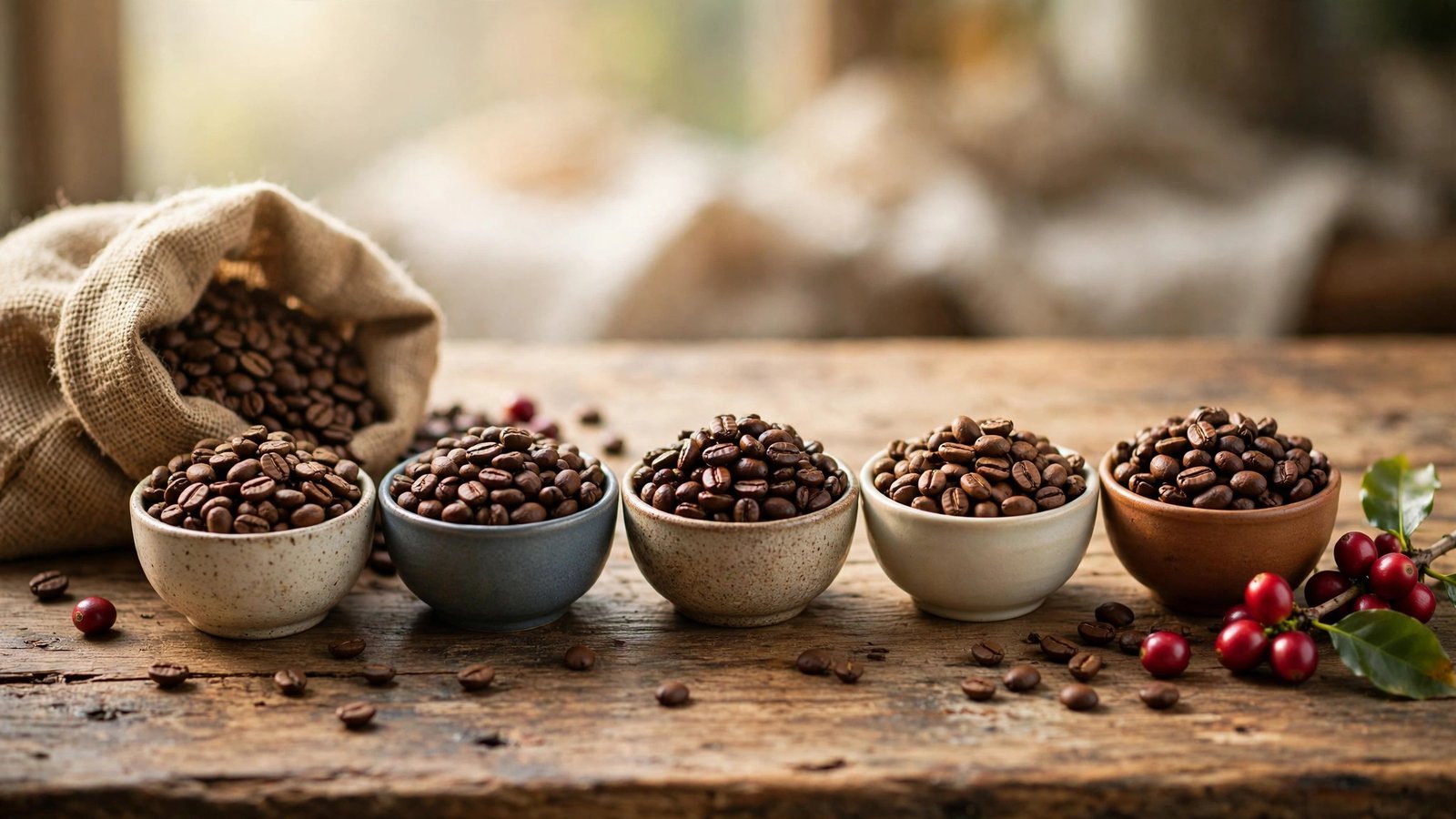
Freshness matters more than brand. Buy whole beans roasted within the last two weeks when you can, and grind right before brewing. Light-to-medium roasts show more acidity and nuance; darker roasts lean chocolatey and bold. Store beans in an airtight container away from light, heat, and moisture — not the fridge, which adds condensation. Our picks for the best Arabica coffee beans and the best coffee beans for espresso are solid starting points.
Troubleshooting: bitter or sour coffee?
- Bitter? You’re over-extracting. Use a coarser grind, shorten the brew time, or cool the water slightly.
- Sour or weak? You’re under-extracting. Grind finer, extend the brew time, or use hotter water.
- Muddy pour-over? Pour slowly and evenly — fast, uneven pouring causes channeling and an off-balance cup.
Change one variable at a time so you can tell what actually fixed it.
FAQs
What’s the easiest way to make coffee without a machine?
The cowboy method — just a pot, water, and grounds. But the most forgiving method for everyday use is the French press: it’s hard to mess up and consistently tastes good.
Can I make coffee without a grinder too?
Yes. Ask the shop or roaster to grind for your method, or use a rolling pin and a zip-top bag for a rough coarse grind. Pre-ground coffee from the bag works fine — just brew it within a couple of weeks of opening.
Can I make espresso without a machine?
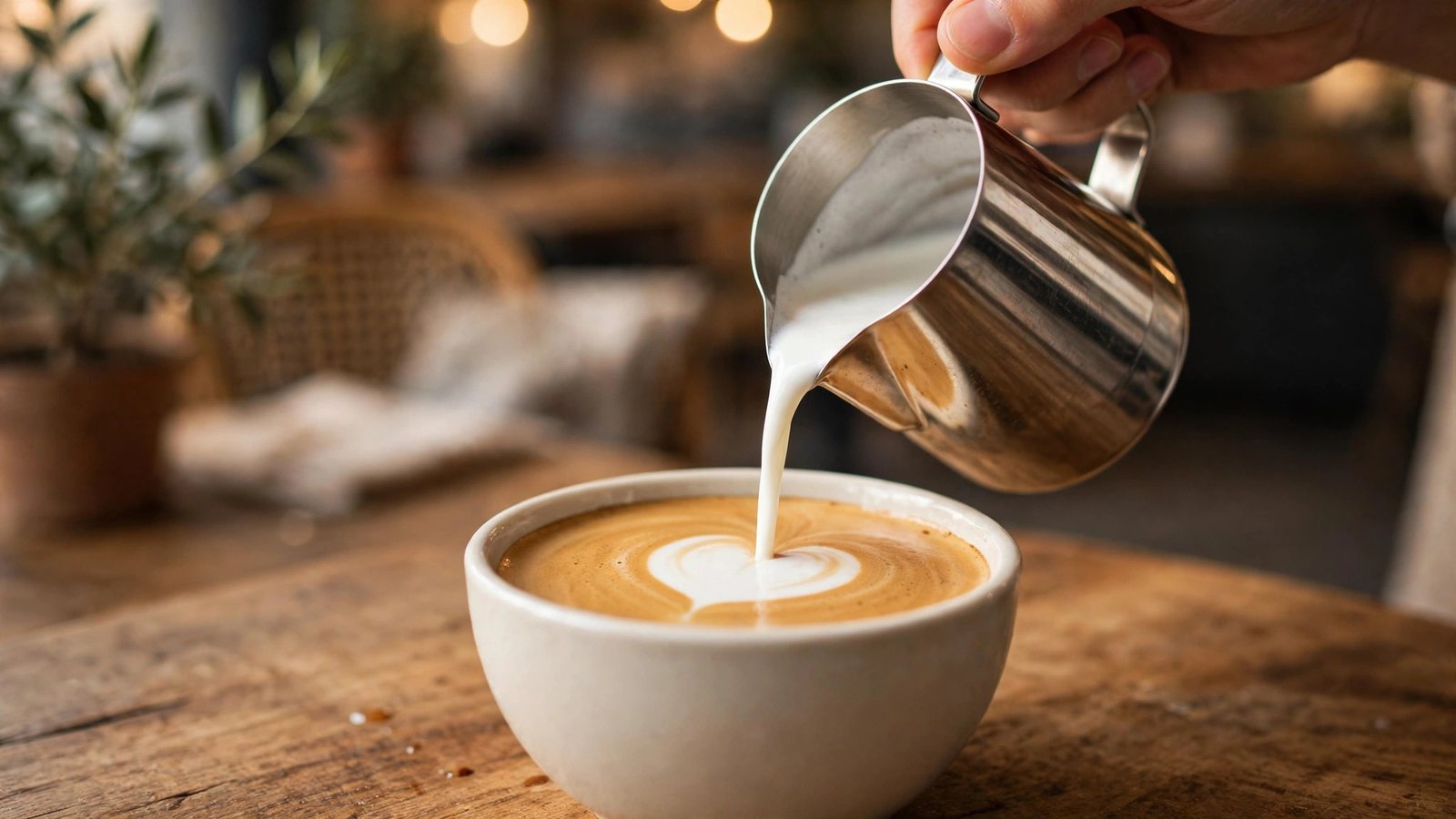
True espresso needs about nine bars of pressure, which you can’t fully recreate by hand. But a Moka pot or AeroPress makes a strong, concentrated shot that works beautifully in lattes and cappuccinos with steamed or frothed milk.
Do I need filtered water?
If your tap water tastes fine, it’ll brew fine. Hard or heavily chlorinated water can dull the cup — a simple pitcher filter or letting tap water sit uncovered for a few minutes helps.
How long does cold brew last?
Up to two weeks in the fridge in a sealed container. Dilute it with water or milk when you serve it, since it’s a concentrate.
The takeaway
Great coffee doesn’t need a machine — it needs fresh beans, the right grind, good water temperature, and a method that suits your taste. Pick one method above, nail the basics, and you’ll be brewing cups that rival any café. Want to compare gear anyway? Check our best home coffee makers and best pour-over coffee makers roundups.