

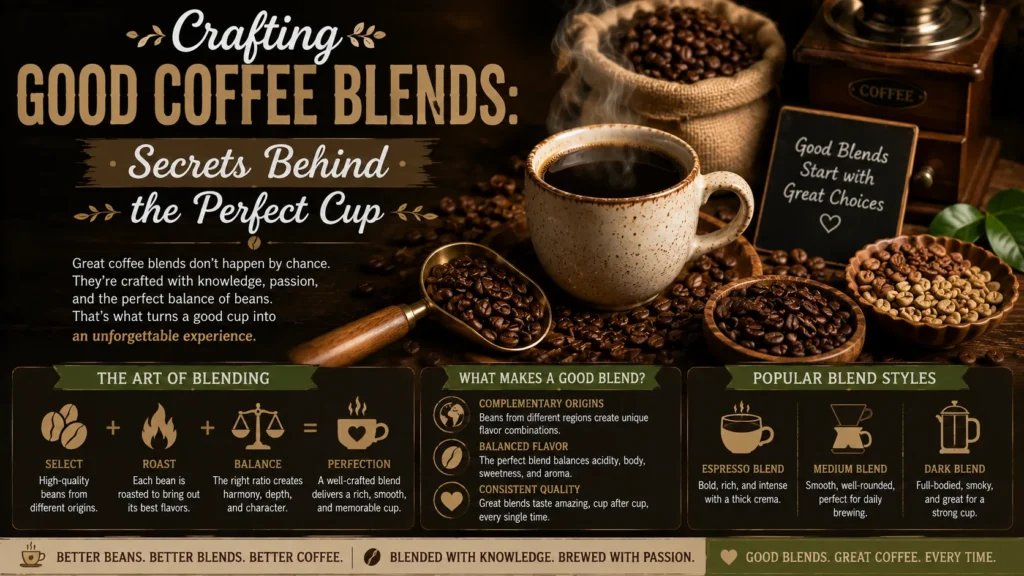
Good Coffee Blends start with a clear purpose: to combine beans that complement each other and deliver a balanced, memorable cup. Whether you seek bright acidity, deep chocolate notes, or a silky body, the right blend transforms everyday brewing into a ritual. This guide explains how to recognize, create, and enjoy Good Coffee Blends that satisfy any palate.
The foundation of Good Coffee Blends lies in selecting beans with distinct geographic characteristics. Ethiopian beans often bring floral and citrus notes, while Colombian varieties contribute caramel sweetness. Brazilian beans add a nutty, chocolatey base that grounds the blend. By mapping these origins, you can predict how each component will interact in the final cup.
Furthermore, altitude influences bean density and acidity. High‑grown beans tend to be more acidic and complex, ideal for bright blends. Low‑grown beans offer heavier body and lower acidity, perfect for espresso‑style mixes. Knowing these traits helps you build a blend that hits the desired flavor targets.
In addition, processing methods—washed, natural, or honey—alter flavor expression. Washed beans highlight clarity, natural beans boost fruitiness, and honey‑processed beans sit somewhere in between. Choosing the right process for each origin adds another layer of control when forming Good Coffee Blends.
Roast level determines how much of the bean’s original flavor survives the heat. Light roasts preserve origin characteristics, delivering tea‑like acidity and floral hints. Medium roasts balance origin traits with caramelization, yielding nutty and chocolatey notes. Dark roasts emphasize bittersweet, smoky flavors that can mask subtle origins.
Consequently, a Good Coffee Blends often combines multiple roast levels to achieve depth. For example, pairing a light‑roasted Ethiopian with a medium‑roasted Colombian creates brightness alongside sweetness. Adding a small portion of dark‑roasted Brazilian can introduce body without overwhelming the blend.
Moreover, roast consistency matters. Beans should reach similar development times to avoid uneven extraction. Using a roast log or bean thermometer ensures each component reaches the target color, which is essential for repeatable Good Coffee Blends.
A successful Good Coffee Blends balances three primary taste pillars: acidity, sweetness, and bitterness. Acidity provides liveliness and can be fruity, wine‑like, or citric. Sweetness counters acidity with flavors like honey, caramel, or dried fruit. Bitterness, when controlled, adds depth and structure, reminiscent of dark chocolate or toasted nuts.
To achieve balance, start with a base bean that supplies body and sweetness, then layer in an acidic bean for lift, and finish with a modest amount of a bitter‑toned bean for depth. Adjust ratios incrementally, tasting after each change, until the blend feels harmonious.
Additionally, consider the brewing method. Espresso amplifies bitterness, so blends for espresso may lean toward sweeter, lower‑acid beans. Pour‑over highlights acidity, allowing brighter beans to shine. Matching your blend to the intended brew ensures the flavor balance translates correctly in the cup.
Many classic Good Coffee Blends have stood the test of time. The Mocha Java blend mixes Yemen’s Mocha beans with Indonesian Java, delivering chocolatey richness and earthy undertones. The Melange blend, popular in Vienna, combines Brazilian natural beans with a touch of dark‑roasted Robusta for crema and strength.
Another favorite is the Breakfast Blend, often featuring Central American beans for bright acidity paired with South American beans for smooth body. This blend aims to be approachable yet lively, perfect for morning cups. Each recipe reflects regional preferences and historical trade routes.
Exploring these traditional formulas provides a solid foundation for crafting your own Good Coffee Blends. By studying the ratios and roast choices used in renowned blends, you gain insight into what makes a combination work consistently across different palates.
Begin by selecting three to five beans that represent the flavor directions you want. Weigh each bean separately; a common starting point is 40% base, 30% accent, 20% highlight, and 10% finisher. Grind each component to a uniform size suitable for your brew method before mixing.
Next, brew a small test batch using your chosen method. Observe the aroma, first sip, mid‑palate, and finish. Take notes on acidity level, sweetness perception, and any bitter edges. Adjust the ratios by 5% increments, re‑brew, and compare until the blend feels cohesive.
Furthermore, consider roasting your own beans if you have access to a home roaster. Roasting each origin to its ideal degree before blending gives you maximal control over flavor development. Keep a blending journal to record bean origins, roast levels, ratios, and tasting notes for future reference.
Good Coffee Blends lose vibrancy when exposed to oxygen, light, heat, and moisture. Store beans in an airtight container made of opaque material, preferably with a one‑way valve that lets carbon dioxide escape without letting air in. Keep the container in a cool, dark pantry away from direct sunlight.
Additionally, avoid storing beans in the refrigerator or freezer unless you plan to use them within a week, as condensation can introduce moisture that degrades flavor. If you must freeze, seal beans in vacuum‑packed bags and thaw them only once before grinding to prevent moisture absorption.
Finally, aim to use your blend within two to four weeks of roasting for peak flavor. Label each container with the roast date and blend name to track freshness. Regularly sniffing the beans can alert you to any stale or off‑odors before brewing.
One frequent error is over‑complicating the blend with too many origins, which can muddle flavor clarity. Stick to a maximum of four distinct beans to maintain discernible notes. Another mistake is ignoring roast compatibility; mixing a very light bean with a very dark one can cause uneven extraction and bitter spikes.
Moreover, neglecting to degas beans after roasting leads to inconsistent blooming and uneven extraction. Allow beans to rest for 12‑24 hours after roasting before blending and grinding. Lastly, failing to clean your grinder between blends can transfer residual oils, altering the intended flavor profile of your Good Coffee Blends.
Sustainability is shaping the next generation of Good Coffee Blends. Consumers increasingly seek beans sourced from farms practicing regenerative agriculture, shade‑grown methods, and fair‑trade certifications. Blends that highlight these stories often command higher loyalty and market premium.
Innovation in flavor infusion is also emerging. Some roasters experiment with barrel‑aging beans in bourbon or wine barrels, adding subtle vanilla, oak, or tannic notes. Others incorporate natural spices like cinnamon or cardamom directly into the blend for a ready‑to‑drink experience.
Additionally, technology assists blending decisions. Spectroscopic analysis and AI‑driven flavor prediction tools help roasters identify complementary beans faster than traditional trial‑and‑error. As these tools become accessible, home enthusiasts can craft Good Coffee Blends with laboratory‑level precision.
A good coffee blend achieves harmony between acidity, sweetness, and bitterness while highlighting the best qualities of each origin. It should be consistent, enjoyable across brewing methods, and reflect the roaster’s intent—whether that’s brightness for pour‑over or body for espresso.
Most successful Good Coffee Blends use three to five beans. This range provides enough complexity to layer flavors without overwhelming the palate. Start with a base bean for body, add an accent for acidity, a highlight for sweetness, and optionally a finisher for depth.
Yes, combining different roast levels is a common technique to create depth. A light‑roasted bean brings brightness, a medium‑roasted bean adds caramelized sweetness, and a small portion of dark‑roasted bean contributes body and bitterness. Ensure the beans have similar development times to avoid uneven extraction.
When stored in an opaque, airtight container with a one‑way valve, a Good Coffee Blends retains peak flavor for two to four weeks after roasting. Keep it away from light, heat, and moisture, and avoid refrigeration unless you plan to use the beans within a week.
Coffee blends contain caffeine and antioxidants similar to single‑origin coffee. Moderate consumption—typically three to five cups per day—is associated with benefits like improved alertness and reduced risk of certain diseases. Individuals sensitive to caffeine should adjust intake accordingly, and pregnant individuals should consult a healthcare provider.
Start experimenting today with our premium bean selection and expert blending guides.





Here’s a question most of us never actually answer: how much caffeine did you really have today? That morning latte, the mid-afternoon cold brew, the cola with lunch — they add up fast, and almost nobody does the math. So we built this caffeine calculator…

Cold brew vs iced coffee vs iced espresso — the summer menu looks simple until you have to choose. They all show up in a glass of ice. But they don’t taste the same, they aren’t made the same way, and they don’t take the…
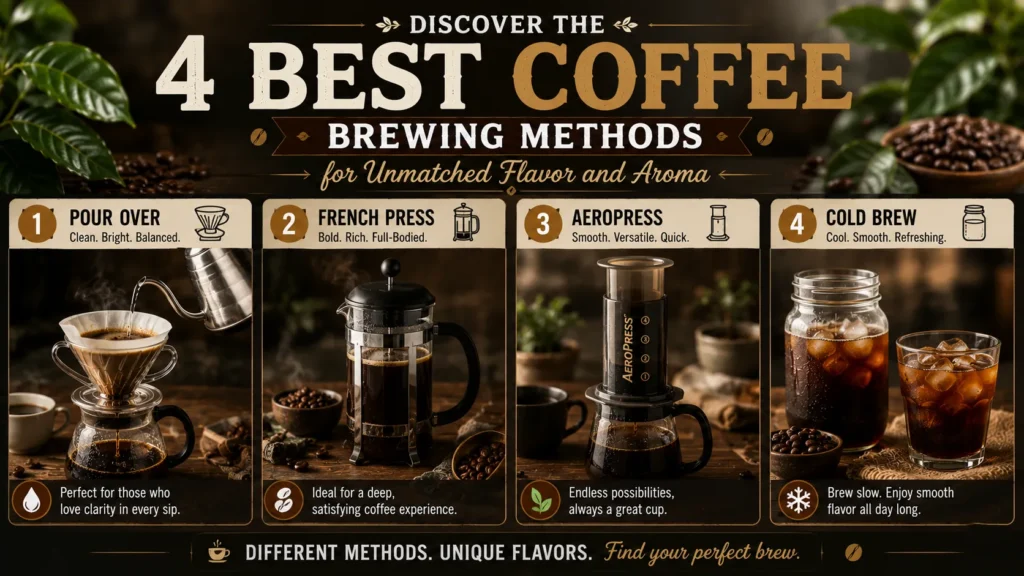
French press vs pour over vs espresso — three brewers, three very different cups of coffee. None of them is objectively “the best.” They just suit different mornings, different budgets, and different tastes. This guide compares all three honestly: how each one works, what the…

Explore the world of coffee with honest reviews and practical advice. Find your perfect cup, one bean and machine at a time.