

If you want a smooth, refreshing coffee that is less acidic and naturally sweeter than traditional coffee, learning how to make cold brew coffee is one of the best skills you can add to your coffee routine. Cold brew has become incredibly popular across the United States because it offers a rich flavor profile, excellent versatility, and the convenience of preparing multiple servings at once.
Unlike traditional hot coffee, cold brew relies on time rather than heat to extract flavor from coffee grounds. This slower extraction process creates a coffee that many people describe as smoother, less bitter, and easier to drink. Whether you enjoy black coffee, coffee with milk, or specialty coffee drinks, cold brew provides a flexible foundation for countless recipes.
One reason cold brew continues to grow in popularity is that it can be made with very little equipment. A simple jar, filtered water, and quality coffee grounds are often all you need to create a beverage that rivals what many coffee shops serve.
After testing different brewing times, roast levels, and coffee-to-water ratios over the years, many home brewers discover that small adjustments can dramatically affect flavor. For example, lighter roasts often highlight fruity and floral notes, while medium and dark roasts tend to produce the chocolate, caramel, and nutty flavors that most people associate with classic cold brew.
This guide explains how to make cold brew coffee at home, how to make cold brew with ground coffee, how to make cold brew coffee concentrate, and how to make cold brew coffee with a French press. You will also learn the best ratios, brewing times, storage methods, troubleshooting solutions, and practical tips that can help you consistently make excellent cold brew coffee.
What Is Cold Brew Coffee?
Cold brew coffee is a brewing method that extracts flavor from coffee grounds using cold or room-temperature water over an extended period. Instead of using heat to accelerate extraction, cold brew relies on time, typically between 12 and 24 hours.
Cold brew coffee is made by steeping coarse coffee grounds in cold water for several hours and then filtering the mixture to produce a smooth, low-acid coffee concentrate or ready-to-drink beverage.
The lack of heat changes the extraction process significantly. Fewer acidic compounds and bitter flavors are extracted, resulting in a smoother cup that many coffee drinkers find easier to enjoy. Cold brew is not simply coffee served over ice. The brewing process itself is fundamentally different, which is why the flavor profile is noticeably distinct.
Cold Brew vs Iced Coffee: What Is the Difference?
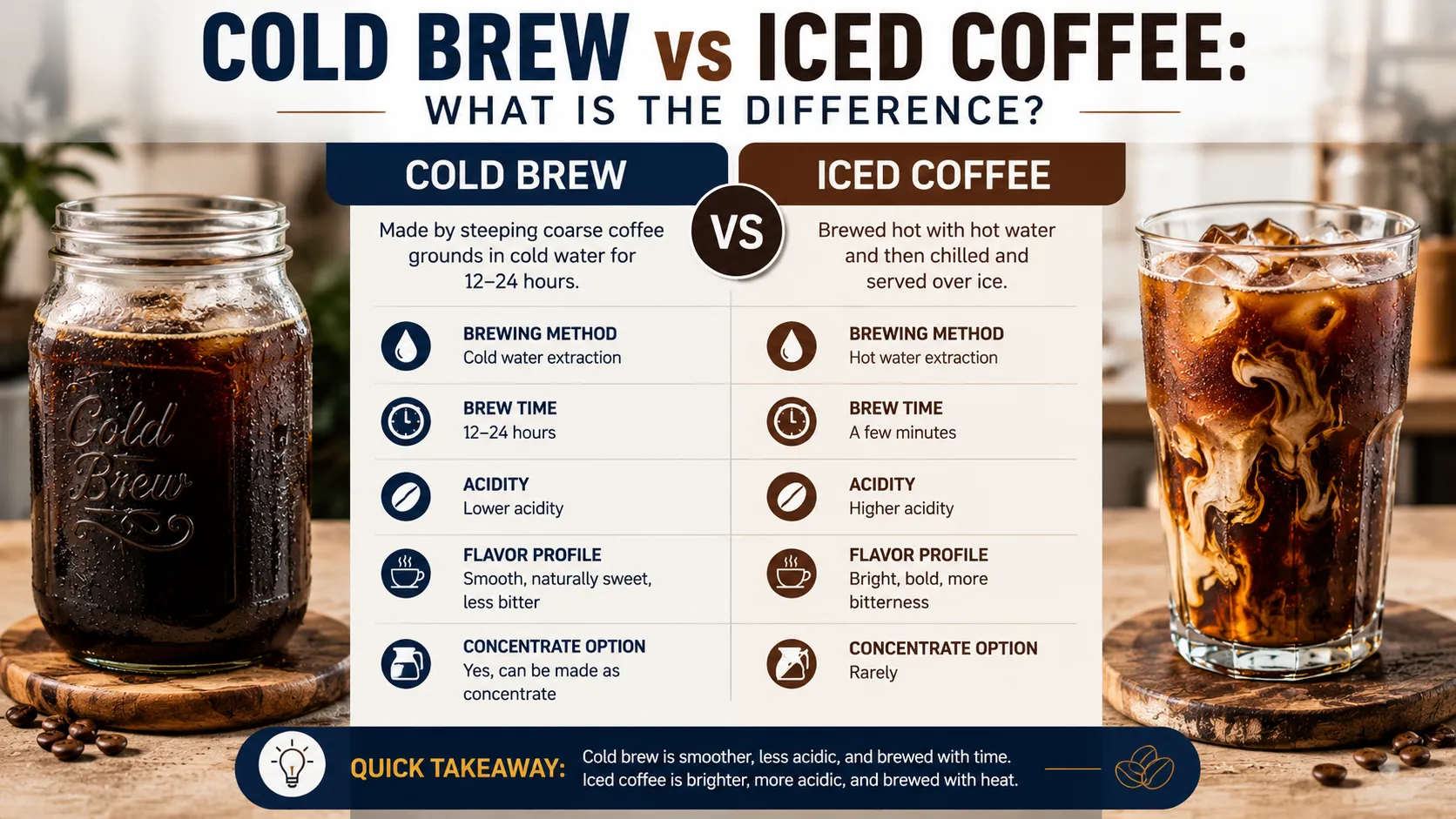
Many people use the terms cold brew and iced coffee interchangeably, but they are not the same thing. Iced coffee is brewed with hot water and then cooled before serving over ice. Cold brew coffee is brewed entirely without heat. This difference affects acidity, flavor, body, and overall drinking experience.
Feature | Cold Brew Coffee | Iced Coffee |
Brewing Method | Cold water extraction | Hot brewed coffee chilled |
Brew Time | 12–24 hours | A few minutes |
Acidity | Lower | Higher |
Flavor Profile | Smooth and sweet | Bright and bold |
Bitterness | Lower | Higher |
Concentrate Option | Yes | Rarely |
Cold brew coffee is smoother and less acidic because it is brewed without heat, while iced coffee is simply hot coffee that has been cooled and served cold. For many coffee drinkers, especially those sensitive to acidity, cold brew offers a more enjoyable experience.
Why Is Cold Brew Coffee So Popular?
Cold brew coffee has moved from a niche coffee shop offering to a mainstream beverage because it solves several common coffee frustrations.
Many people find traditional coffee too bitter or acidic. Others want a coffee option that can be prepared in advance and enjoyed throughout the week. Cold brew addresses both needs.
Benefits of Cold Brew Coffee
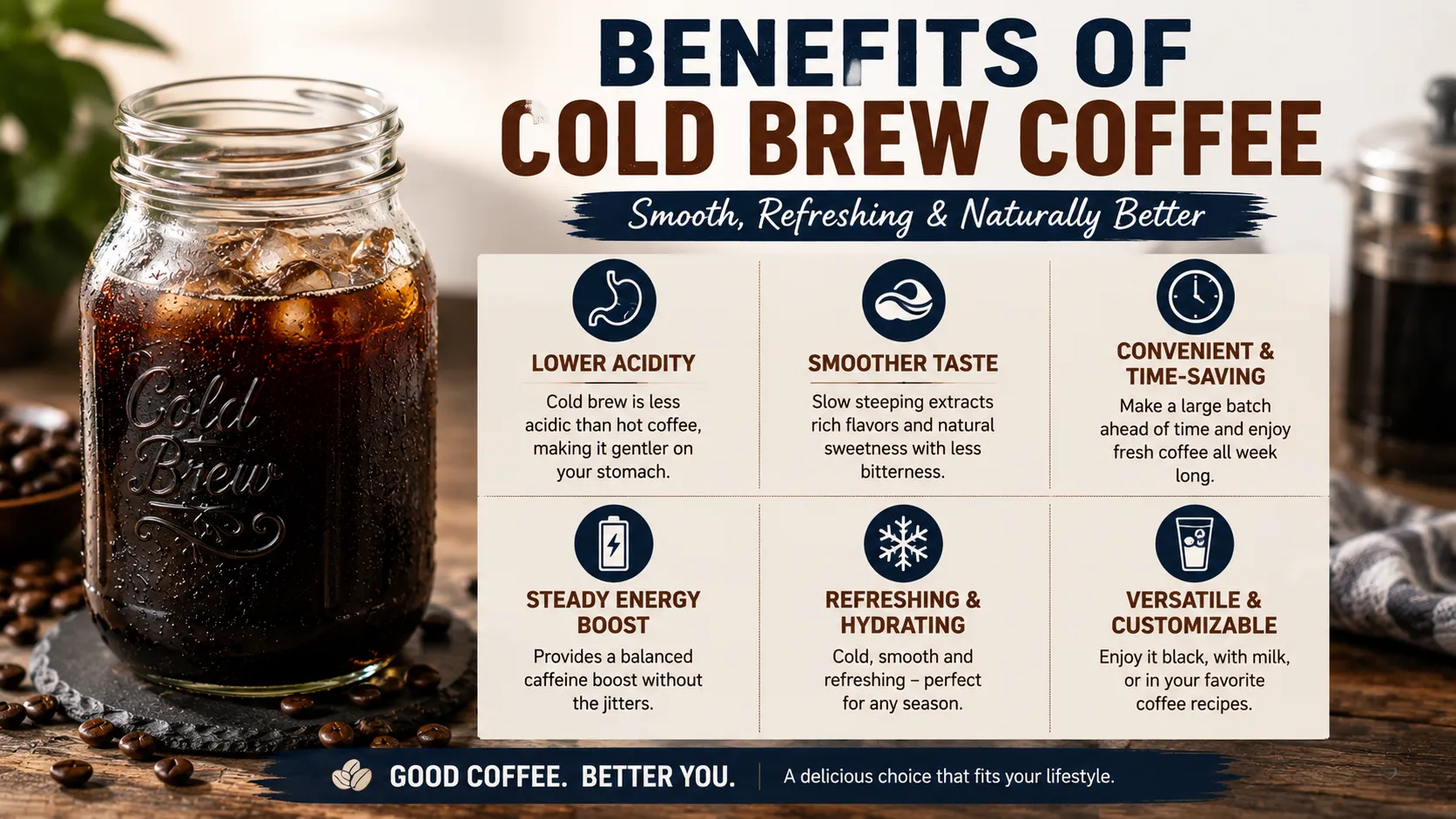
- Naturally smooth flavor with reduced bitterness
- Lower perceived acidity than many hot brewing methods
- Easy batch preparation for busy schedules
- Excellent shelf life when refrigerated
- Highly versatile for different coffee recipes
Another major advantage is consistency. Once you discover a recipe you enjoy, it is relatively easy to reproduce the same results every week.
What Do You Need to Make Cold Brew Coffee?
One of the best aspects of cold brew is its simplicity. Unlike espresso or specialty brewing methods, cold brew requires very little equipment. To get started, you need coffee, water, a brewing container, and a filtration method. Most people already own everything necessary.
A glass jar, mason jar, large pitcher, or French press can all work effectively. For filtration, you can use paper coffee filters, cheesecloth, a fine mesh strainer, or a dedicated cold brew filter.
The quality of your ingredients matters. Fresh coffee beans and filtered water almost always produce noticeably better results than stale coffee and heavily chlorinated tap water.
What Is the Best Coffee for Cold Brew?
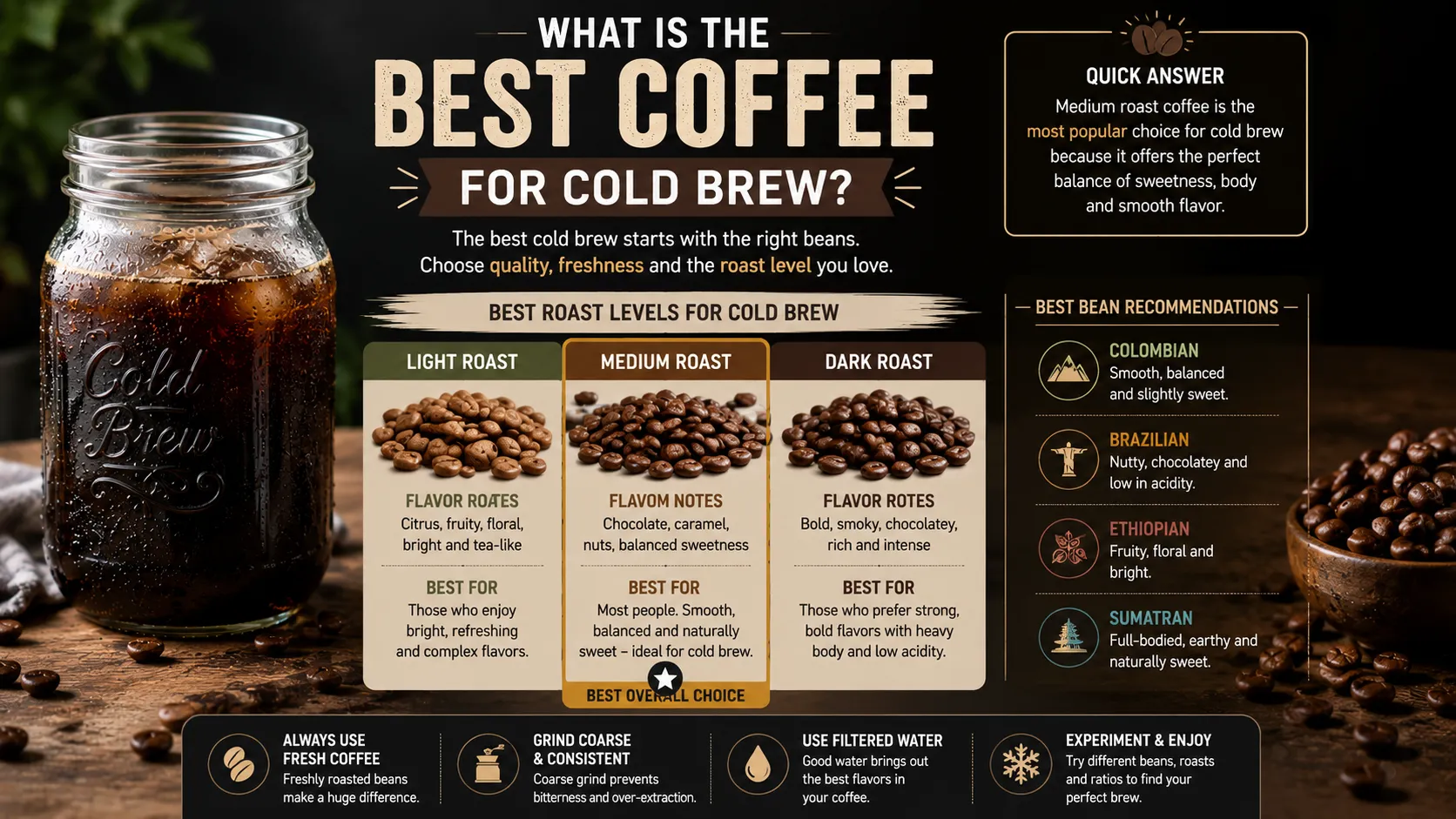
The truth is that almost any coffee can be used for cold brew. However, certain beans tend to produce more balanced and enjoyable results.
Medium-roast coffees are often considered the sweet spot because they provide a balance of sweetness, body, and complexity. Dark roasts create bold chocolate and caramel notes, while lighter roasts can introduce fruity and floral characteristics.
Popular Flavor Profiles by Roast Level
Roast Level | Typical Flavor Notes |
Light Roast | Citrus, berry, floral |
Medium Roast | Chocolate, caramel, nuts |
Dark Roast | Cocoa, smoky, bold |
During side-by-side testing with light, medium, and dark roasts using the same brewing ratio and steeping time, medium-roast coffees often produced the most balanced flavor. They delivered enough sweetness and body without becoming overly intense.
That does not mean medium roast is automatically the best choice. Flavor preference remains personal, and experimenting with different beans is one of the most enjoyable parts of making your own cold brew coffee.
How to Make Cold Brew Coffee at Home
Making cold brew coffee at home is surprisingly simple. Once you understand the basic process, most of the work comes down to waiting. Start by adding one cup of coarse coffee grounds to a large container. Slowly pour four cups of filtered water over the coffee and stir gently until all grounds are saturated.
Cover the container and allow it to steep at room temperature or in the refrigerator. Many recipes recommend steeping anywhere from 12 to 24 hours. In practice, the ideal brewing time depends on the beans, grind size, and desired strength.
Real Brewing Observations
After comparing multiple batches brewed with identical coffee-to-water ratios, some consistent patterns emerge:
Steep Time | Flavor Result |
12 Hours | Light and bright |
16 Hours | Balanced and smooth |
18 Hours | Sweet, rich, and rounded |
24 Hours | Strong with heavier body |
In repeated tests using medium-roast Colombian coffee, the 18-hour brew consistently produced the most balanced combination of sweetness, body, and smoothness. The 24-hour version delivered a stronger flavor but occasionally developed slightly heavier chocolate notes that not every drinker preferred.
Once brewing is complete, filter the coffee carefully to remove all grounds. The resulting liquid can be enjoyed immediately, diluted as needed, or stored in the refrigerator for future use.
Best Cold Brew Coffee-to-Water Ratio
One of the most common questions people ask is how much coffee should be used for cold brew. The answer depends on whether you want a ready-to-drink beverage or a concentrate. For most people, a 1:6 coffee-to-water ratio creates a balanced cold brew that is smooth, flavorful, and easy to drink.
Cold Brew Ratio Guide
Style | Ratio |
Mild Cold Brew | 1:8 |
Standard Cold Brew | 1:6 |
Concentrate | 1:4 |
Strong Concentrate | 1:3 |
If you are new to cold brew, starting with a 1:6 ratio is usually the safest choice. It provides excellent flavor while allowing room for adjustments in future batches.
How to Make Cold Brew With Ground Coffee
Many beginners wonder whether they need the best coffee beans or special grinding equipment. Fortunately, the answer is no. You can absolutely make cold brew with pre-ground coffee. However, grind size plays a major role in the final result.
Coarse grounds generally produce cleaner flavors and are easier to filter. Fine grounds can lead to excess sediment, cloudiness, and over-extraction. If purchasing coffee specifically for cold brew, choose a coarse grind whenever possible. If you already have standard ground coffee at home, it can still work, although filtration may require additional care.
How to Make Cold Brew Coffee Concentrate
Cold brew concentrate is simply a stronger version of cold brew coffee that is designed to be diluted before drinking. Many coffee shops use concentrate because it allows them to prepare large batches while giving customers flexibility in strength and serving style.
To make cold brew coffee concentrate, use a stronger coffee-to-water ratio than you would for a ready-to-drink brew. A ratio of 1:4 is a common starting point and provides a rich, versatile concentrate that can be mixed with water, milk, or non-dairy alternatives.
For example, combine one cup of coarse coffee grounds with four cups of filtered water. Allow the mixture to steep for 18 to 24 hours before filtering thoroughly.
How to Dilute Cold Brew Concentrate
Concentrate | Water or Milk |
1 Part | 1 Part |
1 Part | 2 Parts |
1 Part | 3 Parts |
A 1:1 dilution generally produces a strong coffee similar to many cafe cold brews. Those who prefer a lighter drink can add additional water or milk until the flavor matches their preference. Cold brew concentrate is made using a stronger coffee-to-water ratio, usually around 1:4, and is diluted before serving.
How to Make Your Own Cold Brew Coffee
One of the biggest advantages of learning how to make your own cold brew coffee is complete control over flavor. Coffee shops often follow standardized recipes, but home brewing allows you to customize every variable. You can experiment with roast levels, brewing times, water quality, and dilution ratios until you create a recipe that perfectly matches your taste.
Many experienced home brewers keep simple notes about each batch. Recording details such as coffee origin, roast level, ratio, and steeping time makes it easier to repeat successful results. Over time, these small adjustments can significantly improve consistency and help you develop a cold brew recipe that feels uniquely yours.
How to Make Cold Brew Coffee With a French Press
A French press is one of the easiest and most effective tools for making cold brew coffee at home. Because the French press already includes a built-in filtration system, the brewing and filtering process becomes much simpler. Start by adding coarse coffee grounds to the French press. Pour cold filtered water over the grounds and stir gently to ensure even saturation.
Place the lid on top without pressing the plunger down. Allow the coffee to steep for approximately 16 to 24 hours. When brewing is complete, slowly press the plunger down to separate the grounds from the liquid.
Although the French press filter removes most coffee particles, many coffee enthusiasts prefer to run the coffee through a paper filter afterward for maximum clarity. A French press can be used for cold brew by steeping coarse coffee grounds in cold water for 16–24 hours and then pressing the plunger to separate the grounds.
How Much Caffeine Is in Cold Brew Coffee?
Caffeine is one of the most misunderstood aspects of cold brew coffee. Many people assume cold brew automatically contains more caffeine than regular coffee. While that can be true, it depends entirely on how the coffee is prepared and served.
Cold brew concentrate often contains significantly more caffeine because it uses a higher coffee-to-water ratio. However, once diluted, the caffeine content may be similar to a standard cup of drip coffee. Factors that influence caffeine levels include:
- Coffee bean variety
- Brewing ratio
- Steeping time
- Serving size
- Dilution level
Cold brew concentrate usually contains more caffeine than regular coffee, but a prepared serving may contain a similar amount depending on dilution. For most coffee drinkers, the perceived strength of cold brew often comes from its smooth flavor rather than dramatically higher caffeine content.
How Should Cold Brew Coffee Be Stored?
Proper storage is essential for maintaining freshness and flavor. Once filtered, cold brew should be transferred to a clean, airtight container and stored in the refrigerator. Glass containers are often preferred because they do not absorb odors from surrounding foods. Many home brewers notice that cold brew tastes best within the first week after brewing.
Cold Brew Storage Guide
Storage Method | Expected Freshness |
Refrigerated Ready-to-Drink Cold Brew | 7–10 Days |
Refrigerated Concentrate | Up to 14 Days |
Room Temperature | Not Recommended |
If the coffee develops unusual aromas or flavors, it should be discarded. Filtered cold brew coffee should be refrigerated in an airtight container and is typically best consumed within 7 to 10 days.
Common Cold Brew Problems and How to Fix Them
Even experienced coffee enthusiasts occasionally encounter problems. Fortunately, most issues have simple solutions.
Why Does My Cold Brew Taste Bitter?
Bitterness is usually caused by using coffee grounds that are too fine or by steeping the coffee for too long. Switching to a coarser grind and reducing steeping time often solves the problem.
Why Does My Cold Brew Taste Weak?
Weak coffee is usually the result of too little coffee or too much water. Increasing the coffee dose or using a stronger ratio can improve flavor.
Why Is My Cold Brew Cloudy?
Cloudiness typically occurs when fine particles pass through the filter. Using a paper coffee filter after initial straining often produces a much cleaner result.
Why Does My Cold Brew Taste Flat?
Flat flavor is commonly associated with stale coffee beans or poor-quality water. Freshly roasted beans and filtered water can make a noticeable difference.
Expert Tips for Better Cold Brew Coffee
After preparing dozens of batches, several patterns consistently emerge. Fresh coffee almost always produces a more vibrant and balanced cold brew than beans that have been sitting open for several weeks. Water quality also plays a surprisingly important role. Even excellent coffee beans can taste dull when brewed with poor-quality water.
Another observation is that medium-roast coffees tend to be the most forgiving. During testing with multiple roast levels, medium roasts repeatedly delivered balanced sweetness, body, and smoothness without requiring extensive adjustments.
Many home brewers also find that filtering twice creates a noticeably cleaner cup, particularly when using pre-ground coffee. Small improvements such as these may seem minor individually, but together they can dramatically improve the quality of your cold brew.
Common Cold Brew Myths
Cold brew has become so popular that several myths continue to circulate online. One common myth is that cold brew must always be brewed in the refrigerator. In reality, many successful recipes steep at room temperature before being refrigerated after filtration.
Another misconception is that dark roast coffee is required. While dark roasts work well, light and medium roasts can produce exceptional cold brew with unique flavor profiles.
Some people also believe that cold brew and iced coffee are identical beverages. As discussed earlier, the brewing methods are completely different and produce distinct flavor characteristics. Understanding these misconceptions can help you make better brewing decisions and avoid unnecessary limitations.
Related Coffee Topics You May Like
Frequently Asked Questions
How long should cold brew coffee steep?
Most cold brew recipes produce the best balance of flavor between 16 and 18 hours. However, brewing times can vary depending on coffee type and personal preference.
Can I use regular ground coffee for cold brew?
Yes. Regular ground coffee can be used, although coarse grounds generally produce cleaner flavors and are easier to filter.
What is the best cold brew coffee ratio?
For most people, a 1:6 coffee-to-water ratio provides an excellent balance of flavor, strength, and smoothness.
Can cold brew coffee be served hot?
Yes. Cold brew concentrate can be mixed with hot water to create a smooth hot coffee with reduced bitterness.
Is cold brew less acidic than regular coffee?
Many coffee drinkers perceive cold brew as less acidic because the cold extraction process produces a smoother flavor profile.
How long does cold brew coffee last in the refrigerator?
Ready-to-drink cold brew typically remains fresh for 7 to 10 days, while concentrate can often maintain quality for up to two weeks.
Conclusion
Learning how to make cold brew coffee is one of the simplest ways to enjoy smooth, refreshing coffee without expensive equipment or complicated brewing techniques. By combining quality coffee beans, filtered water, the correct coffee-to-water ratio, and sufficient steeping time, you can consistently create café-quality cold brew at home.
Whether you are exploring how to make cold brew coffee at home, experimenting with how to make cold brew with ground coffee, preparing cold brew coffee concentrate, or learning how to make cold brew coffee with a French press, the key is understanding how small adjustments influence flavor.
Throughout repeated brewing tests, one lesson becomes clear: there is no single perfect recipe for everyone. Some coffee drinkers prefer a lighter and brighter cold brew, while others enjoy a richer and more concentrated profile. The real advantage of making your own cold brew coffee is the ability to refine the process until it perfectly matches your personal taste.
Start with a balanced 1:6 ratio, use freshly roasted coffee whenever possible, and experiment with brewing times between 16 and 18 hours. With a little practice, you can create consistently smooth, flavorful cold brew coffee that rivals many specialty coffee shops while enjoying the convenience of brewing it right at home.