


If your coffee tastes bitter, weak, or just “off,” the problem isn’t your beans, it’s your method. Many people try different coffees but still fail to get that rich, smooth taste they expect.
Learning how to make French press coffee correctly can completely transform your daily cup. This method is simple, affordable, and powerful when you understand the details behind it.
According to the Specialty Coffee Association, brewing variables like grind size, water temperature, and extraction time are the key factors that determine coffee quality. This guide will help you master all of them step by step.
French press coffee uses an immersion brewing method, where coffee grounds stay fully soaked in hot water before being separated by a metal filter.
Unlike paper-filter methods, this process keeps natural oils in the cup, resulting in a richer and fuller flavor. It also gives you more control over the brewing process, making it ideal for both beginners and experienced users.

The grind size is one of the most important factors. Always use coarse-ground coffee with a texture similar to sea salt.
Fine grounds can pass through the filter and lead to bitterness and a muddy texture. Coarse grounds allow proper extraction and a cleaner cup.
Getting the ratio right is critical. Many beginners either use too much coffee, making it bitter, or too little, resulting in a weak flavor.
Here is a simple reference table to help you:
Cups of Coffee | Water (ml) | Coffee (grams) | Taste Profile |
1 Cup | 250 ml | 16–17 g | Balanced |
2 Cups | 500 ml | 32–34 g | Standard |
3 Cups | 750 ml | 48–50 g | Strong |
Coffee Ratio = 1:15
This means 1 gram of coffee for every 15 ml of water for a balanced and smooth cup. This standard ratio works well for everyday brewing and is especially helpful if you’re learning how to make French press coffee for one or two people.
Water temperature directly affects extraction. The ideal range is between 90°C and 96°C. If you don’t have a thermometer, let the boiling water rest for about 30–40 seconds before using it. Too hot leads to bitterness, while cooler water results in weak coffee.
Blooming allows trapped gases to escape, improving flavor extraction. To do this, pour a small amount of water over the coffee grounds and wait for 30 seconds before adding the rest. Skipping this step can lead to flat or uneven taste.
After blooming, pour the remaining water evenly and give a gentle stir. Let the coffee steep for about 4 minutes with the lid placed on top (without pressing).
Pro tip: Most bitterness doesn’t come from brewing too long; it comes from over-extraction caused by using a grind that is too fine.
Once the steeping time is complete, press the plunger down slowly and steadily. Avoid rushing this step, as fast pressing can disturb the coffee bed. After pressing, pour the coffee immediately into cups. Leaving coffee inside the press can lead to over-extraction, which makes it bitter over time.
Ratio | Meaning | Result |
1:12 | Strong coffee | Bold and intense |
1:15 | Standard ratio | Balanced flavor |
1:17 | Light coffee | Smooth and mild |
Adjusting ratios allows you to personalize your coffee based on taste preference.
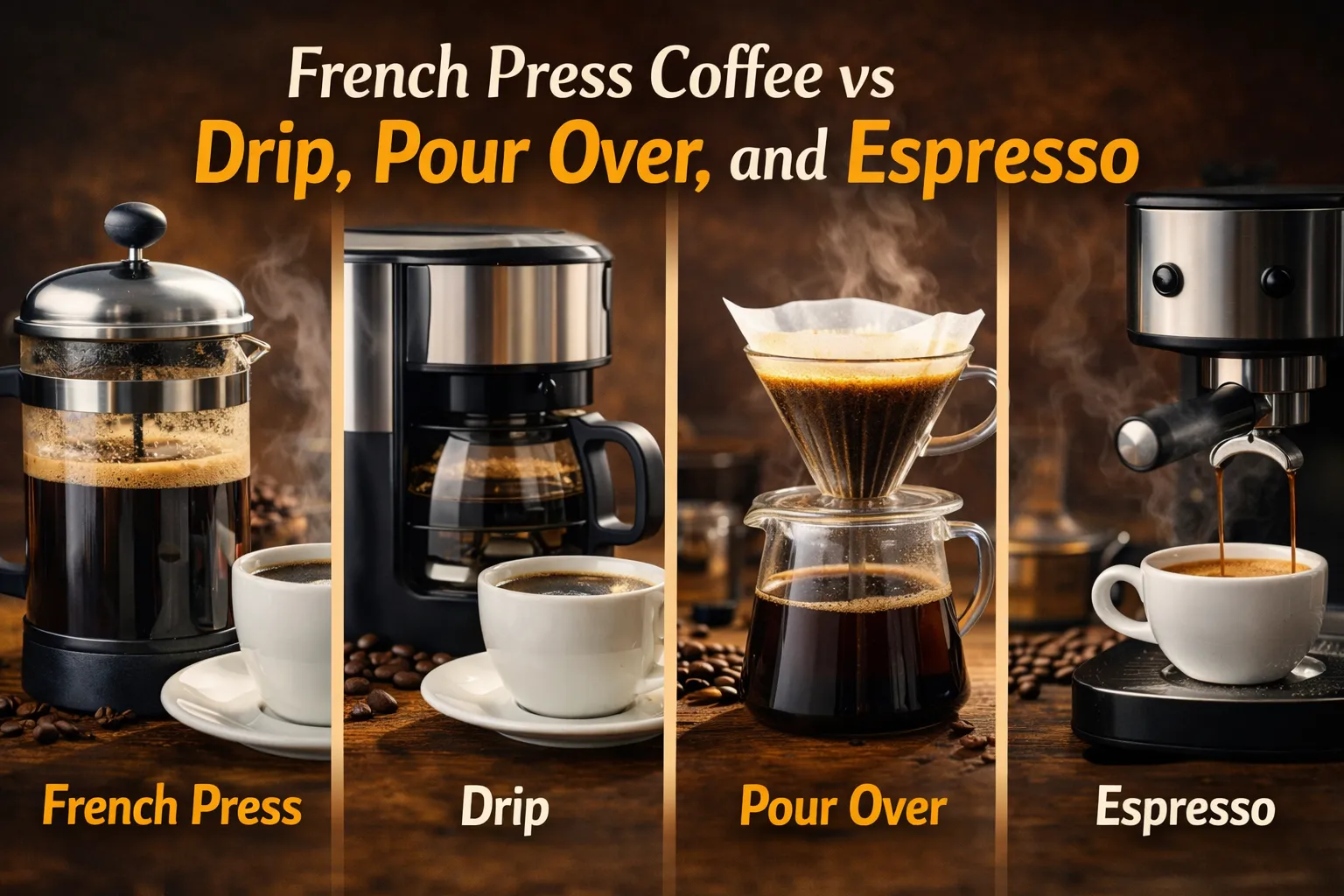
French press coffee offers a rich and full-bodied experience because it retains natural oils.
Drip coffee is lighter and cleaner due to paper filtration. Pour-over coffee provides more clarity and precision but requires more technique. Espresso, on the other hand, is highly concentrated and brewed under pressure, producing a much stronger and smaller serving.
If you prefer depth and texture, French press stands out. If you enjoy cleaner or more intense styles, other methods may suit you better.
If you don’t have a French press, you can still mimic the method using a simple cup.
Add coarse coffee grounds to a mug, pour hot water, and let it sit for about 4 minutes. After that, allow the grounds to settle and drink from the top.
While not as clean as a French press, this method still produces a surprisingly balanced cup when done correctly.
Small adjustments can significantly improve your results:
These simple habits can elevate your coffee quality quickly.
Even small errors can affect the outcome:
Avoiding these mistakes will instantly improve your results.

If you don’t have a grinder, you can still prepare coffee using whole beans. While not ideal, it’s a practical solution. Place the beans inside a clean cloth or bag and crush them using a rolling pin or heavy object. Aim for a coarse texture rather than fine powder.
This method is helpful when learning how to make coffee from coffee beans at home without a machine, especially in limited setups.
Want better results? Start with freshly roasted beans and a consistent grind; these two changes alone can dramatically improve your coffee quality.
The ideal time is 4 minutes, though slight adjustments can be made based on taste.
Yes, but coarse-ground coffee is recommended for the best results.
A 1:15 ratio is widely considered the standard for balanced flavor.
Bitterness is usually caused by fine grind size, overly hot water, or improper ratios.
Mastering how to make French press coffee is about understanding small details that make a big difference. Once you control grind size, ratio, water temperature, and time, you can consistently brew high-quality coffee at home.
The French press remains one of the most reliable methods because it combines simplicity with depth of flavor. With practice, you’ll not only improve your coffee but also develop your own preferred style.




Contact Us Jump To What Is a Light Roast Coffee? A Complete Guide to Flavor, Caffeine, Benefits, and Brewing Coffee lovers often hear terms like light roast, medium roast, and dark roast, but many people still wonder, what is a light roast coffee and how…

Contact Us Jump To How Much Caffeine in Decaf Coffee? Everything You Need to Know If you enjoy coffee but want to reduce your caffeine intake, you have probably wondered how much caffeine in decaf coffee actually remains. Many people believe decaf coffee is completely…

Contact Us Jump To Where Does Coffee Come From? The Fascinating History, Origins, and Journey of Coffee Around the World If you’ve ever wondered where does coffee come from, you’re not alone. Coffee is one of the world’s most popular beverages, enjoyed by millions of…

Explore the world of coffee with honest reviews and practical advice. Find your perfect cup, one bean and machine at a time.