

Have you ever opened a bag of coffee only to find the aroma flat and the taste dull? Freshness fades faster than most realize, turning a promising brew into a disappointing cup. Learning how to make coffee beans last longer protects your investment and guarantees every sip bursts with flavor.
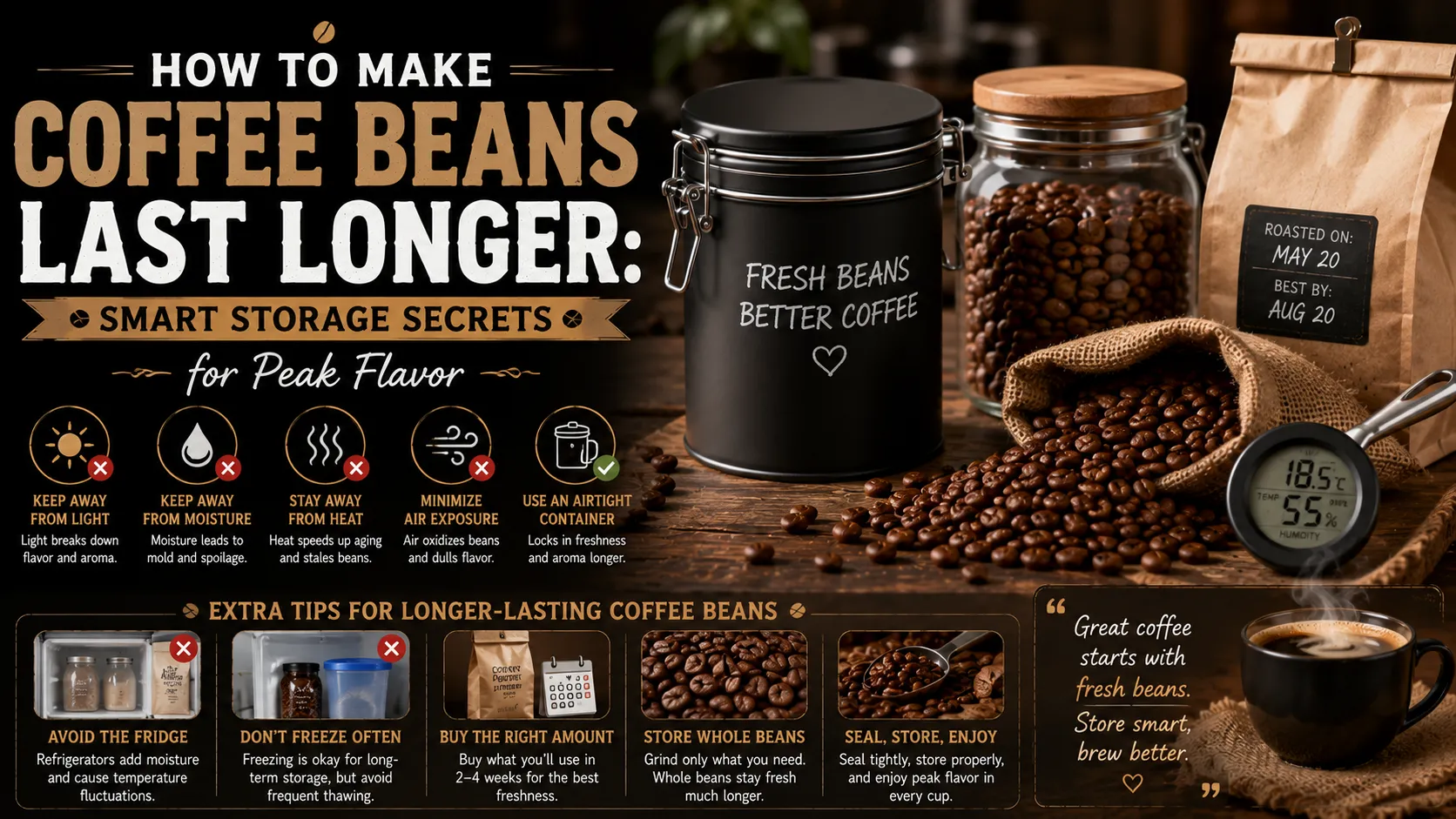
- Store beans in an airtight, opaque container away from heat, light, and moisture.
- Keep the storage environment cool (around 15‑20 °C / 59‑68 °F) and dry.
- Avoid the refrigerator; freezing is only advisable for long‑term storage if done correctly.
- Grind beans just before brewing to preserve volatile oils.
- Buy smaller quantities more frequently to ensure peak freshness.
Why Coffee Beans Lose Their Freshness
Coffee beans are porous and contain delicate oils that oxidize when exposed to air. Oxygen triggers stale flavors, while moisture encourages mold growth. Heat accelerates chemical reactions that break down aromatic compounds. Light, especially UV, degrades the beans’ pigments and flavor precursors. Understanding these factors is the first step toward effective preservation.
Choosing the Right Storage Container
An ideal container blocks air, light, and moisture. Look for jars made of ceramic, stainless steel, or opaque glass with a tight‑sealing lid. Some specialty containers feature one‑way valves that let CO₂ escape without letting oxygen in. Avoid clear plastic bags or containers that do not seal tightly.
Materials to Avoid
Thin paper bags, clear jars, and containers with loose lids offer little protection. Even if they seem convenient, they allow rapid oxidation and moisture absorption. Switching to a proper storage vessel can extend bean life by weeks.
Temperature and Humidity Control
Heat speeds up oxidation, while humidity can cause beans to absorb water, leading to off‑flavors and potential mold. Aim for a stable temperature between 15‑20 °C (59‑68 °F) and relative humidity below 60 %. A pantry away from the stove, oven, or direct sunlight works well.
Monitoring Conditions
Consider placing a small hygrometer near your coffee storage area. If humidity spikes, add a food‑grade silica gel packet (not touching the beans) to absorb excess moisture. This simple step can make a noticeable difference over time.
Light Exposure: The Silent Enemy
UV rays break down the chlorogenic acids and lipids that give coffee its bright acidity and body. Store beans in a dark cupboard or use an opaque container. If you must keep beans on the counter, choose a container that is completely non‑transparent.
Practical Tips
When you open a bag, transfer the beans immediately to your storage jar. Never leave the original bag open on the counter for extended periods. The less time beans spend in light, the longer they retain their complex flavor profile.
Freezing vs. Refrigerating: What Works Best?
Refrigeration introduces moisture and odors from other foods, which can be absorbed by the porous beans. Freezing, however, can halt oxidation if done correctly. Only freeze beans you plan to store for more than two weeks, and divide them into airtight portions to avoid repeated thawing.
How to Freeze Properly
Place beans in a sealed, freezer‑safe bag, squeeze out excess air, and lay flat. When you need beans, remove only the amount you’ll use within a week, let them reach room temperature before opening the bag, and grind immediately. Never refreeze thawed beans.
Grind Just Before Brewing
Ground coffee has a vastly larger surface area exposed to oxygen, causing rapid flavor loss. Grinding beans immediately before brewing preserves the volatile aromatics that define a great cup. Invest in a burr grinder for consistent particle size and minimal heat generation.
Benefits of Fresh Grinding
Freshly ground coffee yields a more even extraction, resulting in balanced acidity, sweetness, and body. The crema on espresso is richer, and pour‑over methods highlight subtle floral or fruity notes that disappear with pre‑ground coffee.
Buy Smart: Quantity and Frequency
Purchasing large bags may seem economical, but beans start losing freshness within days of roasting. Aim to buy enough for one to two weeks of consumption, depending on your brewing habits. Many specialty roasters offer subscription services that deliver freshly roasted beans on a regular schedule.
Reading Roast Dates
Always check the roast date on the bag, not just the “best by” date. Beans are at their peak flavor 3‑14 days post‑roast, after which gradual decline begins. Choosing beans with a recent roast date ensures you start with the highest possible quality.
Common Mistakes That Shorten Bean Life
Even experienced coffee lovers sometimes undermine freshness through avoidable errors. Storing beans near the dishwasher, keeping them in the freezer without proper sealing, or leaving the grinder hopper full for days can all accelerate staleness.
How to Avoid Them
Keep your coffee station away from appliances that generate heat or steam. Clean your grinder regularly to remove old grounds that can turn rancid. Seal storage containers immediately after each use, and label frozen portions with the date to track freshness.
Extending Shelf Life with Nitrogen Flushing (Optional)
Some high‑end retailers flush bags with nitrogen to displace oxygen before sealing. This technique can significantly slow oxidation, allowing beans to stay fresh for months. While not necessary for home users, it’s worth noting if you purchase nitrogen‑flushed bags from specialty suppliers.
Is It Worth the Investment?
For casual drinkers, a good airtight container and proper storage habits provide ample freshness. Nitrogen flushing benefits those who buy in bulk or want to store beans for extended periods without freezing.
Monitoring Freshness Over Time
Your senses are the best tools for gauging bean quality. Fresh beans emit a vibrant, aromatic scent; stale beans smell flat, cardboard‑like, or even musty. When brewing, observe the crema (for espresso) or bloom (for pour‑over). A weak bloom or thin crema often indicates lost freshness.
Simple Freshness Test
Place a few beans in a sealed jar with a small amount of water. If the beans sink quickly and release bubbles, they’re still releasing CO₂—a sign of recent roast. If they float or show little activity, they’ve likely aged beyond optimal freshness.
Conclusion: Savor Every Cup
Mastering how to make coffee beans last longer combines proper container selection, environmental control, mindful purchasing, and timely grinding. By applying these strategies, you protect the delicate flavors that make each coffee experience unique. Start implementing one tip today, and notice the difference in aroma, taste, and overall enjoyment.
Ready to Keep Your Coffee Fresh?
Download our free “Coffee Bean Storage Checklist” and start preserving flavor today!
How long do coffee beans stay fresh after opening?
Once opened, coffee beans begin to lose freshness within 7‑10 days if stored improperly. With an airtight, opaque container kept in a cool, dark place, you can maintain peak flavor for up to three weeks. For longer storage, freezing portions in airtight bags can extend freshness to two months without noticeable degradation.
Once opened, coffee beans begin to lose freshness within 7‑10 days if stored improperly. With an airtight, opaque container kept in a cool, dark place, you can maintain peak flavor for up to three weeks. For longer storage, freezing portions in airtight bags can extend freshness to two months without noticeable degradation.
Is it safe to store coffee beans in the refrigerator?
Storing beans in the refrigerator is generally not recommended. The environment is humid, and beans can absorb moisture and odors from other foods, leading to off‑flavors. If you must refrigerate, use a completely sealed container and allow the beans to reach room temperature before opening to prevent condensation.
Storing beans in the refrigerator is generally not recommended. The environment is humid, and beans can absorb moisture and odors from other foods, leading to off‑flavors. If you must refrigerate, use a completely sealed container and allow the beans to reach room temperature before opening to prevent condensation.
Can I freeze coffee beans, and if so, how should I do it?
Yes, freezing works for long‑term storage if done correctly. Divide beans into weekly portions, place each portion in a sealed freezer‑safe bag, remove excess air, and lay flat. When needed, take out only the amount you’ll use within a week, let it thaw to room temperature while still sealed, then open and grind immediately. Avoid refreezing thawed beans.
Yes, freezing works for long‑term storage if done correctly. Divide beans into weekly portions, place each portion in a sealed freezer‑safe bag, remove excess air, and lay flat. When needed, take out only the amount you’ll use within a week, let it thaw to room temperature while still sealed, then open and grind immediately. Avoid refreezing thawed beans.
Does grinding coffee beans ahead of time affect flavor?
Grinding increases the surface area exposed to oxygen, causing rapid oxidation and loss of volatile aromatics. Pre‑ground coffee can taste stale within 30 minutes to an hour. For the best flavor, grind beans immediately before brewing using a burr grinder to ensure consistent particle size and minimal heat.
Grinding increases the surface area exposed to oxygen, causing rapid oxidation and loss of volatile aromatics. Pre‑ground coffee can taste stale within 30 minutes to an hour. For the best flavor, grind beans immediately before brewing using a burr grinder to ensure consistent particle size and minimal heat.
What are the signs that my coffee beans have gone stale?
Stale beans exhibit a flat, cardboard‑like, or musty aroma instead of the vibrant, fruity, or nutty notes of fresh beans. When brewing, you may notice a weak bloom in pour‑over methods or a thin, quickly dissipating crema on espresso. The taste will be dull, lacking acidity and sweetness, with increased bitterness.
Stale beans exhibit a flat, cardboard‑like, or musty aroma instead of the vibrant, fruity, or nutty notes of fresh beans. When brewing, you may notice a weak bloom in pour‑over methods or a thin, quickly dissipating crema on espresso. The taste will be dull, lacking acidity and sweetness, with increased bitterness.
Related guides on how to make coffee beans last longer: how coffee beans are roasted, how to make coffee beans into instant coffee. For background on the bean itself, see coffee bean.
Once you have tried these storage tips, you will know how to make coffee beans last longer in your own kitchen.
Put these tips into practice this week: store your beans well, grind fresh, and you will soon know how to make coffee beans last longer without any extra effort.
For your next bag, check the roast date first, then follow the storage steps above — that simple routine is the easiest way to learn how to make coffee beans last longer.
One last habit worth adopting: label each container with its roast date, so you always use the oldest beans first — a small step that helps you learn how to make coffee beans last longer across every bag you buy.
Taste your coffee across the two weeks after opening and note when the flavour starts to fade. That habit shows you your household’s real consumption window, so you can size future bags to it — and it is the simplest way to learn how to make coffee beans last longer for your own routine.



2 Comments