
How Coffee Beans Are Roasted (And What It Means for Your Cup)
Green coffee beans don’t taste like coffee at all — they’re grassy, woody seeds that only become aromatic brown beans through roasting. Here’s what actually happens inside the roaster, why roast level changes everything about your cup, and how to use that knowledge when you’re standing in front of a shelf of bags.
The short version: heat + time = flavor
Roasting takes green beans (up to about 12% moisture) and drives off water while triggering the chemical reactions that build flavor. Beans expand in size, lose roughly 15–20% of their weight, and go from pale green to shades of brown. The whole process typically takes 8–15 minutes in a commercial drum roaster — and the roaster controls temperature, airflow, and timing to steer the outcome toward the flavor profile on the label.
The roasting stages, step by step
1. Drying phase
The beans go into a hot drum full of green moisture. The drum temperature drops sharply, then climbs again as the water evaporates. The beans stay pale and yellowish here — nothing much to taste yet, but this phase sets up even roasting later.
2. Yellowing and browning
Once most moisture is gone, the beans turn yellow, then brown. This is the Maillard reaction at work — the same browning chemistry that gives seared meat and baked bread their flavor — plus caramelization as sugars break down. The smell shifts from grassy to something like toasted bread. A papery husk called chaff peels off and gets pulled out by the roaster’s airflow.
3. First crack
Pressure from steam and gases building inside each bean eventually forces a loud popping sound: first crack. Everything roasted to this point or a touch past it is a light roast — bright, acidic, floral or citrusy, with the bean’s origin character front and center.
4. Development
The short stretch after first crack where the roaster fine-tunes the final flavor. Too short, and the coffee tastes sour and grassy; stretched a little further and you get the balanced, sweet territory most people drink every day.
5. Second crack (darker roasts only)
If the roaster keeps going, a second, quieter crack signals the bean’s structure fracturing. Oils migrate to the surface. Dark roast: smoky, bittersweet, heavy-bodied, low acidity — but the coffee’s unique origin character is mostly gone, replaced by roast flavor.
What roast level actually means on a bag
Roast level is the single most useful thing on a coffee label. Here’s a quick cheat sheet:
| Roast level | What the beans look like | What the cup tastes like |
|---|---|---|
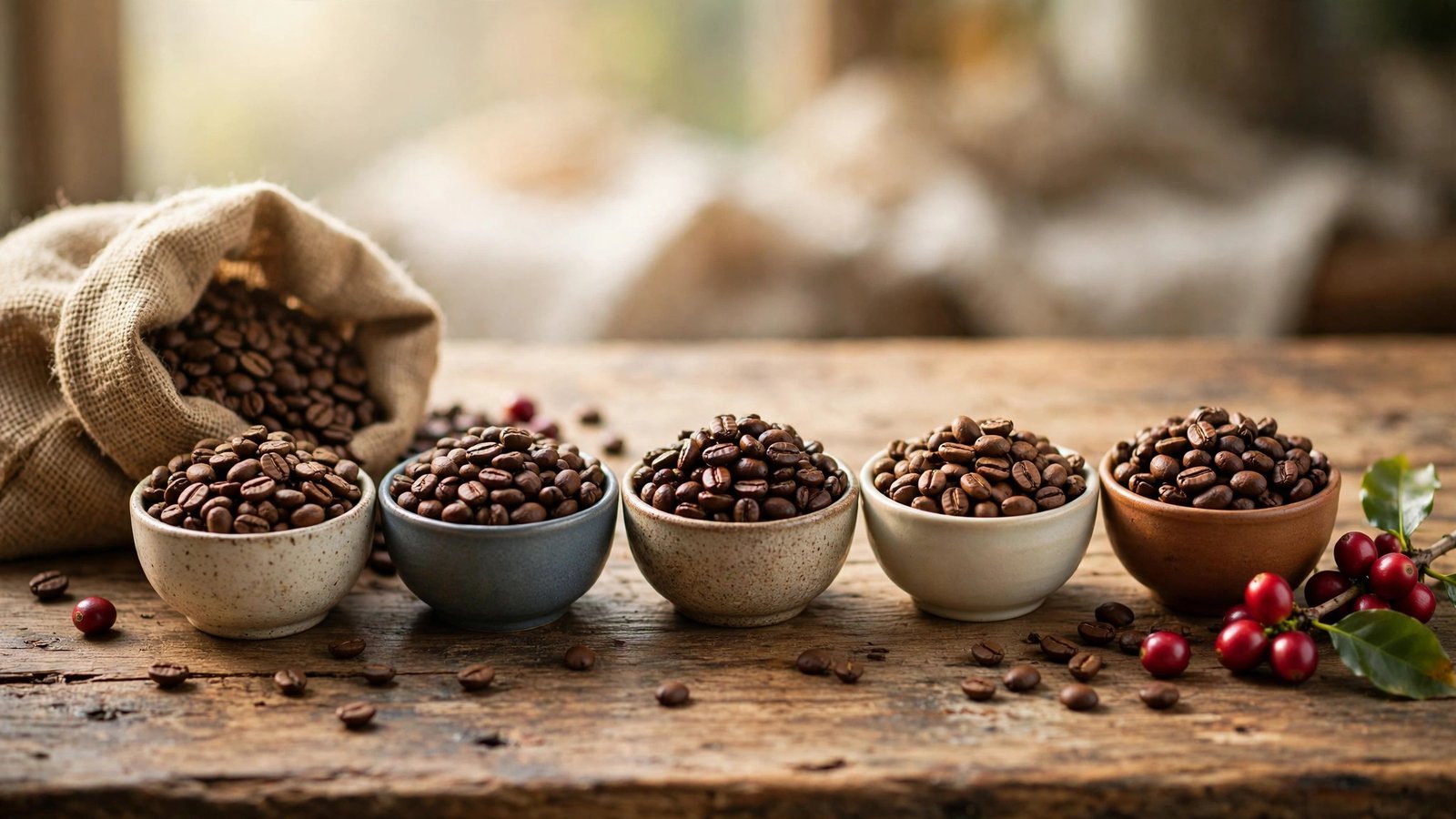
| Light | Light brown, dry surface | Bright, acidic, fruity or floral |
| Medium | Medium brown, still dry | Balanced, sweet, caramel/nutty |
| Medium-dark | Dark brown, slight oil sheen | Heavier body, chocolatey, lower acidity |
| Dark | Very dark, oily surface | Bold, smoky, bittersweet, low acidity |
Light roasts show off where the coffee was grown. Dark roasts show off the roasting itself. Neither is “better” — but if you keep buying beans you don’t love, the roast level is the first thing to check.
Why freshness matters after roasting
Roasting doesn’t end at the cooling tray. Freshly roasted beans release carbon dioxide for days (this is called degassing), and brewing too early can throw extraction off — many roasters suggest waiting 24–48 hours, or up to a week for espresso. After that, oxygen becomes the enemy: store beans in an airtight container, and look for bags with a printed roast date rather than just a “best by” date. Freshness matters most for light roasts, where delicate flavors fade fastest.
Skip the fridge. Temperature swings cause condensation inside the bag, which speeds up staling. A cool, dark cupboard beats the refrigerator every time.
FAQs
Does darker roast mean more caffeine?
Not really. Caffeine survives roasting mostly intact. Darker beans lose more water weight, so a scoop of dark roast (by volume) can have slightly more caffeine — but per bean or by weight, light roast wins slightly. The difference is small either way; don’t choose your roast level based on caffeine.
How much weight do beans lose during roasting?
About 15–20% of the green bean’s weight, mostly water. The beans get bigger physically while getting lighter — which is why roasted coffee is sold by weight, not volume.
Can you brew unroasted (green) coffee beans?
Technically, yes — you can steep them like a herbal tea. But it won’t taste like coffee. All the aromatic oils and soluble flavors you expect only develop during roasting, so green beans taste grassy and woody on their own.
How soon after roasting can I brew?
Give it at least 24–48 hours; three to seven days is the sweet spot many specialty roasters recommend. Brewing straight off the roaster lets escaping CO2 interfere with extraction, often tasting sour.