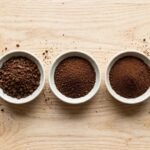
In coffee grinding, grind size controls how fast water pulls flavor from coffee. Too coarse, and your cup tastes thin and sour. Too fine, and it tastes bitter and harsh. This coffee grind size chart gives you the right starting point for every common brewer. Use the feel scale below. Match your brewer. Then adjust by taste.
Why Grind Size Matters
Think of grind size as surface area. Coarse grounds expose less surface to water. Fine grounds expose much more. Water moves through coarse grounds fast. It moves through fine grounds slow. That speed changes extraction. Extraction is just a plain word for flavor pulled from coffee.Short contact time needs a fine grind. Espresso brews in under a minute. It needs very fine grounds. Long contact time needs a coarse grind. Cold brew steeps for hours. It needs very coarse grounds. Get this balance wrong, and even great beans taste off.Grind size also affects flow. Fine grounds can clog a paper filter. Coarse grounds can let water rush through too fast.
The Feel Scale
Numbers on grinders vary by brand. Feel does not. Rub a pinch of grounds between your fingers. Compare it to something you know. That is the most reliable way to check your grind.
| Feel | Looks Like | Grind Level |
|---|
| Chunky, like peppercorns | Cracked pepper | Extra coarse |
| Rough, like sea salt | Flaky salt crystals | Coarse |
| Gritty, like coarse sand | Beach sand | Medium-coarse |
| Even, like sand | Regular sand | Medium |
| Smooth, like table salt | Fine salt grains | Medium-fine |
| Soft, like flour | Baking flour | Fine |
| Silky, like powdered sugar | Dusty powder | Extra fine |
Keep this scale in mind as you read the grind size chart. It works on any grinder. It also helps when a recipe says “medium-fine” and your grinder has no such label.
The Coffee Grind Size Chart
Here is the chart in one place. Start with the grind listed for your brewer. Then taste. Then adjust in small steps.
| Brewer | Grind Level | Feel | Brew Time Guide |
|---|
| Cold brew | Extra coarse | Peppercorns | 12-24 hours |
| French press | Coarse | Sea salt | 4 minutes |
| Chemex | Medium-coarse | Coarse sand | 3-4 minutes |
| Pour-over (V60, Kalita) | Medium | Sand | 2-3 minutes |
| Drip coffee maker | Medium | Sand | 4-6 minutes |
| AeroPress | Medium-fine | Table salt | 1-2 minutes |
| Moka pot | Fine | Flour | 4-5 minutes |
| Espresso machine | Fine | Flour | 25-30 seconds |
| Turkish coffee | Extra fine | Powdered sugar | 2-3 minutes |
These times are guides, not rules. Dose, water temperature, and bean type shift results too. The grind is your main lever, though. Change one thing at a time. That way you know what helped.
Brewer-by-Brewer Notes
French Press
Use a coarse grind, like sea salt. Fine grounds slip through the mesh filter. They make the cup gritty and muddy. Coarse grounds stay put. They also brew evenly over four minutes. If your cup tastes weak, grind slightly finer next time.
Pour-Over
Use a medium grind, like sand. Pour-over relies on a steady drawdown. Too fine, and water pools on top. Too coarse, and water drains too fast. Both hurt flavor. Aim for a flat, even bed of grounds after brewing. That bed is a good sign.
Espresso
Use a fine grind, like flour. Espresso forces hot water through a packed puck. Fine grounds create the resistance it needs. Too coarse, and the shot runs fast and tastes sour. Too fine, and it chokes or drips slowly. Small changes matter a lot here. Move in tiny steps.
Cold Brew
Use an extra-coarse grind, like peppercorns. Cold water extracts slowly. Coarse grounds keep the long steep clean. Fine grounds over-extract over hours. They also make filtering a chore. Coarse grounds filter out with ease.
Drip Coffee Maker
Use a medium grind, like sand. Most drip machines use paper filters. Medium grounds suit that setup well. Fine grounds can clog the filter. Coarse grounds can under-extract in a short brew. If your machine brews fast, lean slightly finer.
AeroPress
Use a medium-fine grind, like table salt. AeroPress is flexible. It works with a range of grinds. Medium-fine is a safe start for most recipes. For a longer steep, go a touch coarser. For a quick press, go a touch finer.
Moka Pot
Use a fine grind, like flour. Do not use espresso-fine powder, though. Moka pots build less pressure than espresso machines. Powder-fine grounds can clog the filter plate. A flour-like grind brews rich coffee without that risk.
Turkish Coffee
Use an extra-fine grind, like powdered sugar. Turkish coffee uses no filter. The grounds stay in the cup. They must be as fine as possible. Any grit ruins the smooth texture. This is the finest grind in home brewing.
Stepped vs. Stepless Grinders
Grinders adjust in two main ways. Stepped grinders click into set positions. Each click is one fixed step. They are simple to use. They are easy to repeat. You can note your step and return to it later.Stepless grinders have no clicks. You turn a dial freely. You can land between steps. That gives finer control. It suits espresso well. It takes more care to repeat, though. Note the dial position each time.Popular grinders use different styles. The Baratza Encore, Fellow Ode, and Breville Smart Grinder Pro are common examples. They differ in how you adjust them. Check your own manual for how yours works. Do not copy a dial number from a random recipe. Your grinder, your beans, and your brewer all differ.A good rule applies to any grinder. Start near the middle of its range. Brew a cup. Taste it. Then move in small steps. That beats chasing a number you saw online.
How to Dial In Your Grind
Follow these steps when you try a new brewer or new beans.
- Pick your starting grind settings. Use the chart above for your brewer.
- Check the feel. Rub grounds between your fingers. Compare with the feel scale.
- Brew one cup. Keep dose, water, and time the same.
- Taste before you change anything. Note sour, bitter, or balanced.
- Adjust in small steps. Sour often means grind finer. Bitter often means grind coarser.
- Brew again. Change only the grind. Repeat until the cup tastes balanced.
- Write it down. Note the feel and your grinder position. This saves time next brew.
Troubleshooting: What Your Cup Is Telling You
| Taste or Problem | Likely Cause | Try This |
|---|
| Sour, sharp, thin | Under-extracted | Grind finer |
| Bitter, harsh, dry | Over-extracted | Grind coarser |
| Gritty cup | Grounds too fine for filter | Grind coarser |
| Water pools on filter | Grounds too fine | Grind coarser |
| Water drains too fast | Grounds too coarse | Grind finer |
| Inconsistent flavor | Uneven grind size | Check burr grinder setting |
If two brews taste different with the same grind, check other factors. Dose and water temperature matter too. Old beans also taste flat.
Common Questions
Can I use one grind for all brewers?
You can, but your coffee will suffer. French press and espresso need very different grinds. One grind cannot serve both well. If you own one grinder, just adjust it per brew. It takes seconds.
How do I know if my grind is too fine?
Look at the brew. Water pools or drains very slowly. The cup tastes bitter or harsh. The filter bed looks muddy. All of these point to too fine a grind. Go one step coarser.
Should I grind finer for dark roast beans?
Often, yes, but only slightly. Dark roasts extract more easily. They can turn bitter fast. Some brewers grind a touch coarser for dark roasts. Taste is your guide. Start with the chart, then adjust.For a deeper look at grinding basics, see our guide on
how to grind coffee beans. If you are shopping for a grinder, see our roundup of the
best coffee grinders.
Final Takeaway
Grind size is not a mystery. It is a simple lever you can learn in one brew day. Use the feel scale. Match your brewer to the chart. Start mid-range on your grinder. Adjust by taste, one small step at a time.Keep the chart handy. Save your winning settings. Soon you will know your grind by feel alone, from coarse to fine. That skill improves every cup you brew, no matter which brewer you pick.For further industry guidance on coffee standards, see the
Specialty Coffee Association.