
How to Make Coffee at a Hotel: Insider Tips for a Perfect Cup Every Time
Jump To
How to Make Coffee at a Hotel: Insider Tips for a Perfect Cup Every Time
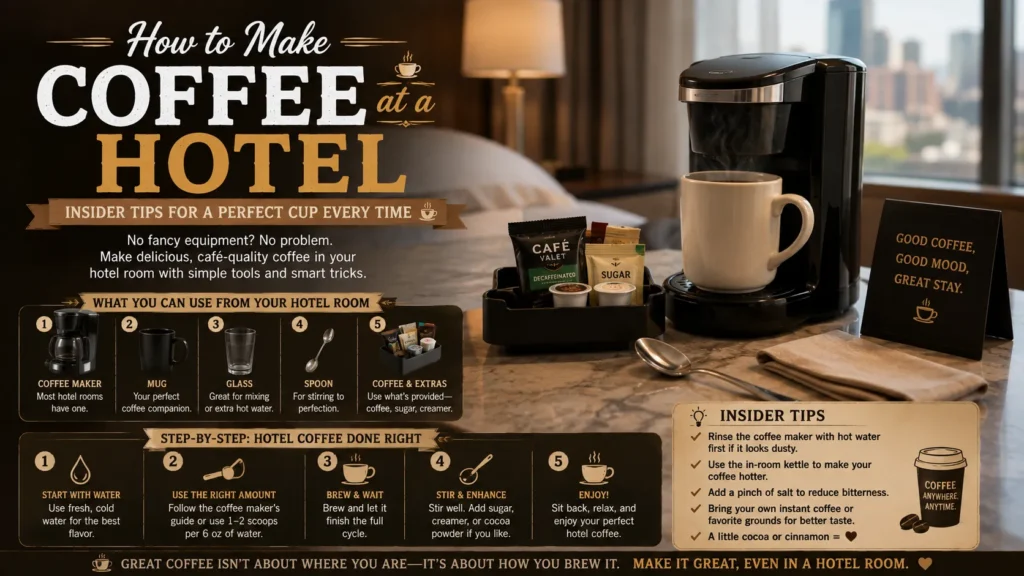
Imagine arriving at your hotel after a long flight, only to find the lobby coffee machine broken and the minibar stocked with stale packets. Knowing How to Make Coffee at a Hotel can turn a frustrating start into a refreshing ritual that fuels your day. In the next few lines you’ll discover practical steps, smart hacks, and the exact tools you need to brew a satisfying cup, no matter where you stay.
Whether you’re a business traveler who needs a reliable caffeine boost or a leisure guest who enjoys a slow morning brew, mastering hotel‑room coffee is easier than you think. This guide walks you through everything from assessing the available equipment to adjusting brew strength with the amenities at hand, ensuring you never settle for a subpar sip again.
Key Takeaways
- Identify the coffee‑making tools already in your room or bring a lightweight travel kit.
- Use the hotel’s hot water kettle or microwave to reach the ideal brewing temperature (195‑205 °F).
- Measure coffee grounds with a spoon or a portable scale for consistent strength.
- Enhance flavor with in‑room items like cinnamon, honey, or a splash of milk from the mini‑fridge.
- Avoid common pitfalls such as over‑extracting with boiling water or using stale grounds.
Why Hotel Coffee Can Be Tricky
Hotel rooms are designed for convenience, not specialty brewing. Often the only appliance is a small kettle or a single‑serve pod machine that may be out of order. Consequently, travelers must adapt their usual routine to the limited resources available.
Furthermore, the quality of supplied coffee packets varies widely, ranging from decent medium‑roast to bland, over‑processed grounds. Understanding these limitations helps you plan a workaround that still delivers a satisfying cup.
Essential Tools You Might Find (or Bring)
Start by scanning the room for a kettle, coffee maker, French press, or even a simple mug and spoon. If the hotel provides a kettle, you already have the most important piece: hot water.
In addition, consider packing a compact travel kit: a reusable filter, a small scoop, and a sealable bag of your favorite beans. These items add virtually no weight but give you full control over grind size and freshness.
How to Make Coffee at a Hotel: Step‑by‑Step Guide
This is the core procedure you’ll follow when you have access to hot water and a mug.
- Measure approximately one to two tablespoons of ground coffee per six ounces of water, adjusting to taste.
- Heat water in the kettle until it reaches just below boiling (around 200 °F). Do not use water that has been rolling boil for more than a few seconds, as this can scorch the grounds.
- Place the grounds in a filter (paper or reusable) over your mug, then slowly pour the hot water in a circular motion, saturating all particles.
- Allow the coffee to drip for about three to four minutes, then remove the filter and enjoy.
- If you prefer a stronger brew, increase the coffee‑to‑water ratio or extend the steep time by thirty seconds.
Therefore, even with only a kettle and a mug, you can replicate a pour‑over experience that rivals many café offerings.
Alternative Brewing Methods When Equipment Is Limited
Sometimes the room lacks a filter or a kettle. In those cases, improvisation is key.
One effective method is the “cowboy coffee” technique: add grounds directly to hot water, stir, let sit for four minutes, then gently pour the liquid into a mug, leaving the sediment behind. Consequently, you avoid the need for any filter.
Another option is to use the hotel’s iron (if available) as a makeshift hot plate. Place a small, heat‑safe container with water and grounds on the iron’s lowest setting, monitor closely, and remove once brewing is complete. However, exercise caution and never leave the iron unattended.
Tips for Enhancing Flavor with Hotel Amenities
Hotels often stock items that can elevate a simple cup.
- A dash of cinnamon or cocoa powder from the mini‑bar adds warmth and depth.
- If the room offers honey or agave syrup, use it instead of sugar for a smoother sweetness.
- Many mini‑fridges contain milk, cream, or even flavored creamers; a splash transforms black coffee into a latte‑style drink.
- Finally, a slice of lemon or a few drops of vanilla extract can brighten the profile without overpowering the coffee.
In addition, consider asking housekeeping for an extra mug or a clean spoon; they’re usually happy to help.
Common Mistakes to Avoid
Even seasoned travelers slip up when brewing in unfamiliar settings.
First, using water that’s too hot leads to bitter, over‑extracted coffee. Always let boiled water cool for thirty seconds before pouring.
Second, re‑using the same grounds multiple times results in weak, flat flavor. Discard grounds after each brew.
Third, neglecting to clean your makeshift filter or mug can impart off‑tastes from previous uses. Rinse quickly with hot water before starting.
Therefore, a quick sanity check of temperature, freshness, and cleanliness saves you from a disappointing cup.
Staying Consistent: Maintaining Your Coffee Routine on the Road
Consistency builds confidence, especially when you’re away from home.
Keep a small log in your phone noting the coffee‑to‑water ratio, brew time, and any flavor tweaks you enjoyed. Over time, you’ll develop a personal “hotel recipe” that works across different chains.
Furthermore, share your tips with fellow travelers in the hotel lounge or online forums; exchanging ideas often uncovers hidden amenities like a communal espresso machine.
As a result, your coffee ritual becomes a reliable anchor, no matter how frequently you change zip codes.
Related Coffee Topics You May Like
Love Your Hotel Brew?
Never settle for bland lobby coffee again. Download our free “Travel‑Ready Coffee Checklist” and start mastering How to Make Coffee at a Hotel on every trip.
What is the best water temperature for brewing coffee in a hotel room?
The ideal range is between 195 °F and 205 °F (90 °C–96 °C). Water that has just stopped boiling but hasn’t cooled for too long extracts flavors without scorching the grounds.
Can I use the hotel’s microwave to heat water for coffee?
Yes. Microwave a mug of water for about 60‑90 seconds, then check the temperature. Avoid superheating by placing a wooden stir stick in the mug while heating.
A reusable metal or cloth filter works best because it doesn’t rely on disposable supplies. If you only have paper filters, bring a few from home or ask the front desk for extras.
How do I make cold brew coffee using only hotel amenities?
Combine coarsely ground coffee with cold water in a sealed container (a travel bottle works). Let it steep in the refrigerator for 12‑18 hours, then strain using a spoon or a makeshift cloth filter.
Are there any hotel‑provided items I should avoid adding to my coffee?
Avoid artificial sweeteners that contain aspartame if you notice an aftertaste, and steer clear of flavored creamers that list high fructose corn syrup as the first ingredient, as they can mask the coffee’s natural profile.

Moses Anthony
Moses Anthony is a coffee enthusiast and home brewing specialist with over 7 years of hands-on experience testing coffee beans, espresso machines, grinders, and brewing methods. He has spent years experimenting with pour-over, French press, drip coffee, and espresso to help everyday coffee drinkers brew better coffee at home.At Best Coffee Guide, Moses focuses on practical brewing tips, honest product comparisons, and beginner-friendly coffee education based on real testing and research. His goal is to simplify coffee brewing and help readers make better choices with confidence.
How to Make Coffee Easy: Effortless Tips for Barista‑level Brew at Home
September 17, 2026
No Comments
Read More » Mastering the Art: How to Make Coffee Darker for a Richer, Bold Brew
September 16, 2026
No Comments
Read More » 
How to Make Coffee Dip: Easy Steps to Create a Rich, Coffee-infused Spread
September 15, 2026
No Comments
Read More » Latest Pots
Imagine waking up, craving a rich cup, but feeling overwhelmed by complicated machines and vague recipes. You want great coffee without the fuss, and you deserve a method that works every single time. This guide shows you exactly how to make coffee easy, turning morning…
Many coffee lovers crave a cup that looks as deep and intense as its flavor promises. If your brew often turns out light or washed out, you’re not alone—achieving that striking darkness involves more than just adding extra grounds. In the next few paragraphs we’ll…

Explore the world of coffee with honest reviews and practical advice. Find your perfect cup, one bean and machine at a time.
Main Menu
Top Categories
Newsletter
Sign up our newsletter to get updated information, promo or insight for free.
Copyright © 2025 Best Coffee Guide, All rights reserved.