

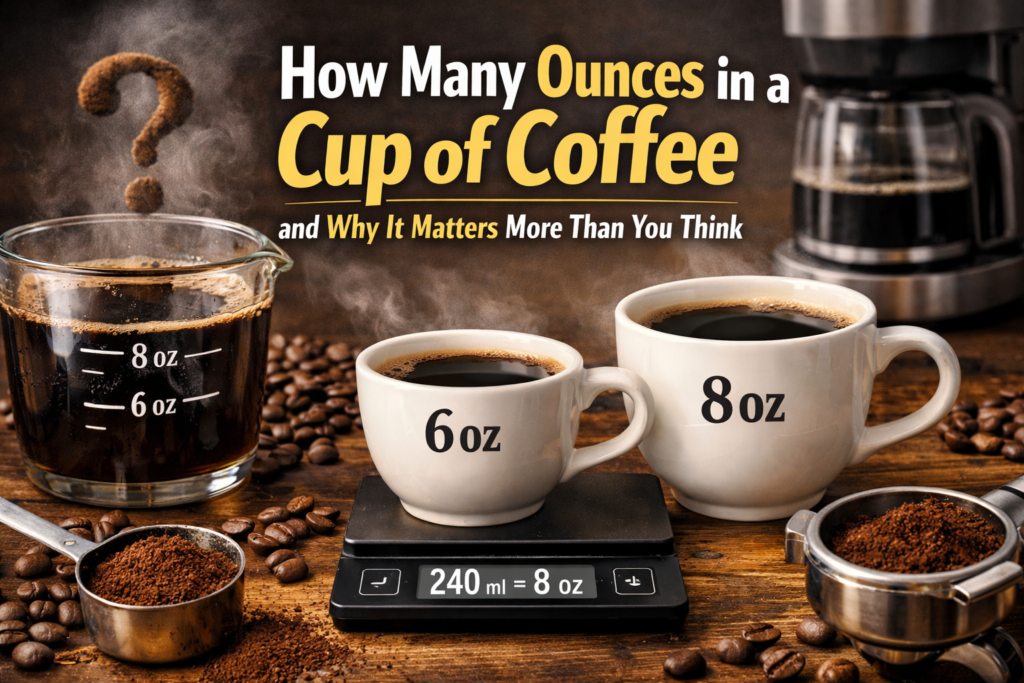
Have you ever stood in your kitchen holding a mug and wondered if you are actually drinking one cup of coffee or something much more? You follow a recipe. You measure carefully. Yet your coffee tastes stronger or weaker than expected. The confusion usually starts with one simple question: how many ounces in a cup of coffee?
Many people assume a cup always means the same thing. But in reality, coffee measurements vary between home kitchens, coffee makers, cafes, and global brands. This small misunderstanding can change flavor, caffeine intake, calorie count, and even your daily health goals.
If you have ever asked yourself whether your cup is six ounces or eight ounces, how much caffeine you are really consuming, or why your Starbucks size feels different from your home brew, this detailed guide will clear everything. By the end, you will confidently measure your coffee without guesswork.
The simple and direct answer to how many ounces in a cup of coffee depends on context. In standard US kitchen measurement, one cup equals eight fluid ounces. However, when it comes to coffee makers and traditional coffee standards, one cup often equals six fluid ounces.
This difference creates confusion. Many coffee machines label one cup as six ounces because older coffee brewing standards defined a cup that way. On the other hand, measuring cups in your kitchen follow the eight ounce rule.
So when someone asks about how many ounces in a cup of coffee, the most accurate response is this: a standard measuring cup is eight ounces, but a traditional coffee cup is six ounces. This distinction matters because it directly affects how much coffee grounds you use and how strong your brew becomes.
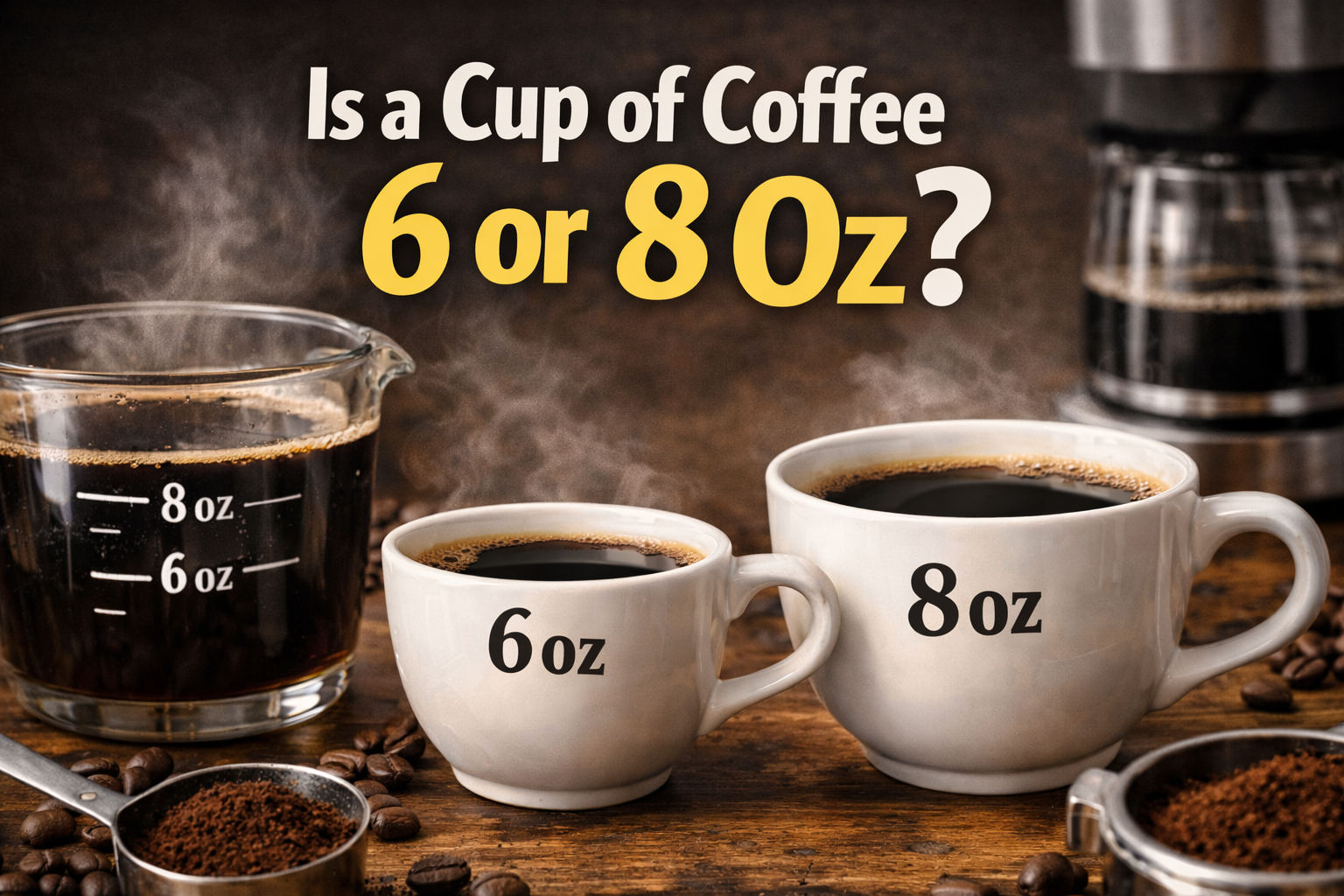
This question causes the most confusion in homes and offices. The truth is that both answers are correct depending on the situation.
In coffee brewing tradition, one cup equals six ounces. Many drip coffee machines still follow this format. That means if your machine says it makes ten cups, it is actually making sixty ounces, not eighty.
In kitchen measurement standards, one cup equals eight ounces. Recipes that mention one cup of liquid always refer to eight ounces.
When people misunderstand this difference, they often brew coffee that tastes too weak or too strong. Knowing whether your reference is six or eight ounces helps you adjust coffee grounds correctly and control flavor. Understanding this measurement clarity supports better brewing results and improves your daily coffee experience.
Caffeine content depends on brewing method, bean type, and serving size. When people ask how much caffeine is in one cup, they often forget that cup size changes the answer.
A standard eight ounce cup of brewed coffee contains around 95 milligrams of caffeine on average. If the cup is six ounces, the caffeine amount drops proportionally.
Stronger brewing methods like espresso contain more caffeine per ounce, but smaller serving sizes. Lighter roast coffee often has slightly more caffeine than darker roast when measured by scoop rather than weight.
When calculating caffeine intake, always confirm your serving size. If you are drinking a large mug that holds twelve or sixteen ounces, you are consuming more caffeine than a traditional cup. This awareness helps people manage energy levels, sleep quality, and daily intake safely.

Starbucks does not follow the traditional six ounce coffee cup model. Instead, the company uses specific drink sizes. A Tall at Starbucks contains twelve ounces. A Grande contains sixteen ounces. A Venti hot drink contains twenty ounces. Cold drinks can go even higher.
So when you order what feels like a standard cup at Starbucks, you are often drinking double or triple the size of a traditional coffee cup.
That means when people compare their home brew to a Starbucks serving, they should not assume they are equal. If you want to match caffeine intake, check the ounce size carefully. Understanding how many ounces in a cup of coffee at Starbucks prevents accidental overconsumption of caffeine and calories.
When measuring coffee precisely, grams offer more accuracy than ounces. One cup of brewed coffee weighs about two hundred forty grams because one fluid ounce of water equals roughly thirty grams.
However, if you measure dry coffee grounds, the numbers differ. A standard brewing ratio often recommends fifteen to eighteen grams of coffee per two hundred forty grams of water.
Using grams improves consistency and flavor control. Professional baristas prefer digital scales because scoop measurements vary depending on grind size and bean density. If you want repeatable results at home, measuring coffee and water in grams helps eliminate brewing mistakes.
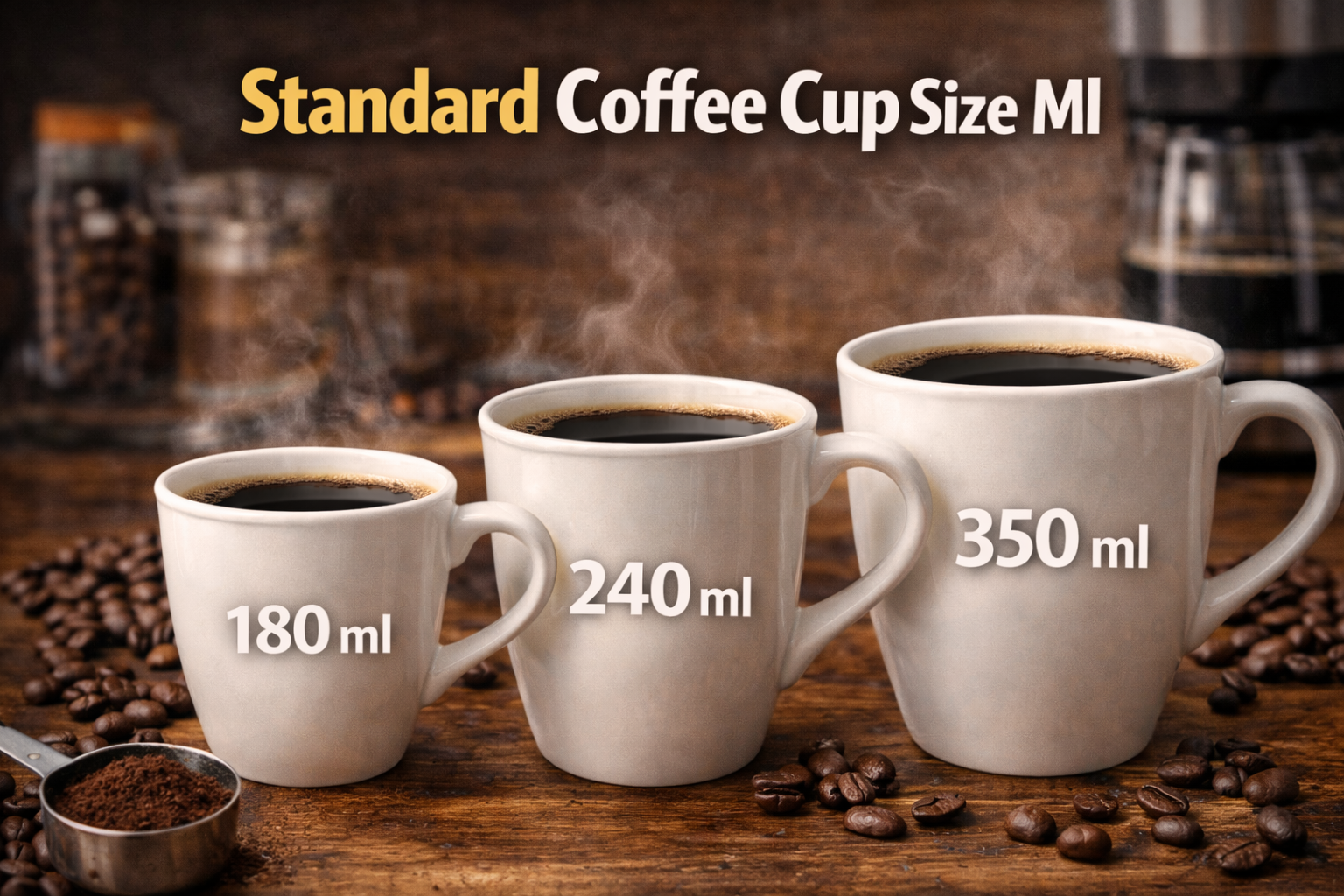
Globally, many countries measure liquids in milliliters rather than ounces. One US measuring cup equals two hundred forty milliliters. A traditional coffee cup often equals around one hundred eighty milliliters, which matches the six ounce model.
When reading international recipes or coffee packaging, you may see ml instead of ounces. Knowing that 240 milliliters equals eight ounces helps you convert easily.
This knowledge is especially useful when buying coffee equipment or following brewing guides from different countries. Clarity in ml measurement helps avoid weak or bitter coffee caused by incorrect water ratios.
A mug is usually larger than a traditional cup. Most household mugs hold between ten and sixteen ounces. This means that when you say you drank one mug of coffee, you likely consumed more than one standard cup. If your mug holds fourteen ounces, that equals almost two traditional six ounce cups.
Many people underestimate caffeine intake because they count mugs instead of ounces. For accurate tracking, measure your mug once with water and note its capacity. Knowing how many ounces in a cup of coffee compared to your mug size ensures better awareness of your daily consumption.

A large cup varies depending on where you buy it. In many cafes, a large size ranges from sixteen to twenty ounces. In fast food chains, large coffee servings may exceed twenty ounces. This is significantly more than the six ounce traditional coffee cup.
If you prepare a large coffee at home using a sixteen ounce mug, you are drinking almost three traditional cups in one serving. Understanding these portion sizes helps control caffeine, manage hydration, and maintain balanced energy throughout the day.
The final answer to what size is a cup of coffee depends entirely on context.
Because of these differences, always clarify what definition you are using. This simple step eliminates confusion and improves brewing accuracy.
When someone asks about how many ounces in a cup of coffee, the correct answer requires context rather than assumption.
You may wonder why this topic deserves such detailed attention. The reason is simple. Measurement affects taste, strength, caffeine level, calorie intake, and even budget.
If you use too much water, coffee tastes weak. If you use too little, it tastes bitter. If you drink oversized servings daily, caffeine intake may exceed healthy limits.
By clearly knowing how many ounces in a cup of coffee, you gain control over flavor and health. You brew consistently. You avoid waste. You understand your caffeine consumption accurately. Small clarity creates big improvements in your daily routine.
Both can be correct. In traditional coffee brewing, a cup is 6 ounces. In standard kitchen measurements, a cup is 8 ounces.
A regular coffee cup, in brewing terms, is usually 6 ounces, but most home mugs range from 8 to 12 ounces.
For traditional brewing standards, 6 ounces is considered one cup. For general liquid measurement, 8 ounces is standard.
No, 12 ounces is larger than a standard coffee cup. It is closer to a medium or cafe size serving.
A standard coffee cup size in classic brewing is 6 ounces, while a measuring cup equals 8 ounces or about 240 milliliters.
Yes, 20 ounces is a large serving. It equals more than three traditional 6 ounce cups and may contain a high amount of caffeine depending on the brew strength.
Coffee feels simple, but its measurements create widespread confusion. The phrase how many ounces in a cup of coffee does not have one universal answer. A kitchen cup equals eight ounces. A traditional coffee cup equals six ounces. Cafe servings often exceed twelve ounces.
Once you understand these distinctions, you can measure accurately, brew confidently, and control caffeine intake wisely. Whether you track grams, milliliters, or ounces, clarity in measurement improves both taste and health. Now, when someone asks you about coffee cup size, you will not guess. You will explain it with confidence and precision.





Contact Us Jump To What Is a Light Roast Coffee? A Complete Guide to Flavor, Caffeine, Benefits, and Brewing Coffee lovers often hear terms like light roast, medium roast, and dark roast, but many people still wonder, what is a light roast coffee and how…

Contact Us Jump To How Much Caffeine in Decaf Coffee? Everything You Need to Know If you enjoy coffee but want to reduce your caffeine intake, you have probably wondered how much caffeine in decaf coffee actually remains. Many people believe decaf coffee is completely…

Contact Us Jump To Where Does Coffee Come From? The Fascinating History, Origins, and Journey of Coffee Around the World If you’ve ever wondered where does coffee come from, you’re not alone. Coffee is one of the world’s most popular beverages, enjoyed by millions of…

Explore the world of coffee with honest reviews and practical advice. Find your perfect cup, one bean and machine at a time.