


Learning how to use a Keurig coffee machine takes less than two minutes: fill the water reservoir, pop in a K-Cup pod, close the handle, pick your cup size, and press the brew button. Hot coffee streams into your mug almost instantly. This guide walks you through the first setup, the daily brew, cleaning, and a few tricks that make the coffee taste noticeably better.
Before brewing, get the machine ready:
If your coffee trickles slowly, the entry or exit needle in the pod holder is probably clogged with grounds. Unplug the machine and gently clear the needle holes with a straightened paperclip. This one fix solves most “slow brew” complaints.
Mineral scale from your water will eventually slow the brew and cool the water. Descale every three to six months:
The brewing steps are the same everywhere, but a few popular models differ:
| Model | What to know |
|---|---|
| K-Mini | No reservoir — pour in exactly the water you want to brew for every cup. Great for small spaces. |
| K-Classic | 48 oz reservoir, simple button controls, three cup sizes. Good for families and offices. |
| K-Cafe | Adds a built-in milk frother plus a “Shot” button for lattes and cappuccinos. |
Machine won’t brew? Check that the reservoir is seated correctly and the handle is pushed fully down — a slightly open lid stops the cycle.
Short cup? Descale the machine; mineral buildup is the usual cause. If that doesn’t fix it, clean the needles with a paperclip.
Coffee not hot enough? Descale first, then try a hot-water cycle before brewing to warm the internals.
Use filtered water rather than plain tap for better flavour and less scaling. Skip purely distilled water — without minerals, coffee extracts poorly and can taste flat or bitter, and some Keurig sensors rely on mineral content to detect the water level.
No. Once punctured and brewed, the grounds are spent. A second pass gives you weak, watery, bitter coffee.
Buy a reusable My K-Cup filter. Fill it with medium-coarse ground coffee to the fill line, place it in the pod holder, and brew as normal.
Every three to six months, depending on your water hardness and how often you brew. Slow brewing or short cups are your warning signs.
Mineral buildup on the heating element is the most likely cause — descale the machine. A hot-water preheat cycle before brewing also helps.
Many modern K-Cups use recyclable plastic, but check your local curbside rules. Let the pod cool, peel off the foil lid, empty the grounds (great for compost), rinse the cup, then recycle it.




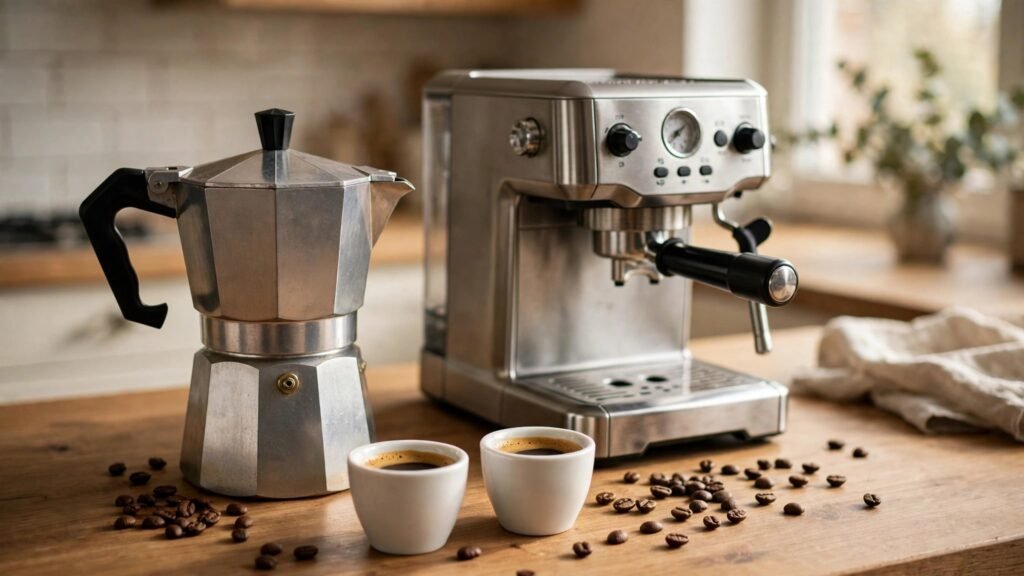
Jump To Moka Pot vs Espresso Machine: The Pressure Story (and Why It Decides Everything) The Short Answer A moka pot cannot make real espresso, and an espresso machine cannot match a moka pot for simple, strong coffee on a small budget. The moka pot…

Jump To Coffee Tasting Notes Explained: How to Read the Flavor Wheel on Your Next Cup The Short Answer Here is the coffee tasting notes flavor wheel explained in one sentence: the notes on a coffee bag describe what the coffee reminds you of, not…

Jump To How to Taste Coffee at Home: Cupping Without Any Special Gear The Short Answer Learning how to taste coffee at home takes two bowls, two spoons, hot water and about 15 minutes. You brew two coffees side by side, break the crust that…

Explore the world of coffee with honest reviews and practical advice. Find your perfect cup, one bean and machine at a time.