
Ever stood at a café counter hesitating between the silky latte and the frothy cappuccino? Here is the short answer: a latte is an espresso drink heavy on steamed milk with just a thin layer of foam, while a cappuccino uses equal thirds of espresso, steamed milk, and thick foam. Same caffeine (with the same number of shots) — totally different texture and taste. The rest of this guide breaks down every difference so you can order with confidence.
Key takeaways
- Latte: roughly 1 part espresso to 5–6 parts steamed milk, finished with a thin layer of micro-foam. Creamy, mild, and milky.
- Cappuccino: roughly equal thirds of espresso, steamed milk, and dense foam. Stronger coffee flavor, airy and velvety.
- Caffeine is the same when both use the same number of espresso shots — a single shot carries about 64 mg.
- Pick the latte if you like a smooth, comforting cup; pick the cappuccino if you want the espresso to shine through foam.
Where they come from
Both drinks were born in Italy’s espresso culture. The cappuccino came first — its name comes from the Capuchin friars, whose brown robes matched the drink’s color. The latte (“latte” simply means milk in Italian) grew up as a milder, milk-forward breakfast drink. When espresso machines spread beyond Italy, cafés everywhere standardized the ratios, and the latte vs cappuccino distinction we know today was set.
Ingredients and ratios
This is the heart of the latte vs cappuccino debate: proportion.
- A classic latte starts with one or two shots of espresso and fills most of the cup with steamed milk, topped with only about a centimeter of smooth micro-foam.
- A classic cappuccino follows the traditional 1:1:1 rule — equal thirds of espresso, steamed milk, and foam, served in a smaller cup (around 150–180 ml versus 240–360 ml for a latte).
The extra milk in a latte softens the espresso’s edge; the cappuccino’s smaller milk volume lets the espresso’s flavor stand out. Because the latte is a bigger, milkier drink, it also ends up with a little more protein and natural milk sugars.
Texture and foam
Texture is where you feel the latte vs cappuccino difference most clearly.
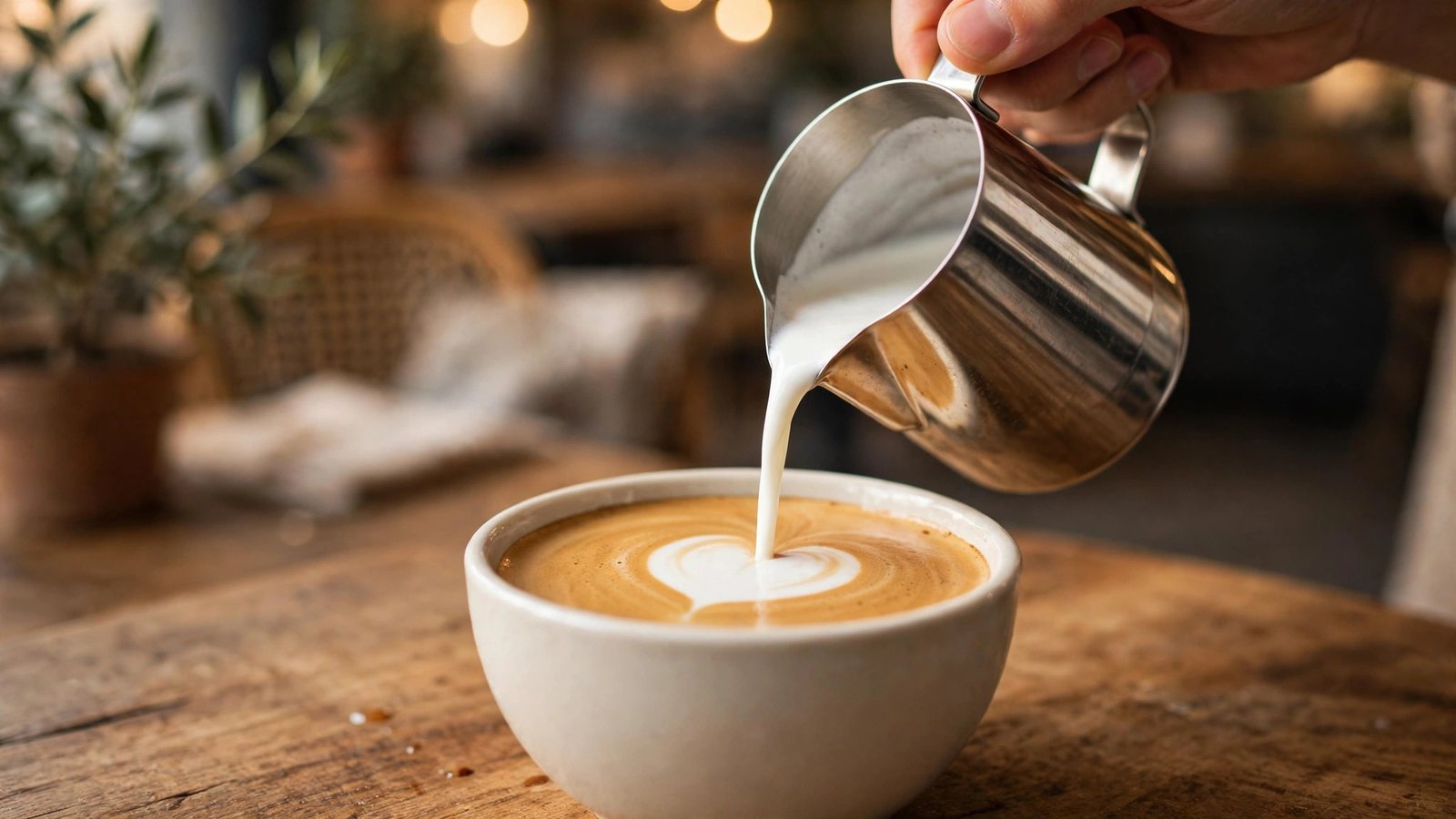
- Latte foam is silky micro-foam — fine, glossy bubbles just thick enough to support latte art. The whole drink feels smooth and uniform.
- Cappuccino foam is thicker, drier, and spoonable, forming a distinct dome on top of the drink. It feels airy and almost pillowy.
Baristas control this with the steam wand: deeper aeration builds the cappuccino’s sturdy foam, while gentle aeration with a swirling “whirlpool” motion gives the latte its satin-like milk.
Flavor profiles
More milk means milder flavor — that is the whole story. A latte tastes sweet, creamy, and rounded, with the espresso sitting in the background. A cappuccino tastes bolder and more coffee-forward, with brighter notes and a touch of bitterness balanced by the foam.
Flavored syrups or spices shift both drinks, but the underlying latte vs cappuccino contrast stays the same: milk-forward comfort versus espresso-forward character.
How a barista makes each one
- Pull the espresso. Both drinks start with a fresh shot (about 30 ml for a single, 60 ml for a double).
- Steam the milk to about 60–65 °C. For a latte, introduce just a little air; for a cappuccino, aerate longer so the milk grows by roughly a third.
- Pour. For a latte, pour the steamed milk over the espresso and finish with a thin cap of foam. For a cappuccino, pour milk and foam together so the cup fills in thirds, and spoon the extra foam on top.
Calories and nutrition
Since a latte uses more milk, it carries more calories — roughly:
- Whole-milk latte (12 oz): about 150–190 kcal
- Whole-milk cappuccino (6–8 oz): about 70–120 kcal
Switching to skim or oat milk trims the numbers for both. If caffeine is what you are watching, ignore the milk entirely — it is the shot count that counts.
Which one should you order?
- Choose the latte if you like a creamy, gentle drink, if espresso usually tastes too strong for you, or if you want something you can sip slowly.
- Choose the cappuccino if you want to taste the espresso, love a thick foam cap, or prefer a smaller, more concentrated cup.
Italians traditionally drink cappuccinos in the morning (milk is considered a breakfast thing there), but in most cafés worldwide you can order either all day. The best approach? Try both over a few days and see which one you reach for again.
Myths worth dropping
Myth: A latte has more caffeine than a cappuccino.
Both start from the same espresso, so with equal shot counts the caffeine is equal. Milk does not dilute caffeine.
Myth: Foam is just decoration.
Foam carries aroma and changes how the drink feels in your mouth. The cappuccino’s thick foam is a big part of why it tastes richer.
Myth: You cannot make latte art on a cappuccino.
The thin micro-foam of a latte makes detailed art easier, but baristas can still pour simple shapes — hearts, leaves — onto a cappuccino if the foam is poured fresh.
Latte vs cappuccino: side-by-side
| Aspect | Latte | Cappuccino |
|---|---|---|
| Espresso | 1–2 shots | 1–2 shots |
| Steamed milk | Majority of the cup | One third |
| Foam | Thin layer of micro-foam | Thick, dense dome (one third) |
| Typical serving size | 240–360 ml | 150–180 ml |
| Taste | Creamy, mild, sweet | Bold, coffee-forward |
| Calories (whole milk, approx.) | 150–190 | 70–120 |
| Best for | Smooth sipping | Espresso lovers |
Making them at home
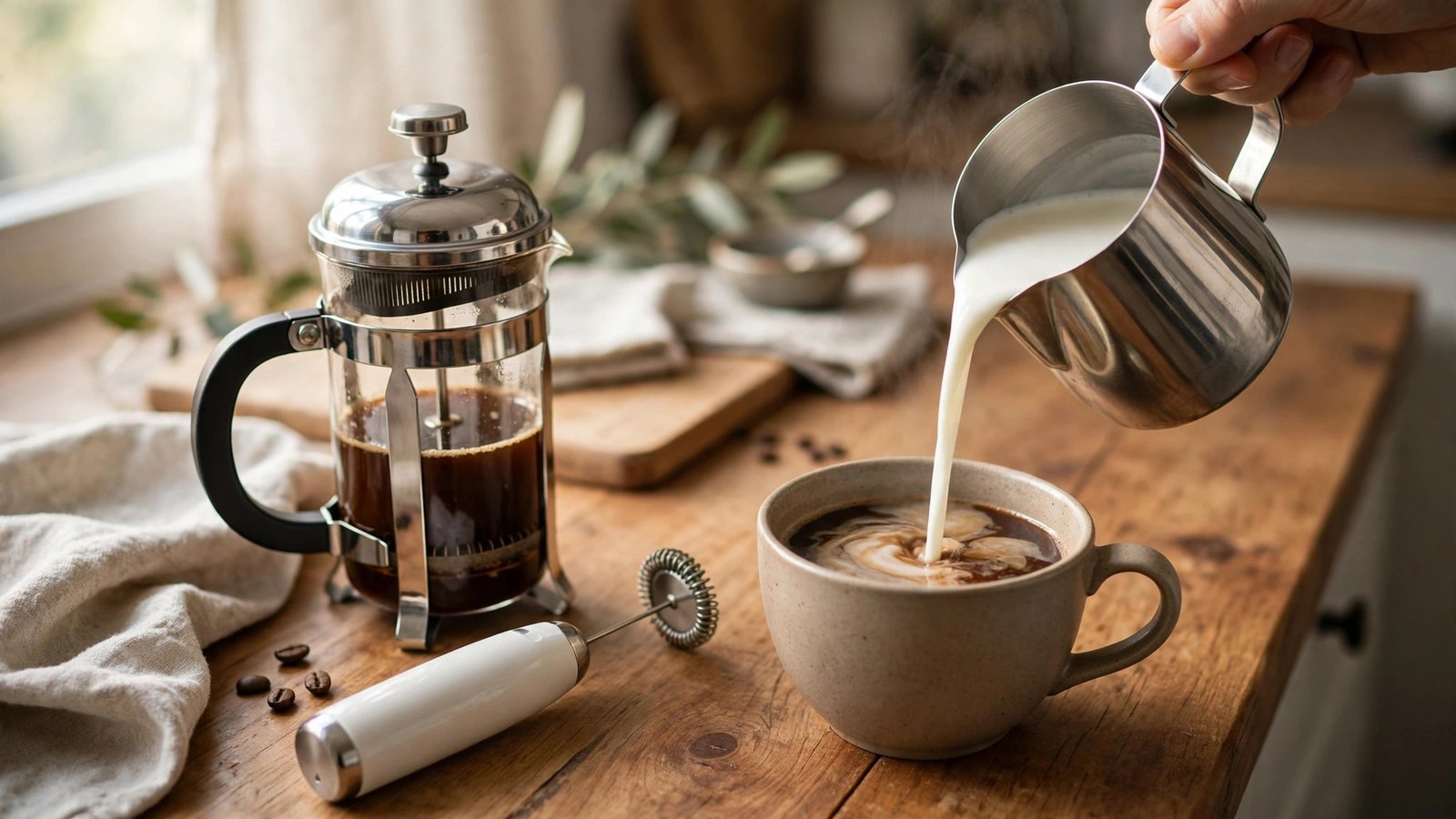
You do not need a café machine to get close. Fresh beans, a consistent espresso shot (aim for roughly 18–20 g of ground coffee and a 25–30 second pull for a double), and cold milk make most of the difference. Start with the steam wand just under the milk’s surface to add air, then sink it deeper to create the whirlpool that smooths the milk. For a latte, stop aerating early; for a cappuccino, keep going until the milk volume grows noticeably. Pour slowly, and do not stress about latte art on your first tries — getting the texture right matters far more.
What to pair with them
A latte’s mellow sweetness works well with buttery pastries — croissants, cinnamon rolls, fruit scones. A cappuccino’s bolder edge stands up to chocolate biscotti, almond muffins, or anything cocoa-heavy. Serve both in a warmed cup so they do not cool too fast.
FAQ
What is the main difference between a latte and a cappuccino?
The milk-to-espresso ratio and the foam. A latte is mostly steamed milk with a thin foam layer; a cappuccino is equal thirds of espresso, steamed milk, and thick foam. That gives the latte a creamier, milder taste and the cappuccino a stronger, airier one.
Which has more caffeine, latte or cappuccino?
Neither, as long as both use the same number of espresso shots. A single espresso shot has about 64 mg of caffeine, and the extra milk in a latte does not change that.
Can I make latte art on a cappuccino?
Simple designs, yes — a skilled pour can leave a heart or leaf on fresh cappuccino foam. Detailed art is easier on a latte’s smooth micro-foam.
Is a cappuccino healthier than a latte?
It usually has fewer calories because it uses less milk — roughly 70–120 kcal versus 150–190 kcal for a typical whole-milk latte. Both are similar in protein and calcium relative to the milk used.
Which should I order at a café?
Order a latte if you want creamy and mild; order a cappuccino if you want the espresso flavor up front with plenty of foam. If you are unsure, ask the barista — they taste these all day.