You can make strong, espresso-style coffee without a machine. You cannot make true espresso without one. That distinction matters for this guide. Learning how to make espresso without an espresso machine means getting close. It does not mean faking the real thing. This guide ranks four methods by closeness. It also states plainly what no method can fake.
The Honest Limit First
True espresso needs about 9 bars of pressure. That pressure forces water through fine grounds fast. It pulls out a thick, syrupy shot. It also creates real crema on top. Crema is the golden foam layer on a true shot.
No home method below reaches 9 bars. Moka pots reach roughly 1 to 2 bars. AeroPress reaches a bit more with hard pressing. French press and pour-over reach none at all. That gap is real and worth stating.
What you can get is strong, rich, concentrated coffee. It works well in milk drinks. It works well over ice too. It will not match a true shot sip for sip. Call it espresso-style coffee and enjoy it on its terms.
What Makes Espresso Espresso
Espresso has four traits that set it apart. First, a fine grind gives a huge surface area. Second, high pressure extracts fast and hard. Third, a small yield gives a thick, syrupy body. Fourth, real crema crowns the shot.
Home methods can copy three of those traits. They can use a fine grind. They can use a small yield. They can make a thick, strong cup. They cannot copy high pressure. That missing trait changes flavor and texture.
Pressure pulls out oils and solids fast. It gives espresso its heavy body. It gives the shot its lasting crema. Low-pressure methods brew slower and gentler. They taste cleaner but thinner. That trade is the core of this guide.
The 4 Methods, Ranked by Closeness
1. Moka Pot (Closest)
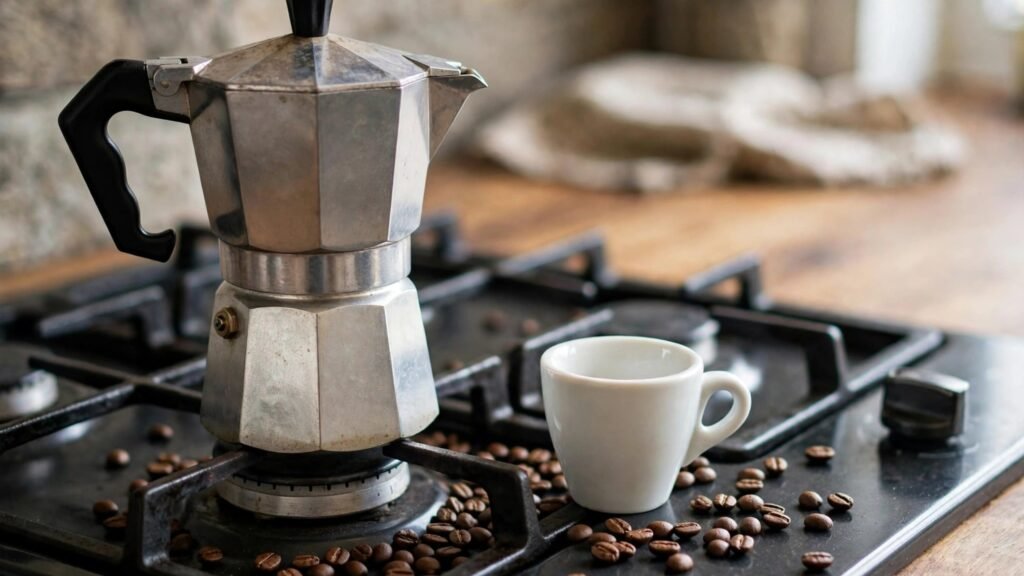
A moka pot brews closest to true espresso. It uses steam pressure to push water up through grounds. It makes a strong, dark, concentrated coffee. It suits milk drinks better than any other method here.
Fill the bottom chamber with hot water to the valve. Add fine grounds to the basket without tamping. Screw the top on tight and heat on medium. Remove the pot when coffee sputters and gurgles. That sputter means the chamber is nearly empty.
Use a fine grind, but not espresso-fine. Espresso-fine grounds can clog the filter plate. A salt-like grind works well here. Do not tamp the grounds down hard. A loose fill lets water pass evenly.
Moka coffee tastes bold and rich. It lacks true crema on top. It may show a thin foam ring instead. That ring fades fast and is not crema. The flavor still works well in lattes.
2. AeroPress (Close Second)
An AeroPress brews a strong, clean concentrate. It uses hand pressure to push water through grounds. It makes a smooth cup with low bitterness. It suits single servings and milk drinks well.
Use a fine grind and a short brew time. Stir the grounds after you add water. Steep for about one minute, then press slowly. Press with steady force for about 30 seconds. Stop pressing when you hear a hiss.
Use a low water dose for a concentrate. A small cup of strong coffee results. Add hot water for an Americano style drink. Add steamed milk for a latte style drink. The AeroPress gives the cleanest cup here.
Its pressure still falls short of true espresso. Hand pressing cannot reach 9 bars. The cup tastes smooth but lighter in body. It makes a great milk base anyway. Many drinkers prefer its clean flavor.
3. French Press (Faux Espresso)
A French press can make a strong, full cup. It uses steeping, not pressure, to brew. It gives a heavy body from metal filtration. It suits bold, chocolatey beans well.
Use a fine grind with care here. Fine grounds slip through the metal filter. They make a silty, muddy cup. A medium-fine grind balances strength and clarity. Steep for three to four minutes total.
Use a high coffee dose for strength. More coffee per cup gives a thicker brew. Press slowly to limit silt in the cup. Pour gently and leave the last sip behind. That last sip holds most of the silt.
French press coffee tastes rich and full. It lacks crema and syrupy thickness. It works in milk drinks with bold beans. It suits a mocha style drink well. It suits a straight sip less well.
4. Pour-Over (Farthest, But Useful)
A pour-over brewer makes the thinnest cup here. It uses gravity, not pressure, to brew. It gives a clean, bright, tea-like coffee. It suits light roasts and fruity beans well.
Use a fine grind and a slow, careful pour. Use a low water dose for a concentrate. A small, strong cup results from less water. It still tastes lighter than moka coffee. It will not fool any espresso drinker.
Pour-over concentrate works in iced drinks well. It works with milk in a pinch too. It suits drinkers who like clarity over body. It ranks last here for closeness to espresso. It ranks first for clean, bright flavor.
Comparison Table: Method by Method
| Method | Pressure level | Body | Crema? | Best use |
|---|---|---|---|---|
| Moka pot | Low (steam) | Thick, bold | No, thin foam only | Milk drinks, straight sips |
| AeroPress | Low (hand) | Smooth, medium | No | Milk drinks, Americanos |
| French press | None (steep) | Full, heavy | No | Bold milk drinks, mochas |
| Pour-over | None (gravity) | Light, clean | No | Iced drinks, bright beans |
How to Build a Milk Drink From These
Use a 1:2 coffee-to-milk ratio as a start. One part strong coffee plus two parts milk. Heat milk to about 60 degrees for best taste. Froth it lightly for a latte style drink. Froth it thick for a cappuccino style drink.
Moka coffee handles milk best of the four. Its bold flavor cuts through milk well. AeroPress coffee gives a smoother milk drink. French press coffee suits a mocha best. Pour-over coffee suits a light iced latte best.
Taste and adjust the ratio to your liking. More coffee gives a stronger drink. More milk gives a softer drink. No ratio is wrong here. Your taste sets the final mix.
Mistakes That Weaken the Cup
- Using a coarse grind for a concentrate brew.
- Tamping moka grounds hard and blocking flow.
- Pressing an AeroPress too fast and hard.
- Steeping French press coffee far too long.
- Using too much water for a concentrate target.
- Expecting true crema from a low-pressure method.
Grind fine, dose high, and keep water low. Those three habits make the strongest cup. Taste after each change you make. Small shifts change a concentrate fast.
Common Questions
Can I get real crema without a machine?
No, not true crema. Moka pots make a thin foam ring. It fades fast and lacks crema texture. True crema needs high pressure extraction. Enjoy the flavor and skip the foam chase.
Which method is best for a latte?
The moka pot works best for lattes. Its bold flavor stands up to milk. The AeroPress gives a smoother latte too. Pick moka for boldness and AeroPress for smoothness.
What beans work best for espresso-style coffee?
Medium to dark roasts work best here. They give chocolate and caramel notes. They cut through milk better than light roasts. Light roasts taste thin in milk drinks. Save light roasts for pour-over brewing.
Should I buy a machine instead?
Buy one if you drink espresso daily. A machine gives true pressure and crema. A moka pot covers weekly cravings well. Start with a moka pot and see how often you use it.
For machine types and picks, see our guide to the best espresso machine. For AeroPress steps, see how to make coffee aeropress. Both guides pair well with this one.
Final Takeaway
No machine does not mean no strong coffee. Moka pots get closest to true espresso. AeroPress gives the cleanest concentrate. French press gives bold body. Pour-over gives bright clarity.
None of these makes true espresso. All of them make good coffee. Pick by taste and by gear you own. Brew strong, keep water low, and enjoy it.