Which Coffee Brewing Method Is Right for You? (Answer 5 Questions, Get Your Method)
The Short Answer
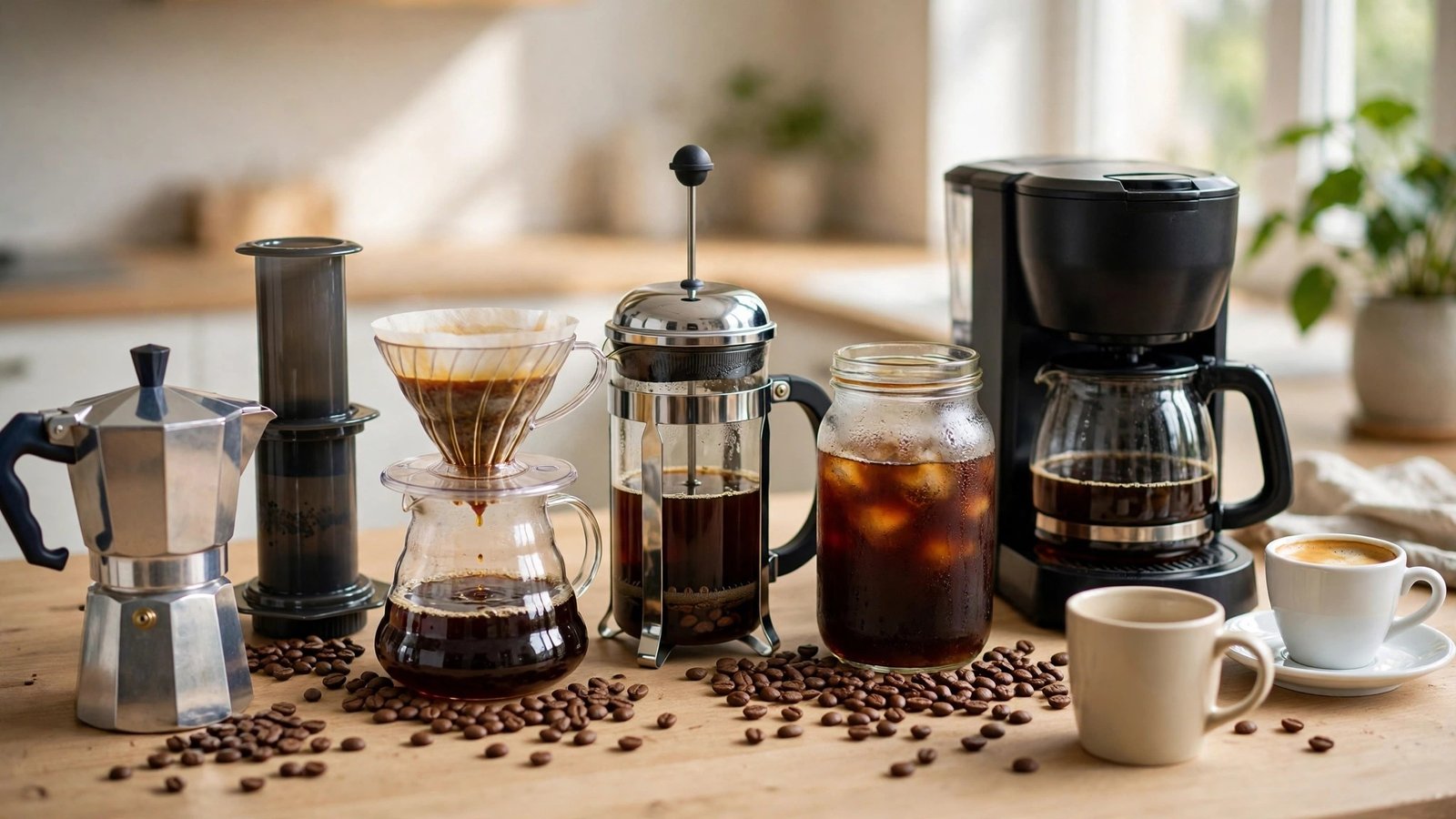
Which coffee brewing method is right for you? Answer five questions — what you want it to taste like, how much time you have, what you can spend, how much effort you want to learn, and how many cups you make — and the matrix below points to one method. Most people land on French press or drip; the rest of this guide shows you why, and what to buy first.
There is no single best method, only the one that fits your mornings. A method that makes a wonderful cup but takes twenty minutes you do not have will sit in a cupboard. A cheap method that makes coffee you do not enjoy is not a bargain. Match the method to your life first, and the coffee takes care of itself.
The Decision Matrix
This is the whole guide in one table. Find your row by reading across the five questions — taste, time, budget, skill, and servings — and the method that matches most of your answers is your method.
| Method | Taste | Active time | Typical gear cost | Skill needed | Servings |
|---|---|---|---|---|---|
| Pour-over | Clean, bright, sweet finish | 2–4 minutes | Low | Medium — steady pouring | 1–2 cups |
| French press | Rich, full-bodied, chocolatey | 4 minutes | Low | Low — add water, wait, press | 1–4 cups |
| Espresso | Intense, syrupy, crema on top | 25–30 seconds a shot | High | High — grind, tamp, dial in | 1 shot at a time |
| Cold brew | Smooth, mellow, low-acid | 12–24 hours (mostly waiting) | Low | Low — but plan ahead | A batch, for days |
| Drip machine | Balanced, familiar, easy | Under a minute to set up | Low–medium | Low — press a button | 1 cup to a full carafe |
| AeroPress | Clean and strong, very forgiving | A couple of minutes | Low | Low — hard to get wrong | 1 cup |
| Moka pot | Strong, dark, espresso-like | 3–5 minutes | Low | Low–medium — heat control | 1–3 small cups |
If one row matches four or five of your answers, that is your method. If two rows tie, pick the cheaper one — you can always add a second method later, and most coffee lovers eventually own two.
Question 1: What Do You Want It to Taste Like?
Taste is the first question because it is the one you live with every morning. A method shapes flavour more than the beans do, so start here and let the rest follow.
- Clean and bright, tasting the coffee itself — pour-over. Hot water passes through the grounds once, so delicate floral and citrus notes come through clearly. It is the best way to explore single-origin beans.
- Rich and full-bodied, a comforting mug — French press. The grounds steep directly in the water, so more oils reach the cup. The result is heavier, with deep chocolatey, nutty flavours that suit dark roasts.
- Intense, the strongest flavour per sip — espresso. Nothing else makes a syrupy, concentrated shot with real crema, and it is the base for lattes and cappuccinos.
- Smooth and easy on the stomach — cold brew. It trades heat for time and comes out naturally sweet and low-acid.
For the full how-to on each of the four main methods — pour-over, French press, espresso, and cold brew — our guide to the 4 best coffee brewing methods walks through the steps, ratios, and tuning for each one.
Question 2: How Much Time Do You Have in the Morning?
Be honest about this one, because it is where most brewing resolutions die. A method that needs ten calm minutes is a weekend method if your weekday alarm gives you three.
- Under two minutes, half asleep — a drip machine. Press a button and coffee appears; under a minute to set up, from one mug to a full carafe.
- About five minutes — French press or AeroPress. Four minutes of steeping for a press, a couple of minutes for an AeroPress — and most of that time is waiting, not working.
- Ten minutes, and you enjoy the ritual — pour-over. Two to four minutes of active pouring, and the slow pour is the point: a small, calm ritual before the day starts.
- Planned the night before — cold brew. The steep takes 12–24 hours, but your active time is about five minutes, and the concentrate waits in the fridge for days.
Espresso is the odd one out on time: the shot itself takes 25–30 seconds, but grinding, dosing, tamping, and dialling in make it the slowest method per cup once you count the setup.
Question 3: What Is Your Budget?
Good news: most methods are cheap to start. The expensive one is easy to spot, and it is the only one that needs a real budget conversation.
- Under $30 — a French press, a moka pot, or a pour-over dripper with filters. A jar plus a sieve is all cold brew needs. The gear costs less than a week of café coffee.
- $30–$100 — quality and comfort: a good dripper and gooseneck kettle for pour-over, a solid French press that lasts years, or an AeroPress with a proper grinder fund started. This is the sweet spot for most people.
- Over $200 — espresso territory. A real machine plus a grinder that can grind fine enough costs several times what any other method costs, and a cheap espresso machine usually makes worse coffee than a $30 French press.
If your budget is under $200 and you want espresso-style drinks, our guide to the best coffee makers covers the closest affordable options — but know that true espresso needs a bigger budget.
Question 4: How Much Effort Do You Want to Put In?
Some people want a hobby; most people want coffee. There is no wrong answer, but the method has to match the answer.
- Zero learning curve — drip machine, French press, or cold brew. Add grounds, add water, wait, drink. French press is the most forgiving method of all.
- A little practice, big payoff — pour-over and AeroPress. Pour-over asks for a steady pouring hand and a bit of timing; within a week the skill is yours. AeroPress is nearly as forgiving as a French press, with a little more control if you want it.
- A genuine hobby — espresso. Grinding fine enough, dosing 18–20 grams, tamping evenly, and adjusting the grind for every new bag — espresso asks the most of you, and teaches you the most about extraction.
It is also the method most likely to frustrate someone who just wanted a quick cup before work — so only pick it if the hobby part appeals to you.
Question 5: How Many Cups Are You Making?
Cups per batch is a practical question, and it rules methods in or out fast. A single-cup method in a four-person household means brewing four times.
- One cup — pour-over, AeroPress, moka pot, or espresso. Single-cup methods by nature: one excellent cup, made fresh, rather than a pot of average coffee.
- Two people, or one slow morning — French press or a small drip machine. A press makes 1–4 cups in one go; a 5-cup drip brewer covers a couple without waste.
- A household, or a pot that lasts all morning — drip machine or cold brew. A 10–12 cup drip brewer fills a carafe for a family, and one cold brew steep covers several days of iced coffee.
If your household cannot agree on one way to brew, that is a sign to look at a machine that does two jobs — a drip machine with a single-serve side, for example — rather than forcing one method on everyone.
Your Answers, Decoded
Put your five answers together and the pattern usually jumps out — that is how you settle which coffee brewing method is right for you. Here are the most common combinations and the method they point to.
| Your answers | Your method | Why it fits |
|---|---|---|
| Rich taste, 5 minutes, low budget, no learning curve, 1–2 cups | French press | Forgiving, cheap, full-bodied, and the steep does the work |
| Clean taste, 10 minutes, low budget, happy to practise, 1 cup | Pour-over | The only method that shows off origin flavours, for the price of a dripper |
| Intense taste, any time, high budget, loves a hobby, 1 shot | Espresso | Nothing else makes a real shot — but only if the budget and patience are real too |
| Smooth taste, plan ahead, low budget, no learning curve, a batch | Cold brew | Five minutes of work, days of smooth coffee, almost nothing to buy |
| Familiar taste, under 2 minutes, low budget, no learning curve, a full pot | Drip machine | The household workhorse — set it up, press a button, pour for everyone |
| Strong taste, a couple of minutes, low budget, no learning curve, 1 cup | AeroPress or moka pot | Both make one strong cup fast; AeroPress is cleaner, moka pot is darker |
If your answers point in two directions at once — say, clean taste but only two minutes — take the time answer seriously. Taste preferences bend; a morning routine does not. Pick the method that fits your time, and choose beans that lean towards the taste you want.
The One-Method Starter Path
Once you know which coffee brewing method is right for you, start with ONE method. Buying three brewers at once is how people end up with a cupboard full of gear and no favourite cup. One method, one month, and then decide.
- The brewer itself, plus fresh beans
- A way to grind them — a burr grinder matters more than expensive beans
- A scale — weighing coffee and water is the single cheapest upgrade in home brewing, because spoons are inconsistent
Give the method two weeks of daily use before judging it. The first three cups are learning, not verdicts. If after two weeks the coffee still disappoints, change one thing at a time: grind a little finer if it tastes sour or thin, a little coarser if it tastes bitter or harsh. Change one variable, taste, and only then change another.
If You Already Own a Brewer
Already own a drip machine and wondering whether to upgrade? The honest answer is usually no — unless you want a different kind of coffee, not just better coffee. A good drip brewer makes good drip coffee; a pour-over setup next to it makes a different drink, not a better version of the same one.
The upgrade that actually improves every method is a grinder. Freshly ground beans, ground to the right size for your method, change the cup more than any new brewer will. If you own one brewer and want better coffee, spend on the grinder first and the second brewer second.
And if you own a method you never use, ask why before buying another. Usually the answer is one of the five questions: it takes too long, it makes too little, or it asks for skill you do not enjoy practising. That answer is the matrix telling you which coffee brewing method is right for you — listen to it.
The Gear That Matters More Than the Method
First, the grinder. A burr grinder that grinds evenly, set to the right size for your method — coarse like breadcrumbs for French press and cold brew, medium-fine like table salt for pour-over, fine and almost powdery for espresso. An uneven grind gives you sour and bitter in the same cup, and no brewer fixes that.
Second, the water. If your tap water tastes off, your coffee will too — coffee is mostly water. Filtered water is a cheap upgrade that shows up in the cup immediately. For hot methods, stay near 195–205 °F (90–96 °C): too hot pulls out bitterness, too cool gives you sour, thin coffee.
Third, fresh beans, stored properly. An airtight container, away from light, heat, and moisture — and beans roasted within the last few weeks, not months. Stale beans make flat coffee in every method, and no technique rescues them.
Mistakes That Waste Money
| Mistake | What happens | Fix |
|---|---|---|
| Buying three brewers at once | A cupboard full of gear, no favourite cup, and no skill in any one method | Start with one method for a month |
| Buying espresso gear on a pour-over budget | A cheap espresso machine makes worse coffee than a $30 French press | Match the method to your real budget, not your wish list |
| Ignoring the grinder | Uneven grounds give you sour and bitter in the same cup | A burr grinder before a second brewer |
| Choosing by café fashion, not mornings | A method that needs ten calm minutes dies on busy weekdays | Answer the time question honestly first |
| Skipping the scale | Spoons are inconsistent, so the same recipe tastes different every day | Weigh coffee and water — it is the cheapest upgrade there is |
Frequently Asked Questions
Which coffee brewing method is best for beginners?
French press. It needs almost no technique — add coarse grounds, pour hot water, wait four minutes, press. Cold brew is equally simple but needs advance planning; pour-over takes pouring practice; espresso takes real patience. Start with the press and learn what good coffee tastes like first.
Which brewing method makes the strongest coffee?
Espresso is the most concentrated per ounce. But “strong” can also mean caffeine per serving — a big mug of French press can carry more total caffeine than a single espresso shot simply because there is more of it. Grind size, ratio, and serving size matter more than the method alone.
Is pour-over better than French press?
They are different, not better or worse. Pour-over gives a cleaner, brighter cup that highlights origin flavours. French press gives a heavier, richer cup with more body. If you love light, fruity coffees, pour-over will show them off; if you love dark, chocolatey coffees, French press leans into that.
How do I choose between drip and pour-over?
Choose by time and control. Drip is a button press that makes a full pot with no skill; pour-over gives you control over water temperature and pour pattern, but asks for a few minutes of attention. If your mornings are rushed, drip wins; if you enjoy the ritual, pour-over rewards it.
Can one brewing method do everything?
No — and that is why most coffee lovers eventually own two. Espresso makes milk drinks but not a pot for the family; a drip machine makes a pot but not a real shot. Start with the method that fits most mornings, and add a second when you know what the first cannot do.
The Short Version
Which coffee brewing method is right for you? It is the one that matches your five answers: the taste you want, the time you actually have, the budget you can spend, the effort you enjoy, and the cups you make. For most people that is a French press or a drip machine; for the flavour-chasers it is pour-over; for the hobbyists it is espresso. Answer the five questions, buy one method, and give it a month.