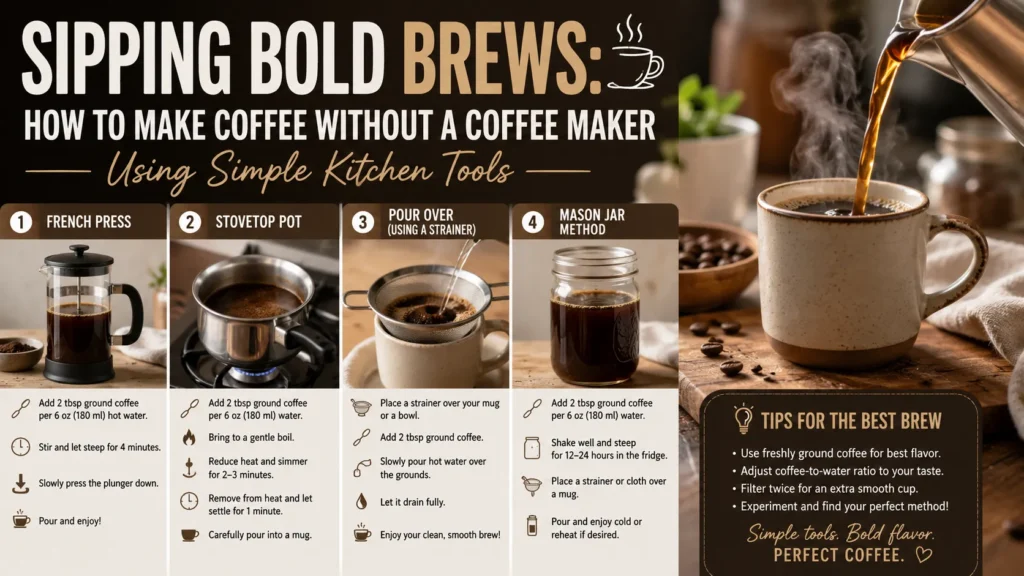
Imagine waking up to a power outage or a broken machine, leaving you stranded without your morning caffeine fix. Fortunately, learning how to make coffee without a coffee maker is incredibly simple and requires only basic kitchen items. You can easily brew a rich, delicious cup using nothing more than hot water, coffee grounds, and a mug. Consequently, you will never have to go without your essential morning ritual again.
Indeed, you do not need expensive equipment to enjoy a robust and aromatic brew. Historically, people have prepared coffee using rudimentary tools for centuries. Therefore, mastering these alternative techniques is both practical and deeply satisfying. This comprehensive guide will explore seven highly effective, field-tested methods to save your morning.
Key Takeaways
- Versatility: Mastering how to make coffee without a coffee maker is a valuable skill for emergencies, camping, or travel.
- Temperature Control: Always target water temperatures between 195°F and 205°F to prevent scorching your grounds.
- Grind Size Matters: Coarser grinds work best for immersion methods, while finer grinds suit quick filtration techniques.
- Patience Pays Off: Allowing grounds to settle naturally is the secret to a grit-free cup when brewing manually.
Essential Rules for Alternative Brewing Success
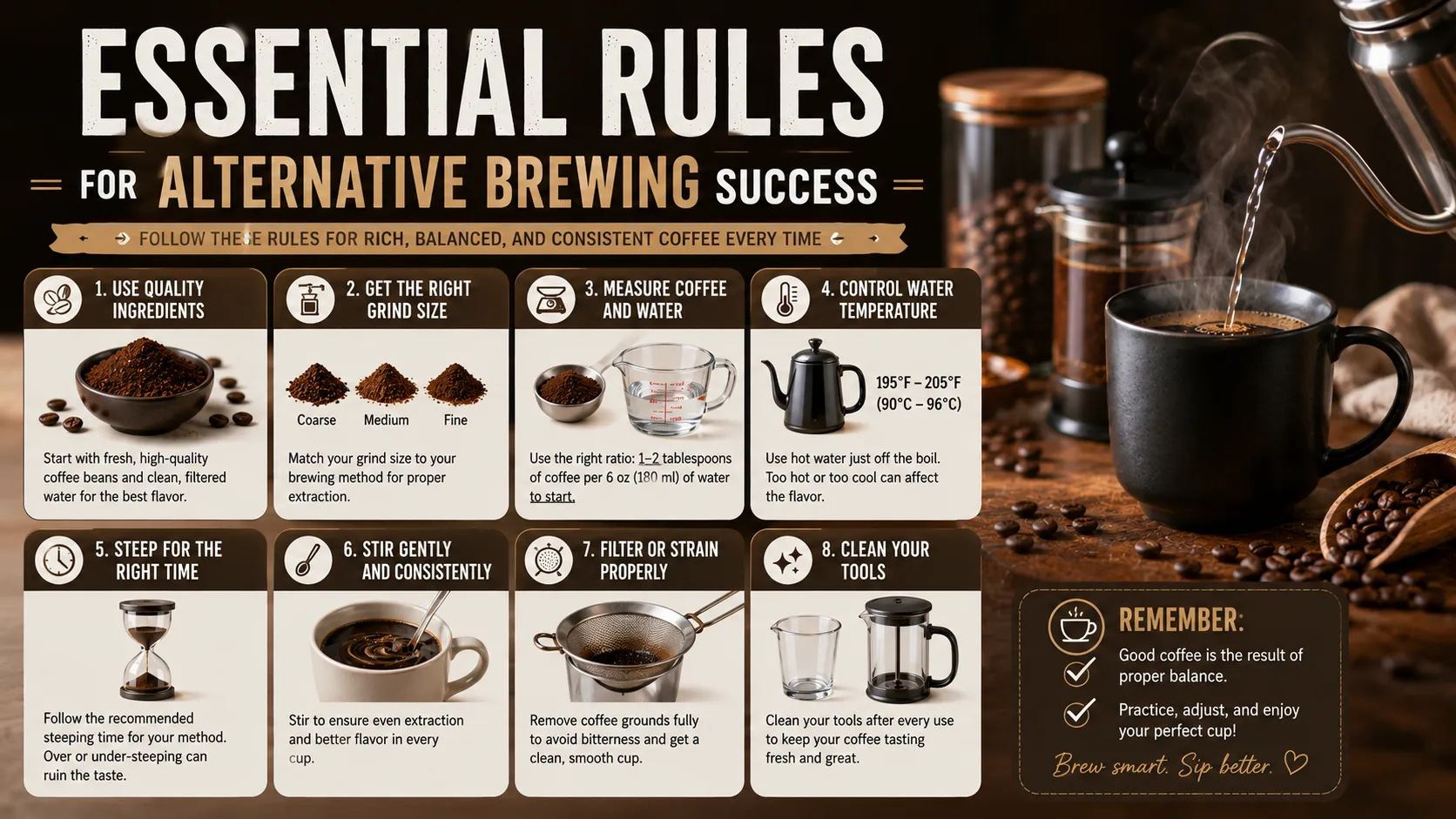
Before diving into the specific brewing methods, you must understand a few fundamental principles. These rules will guarantee a delicious cup, regardless of the technique you choose. Consequently, your manual brew might even taste better than your standard machine-made coffee.
The Ideal Water Temperature
Water temperature plays a crucial role in extraction. If your water is too hot, you will scorch the grounds and create a bitter taste. Conversely, using water that is too cold results in a weak, sour, and under-extracted brew. Therefore, you should aim for a temperature between 195°F and 205°F.
To achieve this without a thermometer, simply bring your water to a rolling boil. Afterward, remove it from the heat source and let it sit for thirty to forty-five seconds. As a result, the water will cool to the perfect brewing temperature naturally.
Selecting the Right Grind Size
While learning how to make coffee without a coffee maker, your grind choice is paramount. Your choice of grind size depends heavily on the specific method you select. For instance, coarse grinds are ideal for methods where coffee sits in water for long periods. On the other hand, fine grinds work best for quick filtration techniques.
If you use the wrong size, you might end up with a bitter cup or a mouth full of sediment. Thus, adjusting your grind size is essential for a balanced flavor profile. If you only have pre-ground coffee, however, do not worry. Most of these methods can be adapted to accommodate standard medium grinds successfully.
Maintaining the Golden Ratio
Achieving the perfect balance of coffee and water is vital for manual brewing. Generally, a ratio of one to two tablespoons of coffee per six ounces of water works best. However, you can easily adjust this ratio to suit your personal taste preferences.
If you prefer a stronger, more robust brew, simply add more grounds to the mix. Alternatively, use slightly more water for a milder cup. Keeping a consistent ratio ensures that your experiments remain repeatable and delicious.
How to Make Coffee Without a Coffee Maker
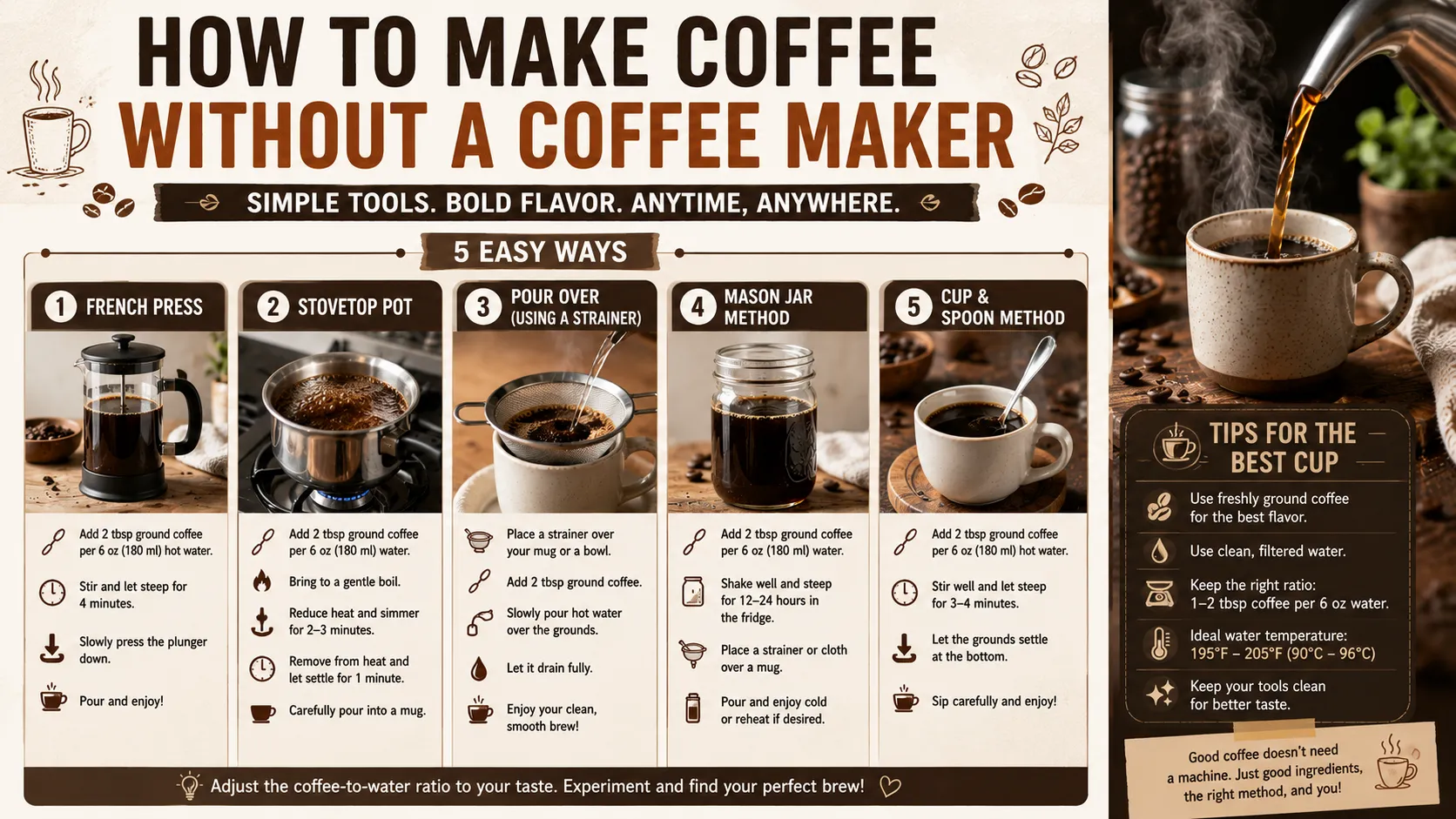
Now, let us explore the most popular and effective way to brew without a machine. This classic approach is often referred to as the Cowboy Method. It is incredibly simple and requires absolutely no special equipment besides a pot and water.
The Cowboy Method Explained
When studying how to make coffee without a coffee maker, the cowboy method is the absolute gold standard. This traditional technique relies on boiling water and letting the grounds settle naturally to the bottom of the pot. It is perhaps the oldest and most reliable way to prepare coffee. However, it requires a bit of patience to ensure you do not drink the sediment.
Step-by-Step Instructions
To begin with, add one tablespoon of coffee grounds to a small saucepan for every cup you wish to make. Next, pour the appropriate amount of water over the grounds and stir gently. After that, place the saucepan on your stove and bring the mixture to a very gentle boil.
Once the water reaches a boil, remove the saucepan from the heat immediately. Consequently, this prevents the coffee from over-extracting and becoming overly bitter. Let the pot sit undisturbed for about four to five minutes. During this time, the grounds will naturally sink to the bottom of the vessel.
Finally, slowly pour the liquid into your favorite mug. Be very careful not to disturb the settled grounds at the bottom of the pot. As a result, you will enjoy a surprisingly clean, rich, and full-bodied cup of coffee.
Six Alternative Brewing Methods to Try
If the cowboy method does not appeal to your taste, there are several other creative options available. Each technique offers a unique flavor profile and level of convenience. Therefore, you can choose the method that best matches your available kitchen tools.
1. The DIY Coffee Bag Method
If you want to know how to make coffee without a coffee maker with zero mess, this is your best option. This clever technique is highly reminiscent of brewing hot tea. It is exceptionally clean and prevents any loose grounds from entering your cup. Therefore, it is a favorite among travelers and minimalists alike.
To start, place your coffee grounds in the center of a clean paper coffee filter. Next, gather the edges of the filter together to create a small, neat pouch. Secure the top tightly using a piece of butcher’s twine or plain string.
Subsequently, place the DIY coffee bag directly into your empty mug. Pour hot water slowly over the bag, ensuring the grounds are fully saturated. Let the bag steep for approximately four minutes. Ultimately, discard the bag and enjoy your hassle-free, sediment-free brew.
2. The Double Mug Strainer Technique
Understanding how to make coffee without a coffee maker using strainers can save your morning routine. If you have a fine-mesh strainer in your kitchen, this method is incredibly straightforward. It effectively eliminates the grit associated with other rustic brewing styles.
First, measure your grounds and place them directly into a heatproof mug or glass measuring cup. Pour hot water over the grounds and stir the mixture thoroughly. Allow the coffee to steep undisturbed for four minutes.
Meanwhile, place your fine-mesh strainer directly over a second, empty mug. Once the steeping time is complete, slowly pour the mixture through the strainer. Consequently, the strainer catches all the grounds, leaving you with a perfectly clean cup.
3. The Classic Saucepan Method
This variation on how to make coffee without a coffee maker relies on gentle simmering. It is very similar to the cowboy method but utilizes a slightly different heating process. It is ideal when you need to brew multiple servings simultaneously for family or friends.
Start by pouring water into a saucepan and heating it on your stove. Once the water is hot but not boiling, stir in your coffee grounds. Keep the heat on low and simmer the mixture gently for three minutes.
However, make sure the liquid does not reach a rolling boil, as this will ruin the delicate flavor. After simmering, remove the pan from the heat source. Let it rest for two minutes to allow the sediment to settle before serving.
4. The Mason Jar Cold Brew
Learning how to make coffee without a coffee maker also extends to cold beverages. If you prefer iced coffee, you do not need a machine at all. In fact, a simple glass mason jar is the perfect vessel for making rich cold brew.
To begin, add coarse coffee grounds to your mason jar. Next, pour cold, filtered water over the grounds using a one-to-four ratio. Stir the mixture gently to ensure all grounds are thoroughly wet.
Afterward, seal the jar tightly and place it in your refrigerator. Let it steep for twelve to twenty-four hours. Finally, strain the liquid through a paper filter or fine mesh before serving over ice.
5. The Funnel and Paper Towel Hack
Indeed, discovering how to make coffee without a coffee maker using a funnel is a lifesaver. If you have coffee filters but no machine, a simple kitchen funnel can save the day. Alternatively, you can even use a clean paper towel if you lack filters.
First, place the funnel securely inside the rim of your mug. Next, fit the paper filter or folded paper towel inside the funnel. Wet the filter slightly with hot water to rinse away any paper taste.
Subsequently, add your coffee grounds to the filter. Pour hot water slowly in a circular motion over the grounds. As a result, the coffee will drip gently through the funnel directly into your mug.
6. The Microwave Quick Brew
For those exploring how to make coffee without a coffee maker in a hurry, the microwave is a viable tool. When you are in an extreme rush, your microwave can serve as a heating source. However, this method requires careful monitoring to avoid a messy boil-over.
First, fill a microwave-safe mug with water and heat it for about ninety seconds. Once the water is hot, stir in your coffee grounds immediately. Let the mixture sit for four minutes to steep.
After the steeping process, the grounds should sink to the bottom of the mug. If some grounds remain floating, gently splash a tablespoon of cold water on top. Consequently, this cold water will force the floating grounds to sink quickly.
Common Pitfalls to Avoid
When practicing how to make coffee without a coffee maker, avoiding common errors will make a huge difference. While these methods are simple, minor mistakes can ruin the flavor of your coffee. Therefore, keep these potential issues in mind.
Using Boiling Water Directly
Pouring boiling water directly onto your coffee grounds is a frequent mistake. This intense heat will burn the delicate oils in the coffee, resulting in a bitter cup. Therefore, always let your water cool slightly before brewing.
Neglecting the Steep Time
Patience is a virtue when brewing coffee manually. If you rush the process, your coffee will taste weak and watery. Conversely, leaving the grounds in the water too long results in extreme bitterness. Thus, timing your brew is essential.
Using the Wrong Grind Size
Using finely ground coffee for immersion methods like the cowboy style is a recipe for disaster. Fine grounds will stay suspended in the liquid, creating a muddy texture. Thus, always opt for a coarser grind when using immersion techniques.
Essential Tips for Enhancing the Flavor
To elevate how to make coffee without a coffee maker, focus on the quality of your ingredients. You do not have to sacrifice flavor just because you are not using a machine. In fact, many coffee enthusiasts prefer manual brewing because it offers greater control.
Use Freshly Ground Beans
Whenever possible, grind your coffee beans immediately before brewing. Pre-ground coffee loses its aroma and flavor rapidly when exposed to air. Therefore, fresh grinding guarantees a much more vibrant and delicious cup.
Pre-Heat Your Mug
Pouring hot coffee into a cold mug will drop the temperature of your drink instantly. To prevent this, fill your mug with hot water for a minute before brewing. Consequently, your coffee will stay hot and enjoyable for much longer.
Filter Your Water
Another factor in how to make coffee without a coffee maker is water quality. Since coffee is mostly water, the quality of your water matters immensely. Tap water often contains chlorine and minerals that alter the taste of your brew. Therefore, using filtered water will instantly elevate the purity of your coffee’s flavor.
How to Clean Up Easily After Manual Brewing
When figuring out how to make coffee without a coffee maker, clean-up is an important consideration. Cleaning up after brewing without a machine can sometimes feel messy. However, a few simple tricks can make the process quick and effortless.
Managing Loose Grounds
Never pour loose coffee grounds directly down your kitchen sink drain. Over time, they can clog your pipes and cause serious plumbing issues. Instead, scrape the grounds into your compost bin or trash can.
Reusing Coffee Grounds
In addition, coffee grounds make an excellent addition to your garden soil. They are highly acidic and rich in nitrogen, which plants love. Therefore, recycling your grounds is both eco-friendly and beneficial for your garden.
Summary of Brewing Methods
In summary, knowing how to make coffee without a coffee maker gives you ultimate brewing freedom. Let us look at a quick comparison of the different manual brewing methods. This will help you choose the best technique for your current situation.
| Brewing Method | Ideal Grind Size | Steep Time | Grit Level |
|---|---|---|---|
| Cowboy Method | Coarse | 4-5 Minutes | Medium |
| DIY Coffee Bag | Medium-Fine | 4 Minutes | None |
| Double Mug Strainer | Medium-Coarse | 4 Minutes | Low |
| Mason Jar Cold Brew | Extra Coarse | 12-24 Hours | Low |
Related Coffee Topics You May Like
Frequently Asked Questions About Manual Brewing
Here are some common questions about how to make coffee without a coffee maker to help you troubleshoot your brewing process.
Can I use a paper towel as a coffee filter?
Yes, you can absolutely use a clean paper towel as a makeshift filter when learning how to make coffee without a coffee maker. However, make sure to fold it carefully so it does not rip under the weight of the hot water. Additionally, pour the water slowly to prevent overflowing.
How do I prevent coffee grounds from getting into my teeth?
Allowing the brewed coffee to sit undisturbed for a few minutes is essential for how to make coffee without a coffee maker successfully. This waiting period lets gravity pull the grounds to the bottom of the vessel. Furthermore, pouring the coffee very slowly and leaving the last splash in the pot will keep your cup grit-free.
Is instant coffee the same as brewing without a machine?
No, instant coffee is made from dehydrated brewed coffee that dissolves completely in water. On the other hand, brewing without a machine involves extracting flavor from actual ground coffee beans. Consequently, manual brewing yields a much fresher, richer, and more authentic flavor than instant alternatives when discovering how to make coffee without a coffee maker.
What is the best grind size for cowboy coffee?
A coarse grind is the absolute best choice as you practice how to make coffee without a coffee maker. Coarser grounds are heavier and sink to the bottom of the pot much faster than fine grounds. Therefore, using a coarse grind significantly reduces the amount of sediment that ends up in your final mug.
Ready to Elevate Your Coffee Journey?
Now that you know how to make coffee without a coffee maker like a pro, it is time to upgrade your beans. Explore our handpicked selection of premium, organic coffee beans sourced from sustainable farms worldwide.