

When people start learning about coffee, one confusion appears again and again. Espresso beans and coffee beans look almost the same, yet they are sold separately and priced differently. This creates doubt in the mind of every coffee lover. Many people believe espresso beans are stronger, while others think coffee beans contain more caffeine. Because of this confusion, people often buy the wrong beans and feel disappointed with the taste.
This problem becomes even more serious for beginners who want cafe quality coffee at home. They try different beans, change machines, and still cannot get the flavor they expect. The real issue is not the equipment but the lack of clarity between espresso beans and coffee beans.
In this detailed guide, we will explain espresso beans vs coffee beans in the simplest possible language. Every pain point that confuses coffee drinkers will be discussed clearly so that by the end, you can confidently choose the right beans for your daily coffee.
Espresso beans and coffee beans both come from the same coffee plant. There is no separate tree that produces espresso beans. This is one of the biggest misunderstandings among coffee drinkers. The difference does not start at farming but at roasting.
Coffee beans are usually roasted light or medium. This allows the natural flavor of the bean to stay visible. Espresso beans are mostly roasted medium dark or dark, so they can perform well during espresso brewing, which uses high pressure and short extraction time.
Because of this roast difference, the flavor and intensity feel very different even though the bean origin is the same.
The primary difference between espresso and coffee beans lies in the depth of roast and the brewing purpose. Espresso beans are roasted in a way that produces a bold body and rich crema when brewed under pressure. Coffee beans are roasted to highlight aroma, brightness, and a smooth drinking experience.
When people say espresso tastes stronger, they are mostly reacting to flavor intensity rather than caffeine level. Darker roasting creates a heavier mouthfeel that gives the impression of strength.
| Feature | Espresso Beans | Coffee Beans |
|——–|—————|————–|
| Roast Level | Medium-dark to dark | Light to medium |
| Flavor | Bold, intense | Smooth, balanced |
| Caffeine per gram | Nearly same | Nearly same |
| Best Brewing | Espresso machine | Drip, pour over |
Taste is where most people notice the difference instantly. Espresso beans deliver rich flavors reminiscent of chocolate, cocoa, roasted nuts, and caramel. These flavors feel heavier on the tongue and stay longer after each sip.
Coffee beans often taste cleaner and lighter. Depending on origin, they may offer fruity, floral, or sweet notes. This makes them ideal for people who enjoy sipping larger cups slowly.
The taste difference is not about quality but about personal preference. Some people love bold intensity, while others prefer gentle smoothness.
A very common belief is that espresso beans contain more caffeine. In reality, caffeine depends on brewing method, not bean name. By weight, espresso beans and coffee beans contain nearly the same amount of caffeine. Scientific research on caffeine content in coffee beans confirms that brewing method matters more than bean type.
Espresso feels stronger because it is concentrated. A small shot delivers caffeine quickly, creating a fast alert feeling. A full cup of brewed coffee usually contains more total caffeine, but it enters the body more slowly. This is why people feel espresso hits harder, even when the caffeine amount may be lower.
When people ask whether espresso beans are stronger than coffee beans, the answer depends on the meaning. If strength means flavor, then yes, espresso beans taste stronger. If strength means caffeine, then no, they are almost equal.
The roasting process creates intense flavors, while the brewing pressure amplifies them. This combination gives espresso its powerful character.
Many people search for espresso beans vs coffee beans vs regular beans. In reality, regular beans are simply coffee beans. There is no third category.
All coffee beans are the same at origin. Labels only describe how they are roasted and marketed for specific brewing styles. Understanding this removes confusion and prevents unnecessary spending.
Brewing plays a major role in how beans behave. Espresso brewing uses high pressure and a very fine grind size. Coffee brewing methods use lower pressure and longer extraction time.
Because of this, espresso beans are roasted to avoid sourness under pressure. Coffee beans are roasted to balance flavor during slow brewing. Using the wrong bean with the wrong method can result in bitterness or acidity.
The best espresso beans are those roasted medium dark with balanced oils. These beans produce rich crema and a smooth mouthfeel. Freshness is extremely important because old beans lose aroma and crema quickly.
Beans with chocolate and nut notes usually perform best for espresso brewing. Very oily beans should be avoided because they can harm machines.
Many discussions online about espresso beans vs coffee beans in Reddit threads reach the same conclusion. Experienced coffee drinkers agree that espresso beans are not special beans but normal beans roasted for espresso.
Most advice focuses on choosing beans based on brewing equipment rather than the name written on the bag. This matches professional coffee knowledge used by cafes worldwide.
Chocolate covered espresso beans are made using dark roasted beans coated with chocolate. They taste stronger compared to chocolate covered coffee beans because the darker roast flavor blends more intensely with chocolate.
These beans contain caffeine and can give an energy boost when eaten. However, they are snacks rather than replacements for brewed coffee.
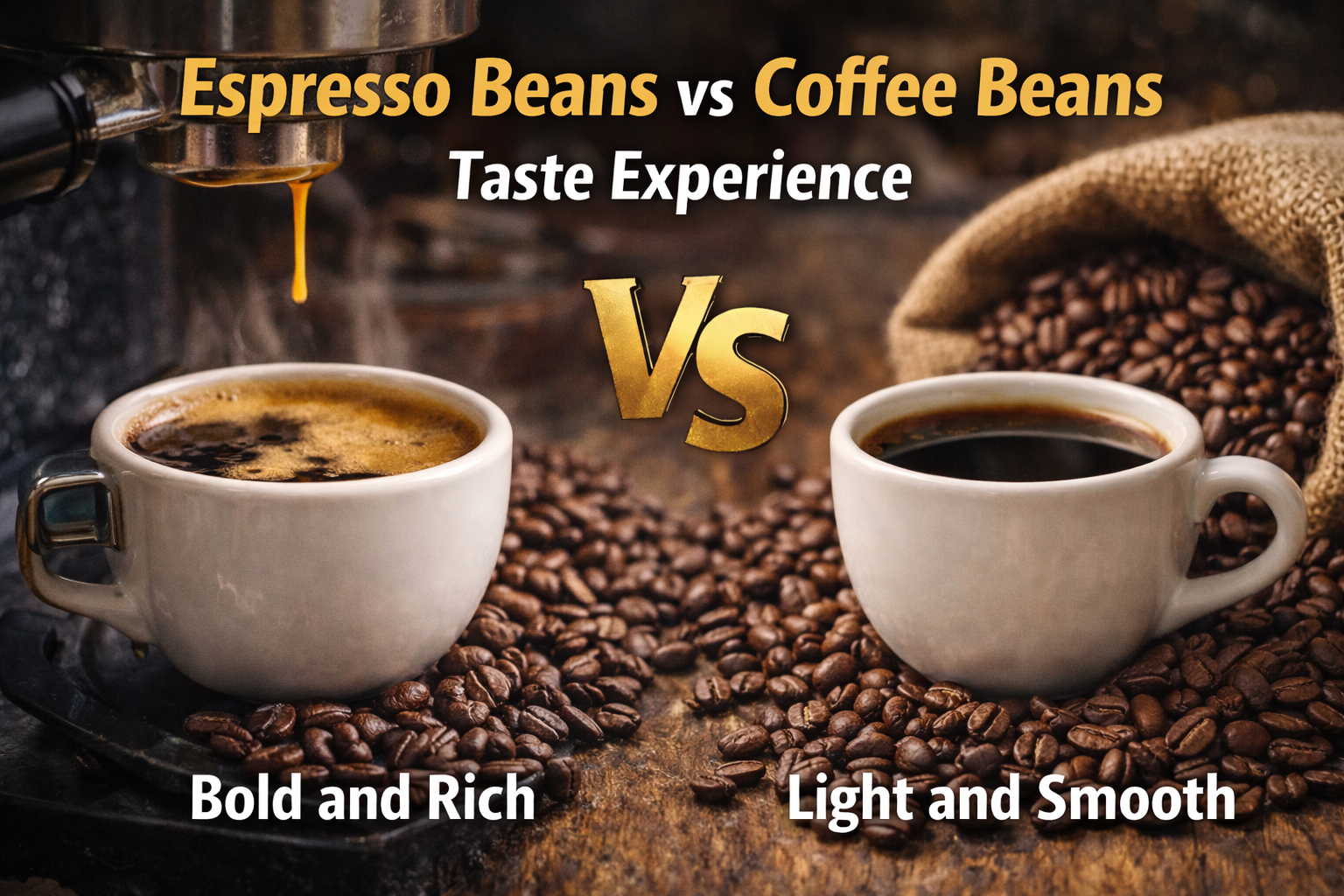
The experience of drinking espresso is fast and intense. The experience of drinking coffee is slow and smooth. Espresso beans are designed for impact, while coffee beans are designed for comfort.
This is why cafes often use espresso beans for drinks like latte and cappuccino, while coffee shops use lighter beans for brewed coffee.
For daily drinking, comfort and digestion matter. Lighter coffee beans feel easier on the stomach for many people. Espresso beans feel heavier but more satisfying in small amounts.
People who drink several cups a day often prefer coffee beans. People who drink one or two strong cups often prefer espresso beans.
Beginners usually enjoy medium roast coffee beans more. They are forgiving, easier to brew, and taste balanced even with basic equipment.
Espresso beans require a correct grind size and pressure control. Without proper setup, results may be inconsistent.
Both beans serve different purposes. Espresso beans focus on intensity and richness. Coffee beans focus on clarity and smoothness. Neither is superior. The right choice depends on your taste preference, brewing method, and daily habits.
Yes, espresso beans and coffee beans come from the same coffee plant. The difference is mainly in how they are roasted and prepared for brewing, not in the bean itself.
Yes, you can use coffee beans to make espresso, but the taste may change. Medium or dark roasted beans usually work better for espresso than very light roasts.
You can, but the result may taste sour or weak. Espresso works best with beans roasted specifically for pressure brewing.
Espresso and coffee offer similar health benefits. Espresso is more concentrated but usually consumed in smaller amounts, which can reduce overall caffeine intake.
Regular ground coffee is usually too coarse for espresso. Espresso requires a very fine grind to create proper pressure and flavor.
One espresso shot contains less total caffeine than a full cup of coffee, but it feels stronger because it is more concentrated.
If espresso starts flowing in less than 10 seconds, the grind is usually too coarse, which leads to weak and under extracted coffee.
A good espresso bean produces rich aroma, balanced bitterness, and a smooth crema when brewed under pressure.
Yes, grinding your own beans is recommended. Fresh grinding improves flavor, aroma, and overall espresso quality.
Espresso beans vs coffee beans confusion exists mainly because of marketing terms and myths. In reality, both come from the same coffee source. The difference appears through roasting and brewing style.
Espresso beans create bold flavor and a strong aroma. Coffee beans create a smooth and layered taste. Caffeine depends on preparation, not bean name.
When you choose beans based on how you brew and what flavors you enjoy, your coffee experience improves naturally. Once this clarity is achieved, every cup becomes more enjoyable and consistent.


Contact Us Jump To Does Black Coffee Have Calories Real Truth About Fasting, Weight Loss & Health You switch to black coffee, thinking it is the safest drink for weight loss. No sugar, no milk, almost no calories. It feels like a smart move. But…
Contact Us Jump To How to Roast Coffee Beans at Home (Beginner to Pro Guide) A lot of people try roasting coffee at home with excitement, but the results often disappoint them. The beans either taste too bitter, too sour, or completely flat. The confusion…
Contact Us Jump To Baratza Encore Coffee Grinder A Beginner Friendly Guide to Grind Quality, Settings, Upgrades, and Whether It Is Still Worth Buying You buy good coffee beans, follow a recipe, and still get a cup that tastes flat, bitter, or oddly sour. For…

Explore the world of coffee with honest reviews and practical advice. Find your perfect cup, one bean and machine at a time.