
If your French press coffee tastes bitter or leaves sludge at the bottom of your cup, the grind is almost always the problem. Coarse ground coffee for French press is what you want — big, even particles about the size of kosher salt that the metal mesh filter can actually hold back.
Why French Press Needs a Coarse Grind
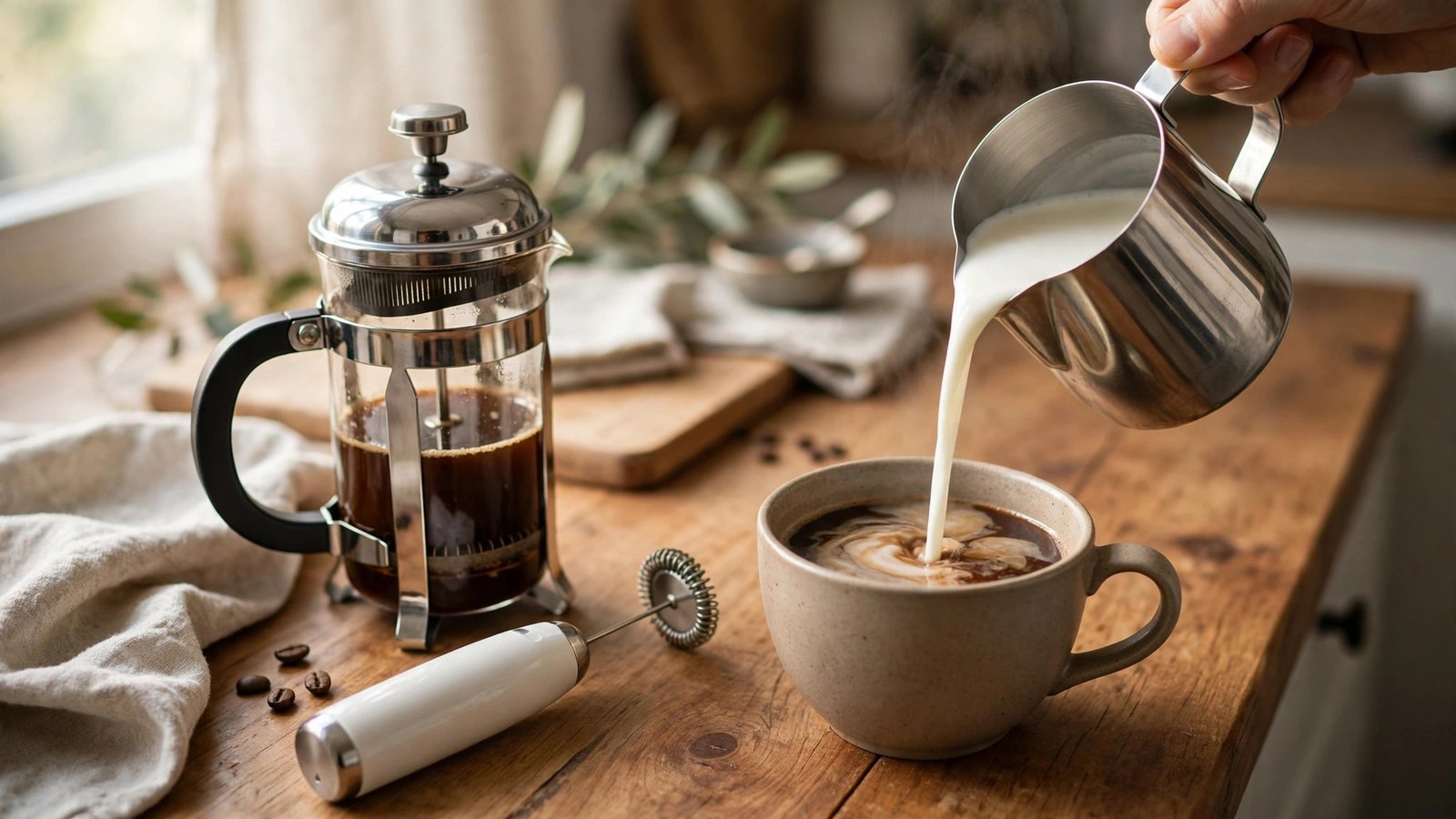
A French press brews by immersion: grounds sit in hot water for four minutes, then a metal mesh pushes them down. Unlike paper filters, that mesh has relatively large holes.
- Too fine → grounds slip through the mesh → muddy cup and bitter over-extraction.
- Too coarse → water can’t extract enough in 4 minutes → sour, watery coffee.
- Coarse and even → clean cup, balanced flavor, easy plunge.
The grind is the single biggest lever on French press quality. Beans and water matter, but grind decides whether the press works as designed.
What Coarse Grind Looks Like
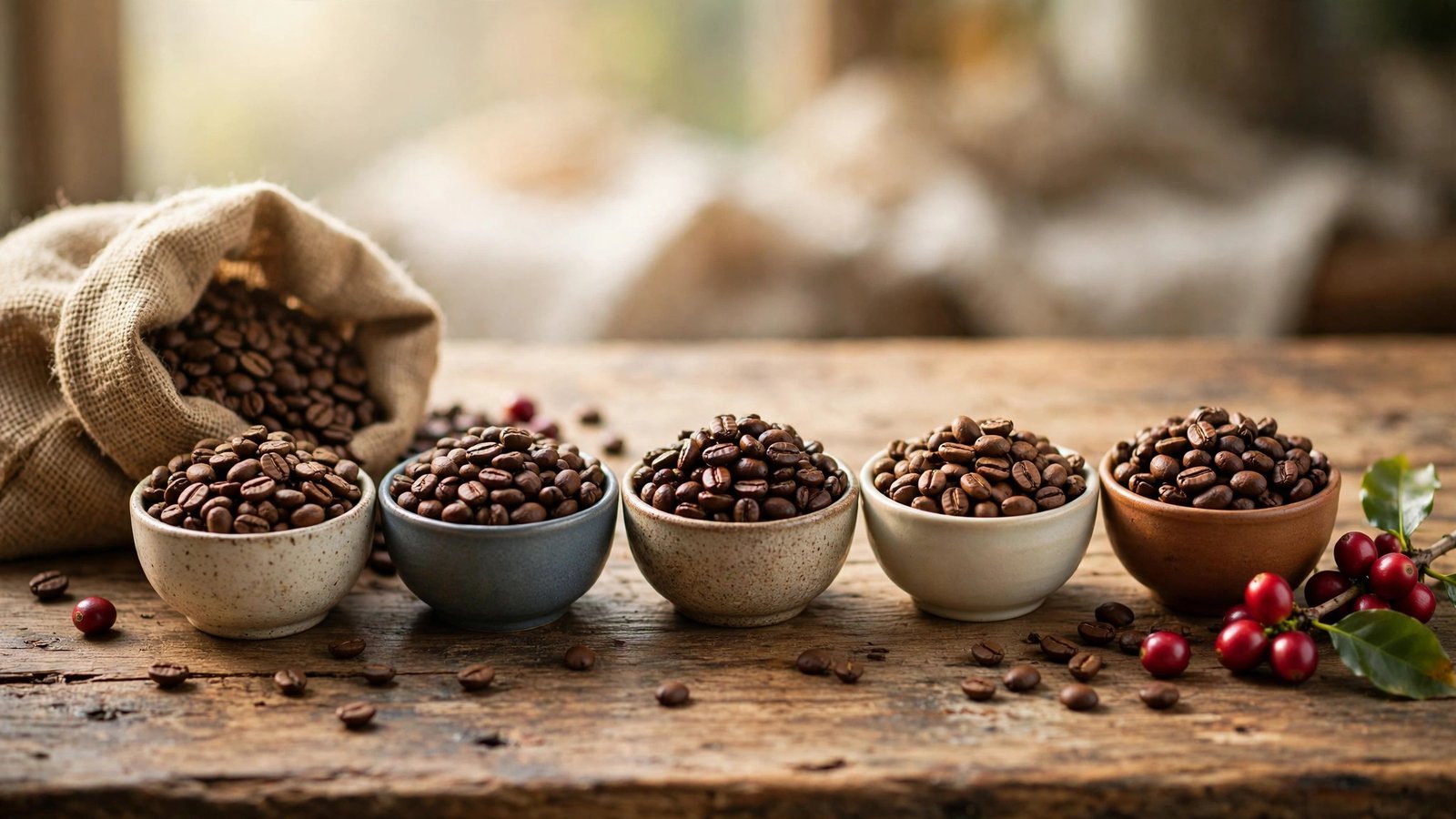
Think kosher salt or rough breadcrumbs. Chunky, distinct particles that feel gritty — not powdery — between your fingers. Powder means too fine.
If your grinder has numbered settings, coarse for French press is usually in the 60–80% range of the coarseness scale (exact numbers vary by grinder — check your manual).
How to Grind for French Press
Best: a burr grinder. Burr grinders crush beans between two plates, producing even particles. Blade grinders chop unevenly — some powder, some chunks — which is exactly what ruins a press.
Budget option: many grocery stores have bulk grinders with a “coarse / French press” setting. Grind only what you need for a few days; pre-ground coffee goes stale within a week or two.
Grind right before brewing. Ground coffee loses aroma fast. Grinding fresh is the cheapest upgrade you can make.
The Right French Press Recipe
- Ratio: 1:15 coffee to water (about 2 tablespoons per 6 oz cup, or 30g per 450ml).
- Water: just off the boil, around 200°F (93°C).
- Steps:
- Add coarse grounds to the empty press.
- Pour hot water, saturating all grounds. Stir gently.
- Place the lid on (plunger up) and steep 4 minutes.
- Break the crust, skim off foam, then press down slowly.
- Pour immediately — coffee left sitting on grounds keeps extracting and turns bitter.
Troubleshooting: Bitter, Sour, or Muddy?
| Problem | Likely cause | Fix |
|---|---|---|
| Bitter, harsh | Grind too fine or steeped too long | Go coarser; steep 4 minutes max |
| Sour, thin | Grind too coarse or water too cool | Go slightly finer; use hotter water |
| Muddy sludge | Grind too fine or cheap blade grinder | Coarser grind; consider a burr grinder |
| Hard to plunge | Way too fine | Much coarser — plunging should feel easy |
French Press vs Other Grinds (Quick Reference)
- Extra coarse: cold brew (12+ hour steep)
- Coarse: French press
- Medium-coarse: Chemex
- Medium: drip coffee makers
- Medium-fine: pour-over, AeroPress
- Fine: espresso, moka pot
- Extra fine: Turkish coffee
FAQs
What grind is best for French press?
Coarse — particles like kosher salt. Even and chunky, never powdery.
Can I use pre-ground coffee in a French press?
You can, but most pre-ground coffee is medium grind for drip makers — too fine for a press. If it’s all you have, shorten the steep to 3 minutes and expect some sediment.
How much coffee do I use per cup?
About 2 tablespoons (10–12g) of coarse grounds per 6 oz of water — a 1:15 ratio. Adjust to taste.
Why is my French press coffee bitter?
Almost always the grind: too fine, or steeped too long. Go coarser and keep it to 4 minutes.
Does grind size really change the taste?
Yes, more than almost anything else. Too fine in a press gives bitterness and sludge; too coarse gives a sour, watery cup. Coarse and even is the middle ground where the flavour lands.