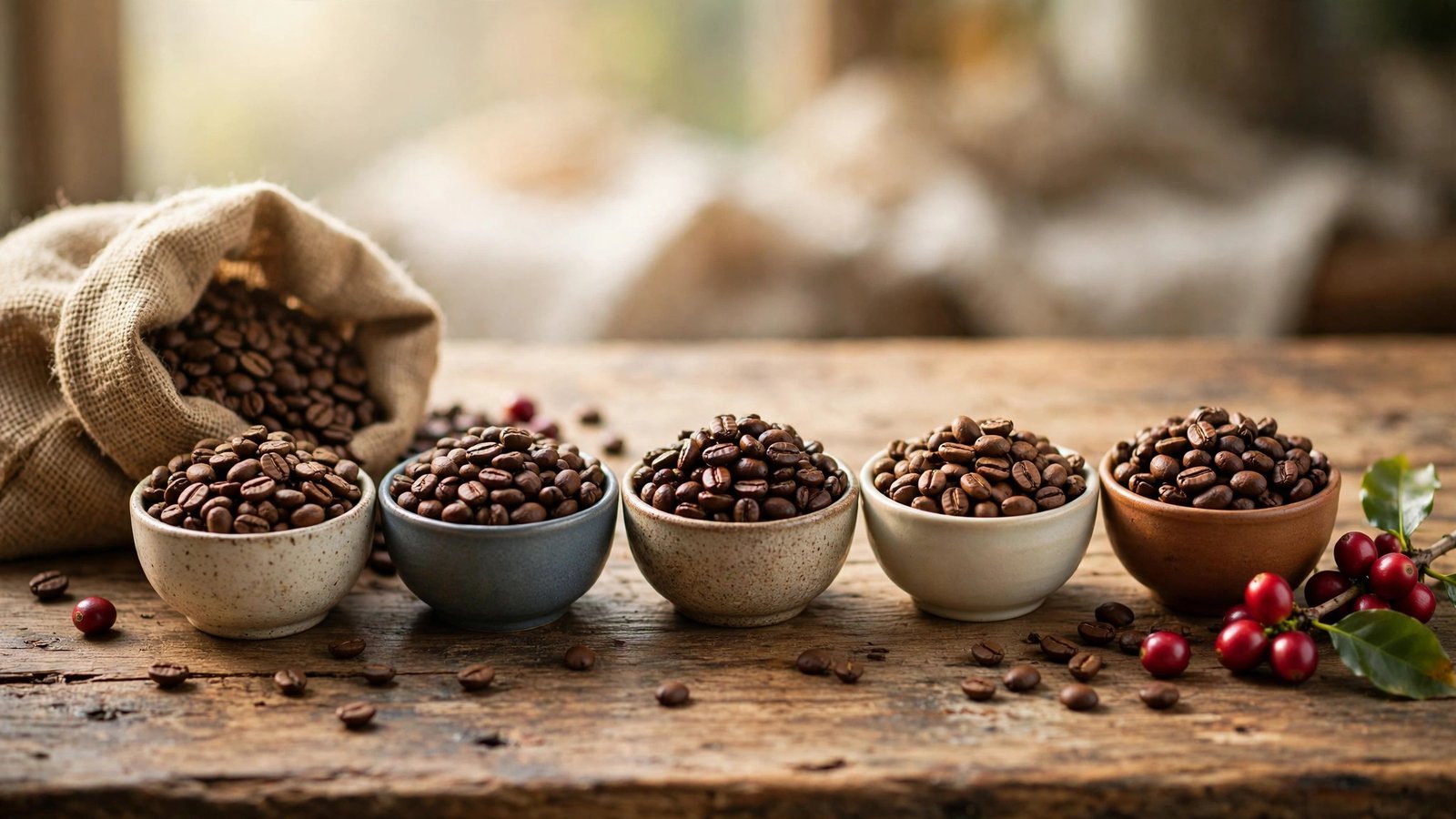
What Is Single Origin Coffee? (And Why It Isn’t Automatically Better)
What is single origin coffee? It is coffee that comes from one place — one country, one region, one farm, or even one small plot of land. A blend, by contrast, mixes beans from several places. That is the whole difference: one source versus many. But the label hides a catch, because “one place” can mean four very different things, and nobody regulates the term.What Single Origin Coffee Actually Means
Single origin coffee comes from one place, and that place can be wide or narrow. One roaster’s single origin is a whole country. Another’s is a single hillside farm. Both bags are honestly labelled, but they are very different things — and they will taste different too.The reason the term is slippery is that no authority defines it. There is no legal standard that says how small “one place” must be. Roasters decide for themselves, and most are honest about it, but the label alone does not tell you how narrow the claim is.So the real question is not just whether it is single origin. It is where it comes from, and how narrow that where is. That is what this guide answers. Once you know the scale, you will read every coffee bag differently.The Granularity Scale: Country, Region, Farm, Microlot
Think of origin as a zoom lens. The wider the place, the less the name tells you about the cup. The narrower the place, the more specific the flavour — and usually, the smaller the batch.| Level | What it means | What it tells you | Example |
|---|---|---|---|
| Country | All beans from one country | The general character of that country’s coffee | Ethiopia, Colombia, Brazil |
| Region | One growing region inside a country | A clearer flavour profile | Yirgacheffe (Ethiopia), Huila (Colombia) |
| Farm / Estate | One farm or washing station | One grower’s style and processing method | A named estate or co-op |
| Microlot | One small plot, often one harvest | The most specific coffee, in the smallest batch | A single hillside lot, limited bags |
Single Origin vs Blend: The Real Difference
A blend is built for consistency. Roasters mix beans from several origins so the bag tastes the same all year, even as harvests change and one origin runs short. A single origin is built for character — it tastes like its place, and it changes when the harvest changes.Neither is better. A blend is the right call when you want the same cup every morning, or a coffee that stands up to milk. A single origin is the right call when you want to taste what makes one place different from another.If you drink mostly milk drinks, start with a blend. If you drink black filter coffee, a single origin will show you far more. That is the simplest way to choose between them.Why Single Origin Isn’t Automatically Better
“Single origin” sounds premium, and it is often priced that way. But the label says where the beans came from, not how good they are. A careless farm in a famous region grows worse coffee than a careful farm in a plain one, and no label fixes that.Origin is one factor among many. Variety, altitude, processing, roast and freshness matter just as much — sometimes more. A stale single origin loses to a fresh blend every single time, because freshness fades faster than origin matters.The honest way to judge a bag is by the details on it: a named region, a roast date, a processing method. “Single origin” on its own is a starting point, not a quality stamp. Treat it as a promise to check, not a promise kept.How to Read a Single-Origin Label
A good single-origin bag reads like a short address. The more specific the address, the more the roaster is telling you. Here is what each line on the bag actually means.| Label line | What it really means |
|---|---|
| “Single origin” | Beans from one place — check how narrow that place is |
| “Ethiopia Yirgacheffe” | Region-level; expect bright, floral, citrus notes |
| “Washed” / “Natural” | How the cherry was processed; washed is cleaner, natural is fruitier |
| “Estate” or a farm name | One farm; the most traceable bag short of a microlot |
| “Microlot” | A tiny lot from one plot; a small batch, often limited |
| Tasting notes (“blueberry, jasmine”) | Flavour impressions, not ingredients — the coffee contains no blueberry |
| Roast date | When it was roasted; fresher is better, within a few weeks |
When Single Origin Shines — and When a Blend Wins
Single origin shines in black filter coffee — pour over, Chemex, French press — where nothing hides the bean’s character. That is where a Yirgacheffe tastes floral and a Huila tastes like caramel, and you can actually tell them apart.Blends win in milk drinks and espresso. Milk softens the quirks that make a single origin special, and espresso needs the balance a blend is built for. A single origin can still work as espresso, but it is less forgiving — one small brewing error and the quirks turn into flaws.A simple rule covers most mornings: if you can taste the coffee clearly, buy single origin. If milk or sugar does most of the talking, a good blend is the better buy — and usually the cheaper one too.How to Buy Your First Single-Origin Bag
Start with a region, not a country. “Ethiopia” is a good start; “Yirgacheffe, washed” is a better one. Pick a medium roast — light roasts show more character but punish sloppy brewing, and dark roasts hide the origin almost entirely.Buy whole bean with a visible roast date, and grind just before brewing. Most single-origin bags you will see are Arabica. Our guide to the best Arabica coffee beans explains what to look for on the label and which bags suit which brewer.Buy a small bag first. Single origins change with the harvest, so last year’s favourite may taste different this year. A small bag lets you try the region without committing to a kilo of something you do not love. And if you do love it, you can go back for more before the lot runs out.Common Questions
Is single origin coffee better than a blend?
Not better — different. A single origin shows off one place’s character, which is wonderful in black filter coffee. A blend is built for consistency and milk drinks. The right choice depends on how you brew, not on which label sounds fancier.
Does single origin mean the coffee comes from one farm?
Not always. Single origin can mean one country, one region, one farm or one tiny microlot — the term is not regulated. A bag that names a farm or washing station is the narrowest claim; one that names only a country is the widest.
Is single origin coffee always Arabica?
Almost always, on the bags you will see. Specialty roasters sell single origins as Arabica because that is where the distinct regional flavours live. Single-origin Robusta exists, but it is rare on shop shelves.
Why is single origin coffee more expensive?
Small lots cost more to grow, sort and ship, and traceability adds work at every step. A microlot from one hillside cannot be scaled up like a blend. You are paying for specificity and scarcity, not automatically for better taste.
What single origin should I try first?
A washed Ethiopia Yirgacheffe if you like bright, floral coffee, or a Colombia Huila if you prefer smooth and chocolatey. Both are widely available, forgiving to brew, and show clearly what single origin means.
The Short Answer
What is single origin coffee? Coffee from one place. But “one place” can mean a country, a region, a farm or a single microlot. The term is not regulated, so the label alone does not tell you how narrow the claim is. A single origin is not automatically better than a blend. It is better at showing character. A blend is better at consistency and milk drinks. Read the bag like an address: region, processing, roast date. Then start with a washed Yirgacheffe or a Huila, and taste the difference for yourself.