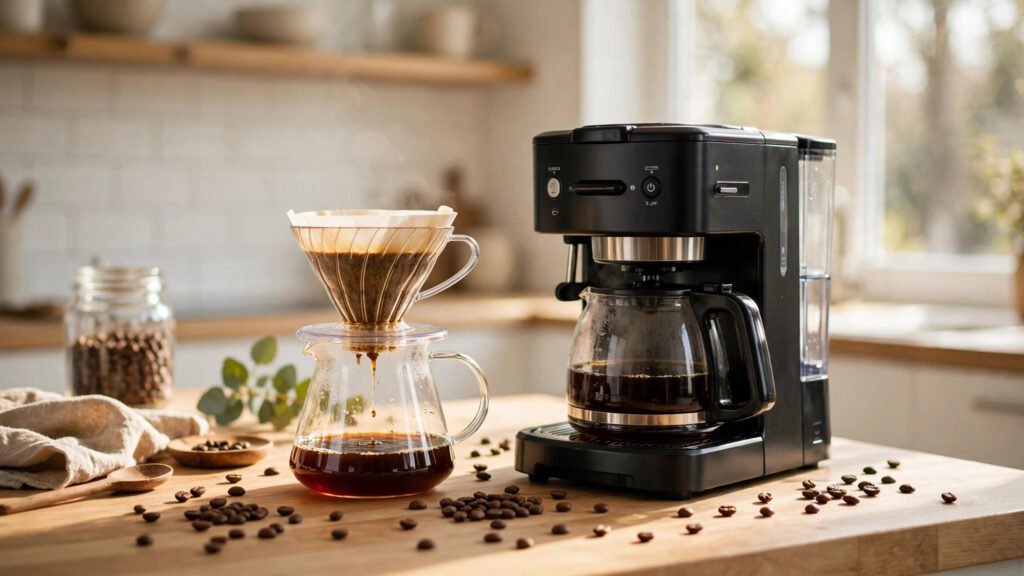
Pour Over vs Drip Coffee Maker: Who Should Control the Brew
A pour over vs drip coffee maker choice is really about control. Both methods brew filter coffee. Both use hot water and ground beans. The difference is who sets the variables. With pour over, you set them all. With drip, the machine sets them all. This guide shows what that means for taste, time, and cost.
The Core Difference: Who Controls What
Three variables shape filter coffee. Water temperature sets extraction speed. Flow rate sets contact time. Pour pattern sets how evenly water meets grounds. A drip machine fixes all three for you. You add water and grounds, then press a button. The machine heats, showers, and drains on its own.
Pour over hands all three to you. You heat the water yourself. You pour in slow circles yourself. You control speed and pattern by hand. That control is the whole point. It is also the whole effort. Good control brews a great cup. Poor control brews a weak or bitter one.
| Variable | Pour over | Drip machine |
|---|---|---|
| Water temperature | You choose it | Machine sets it |
| Flow rate | You pour it | Machine showers it |
| Pour pattern | You circle it by hand | Fixed shower head |
| Batch size | One to two cups | One mug to a full carafe |
| Active time | Two to four minutes | Under one minute of setup |
| Skill needed | Some practice | Almost none |
Taste Compared
Pour over tastes brighter and clearer. You control every variable. Fine control brings out delicate notes. Floral and fruity beans shine here. The paper filter keeps oils out. The cup feels clean and light.
Drip tastes rounder and heavier. The machine brews the same way each time. That consistency suits bold beans well. Chocolate and caramel notes show strongly. The cup feels full and steady. It rarely reaches pour-over clarity. It also rarely fails badly.
Neither taste is better in itself. Bright and clean suits light roasts. Round and full suits dark roasts. Match the method to the beans you love. Light, fruity beans favor pour over. Dark, bold beans favor drip.
Time and Effort
Pour over takes more of your morning. You heat water, rinse the filter, and bloom the grounds. Then you pour in stages for two to four minutes. Total time runs several minutes of active work. The ritual suits slow mornings. It frustrates rushed ones.
Drip takes almost no morning effort. You fill water, add grounds, and press start. Setup takes under a minute. The machine brews while you get ready. A full carafe serves a household. A single mug serves one person fast.
Effort also includes cleanup. Pour over cleanup is quick. You toss the filter and rinse the dripper. Drip cleanup takes longer. You wash the carafe and basket. Scale builds in drip machines over time. Descaling adds a chore pour over never needs.
Cost and Counter Space
Pour over gear costs little. A basic dripper costs less than a bag of good beans. Filters cost little per cup. A kettle helps but a normal kettle works too. Total startup cost stays low. Counter space stays tiny. A dripper fits in a drawer.
Drip machines cost more up front. A decent machine costs several times a dripper. Filters cost little per pot. Power use adds a small running cost. Counter space is larger. A carafe machine claims a permanent spot. Households that brew daily accept that trade gladly.
Should You Upgrade From Drip
Ask three questions before you switch:
- Do you enjoy the brewing ritual, or do you want coffee fast?
- Do you brew light, fruity beans that need fine control?
- Do you brew one or two cups, or a full household pot?
If you love ritual and light beans, pour over rewards you. If you want speed and big batches, drip still wins. If you brew both ways, own both. Many coffee lovers do exactly that. They use drip on busy weekdays. They use pour over on slow weekends.
One honest warning helps here. Pour over punishes sloppy technique. A fast, careless pour makes weak coffee. A slow, uneven pour makes bitter coffee. Practice for a week before you judge it. Your fifth pour tastes better than your first.
For pour-over picks, see our guide on best pour-over coffee makers. For drip picks, see best coffee makers.
Gear You Actually Need
Pour over gear stays simple. You need four things to start. First, a dripper that fits your batch size. Small drippers suit one cup. Large drippers suit two cups. Second, paper filters that match the dripper. Wrong filters fold or drain badly. Third, a kettle you can pour slowly with. A gooseneck kettle helps most. A normal kettle works if you pour with care. Fourth, a grinder that grinds evenly. Even grounds matter more than fancy gear.
You do not need a scale at first. A scoop and a steady routine work fine. Add a scale later if you chase consistency. You do not need a special stand either. A dripper sits on a mug or carafe directly. Keep gear simple and spend money on fresh beans instead.
Common Questions
Does pour over really taste better than drip?
It tastes clearer, not always better. Clarity suits light roasts well. Bold roasts taste fine in both methods. The best method depends on your beans. Try the same beans in both and compare.
Is pour over hard to learn?
No, it takes about a week of practice. Start with a steady, slow pour. Keep the water level even. Grind medium-fine for most drippers. Small changes teach you fast. Your taste guides you better than any chart.
Can one household use both methods?
Yes, easily. Use drip for busy mornings and big batches. Use pour over for slow mornings and special beans. The two methods complement each other well. Neither one must replace the other.
The Short Answer
Pour over gives you full control and a clearer cup. Drip gives you speed, consistency, and big batches. Control suits light beans and slow mornings. Convenience suits dark beans and busy households. Pick by your routine and your beans. Owning both is a fine answer too.