
Latte Vs Cappuccino: Which Espresso‑based Drink Wins Your Morning?
Jump To
Latte Vs Cappuccino: Which Espresso‑based Drink Wins Your Morning?
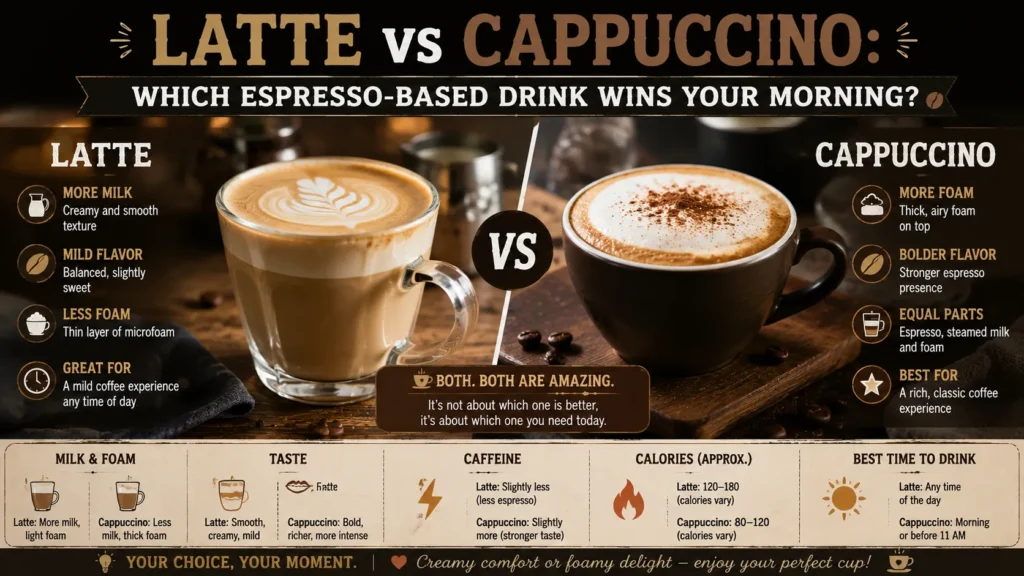
Ever stared at a café menu wondering whether the silky latte or the frothy cappuccino will better kick‑start your day? The answer lies in the balance of milk, foam, and espresso that shapes each sip. In this guide we break down the latte versus cappuccino debate, so you can pick the perfect cup every time.
Key Takeaways
- Latte features more steamed milk and a thin layer of micro‑foam, delivering a creamy, mild flavor.
- Cappuccino balances equal parts espresso, steamed milk, and dense foam, giving a richer coffee taste with a velvety texture.
- The latte vs cappuccino ratio difference (1:3:1 vs 1:1:1) directly influences mouthfeel and caffeine perception.
- Both drinks contain roughly the same caffeine amount when made with a single shot of espresso.
- Your choice hinges on texture preference: silkier latte vs frothier cappuccino.
Origins and History
Both beverages trace their roots to Italy, where espresso culture blossomed in the early 20th century. The cappuccino emerged first, named after the Capuchin friars whose brown robes resembled the drink’s color. Decades later, the latte gained popularity as Italians sought a milk‑forward option for breakfast.
When espresso machines spread across Europe, baristas began experimenting with milk texture. The latte versus cappuccino distinction solidified as cafés standardized milk‑to‑espresso ratios. Today, these definitions guide menus worldwide, though local twists abound.
Ingredients and Ratios
At the heart of the latte versus cappuccino comparison lies proportion. A classic latte uses one part espresso to three parts steamed milk, topped with a thin veil of micro‑foam. A cappuccino, by contrast, splits the drink into equal thirds: espresso, steamed milk, and a generous cap of foam.
These ratios affect not only flavor but also volume. A typical latte measures about 240 ml, while a cappuccino sits nearer 180 ml. The higher milk content in a latte dilutes the espresso intensity, making it smoother for those who prefer a gentler coffee experience.
Texture and Foam
Texture is where the latte versus cappuccino debate becomes most palpable. Latte foam is silky and thin, often just enough to create latte art without overwhelming the drink. Cappuccino foam is dense, dry, and holds its shape, providing a luxurious mouthfeel that lingers on the palate.
Baristas achieve these differences by adjusting steam wand positioning and aeration time. More air creates the cappuccino’s sturdy foam; less air yields the latte’s velvety micro‑foam. Mastering this technique is essential for delivering the authentic latte versus cappuccino experience.
Flavor Profiles
Flavor follows texture. Because a latte contains more milk, its taste leans sweet and creamy, allowing subtle espresso notes to surface gently. The cappuccino’s balanced ratio preserves the espresso’s robustness, delivering a brighter acidity and a richer coffee backbone.
Add‑ins such as flavored syrups or spices shift the profile, but the base latte versus cappuccino contrast remains. Purists often choose a cappuccino to savor the espresso’s character, while latte lovers enjoy a milder, more indulgent sip.
How a Barista Prepares Each Drink
Preparation begins with pulling a fresh espresso shot—typically 30 ml—for both drinks. For a latte, the barista steams milk to approximately 60‑65 °C, introducing minimal air to create micro‑foam, then pours it over the espresso, holding back the foam with a spoon before finishing with a thin layer.
For a cappuccino, the milk is steamed to a similar temperature but with greater aeration, yielding a thicker foam. The poured milk integrates with the espresso, and the spooned foam crowns the drink. This precise latte versus cappuccino method ensures consistency across cafés.
Nutritional Comparison
Nutritionally, the latte versus cappuccino difference mainly stems from milk volume. A latte made with whole milk contains roughly 150 kcal, 6 g of fat, and 12 g of sugar per serving. A cappuccino, with less milk, averages 90 kcal, 3.5 g of fat, and 7 g of sugar.
Switching to skim or plant‑based milk reduces calories and fat proportionally for both options. Protein content remains similar because it derives mainly from milk; thus, a latte offers slightly more protein due to its higher milk volume.
Choosing Between Latte and Cappuccino
Your decision should hinge on texture preference, desired intensity, and dietary goals. If you crave a creamy, comforting drink that mellows the espresso’s edge, opt for a latte. If you prefer a bold coffee punch punctuated by airy foam, the cappuccino is the better fit.
Consider the time of day, too. Many find the latte’s smoothness ideal for leisurely mornings or afternoon treats, while the cappuccino’s briskness pairs well with a quick breakfast or post‑workout refill. Experimenting with both lets you pinpoint your personal latte versus cappuccino sweet spot.
Common Myths Debunked
Myth 1: A latte always contains more caffeine than a cappuccino.
Fact: Both drinks use the same espresso base, so caffeine levels are equal when the shot count matches.
Myth 2: Foam is just decorative and doesn’t affect taste.
Fact: Foam traps aromatic compounds, influencing aroma and mouthfeel; the cappuccino’s dense foam enhances perceived richness.
Myth 3: You cannot make latte art on a cappuccino.
Fact: While latte art is easier on a latte’s thin micro‑foam, skilled baristas can create simple designs on a cappuccino’s foam surface.
Latte Vs Cappuccino: Side‑by‑Side Comparison
| Aspect | Latte | Cappuccino |
|---|---|---|
| Espresso (ml) | 30 | 30 |
| Steamed Milk (ml) | 90 | 30 |
| Foam (ml) | 15 | 90 |
| Total Volume (ml) | ≈240 | ≈180 |
| Calories (whole milk) | ~150 | ~90 |
| Foam Texture | Silky micro‑foam | Dense, dry foam |
Practical Tips for Home Brewing
Replicating café quality at home starts with fresh beans and a reliable espresso machine. Grind beans just before brewing to preserve aromatics. Use a scale to measure 18‑20 g of coffee for a double shot, aiming for a 25‑30 second extraction.
For milk, cold whole milk yields the best foam. Submerge the steam wand just below the surface, open the valve, and tilt the pitcher to create a whirlpool. For a latte, stop aerating once the pitcher feels warm to the touch (about 60 °C). For a cappuccino, continue aerating until the pitcher is noticeably warmer and the volume has increased by roughly one‑third.
Pour the steamed milk slowly, holding back foam with a spoon for a latte, then spoon the reserved foam on top. For a cappuccino, integrate milk and foam together, finishing with a generous dome. Practicing this latte versus cappuccino routine will improve consistency and texture.
Pairings and Serving Suggestions
Both drinks pair beautifully with pastries, but their differing intensities suit different treats. A latte’s mellow profile complements buttery croissants, cinnamon rolls, or fruit‑topped scones. The cappuccino’s sharper coffee notes stand up to dark chocolate biscotti, almond‑flavored muffins, or a slice of tiramisu.
Serve each in a pre‑warmed ceramic cup to maintain temperature. A latte often looks stunning in a taller glass, showcasing latte art, while a cappuccino’s classic presentation in a 6‑ounce cup highlights its foam crown. Experiment with syrups, spices, or alternative milks to tailor the latte versus cappuccino experience to your palate.
Related Coffee Topics You May Like
Final Thoughts
The latte versus cappuccino discussion isn’t about declaring a universal winner; it’s about matching the drink to your mood, taste, and moment. By understanding the nuances of ratio, texture, and flavor, you can confidently order or craft the perfect espresso‑based beverage every time. So next time you approach the espresso bar, let your preferences guide you—whether you crave the silky embrace of a latte or the lively froth of a cappuccino.
Ready to Elevate Your Coffee Routine?
Download our free barista‑level guide and master latte art, milk steaming, and espresso extraction at home.
What is the main difference between a latte and a cappuccino?
The primary difference lies in the milk-to-espresso ratio and foam texture. A latte contains roughly one part espresso to three parts steamed milk with a thin layer of micro‑foam, resulting in a creamy, mild drink. A cappuccino balances equal parts espresso, steamed milk, and dense foam, delivering a stronger coffee flavor with a velvety, frothy top.
Which drink has more caffeine, latte or cappuccino?
When made with a single shot of espresso, both drinks contain essentially the same amount of caffeine—about 63 mg on average. The difference in milk volume does not affect caffeine content, so choosing latte versus cappuccino does not change your caffeine intake unless you vary the number of espresso shots.
Can I make latte art on a cappuccino?
Latte art is easier on a latte because its thin micro‑foam provides a smooth canvas for intricate patterns. While a cappuccino’s thicker, dryer foam makes detailed designs challenging, skilled baristas can still create simple shapes such as hearts or leaves by carefully manipulating the foam before it sets.
Is a cappuccino healthier than a latte?
A cappuccino generally has fewer calories and less fat because it uses less milk. For example, a whole‑milk cappuccino averages around 90 kcal versus 150 kcal for a latte of the same size. However, both drinks offer similar protein and calcium levels proportional to the milk used, so the health difference mainly stems from milk volume rather than intrinsic properties.
How do I know if I should order a latte or a cappuccino?
Choose a latte if you prefer a silky, milk‑forward drink that softens the espresso’s intensity—ideal for leisurely sipping or pairing with sweet pastries. Opt for a cappuccino when you want a balanced coffee experience with noticeable foam and a stronger espresso presence, perfect for a quick morning boost or alongside richer, chocolate‑based treats.

Moses Anthony
Moses Anthony is a coffee enthusiast and home brewing specialist with over 7 years of hands-on experience testing coffee beans, espresso machines, grinders, and brewing methods. He has spent years experimenting with pour-over, French press, drip coffee, and espresso to help everyday coffee drinkers brew better coffee at home.At Best Coffee Guide, Moses focuses on practical brewing tips, honest product comparisons, and beginner-friendly coffee education based on real testing and research. His goal is to simplify coffee brewing and help readers make better choices with confidence.
How to Make Coffee Easy: Effortless Tips for Barista‑level Brew at Home
September 17, 2026
No Comments
Read More » Mastering the Art: How to Make Coffee Darker for a Richer, Bold Brew
September 16, 2026
No Comments
Read More » 
How to Make Coffee Dip: Easy Steps to Create a Rich, Coffee-infused Spread
September 15, 2026
No Comments
Read More » Latest Pots
Imagine waking up, craving a rich cup, but feeling overwhelmed by complicated machines and vague recipes. You want great coffee without the fuss, and you deserve a method that works every single time. This guide shows you exactly how to make coffee easy, turning morning…
Many coffee lovers crave a cup that looks as deep and intense as its flavor promises. If your brew often turns out light or washed out, you’re not alone—achieving that striking darkness involves more than just adding extra grounds. In the next few paragraphs we’ll…

Explore the world of coffee with honest reviews and practical advice. Find your perfect cup, one bean and machine at a time.
Main Menu
Top Categories
Newsletter
Sign up our newsletter to get updated information, promo or insight for free.
Copyright © 2025 Best Coffee Guide, All rights reserved.